
🍊 Naranjilla
What it looks like
How to grow
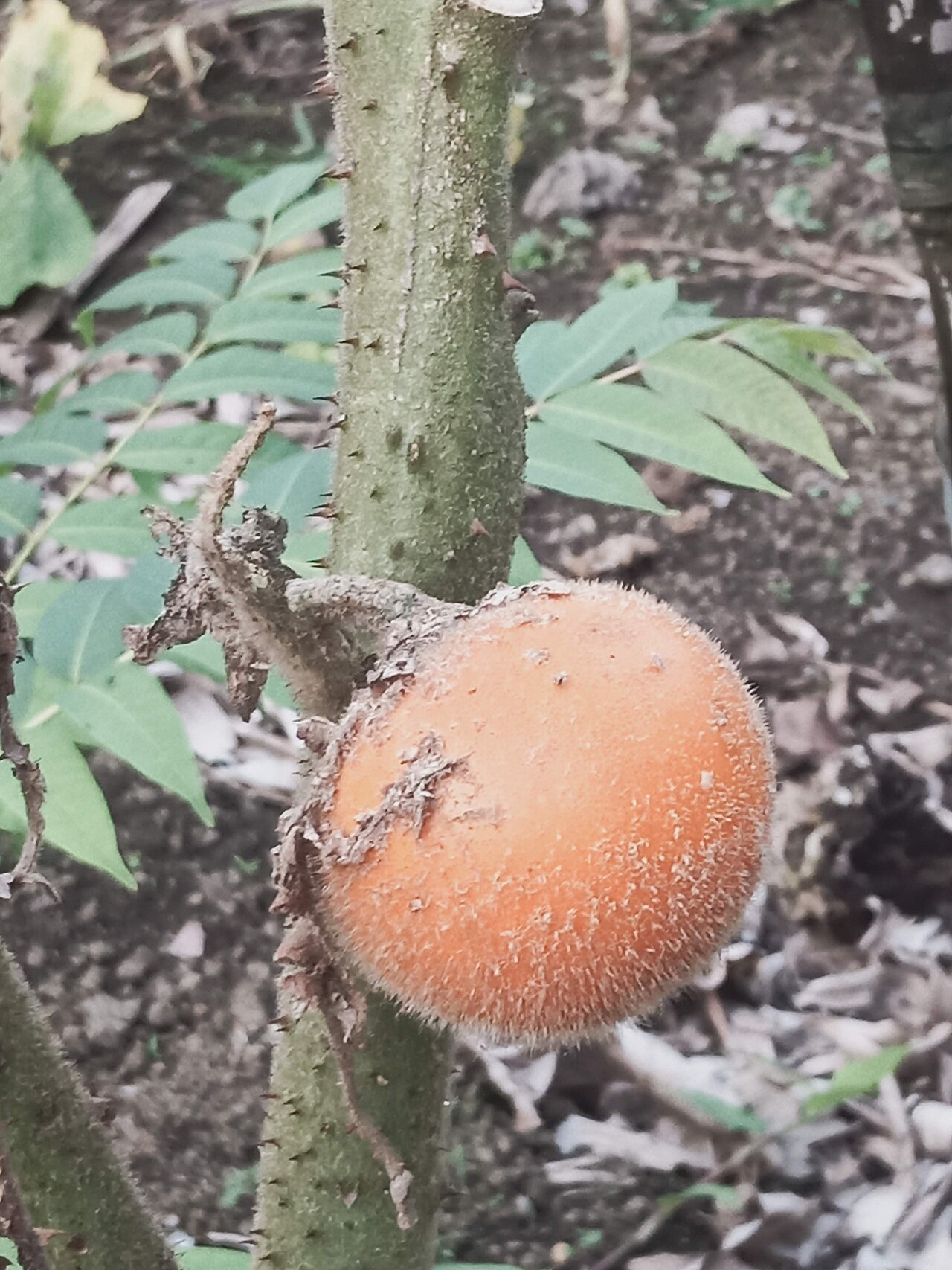
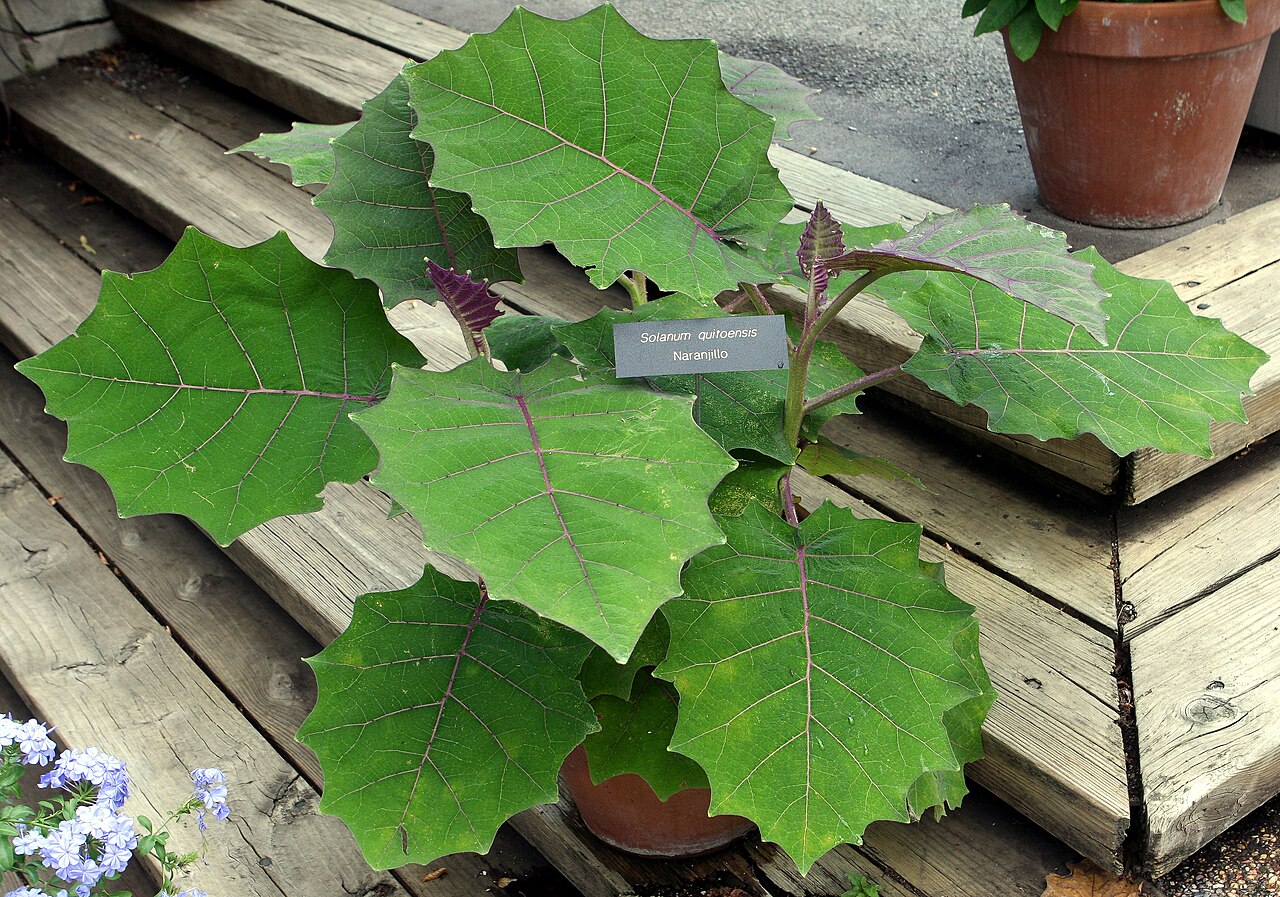
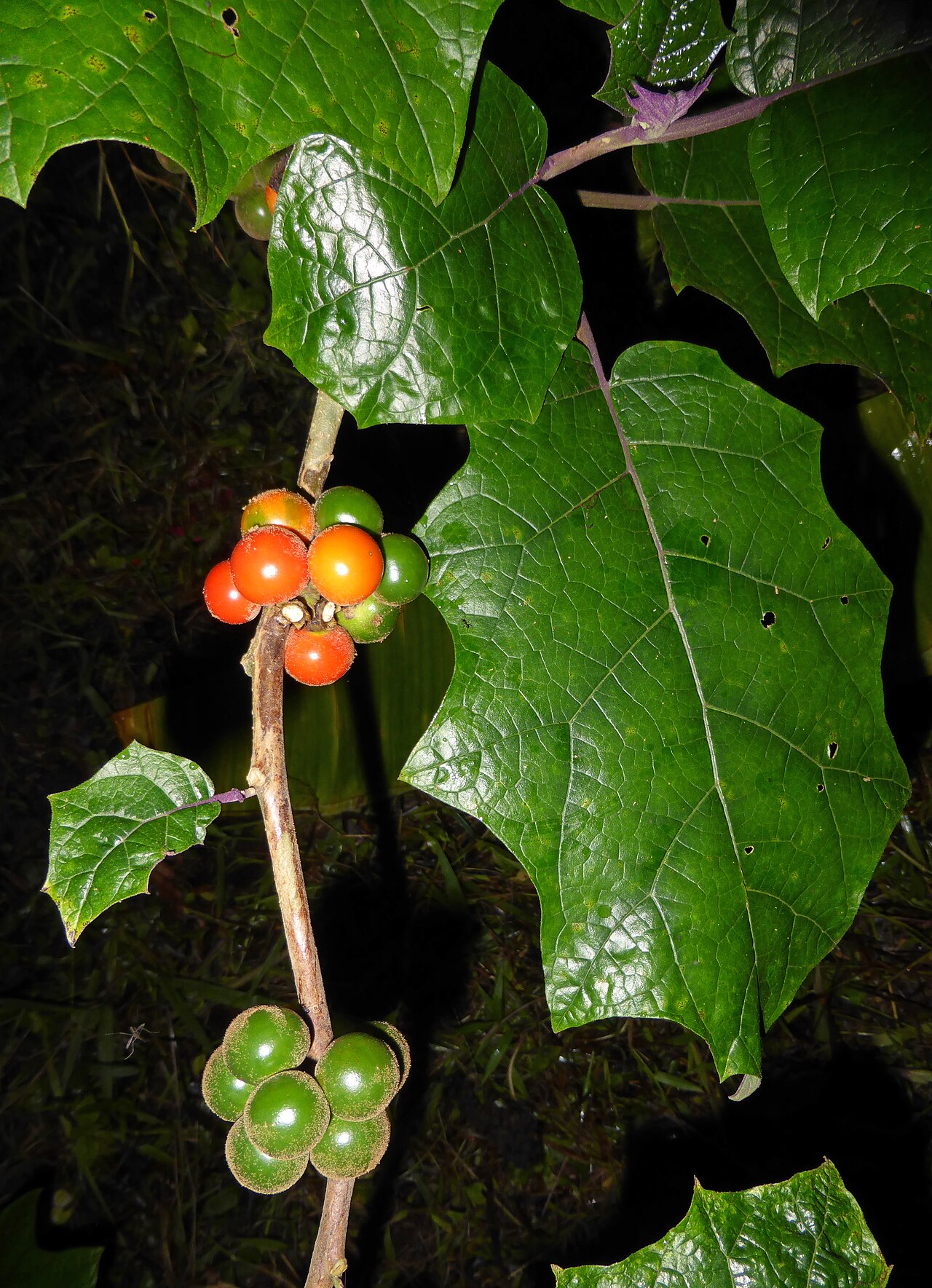
Naranjilla, also called lulo, is an Andean shrub with purple-veined leaves and orange, hairy fruit that tastes like citrus crossed with rhubarb. It wants what its mountain home gave it: cool, humid air, rich well-drained soil, and protection from wind and hard sun. In Florida that means semi-shade, a wind-sheltered spot, and mulch — full Florida sun and heat above about 85°F stress it badly, and frost kills it. Plants grow fast from seed and bear within a year, and grafted plants can bear sooner; in south Florida, grafting onto nematode-resistant rootstock is often essential. Prune old woody stems after harvest and expect a productive life of only about 3-4 years before replacing the plant.
Water & feeding
Keep soil evenly moist at all times; naranjilla wilts fast and recovers poorly from drying out. Drip irrigation and a thick mulch help, but do not waterlog the roots. Feed lightly and regularly in the growing season with compost or a balanced fertilizer, and give container plants a pot large enough to hold steady moisture.
Common problems
- Root-knot nematodes — the classic south Florida problem; use grafted plants on resistant rootstock and rotate ground.
- Heat and sun scorch — shade cloth and afternoon shade are not optional in hot lowlands.
- Frost — no tolerance at all; move pots inside before cold weather.
- Spider mites, whiteflies, and aphids in dry or stressed plants — keep humidity up and inspect often.
Harvest
Pick when the fruit turns fully orange and softens slightly. Brush or rub off the fine hairs (wear gloves if your skin is sensitive), cut in half, and scoop or squeeze the greenish pulp — it shines in juice, ice cream, and jam more than as a plain eating fruit.
Browse all plant & pest guides
Saving seeds
Naranjilla is a tropical oddity with a short seed clock: the seed is short-lived, so the rule is sow it fresh or do not bother saving it. Let the fruit ripen fully on the plant — the orange, fuzzy-skinned fruit softens and gives slightly when squeezed — then cut it open, scoop out the pulp, and wash the seed free. The pulp can inhibit germination, so rinse the seed well in a sieve under running water until it is clean, then dry it briefly on paper. Do not store it for months and expect it to sprout; sow within a few weeks of harvest.
Sow the seed shallowly in a warm, moist, well-draining mix and keep it warm — 75 to 85°F is the sweet spot, which in Florida’s warm season is just a sunny spot out of direct scorching sun. Germination usually comes within two to four weeks, though some seed takes longer, so keep the mix damp and do not give up on a pot at three weeks. A heat mat helps in cool weather, and a clear lid or plastic wrap over the pot keeps the humidity up while the seed wakes.
One practical warning: some naranjilla varieties are spiny, with sharp spines on the stems and leaf veins, so wear gloves when you harvest fruit and handle the plant. And the honest headline is the usual one for fruit: seedlings vary, and a seedling from a named variety will not come true to type. If you want a specific variety, cuttings are the route — but seed is the way most gardeners start naranjilla, and it works well as long as the seed is fresh.
Save seed from fruit that was fully ripe and flavorful, from a healthy, productive plant, and sow more than you need. There is no storage to speak of with naranjilla — sow it fresh, or share it fresh with a neighbor who will sow it right away.