
🍎 Ackee
What it looks like
How to grow
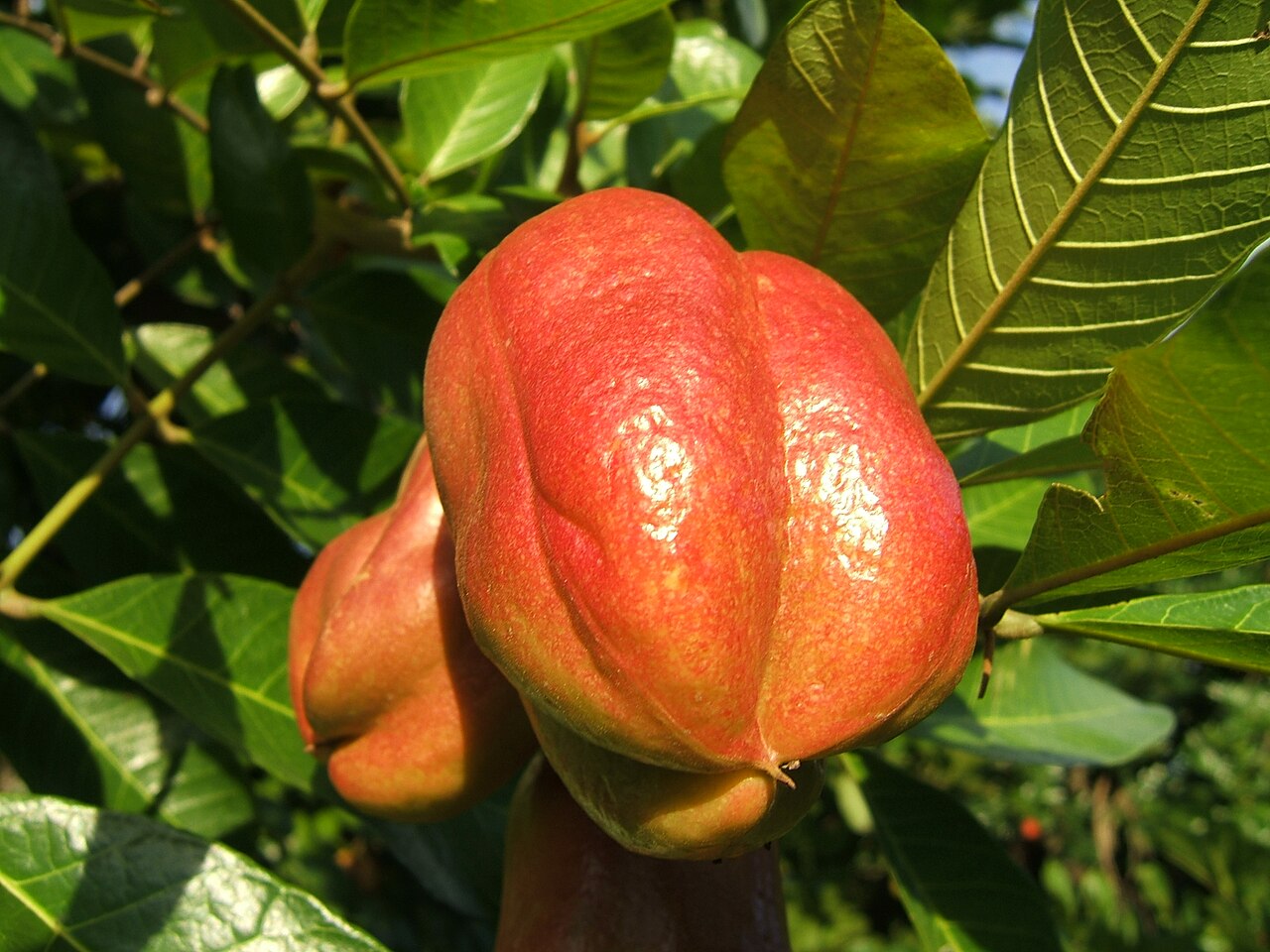
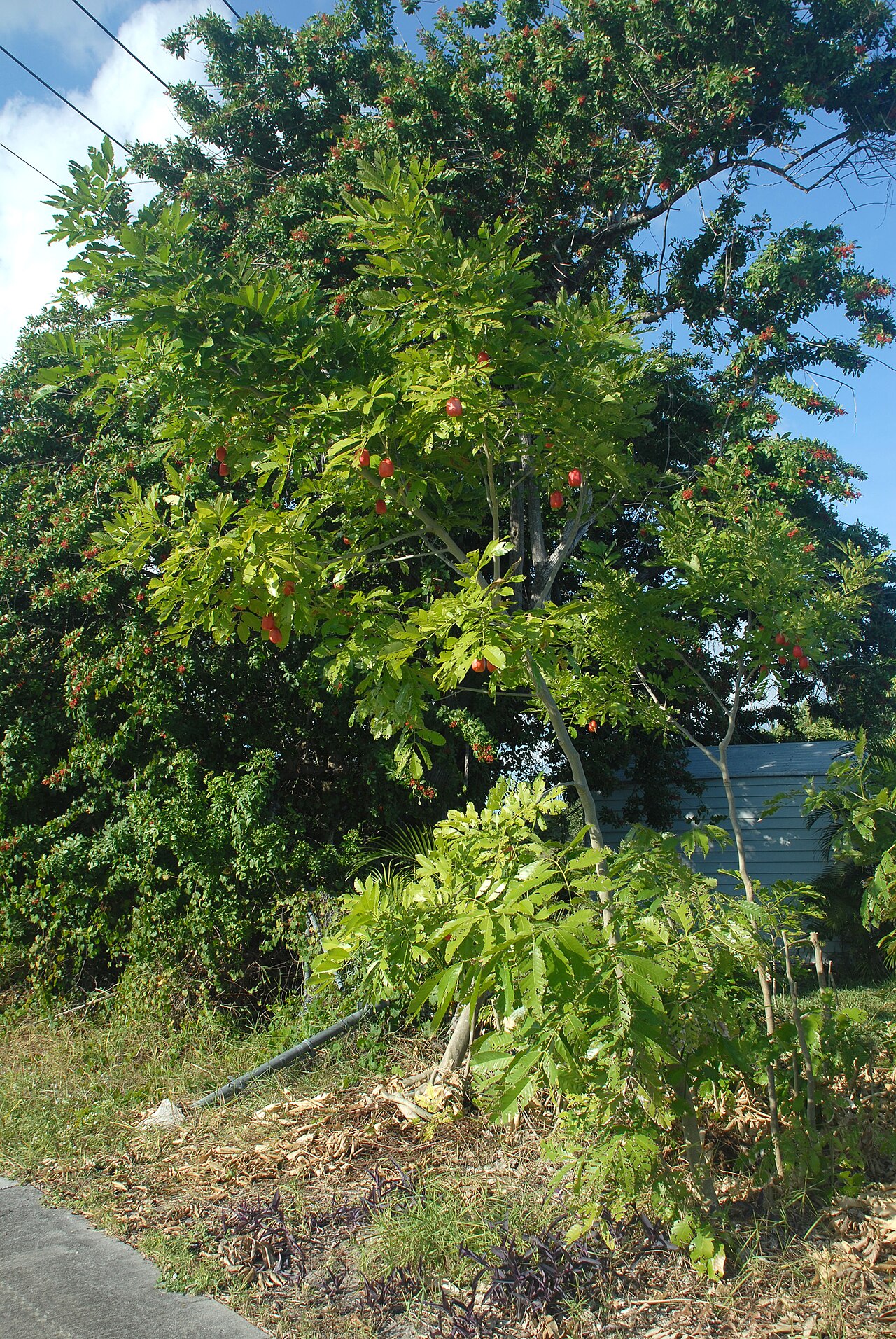
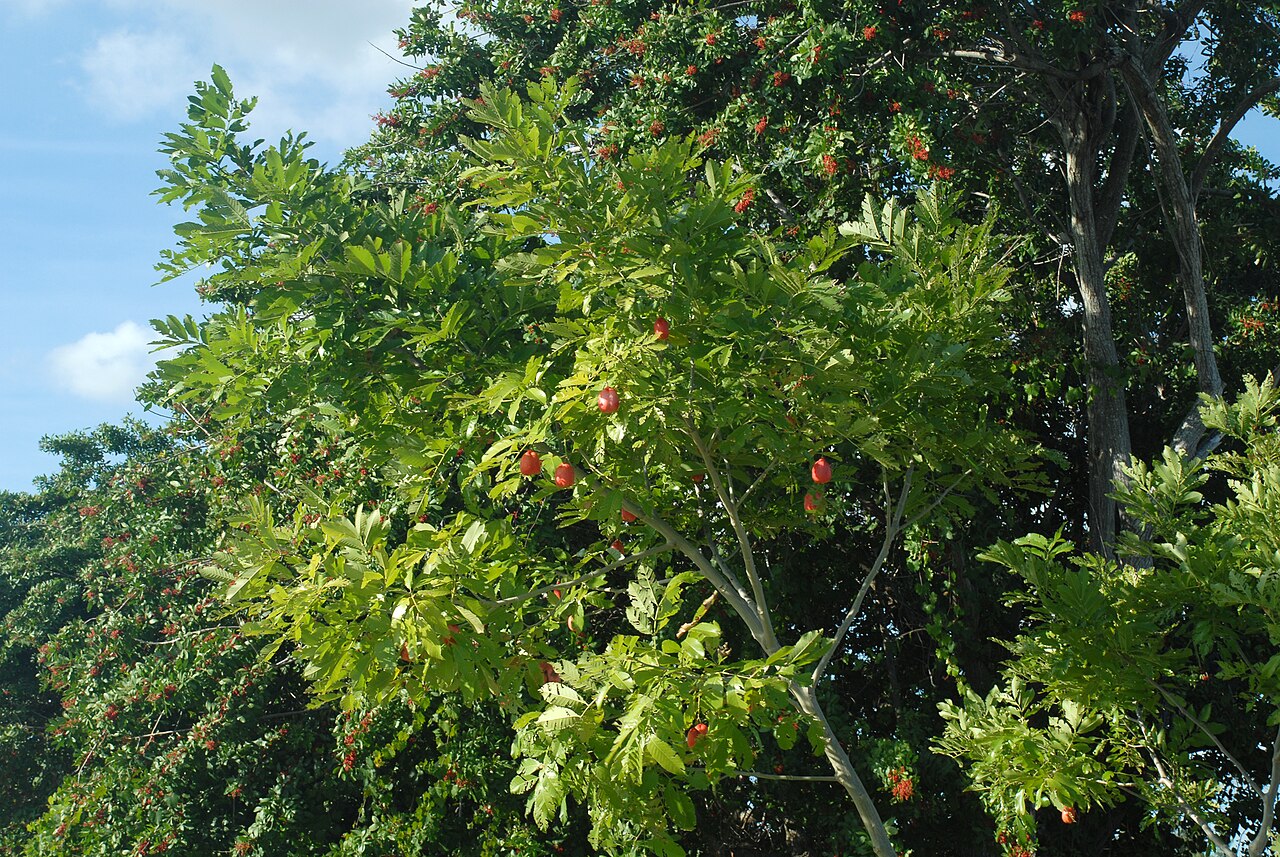
Ackee is a medium evergreen tree from West Africa, now Jamaica’s national fruit, bearing brilliant red pods that split open to reveal creamy arils cooked like a vegetable — famously with saltfish. Read the safety warning before you plant it, because it is the most important part of this guide: only the fleshy aril of a fully ripe fruit that has naturally split open on the tree is edible, after removing all red tissue and veins; unripe, overripe, forced-open, and seed parts are highly poisonous from hypoglycin toxins, and UF/IFAS does not recommend ackee for home plantings by anyone unfamiliar with the fruit. If you are not already expert in ackee, do not plant it — admire it, buy canned ackee from approved processors, and leave the tree to experienced growers. For those growers, plant in full sun in well-drained soil in zones 10-11, in south Florida and Hawaii, and keep children and unfamiliar visitors away from unripe fruit.
Water & feeding
Water while young and in dry spells; established ackee tolerates drought better than many tropical trees but fruits better with steady moisture. Mulch to hold moisture. Feed a few times a year with a balanced fertilizer or compost.
Common problems
- Poisoning risk from unripe or improperly prepared fruit — the central risk; never force pods open, never eat seeds, rind, or red veins.
- Frost — cold-sensitive; protect young trees.
- Few pests — ackee is notably pest-free for a tropical tree, which is small comfort beside the safety rule.
- Large size — site with room for a medium tree.
Harvest
Harvest only pods that have naturally split open on the tree. Remove arils, discard seeds, rind, and all red tissue and veins, wash arils, and boil briefly, discarding the water, before cooking as tradition directs. Never eat a pod you opened yourself, never eat unripe or overripe fruit, and never serve ackee to anyone who does not know these rules.
Saving seeds
Safety first, in plain language: ackee seeds are always poisonous, even seeds from a fully ripe fruit that opened on its own. Never eat them, never taste-test them, and never save seed for eating. The danger is the compound hypoglycin, which is highest in unripe fruit and still present in the seeds after ripening. Eating unripe ackee or ackee seeds can cause violent vomiting, dangerously low blood sugar, and in severe cases convulsions or death. This section is only about growing a new tree, and it follows the same rule as the Harvest section: only ever handle fruit that has split open naturally on the tree. Never pry a pod open yourself, never pick an unripe pod to ripen on the counter, and never leave seeds lying around where a child, a visitor, or a pet could mistake them for something edible.
Take seeds only from pods that yawned open on the tree, and separate them from the arils with care. Wash your hands afterwards, and if children are about, label the pot plainly so nobody mistakes a seedling project for a snack. Ackee seed does not behave like a dried bean you can jar for next year. It loses viability quickly once it dries out, so there is no seed-bank step here: plant it fresh, within days of taking it from the fruit, rather than storing it. A short soak in room-temperature water, roughly a day, is a common way to get the seed fully hydrated before sowing, but be clear about what soaking does and does not do. It helps germination. It does not make the seed safe to eat. Nothing in home preparation makes an ackee seed edible, so do not try.
Sow the cleaned seed about an inch deep in a moist, well-drained potting mix, keep it warm and evenly moist but never soggy, and be patient. Germination often takes a few weeks, with sources commonly giving roughly two to four weeks in warm conditions. Pot seedlings up as they grow, and site the young tree with room to become a medium tree, in full sun and frost-free ground. In Florida that means the warm south: young ackee trees are cold-sensitive, and a hard freeze can kill them even where an older tree might shrug off a brief chill.
A seedling is not a clone of its parent tree. Ackee shows relatively little variation from seed, so a seedling is a reasonable way to get a fruiting tree, but if you want a known fruiting type sooner and more predictably, a grafted or budded tree is the better buy. Seed-grown trees take several years to fruit, often around three to five years and sometimes longer, so this is a long game, not a quick crop. That is part of the charm, and part of the warning: you are planting a tree whose fruit will one day demand the same strict rule you are following now. Only the aril of a fully ripe, naturally opened fruit is food. Everything else, seeds included, is poison, and the tree you grow from this seed will be no exception.