
💛 Rue
What it looks like
How to grow
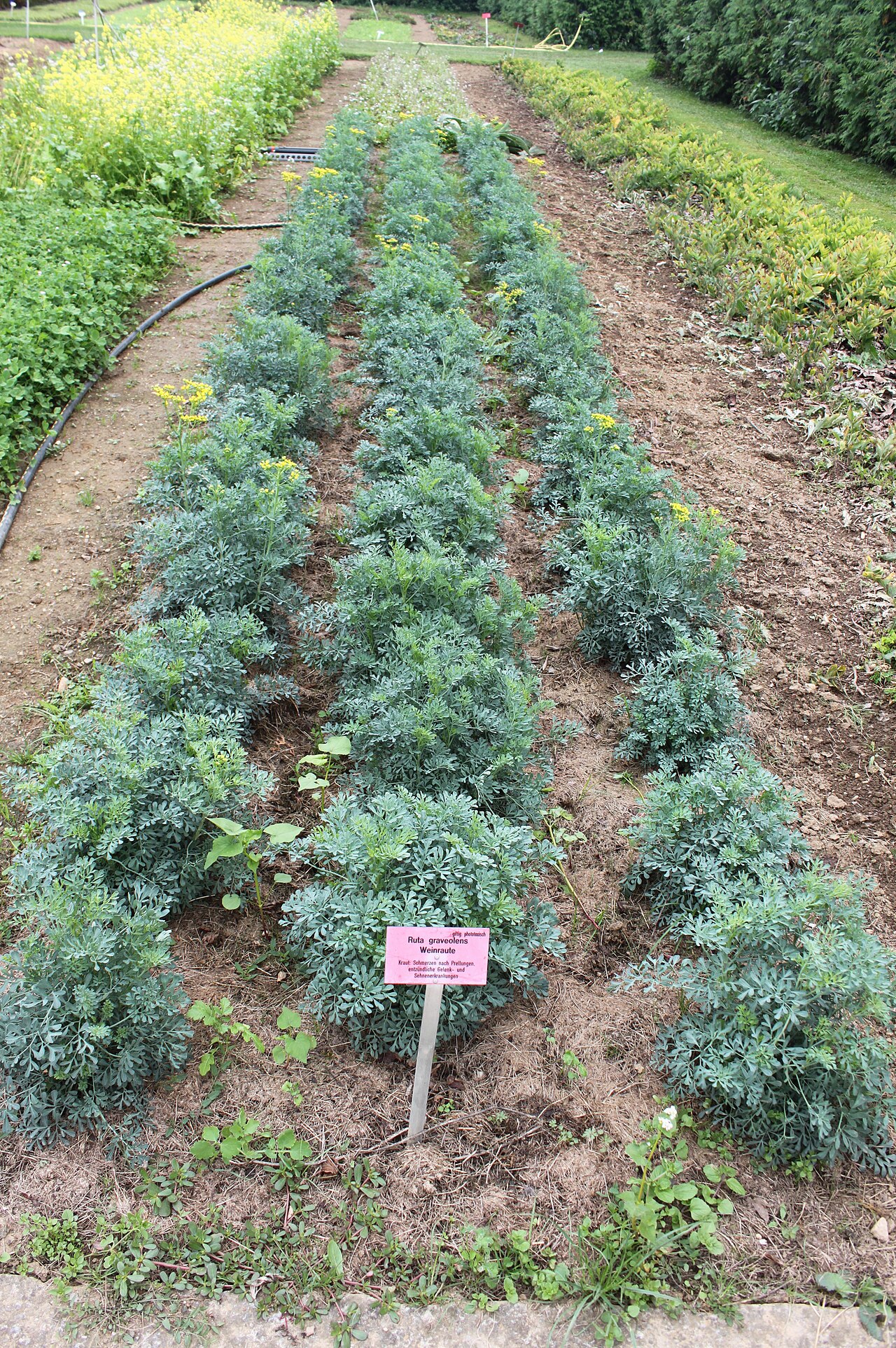
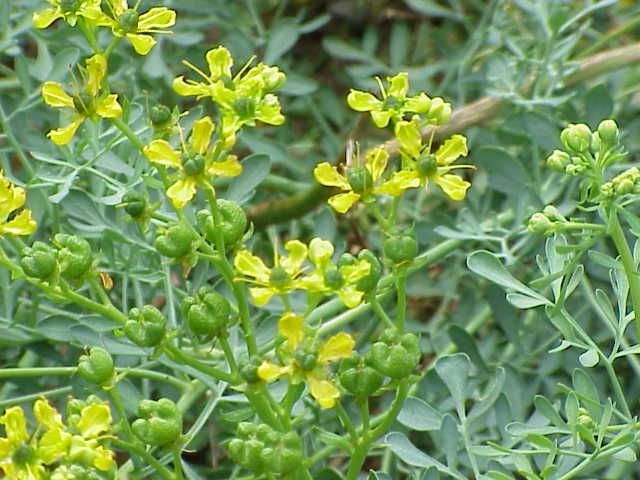
Rue is a woody-based perennial, 2-3 feet tall and wide, with blue-green, deeply divided leaves and clusters of small yellow flowers in summer. It is evergreen where winters are mild and dies back to regrow in spring where they are not. Start from cuttings or divisions — the easiest routes — or from seed in spring, and plant it in full sun or part shade in poor, dry, sharply drained soil; rue positively prefers rough conditions and thin, rocky ground where fussier herbs fail. Do not fertilize it and do not overwater it: pampering makes it leggy and short-lived. It is a classic knot-garden and herb-garden edging plant, deer-resistant, drought-tolerant once established, and a host plant for giant swallowtail butterflies, whose caterpillars eat the leaves — plant extra if you want both rue and butterflies.
Water & feeding
Water sparingly once established — rue is drought-tolerant and hates wet feet, especially in winter. It needs no fertilizer; in fact, fertilizer is counterproductive. Mulch with gravel in wet climates to keep the crown dry, and prune in spring to remove dead wood and shape the plant, cutting back leggy stems to force bushy growth.
Common problems
- Phototoxic sap — the big one. Rue sap on skin plus sunlight causes blistering, painful rashes. Always wear gloves and long sleeves when handling it, and keep children away from the plant.
- Root rot in wet soil — plant in raised beds or gritty soil, and never let it sit in winter wet.
- Swallowtail caterpillars eating leaves — plant extra and share, or move caterpillars to a sacrificial plant; the butterflies are worth it.
- Woodiness with age — cut back hard in spring every few years to renew the plant from the base.
Harvest
Snip leaves as needed, always with gloves on, and dry small bunches in a dark, airy place if you want to keep them. Safety note, plainly: rue is toxic in quantity, its sap blisters skin in sunlight, and it has a history as an abortifacient herb — it should never be taken internally, and pregnant people should not handle it at all. Grow rue as an ornamental, aromatic, and butterfly plant, and leave its medicinal history in the history books. Wash hands and tools after cutting, even with gloves on.
Browse all plant & pest guides
Saving seeds
Rue seed is easy to save — and it comes with a warning that belongs at the top, not the bottom. Rue is phototoxic: the sap, on skin in sunlight, can cause blistering burns. Wear gloves and long sleeves when you handle the plant, collect seed in the evening or on a cloudy day, and wash your hands and arms afterward. The plant is beautiful and tough, but it is not a plant to handle casually.
After the small yellow flowers fade, tiny seed capsules form, and when they turn brown and dry, snip the whole stem into a paper bag and let it finish drying indoors. Rub the capsules gently to free the small dark seeds, winnow away the chaff, and store the seed in a paper envelope in a cool, dry place. Rue seed keeps for a few years when it is dry.
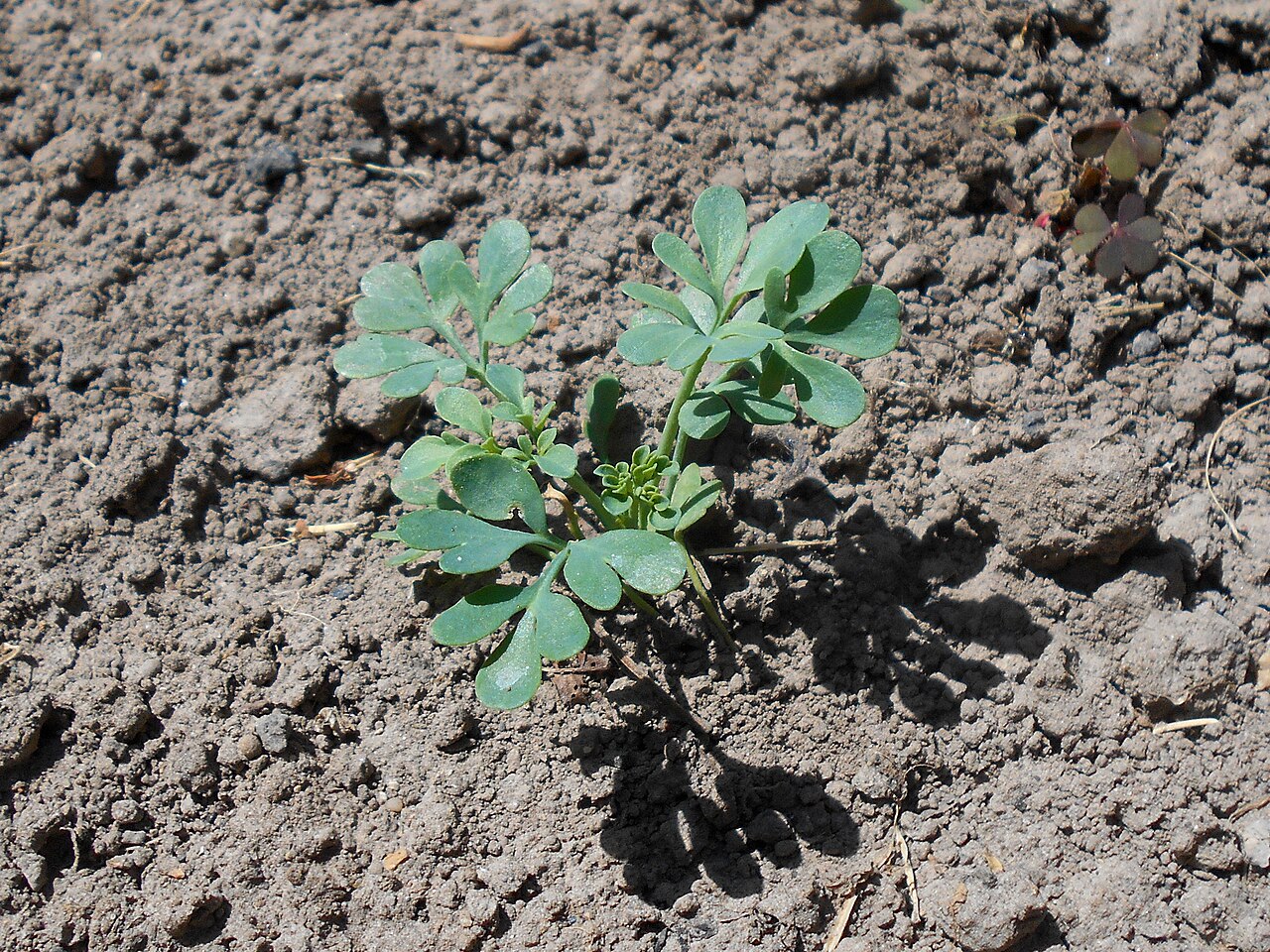
Sow in spring, when the weather is warm. Rue seed germinates best around 65 to 75°F, so sow on the surface of a well-draining mix and press the seed in lightly — do not bury it, since rue seed needs light to germinate. Keep it moist and warm, and expect sprouts in one to three weeks. Seedlings grow slowly at first and need steady moisture without ever sitting wet, and they want sharp drainage from the start — a rue seedling in soggy soil is a dead seedling. Once established, rue is a tough, drought-tolerant shrub that largely takes care of itself.
Save seed from a healthy plant with good form and the blue-green foliage that makes rue worth growing, and sow more than you need — germination is uneven, and a generous sowing is the practical approach. In Florida, rue grows well with sun and sharp drainage, so start seedlings in pots with a gritty mix and plant them out once they are sturdy. And plant it where you will not brush against it in passing: a rue by a path is a rue that will bite the gardener who walks by in shorts.
Varieties
Every named variety of Rue with its own growing guide:
- Jackman’s Blue Rue — The blue rue: compact, vividly blue-gray, and intensely aromatic — the knot-garden rue, with a phototoxicity warning you must read first.