
🌿 Kava
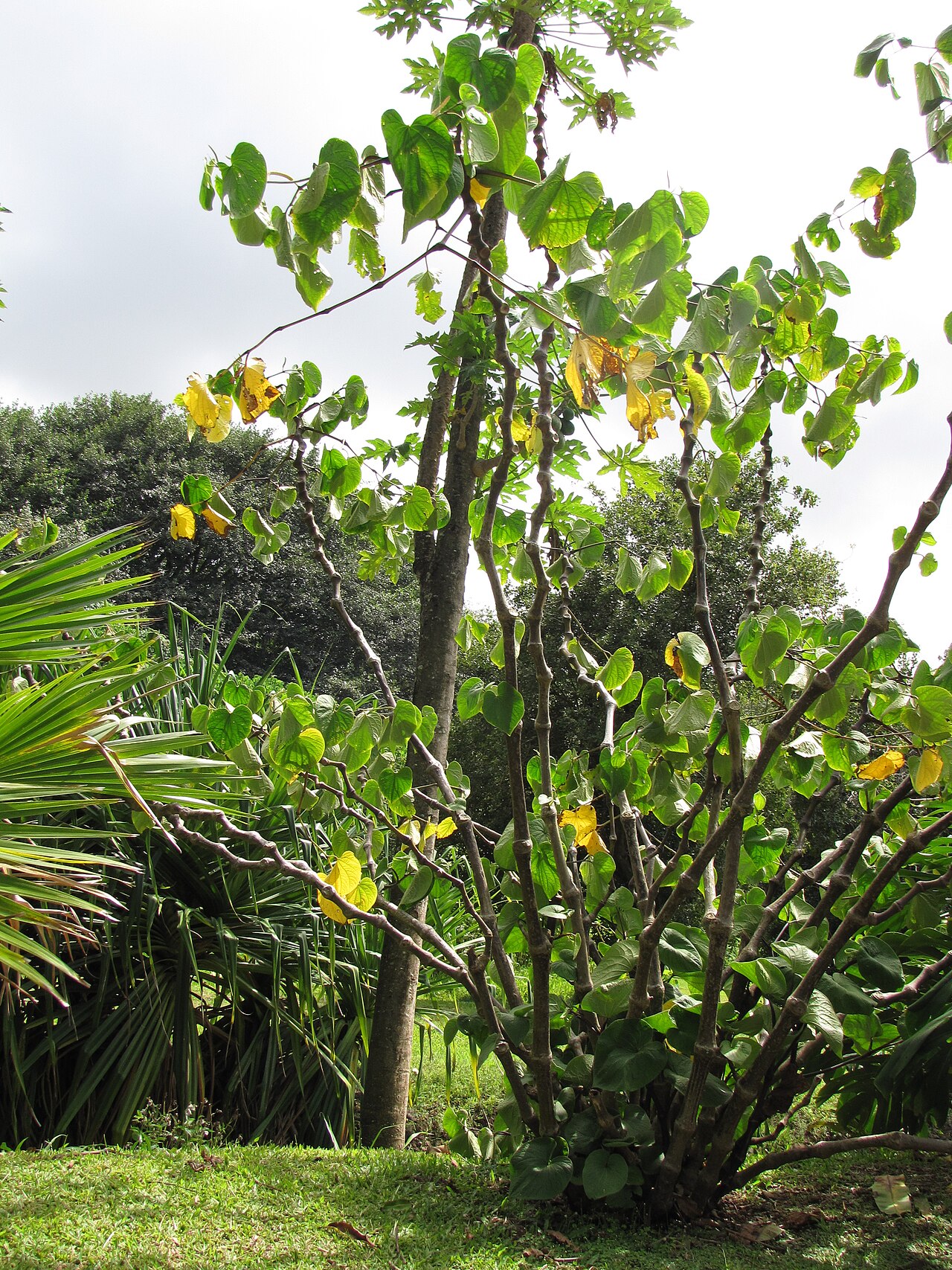
What it looks like
How to grow
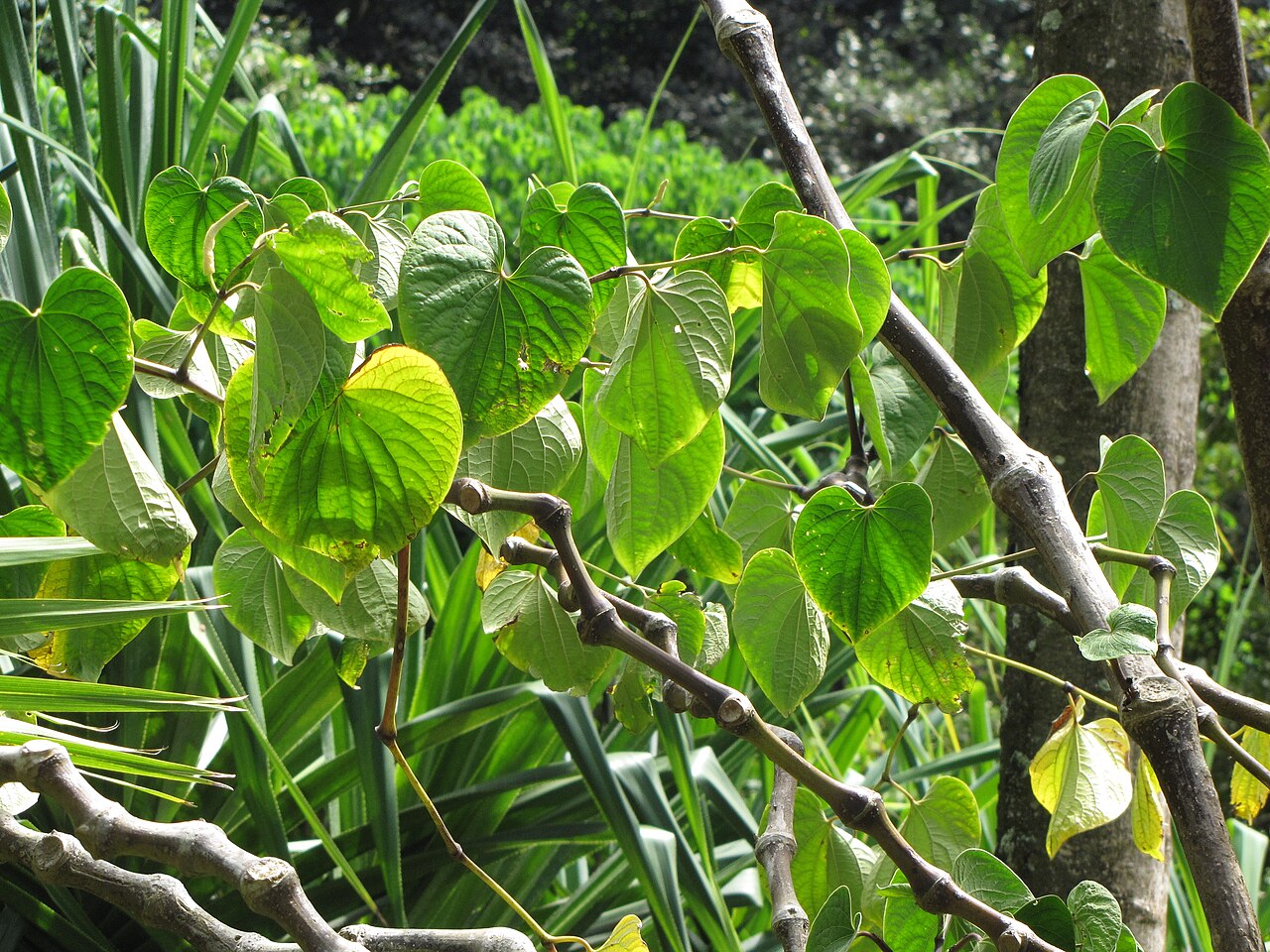
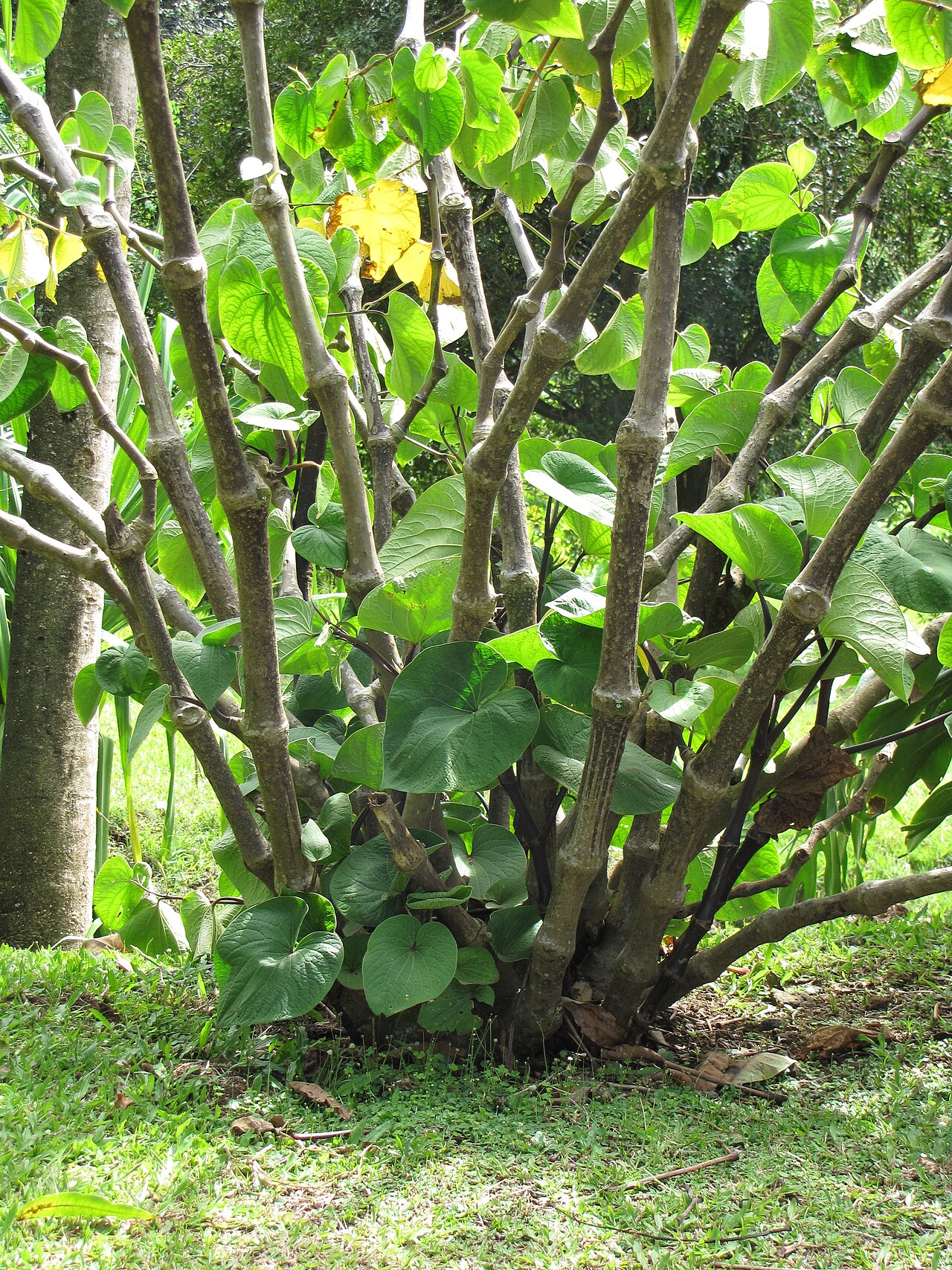
Kava is a tropical shrub, 6-10 feet, with large, heart-shaped leaves, jointed stems, and a thick, knobby root system — the part used in Pacific Island ceremonies for a traditional beverage. Start from stem cuttings in spring — the only reliable route, since kava is sterile and does not produce seed — and plant in part shade in frost-free zones 10-12 only: Hawaii, southern Florida, and similar tropical pockets. It wants warm, humid conditions, rich, moist, well-drained soil, and protection from wind and direct sun; it has no frost tolerance at all, and a single cold night can kill it. In pots, use a large container with rich, moist mix and bring it indoors before any cold snap — though indoor kava rarely thrives long-term. This is a specialist plant for tropical gardeners, not a general herb-bed plant, and most mainland US gardeners should admire it from afar.
Water & feeding
Keep soil consistently moist — kava is a tropical plant that wilts in drought and needs steady water, especially in dry seasons. Mulch thickly to hold moisture, and feed with compost regularly; kava is a hungry plant and rewards fertility with lush growth. Mist leaves in dry air, and protect from wind, which shreds the large leaves.
Common problems
- Frost — the absolute limit. Kava has no cold tolerance; grow only in zones 10-12, or in a greenhouse, and protect from any cold snap.
- Drying out — leaves wilt and growth stalls; water deeply, mulch, and mist in dry air.
- Root rot in waterlogged soil — plant in rich but well-drained soil, and never let pots sit in standing water.
- Slow growth — expect 3-5 years to a harvestable root, and do not disturb the plant in the meantime.
Harvest
Harvest roots only from third- to fifth-year plants, digging carefully and replanting stem cuttings to keep the patch going. This guide is about growing only, and it carries a plain safety note: kava has documented liver-safety concerns, and traditional kava preparation is a cultural practice with its own protocols — this guide does not recommend preparing or drinking homegrown kava, and if you are considering kava for any reason, talk to a clinician first. For most gardeners, kava’s value is as a tropical collection plant and a lesson in how specific a plant’s climate needs can be — a shrub that simply will not compromise on frost.
Browse all plant & pest guides
Propagation
There is no seed-saving section for kava, because there are no kava seeds to save. Say it plainly: kava is sterile. Its flowers are rare, female flowers are virtually unknown, and even hand-pollination does not produce fruit. Every kava plant in cultivation is a clone, one of hundreds of sterile cultivars descended from a wild ancestor, Piper wichmannii, and the plant has depended entirely on people to reproduce for as long as anyone has grown it. That also means any “kava seeds” offered for sale are a red flag — do not buy them, because they are not what they claim to be.
What kava does instead is multiply vegetatively, and it does it willingly. The two methods are stem cuttings and rhizome division. For cuttings, take a healthy stem section about six to eight inches long with at least two nodes, cut with a clean sterile blade, and pot it in a rich but open mix — something like equal parts compost and coconut coir or vermiculite. Keep it warm, roughly 68 to 77 degrees, and humid: a heated propagator is ideal, and a clear bag over the pot works as a home version. Roots take weeks to a couple of months, so be patient and keep the mix moist but not waterlogged. For division, the moment comes at harvest: kava is traditionally harvested at around four years old, and when the root is lifted, the rhizome can be broken into pieces or its offsets — the daughter rhizomes growing off the main mass — can be separated and potted directly into moist, fertile soil.
The habit to build is replanting at harvest. Every time you lift a plant, put a cutting or a rhizome piece back in the ground, so the cycle never breaks. And keep a mother plant: because there is no seed bank to fall back on, your living plants are the entire future of your kava. Keep at least one vigorous plant unharvested as insurance, so a bad season or a failed batch of cuttings never leaves you starting from nothing.
A Florida note: kava is a tropical plant, hardy only in zones 10 to 12, and it wants constant moisture, humidity, and shade from harsh sun — Florida’s humidity actually suits it, but cold is the enemy, and it has no frost tolerance at all. In most of Florida, grow it in a pot or a sheltered shade house so you can move it under cover when a cold snap threatens. One safety line, because it matters: traditionally only the roots are used, and the above-ground parts are not for consumption. Propagate it, enjoy it as a plant, and leave the rest to the traditions that know it best.
Varieties
Every named variety of Kava with its own growing guide:
- Borogu Kava — The everyday noble kava: balanced, smooth, and widely grown, the Vanuatu kava for the traditional evening bowl.
- Melomelo Kava — The mellow noble kava: mild, balanced, and sweetly relaxing, the Vanuatu kava for a gentle evening.