
🍒 Rowan
What it looks like
How to grow
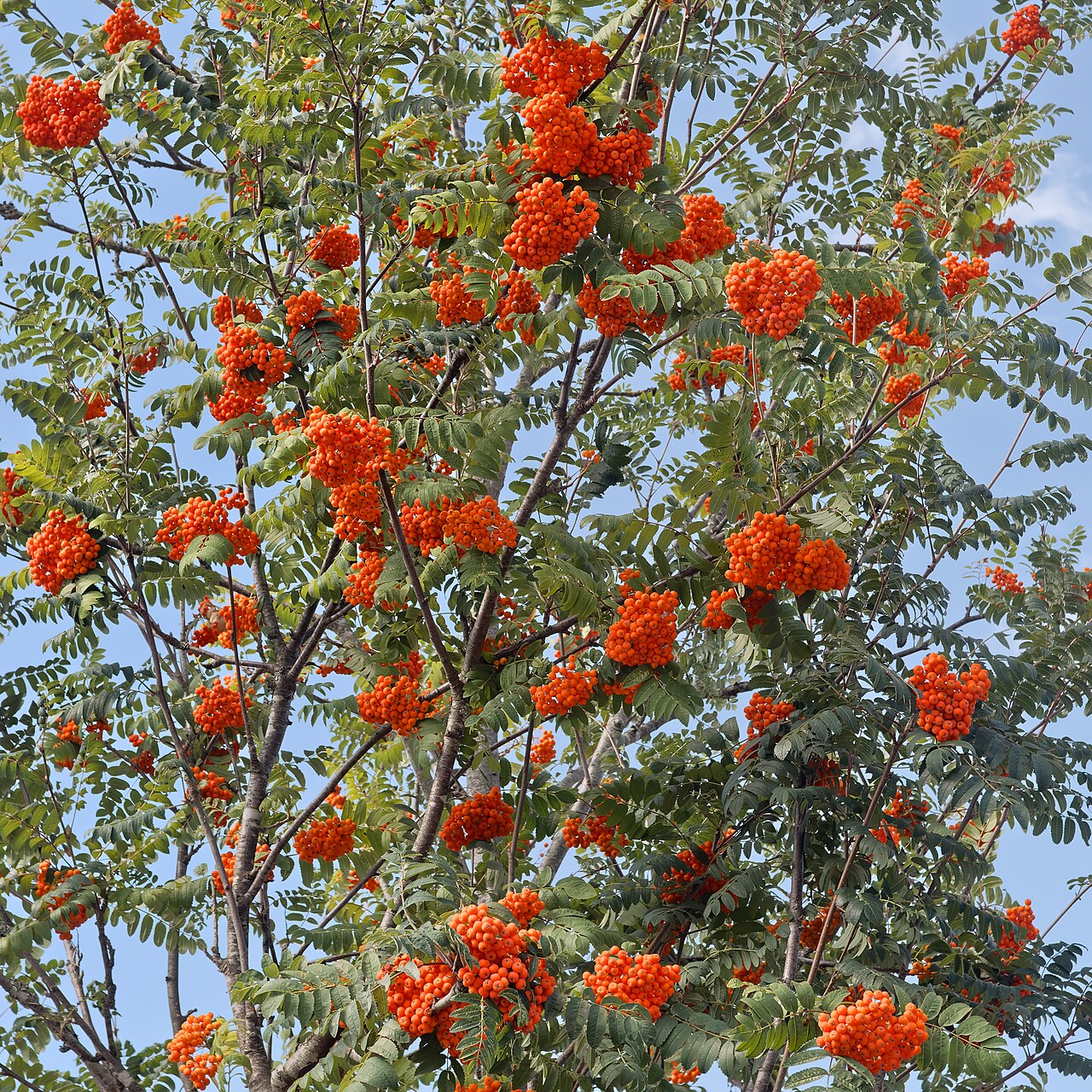
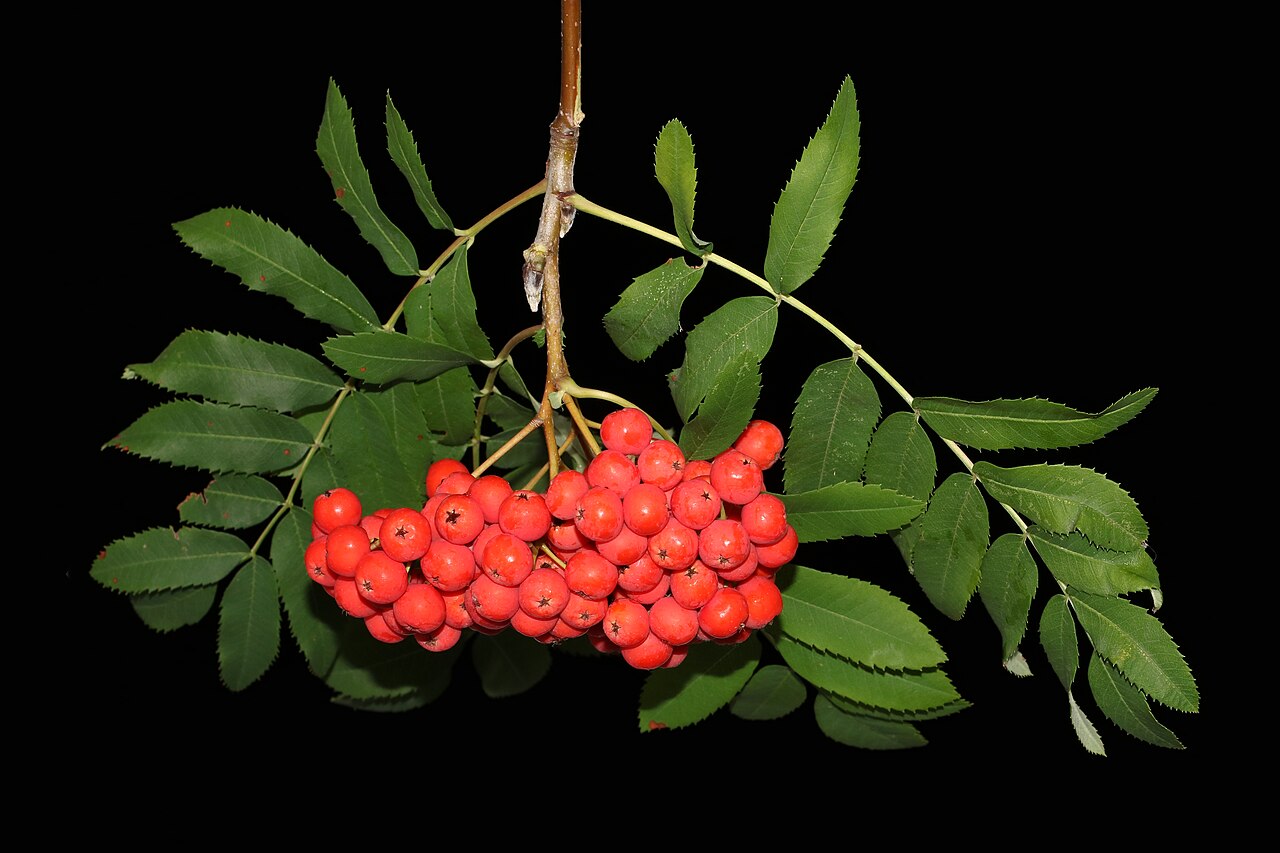
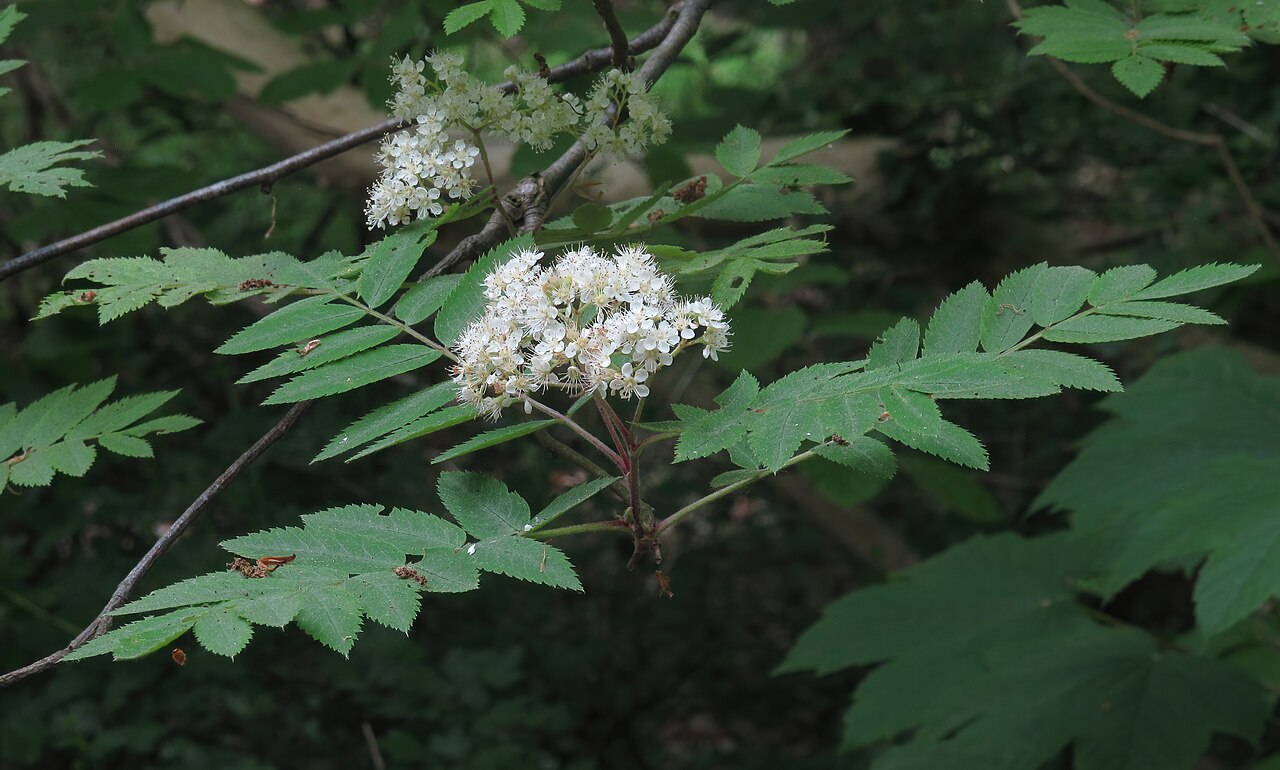
Rowan — the European mountain ash — is a small to medium deciduous tree, 20–40 feet tall with an 8–20 foot spread, despite the name: it is not a true ash at all, but a member of the rose family, with ash-like pinnate leaves. It earns its place with white flower clusters in May, brilliant orange-red berries in autumn that birds adore, and yellow-to-red fall foliage. Plant in spring or fall in moist, well-drained, fertile soil, and keep it cool: rowan wants consistent moisture and cool summers, thriving in the Northeast, Northwest, and higher elevations. It is a poor choice for hot, dry, or humid southern gardens, where heat stress invites pests and disease. Give it room, mulch the root zone, and let it grow into its upright oval crown with little pruning.
Water & feeding
Water regularly and deeply, especially in drought — rowan has very little drought tolerance and sulks fast when dry. Mulch to keep roots cool and moist, and feed lightly with compost in spring; it is not a heavy feeder. Avoid waterlogged soil, which it dislikes just as much as drought.
Common problems
- Heat stress — browning, sparse growth, pest and disease pressure in hot summers; this is a climate mismatch, not a care failure, and the fix is planting it only where summers stay cool.
- Fire blight and canker — prune out affected wood promptly, disinfecting tools between cuts.
- Aphids and borers on stressed trees — keep the tree watered and mulched; healthy rowans resist far better than stressed ones.
- Berry drop — birds strip berries fast; if you want some for jelly, net a branch or pick early.
Harvest
Berries ripen in autumn and are traditionally cooked into jellies and preserves — do not eat them raw, as they can upset the stomach. Harvest after a light frost for the best flavor, and leave plenty on the tree: the birds consider them theirs, and they are not entirely wrong.
Browse all plant & pest guides
Saving seeds
Rowan seed is one of the most patient seeds in the garden — deep dormancy, a long cold requirement, and a habit of germinating on its own schedule, not yours. Collect the berries in fall, when the clusters have turned bright orange-red and the fruit is soft. Mash the berries in a little water, let the pulp float off, and save the small seeds that sink. Clean the pulp off thoroughly: the fruit pulp itself can delay germination, and seed left in the berry may take an extra winter or two to wake up. Rinse the seeds and let them dry for a day.
Then comes the long treatment. Rowan seed needs warmth first, then cold: mix the seeds with damp sand or peat moss in a bag, keep them warm — around 68°F — for about two weeks, and then move the bag to the fridge for a long cold stretch. Sources disagree on the length, with growers quoting anywhere from 14 to 16 weeks to 30 weeks at around 39°F, so three to four months is the honest minimum and longer is safer. Check the bag every few weeks, because germination can begin in the fridge from the 16th week onward. After stratification, sow shallowly in a cool, well-draining mix and keep it cool and moist — and keep the soil temperature below about 59°F, because warm soil can push rowan seed back into a second dormancy. Germination is slow and uneven, and some seed will wait for a second winter. Seed that does not sprout can be put through the whole warm-and-cold cycle again.
Save seed from a healthy tree with the berry color and form you love, and sow more than you need — germination is uneven, and a generous sowing is the practical approach. Named selections are propagated by grafting for a reason, and a seedling may not match its parent in berry color or form.
And a Florida note, because it matters: rowan is a cool-climate tree that wants cold winters and cool summers, and it is not a Florida plant. The guide says it plainly — a firm refusal to tolerate hot summers. In Florida it will struggle no matter what you do. Treat rowan seed as a curiosity for a cool-climate friend, not a plant for your own garden.
Varieties
Every named variety of Rowan with its own growing guide:
- Edulis Rowan — The sweet-fruited rowan: the mountain ash selected for fruit you can actually enjoy, not just admire and leave for the birds.
- Joseph Rock Rowan — The yellow-berried rowan: golden autumn fruit on a mountain ash, for gardeners who want rowan berries without the usual red.