
🍅 Caprese Bites
No cooking. No chopping marathons. Just three perfect ingredients, stacked up, and a drizzle that makes the whole thing sing.
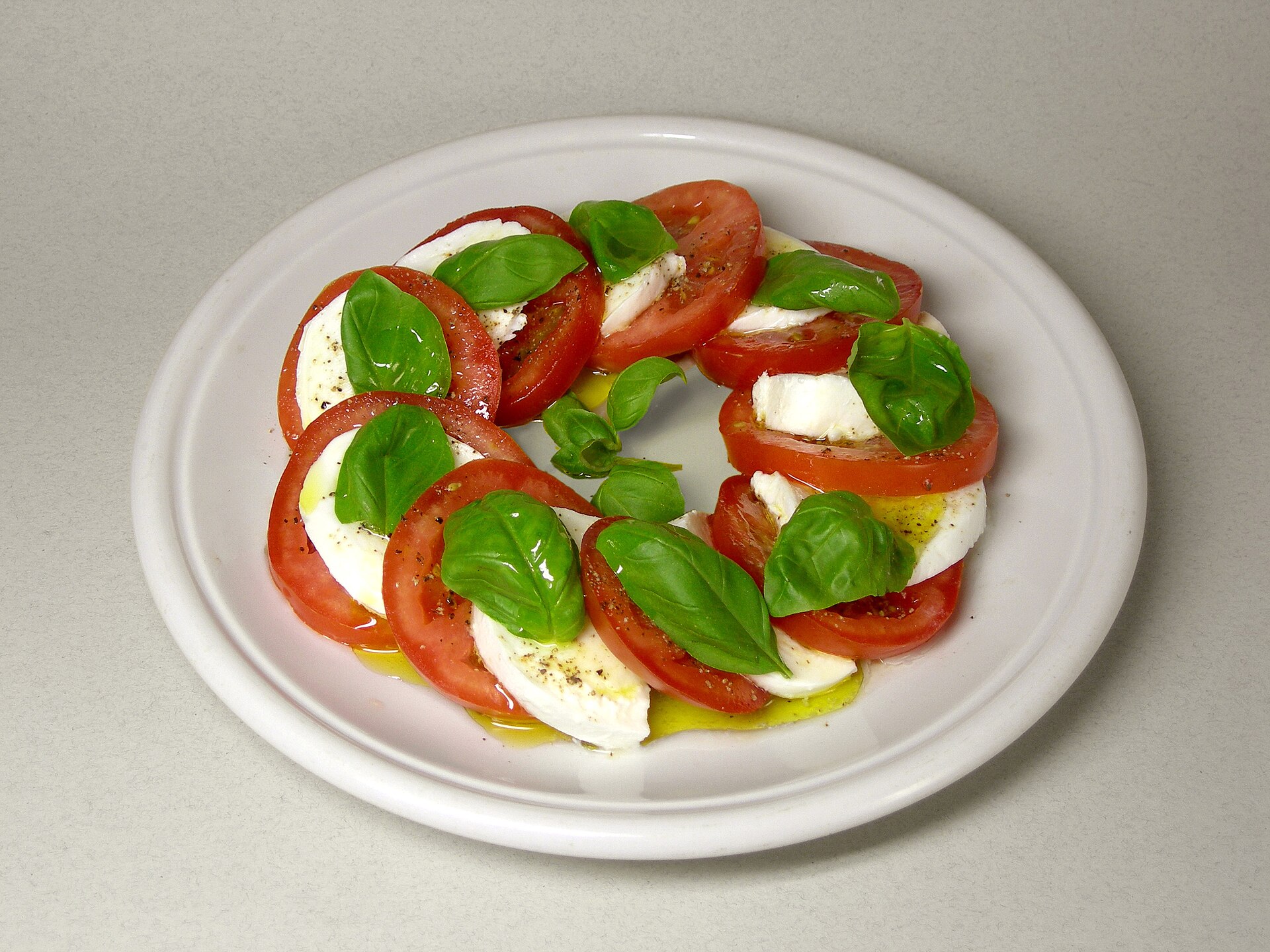
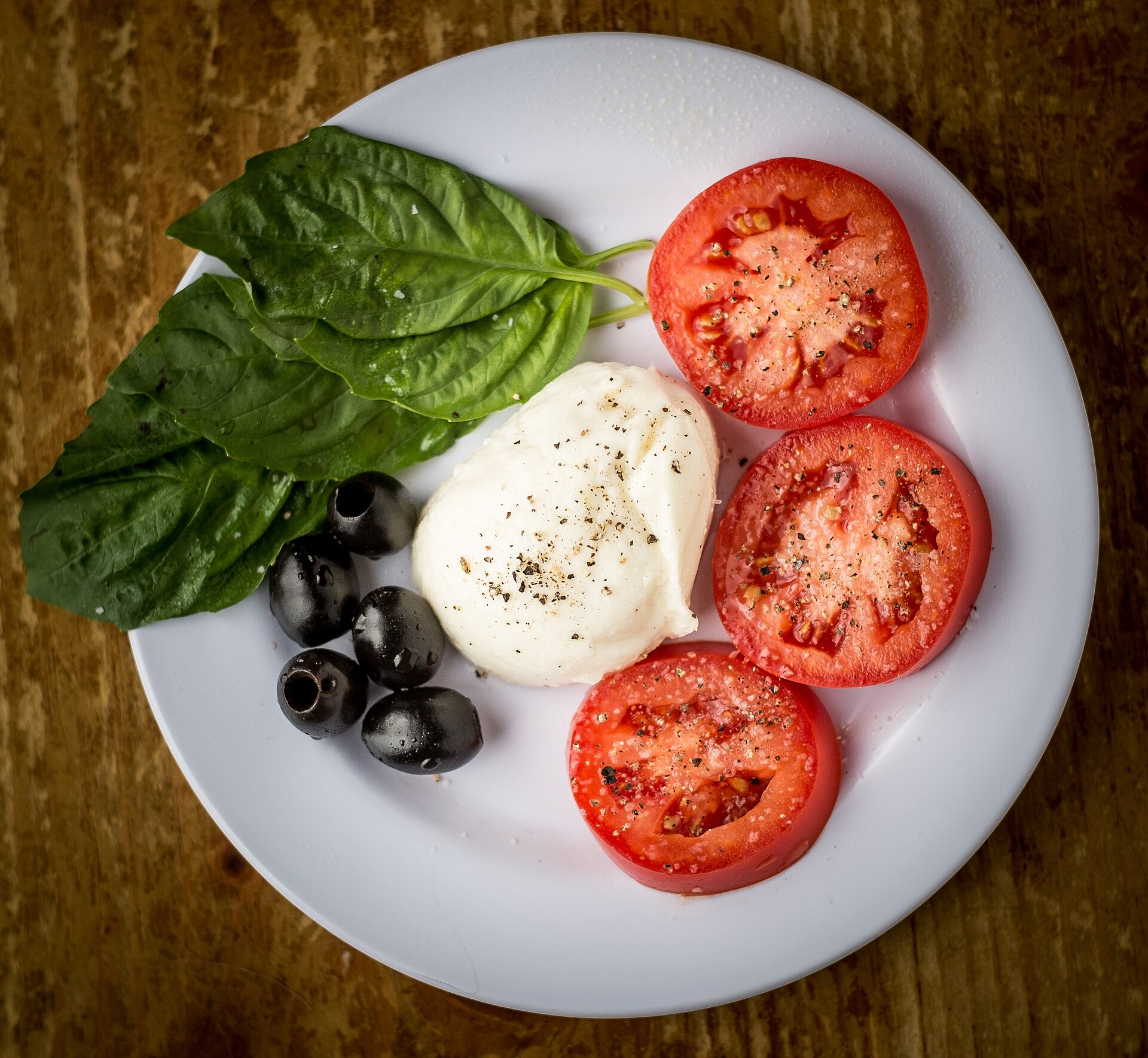
Caprese (say: kuh-PRAY-zay) is a salad from Italy, named after the island of Capri, and it has exactly three stars: tomato, mozzarella, and basil. That is it. No lettuce hiding anything. No sauce covering anything up. When a recipe has only three ingredients, every single one of them has to be good — and you are about to find out why these three, together, are better than any of them alone.
Your job is assembly, and assembly is a real cooking skill. You will tear the basil (not chop it — tearing matters, and the science section will tell you why), stack the layers, drizzle the oil, and then do the most important taste test in this whole guide: try it with the drizzle, try it without, and notice the difference. That difference is the entire secret of cooking.
🧪 The Science Hiding on Your Plate
Two nerdy things happen while you stack caprese, and knowing them makes you a better cook:
1. Sweet, acid, salt, and fat are a team. The tomato brings sweet and acid. The mozzarella brings salt and creamy fat. The basil brings aroma. The olive oil brings more fat, and the balsamic brings more acid. Every flavor direction is covered, and that is why one bite tastes complete in a way a plain tomato slice does not. Cooks call this “balance” — and you just built it out of three ingredients and a drizzle. The salsa guide taught the same trick with salt and lime. Same science, fancier plate.
2. Tearing basil beats chopping it. Basil leaves are full of tiny pockets of volatile oils — “volatile” means the oils evaporate easily, which is why you can smell basil from across the room. Chopping with a knife crushes lots of those pockets at once and bruises the leaf dark. Tearing gently breaks fewer pockets and keeps the leaf green and pretty — and the oils that do escape land right on your fingers, which is why your hands smell amazing afterward. It is the same idea as the mint water recipe: bruising releases the good stuff, but gentle hands release just enough.
🧰 Your Gear
- A plate or small board for stacking
- 2–3 ripe tomatoes, any kind — the smellier the better
- Fresh mozzarella — the soft white kind, sliced or in small balls
- A handful of fresh basil leaves
- Good olive oil, for drizzling
- A little balsamic vinegar (optional, but recommended)
- Salt and pepper
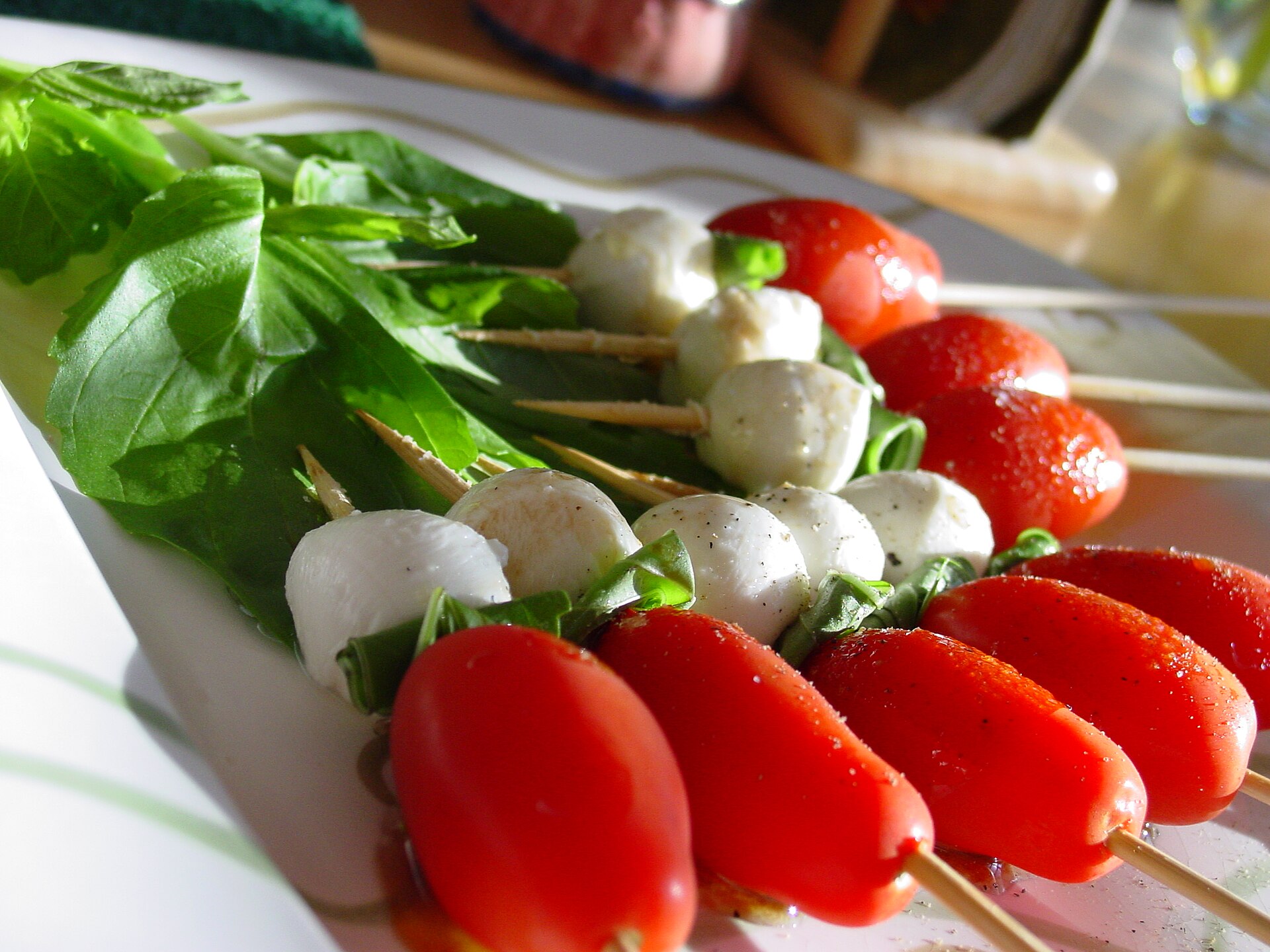
- Toothpicks (optional, for bite-size stacks)
🔨 The Build
- Tear the basil. Take each leaf and tear it gently into two or three pieces. Smell your fingers. That smell is the volatile oils doing their job.
- Lay down the tomato. One slice per bite, flat on the plate. If you are making toothpick bites, use a small tomato slice or a cherry tomato half (cut by your grown-up).
- Add the mozzarella. One slice or one small ball on top of each tomato. Same size as the tomato if you can — matching layers stack neater.
- Top with basil. A torn piece or two on top of the cheese. Tuck it a little so it does not slide off.
- Drizzle. A thin stream of olive oil over the whole plate, and a smaller drizzle of balsamic if you are using it. Drizzle means “a little, from up high, back and forth” — not a pour, not a flood.
- Salt LAST. A small pinch of salt and a crack of pepper over the top, right before serving. Remember the tomato-water rule: salt at the end, or the stacks go weepy.
- Skewer if you like. Push a toothpick through each stack to hold it together. Bite-size caprese on a stick is party food, and you made it.
🧑🔬 The Taste-and-Fix Lab
Before you serve, run the most important experiment in this guide. It takes thirty seconds and it teaches you something real:
- Taste one bite BEFORE the drizzle. Just tomato, mozzarella, and basil. Good, right? Notice what it tastes like — fresh, a little plain, maybe missing something.
- Now taste one bite WITH the drizzle. Same stack, plus oil and balsamic. Notice what changed: richer, brighter, more complete. The oil carries flavor and the acid turns up the volume.
- That difference is the lesson. Fat and acid do not just add flavor — they make the flavors that are already there louder. Every great cook knows this, and now you do too.
- Too sharp? Less balsamic next time, or skip it and let the tomato’s own acid do the work.
- Too plain? One more pinch of salt, right at the end. Salt is almost always the answer.
❄️ The Same-Day Rule (Read This, It Is Short)
Your caprese bites are fresh food. Mozzarella is cheese, and cheese plus cut tomato plus a warm room is a bad combination. Keep the plate in the fridge, covered, and eat them the same day. After that, the tomatoes go weepy and the cheese goes sad — and both go to the compost, not your mouth. Fridge. Covered. Same day. That is the whole rule.
🌱 Keep learning
Three related guides worth reading next:
- Rainbow Fruit Salad — Same stacking skills, fruit edition. Build it in rainbow order.
- Salsa You Built Yourself — The same sweet-acid-salt-fat balance, in a bowl.
- Tomato Candy — Tomatoes, but make them candy.
🪱 Your Soil Needs This
Reading about healthy soil is great. Growing in it is better. Our small-batch, traceable worm castings are the shortcut your garden deserves.
Shop Worm Castings Subscribe & SaveEvery bag comes with a lot certificate. Know what's in your soil.