
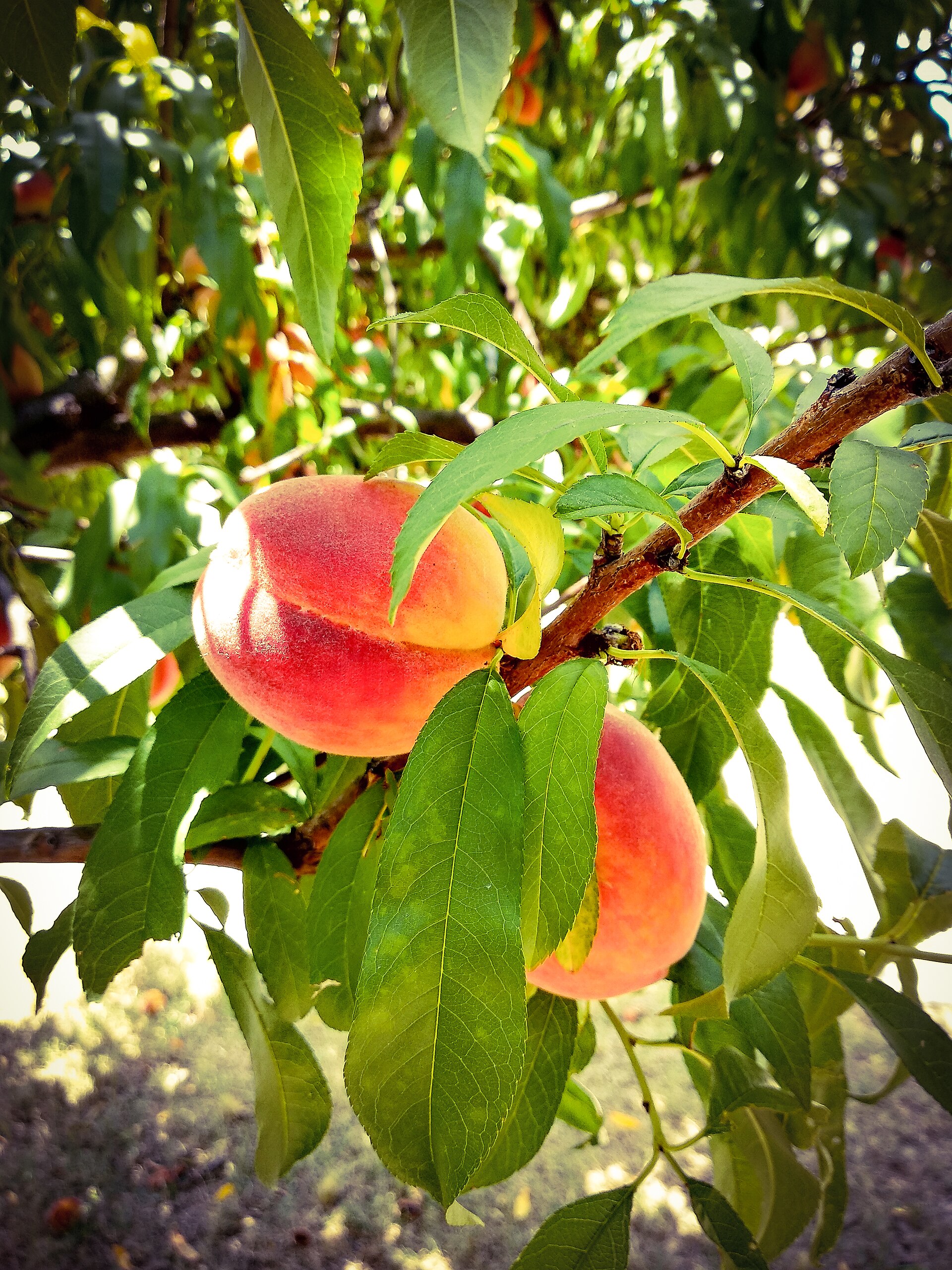
Peaches are Florida’s sweetest plot twist. Stone fruit sounds like something that belongs to Georgia roadside stands and cooler climates, but a peach tree in a Florida yard can hand you warm, fragrant fruit in late spring — the kind that drips down your wrist. If your garden has room for one fruit tree, this is a strong candidate.
First, the botany: a peach is a drupe, a stone fruit, which means the flesh you eat wraps around a single hard pit. That pit is the seed’s armor. And the fuzz? That soft coat helps protect the fruit from pests and sun — just give it a good wash before biting in.

Why peaches deserve the garden
Three reasons. One: they are the stone fruit that actually grows here. Most peaches need a long cold winter to fruit, but low-chill varieties were bred for Florida’s mild winters, so you do not have to move north to grow one. Two: the harvest lands in a hungry gap — late spring to early summer, when the spring vegetables are winding down and the summer crops are still getting going. Three: nothing beats a tree-ripened peach. The flavor peaks on the branch, and no shipping crate can fake that.
The science that matters: ripening runs on ethylene, a gas the fruit itself makes. That is why a hard peach softens on the counter, and why a paper bag speeds it up — the bag traps the ethylene around the fruit. It is also why one ripe peach can hurry its neighbors along.
Growing tie-in (the short version)
Pick a low-chill variety bred for Florida — Florida Prince is one well-known example — and plant it in full sun with room to spread. Chill hours are simply the hours of cool weather a tree needs each winter to set fruit, and low-chill types need far fewer of them, which is the whole trick. Harvest in late spring to early summer, when the fruit gives slightly to a gentle squeeze and smells like a peach should. That is the whole growing story; the rest of this guide is what to do with the basket that results.
Four ways to cook them
1. Fresh in salads (the no-cook win)
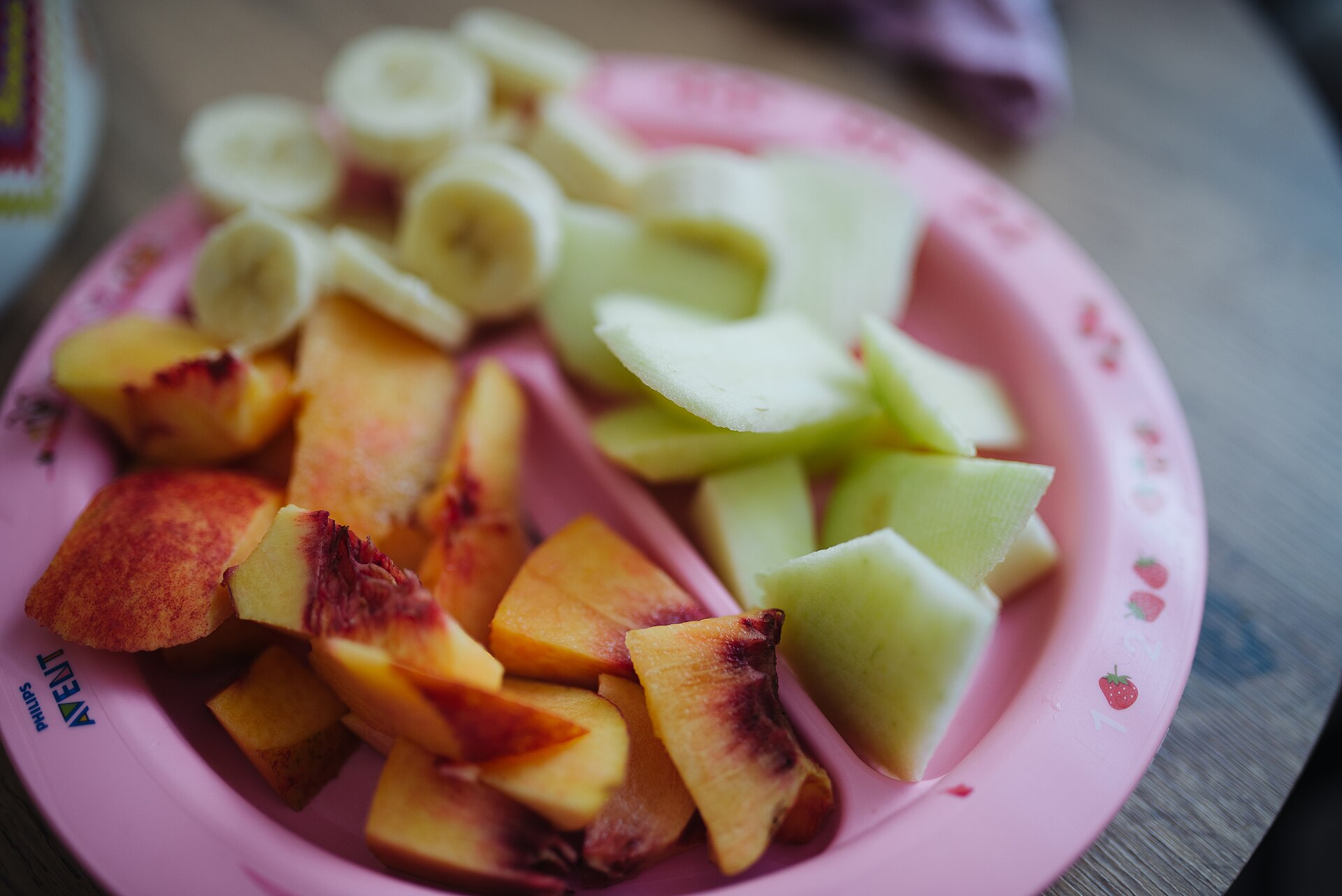
Slice ripe peaches over greens with toasted nuts and a sharp vinaigrette, and let the sweet-tart fruit do the heavy lifting. The contrast is the point: soft peach against crunchy nuts, sweetness against vinegar bite. Use freestone peaches if you can — the flesh pulls cleanly away from the pit, which makes slicing a pleasure instead of a wrestling match. Clingstone types hold onto the pit stubbornly, and they are fine for eating out of hand, but freestone is easier to work with in the kitchen.
2. Grilled (the caramelization trick)
Halve and pit firm-ripe peaches, brush the cut sides lightly with oil, and grill cut-side down over medium heat for a few minutes until grill marks appear and the edges caramelize. Heat does to a peach what it does to any sugar-rich fruit: it concentrates the sweetness and adds a smoky, toasty edge. Serve warm, as-is or over greens.
3. Cobbler (the biscuit science)
The classic: sliced peaches sweetened lightly and baked under a biscuit topping until the filling bubbles up around the edges. The topping is the science — a simple biscuit dough bakes into a tender, golden lid while the fruit underneath turns jammy, and the juices that bubble over the edges thicken as they cool. Keep the sugar modest; a tree-ripened peach is already sweet.
4. Jam and sauce (the preserving play)
When the basket outruns your appetite, cook peaches down into jam or a simple sauce. Jam is just fruit, sugar, and heat until it sets — the cooking concentrates flavor and the sugar helps it keep. A cooked peach sauce is the same idea with less fuss. Do not eat the pits. That is the one firm rule, no exceptions, and it applies to every method on this page.
Storing the basket
Counter to ripen, fridge when ripe — that is the whole rule. A hard peach on the counter will soften in a few days, faster in a paper bag. Once it is ripe and fragrant, move it to the fridge to hold it for a few more days. For longer storage, freeze sliced peaches flat in bags for smoothies and baking, or turn the surplus into jam. Our Freezing the Harvest guide covers the freezing method, and the Florida Preserving Calendar tells you when the harvest lands.
That is the peach deal: a stone fruit that actually fruits in Florida, a harvest timed for the hungry gap, and a basket that turns into salads, grill marks, cobbler, and jam without a single complaint. Plant a low-chill tree. You will wonder why you ever settled for the grocery-store kind.
🌱 Keep learning
Three related guides worth reading next:
- Water-Bath Canning Without Fear — The safety-first guide to preserving your harvest: botulism science, the pH 4.6 rule, and water-bath canning step by step.
- Fermented Hot Sauce — Let the microbes do the cooking: lacto-fermented hot sauce from garden peppers, with the safety science built in.
- Drying Herbs the Right Way — Which herbs dry beautifully, which ones should be frozen instead, and the methods that actually preserve flavor.
🪱 Your Soil Needs This
Reading about healthy soil is great. Growing in it is better. Our small-batch, traceable worm castings are the shortcut your garden deserves.
Shop Worm Castings Subscribe & SaveEvery bag comes with a lot certificate. Know what's in your soil.