
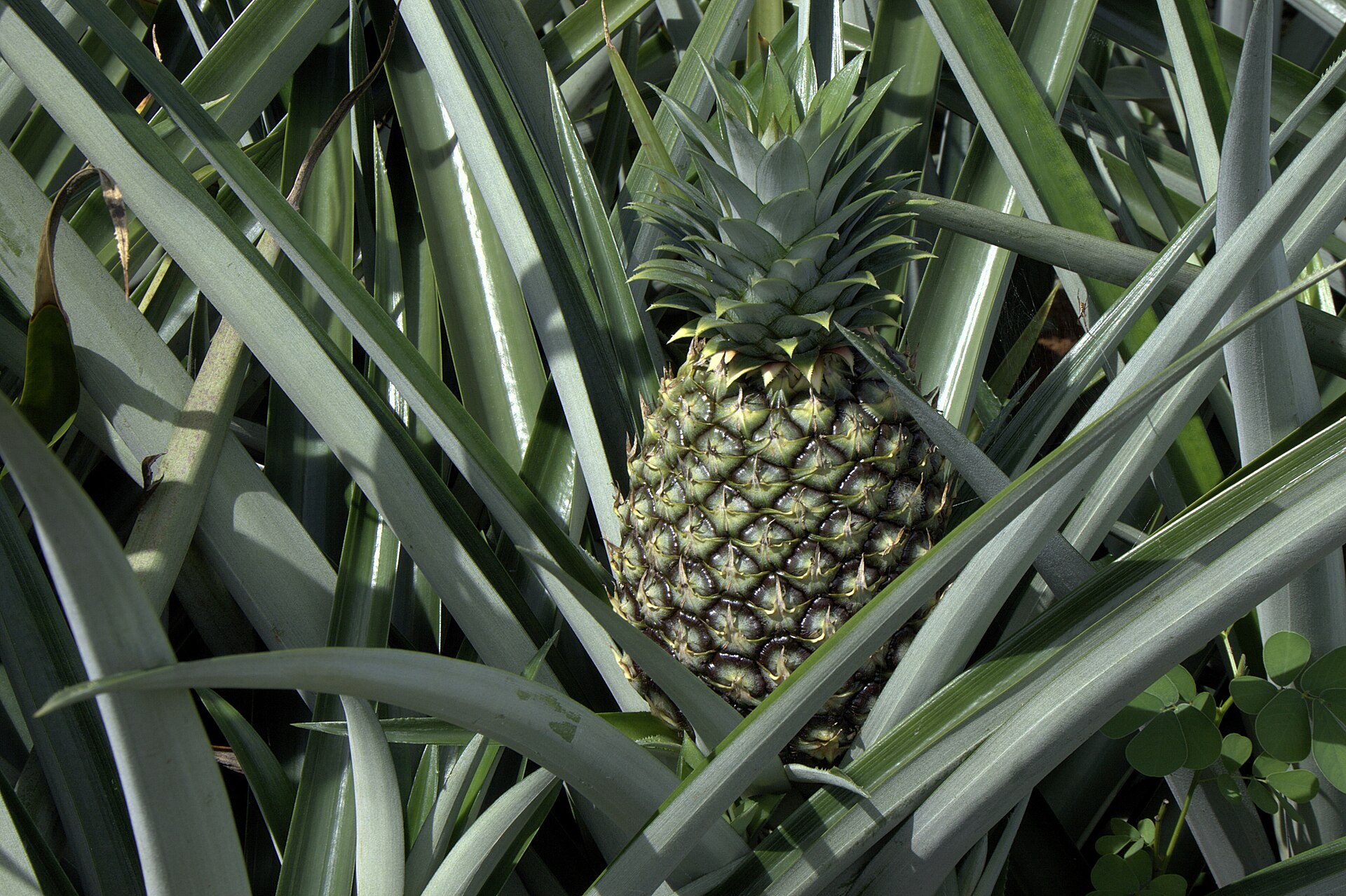
Pineapple is the fruit you can grow from a grocery top, which makes it the best magic trick in the Florida yard. Twist the top off a store pineapple, stick it in dirt, wait — and a year or more later, a pineapple grows. It is slow magic, but it is magic.
First, the identity check: a pineapple is not one fruit. It is a multiple fruit — many small flowers fused together into one spiky whole, each little section on the skin marking where a flower used to be. What matters in the kitchen is bromelain, a real enzyme in fresh pineapple that breaks down protein. That is why fresh pineapple tenderizes meat, why your mouth tingles when you eat a lot of it, and why you should never marinate meat in fresh pineapple for long — the enzyme does not stop at tender and goes straight to mush. Cooking tames it, which is why canned pineapple behaves differently.
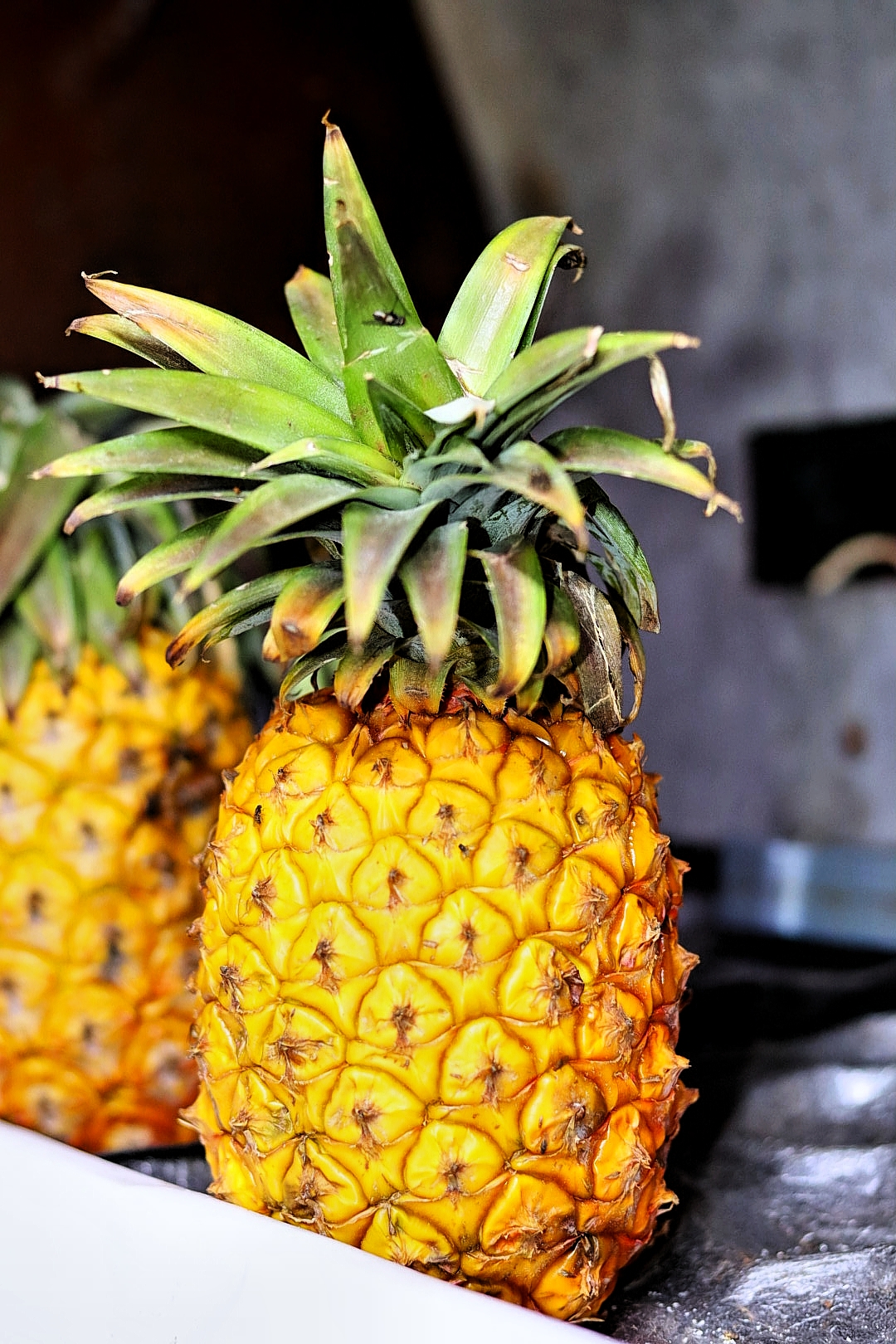
Why pineapple deserves the garden
Three reasons. One: the story. No other yard fruit starts as grocery waste — every pineapple you grow is a rescue. Two: the flavor. Homegrown pineapple, picked ripe, is sweeter and more fragrant than most store fruit, because it stayed on the plant until it was ready. Three: the range. Pineapple grills, blends, salsas, and stir-fries, and its sweet-tart punch lifts savory dishes the way a squeeze of lime does, only louder.
The science that matters: pineapples barely ripen after picking. Unlike bananas and mangoes, a pineapple does not get sweeter off the plant — it just gets older. So buy or pick ripe, judged by smell at the base and a slight give, not by color or by pulling a leaf. A pineapple that smells like nothing will taste like nothing, no matter how long it sits on your counter.
Growing tie-in (the short version)
Pineapples grow in South Florida and in pots almost anywhere warm enough to bring them inside for cold snaps. Plant from tops, give them sun and drainage, and be patient — a year or more to fruit is normal, not a failure. Harvest when it smells ripe at the base and gives slightly. That is the whole growing story; the rest of this guide is what to do with the pile that results.
Four ways to cook them
1. Grilled (the caramelized classic)
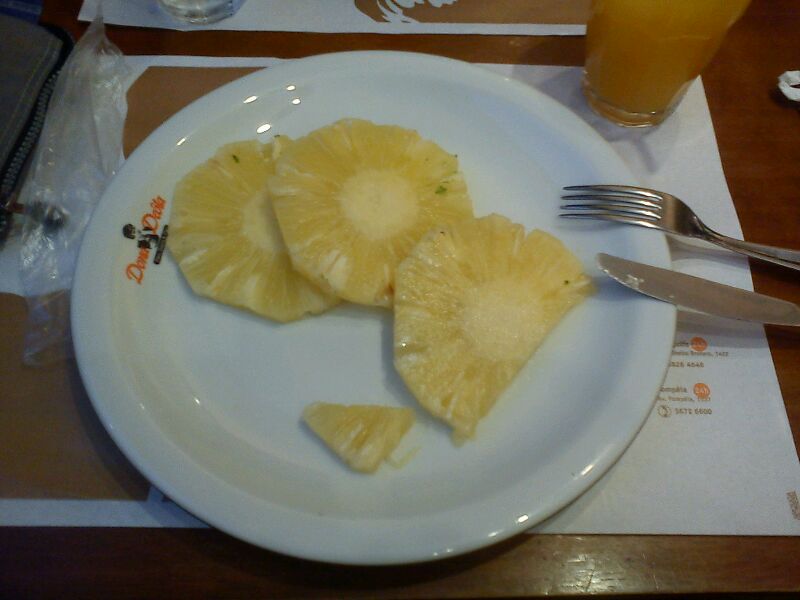
Cut into thick rings or spears and grill over high heat until charred at the edges. Heat caramelizes the sugars and concentrates the flavor, and cooking tames the bromelain, so grilled pineapple is sweet without the mouth tingle. Serve with grilled meat, over rice, or with ice cream and a pinch of chili.
2. Salsa (the sweet-heat balance)
Dice fresh pineapple small and mix with red onion, jalapeño, cilantro, lime juice, and salt. The trick is the same as mango salsa and just as good: pineapple brings sweet and tart at once, lime sharpens it, jalapeño brings heat, salt wakes everything up. Serve with chips, tacos, or grilled fish.
3. Smoothies and juice (the easy glut-buster)
Blend fresh or frozen pineapple chunks with banana, coconut milk, or greens. Frozen pineapple blends thick like frozen mango, so you get a spoonable smoothie instead of a thin drink — and the tartness means you need less sweetener than you think. Juice it if you must, but blending keeps the fiber, which is the better deal.
4. Pineapple fried rice (the savory turn)
Stir-fry cold cooked rice with diced pineapple, egg, vegetables, soy sauce, and a little garlic and ginger. The pineapple caramelizes in the hot pan and sweetens the whole dish, which is why this works and why plain rice does not. Day-old rice is mandatory — fresh rice steams into mush, and no amount of pineapple saves it.
Storing the pineapple
Buy or pick ripe — the counter will not improve it. Cut pineapple keeps 3–5 days in the fridge in a covered container, and frozen chunks keep for smoothies all year; our Freezing the Harvest guide covers the method, and the Florida Preserving Calendar tells you when the harvest lands. Two safety notes: fresh pineapple tingles the mouth thanks to bromelain, so if it bothers you, cook it first. And the skin is spiky and the core is tough, so cut on a stable base with a sharp knife, away from yourself. The flesh is the prize; the rest is compost.
That is the pineapple deal: a fruit that starts as a grocery top, takes its time, and turns into dinner four different ways without a single complaint. Plant a top. You will wonder why you ever let a year beat you.
🌱 Keep learning
Three related guides worth reading next:
- Water-Bath Canning Without Fear — The safety-first guide to preserving your harvest: botulism science, the pH 4.6 rule, and water-bath canning step by step.
- Fermented Hot Sauce — Let the microbes do the cooking: lacto-fermented hot sauce from garden peppers, with the safety science built in.
- Drying Herbs the Right Way — Which herbs dry beautifully, which ones should be frozen instead, and the methods that actually preserve flavor.
🪱 Your Soil Needs This
Reading about healthy soil is great. Growing in it is better. Our small-batch, traceable worm castings are the shortcut your garden deserves.
Shop Worm Castings Subscribe & SaveEvery bag comes with a lot certificate. Know what's in your soil.