
🌿 Potato Leafhopper
How to identify
Adults are pale green, about 3.5 mm, with a row of white spots on the front margin of the pronotum. Eggs are inserted into leaf veins and petioles and hatch in 7–20 days; nymphal development takes 8–25 days. They overwinter as adults in reproductive diapause in Gulf Coast states from Louisiana to Florida, then disperse north annually, with several overlapping generations after the spring invasion. No leafhopper guide exists on this site, so there is no general-guide confusion here.
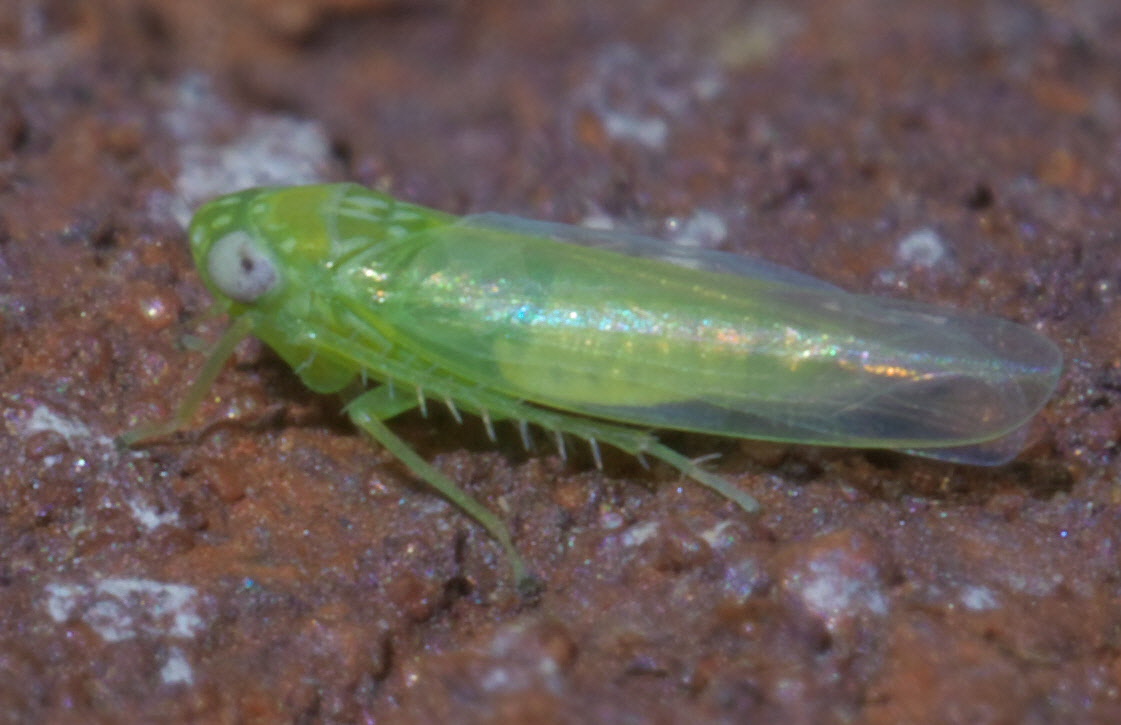

Damage signs
Adults and nymphs suck sap on leaf undersides and secrete a toxin as they feed. Leaves curl, yellow and stunt — “hopperburn,” as if singed by fire — plants may be stunted and yields reduced.
Plants it attacks
Over 200 wild and cultivated plants; legumes preferred — potato, snap bean, peanut, alfalfa — plus vegetables, ornamentals, and fruit and shade trees.
Non-chemical controls
- Scout leaf undersides regularly, where adults and nymphs feed.
- Remove heavily infested leaves in gardens.
- Keep plants vigorous so they tolerate feeding better.
- Conserve generalist predators by avoiding broad-spectrum sprays.
- Be honest about the limits: UF’s cited control in the passages consulted is foliar insecticide at threshold, and no named natural enemy with a control claim was found — so this short list is the whole non-chemical story, not padded with home remedies. The often-quoted “25% of plants showing hopperburn symptoms and leafhoppers present” figure is a peanut-field sweep-net reference, not a garden rule.
Still not sure this is your culprit? What’s Eating My Plant? narrows the suspects from what you actually see on the plant.