
⬛ Sooty Mold
Sooty mold looks alarming, but here is the twist: it is not a primary plant pathogen at all. It does not infect the plant. It is a complex of fungi, commonly Capnodium spp., that grows on sugary honeydew — the sticky waste excreted by sap-sucking insects. Treat the mold and you have treated the symptom; treat the insects and the mold runs out of food.
Signs and symptoms
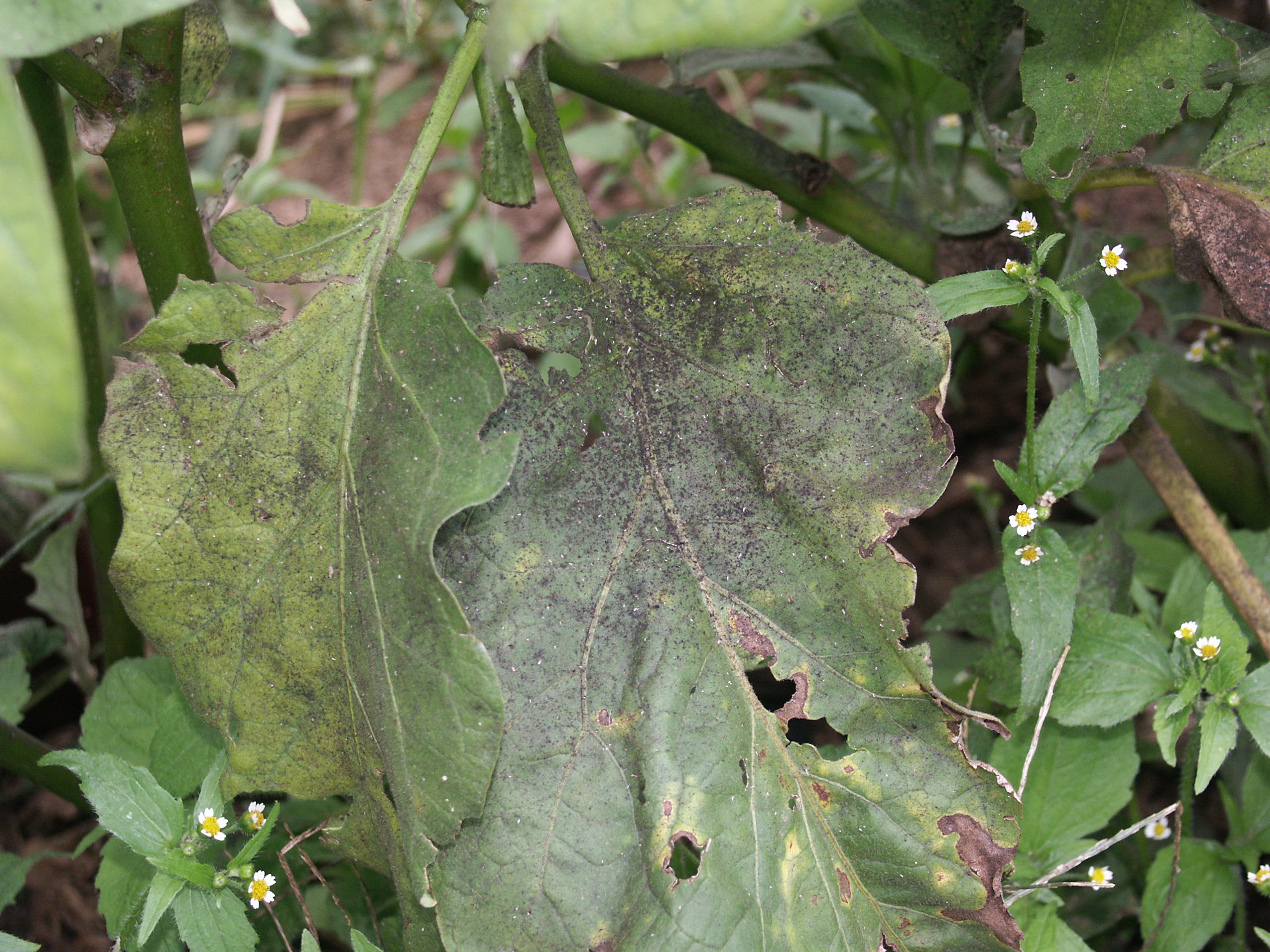
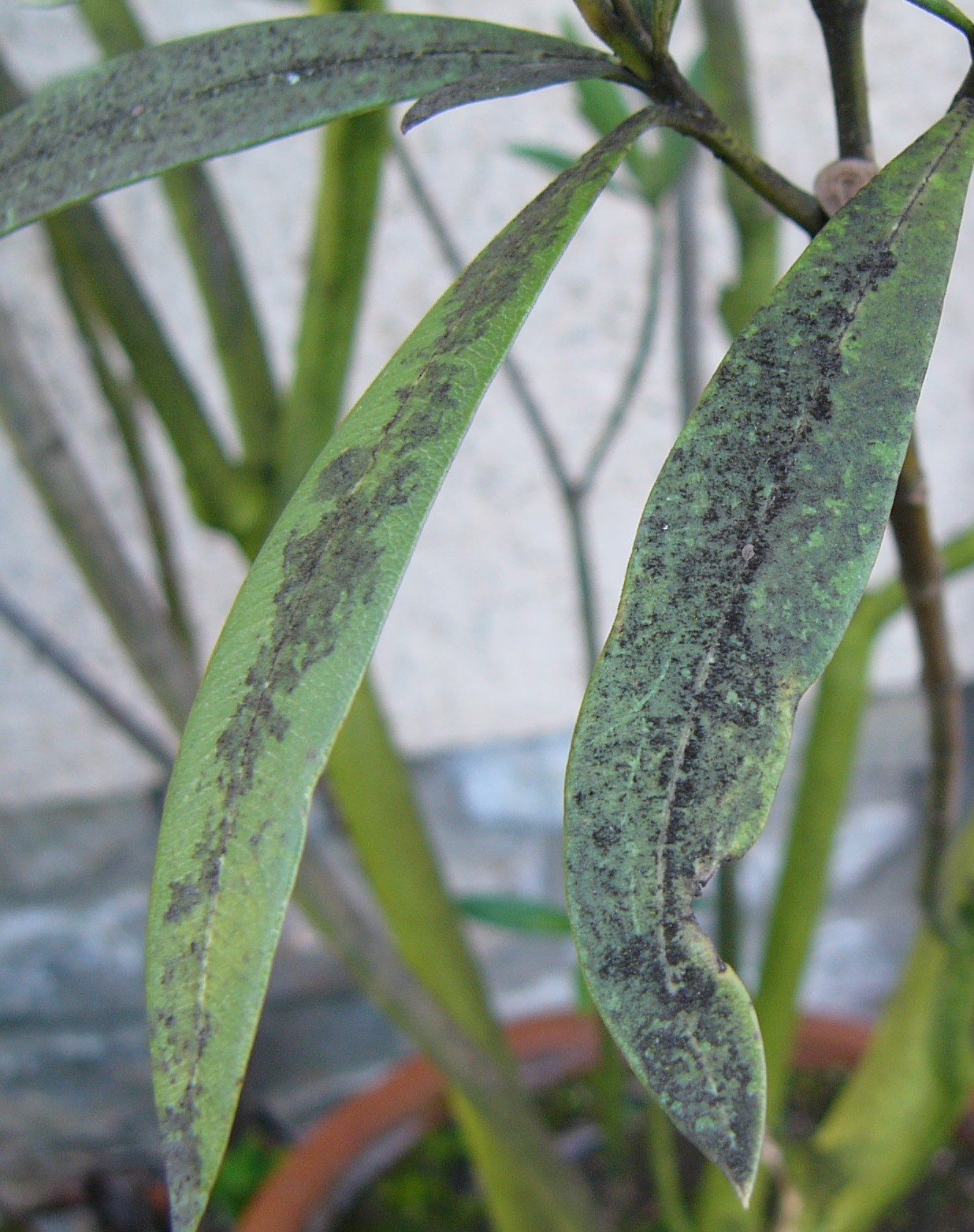
A black, sooty, velvety coating spreads over upper leaf surfaces, stems, and sometimes fruit. By itself it is usually harmless, but a heavy coat blocks light and can stunt growth. Here is your diagnostic clue: the coating can be washed off. True leaf-spot diseases live in the leaf tissue and do not wash off — if it rinses away, you are looking at sooty mold, not a leaf spot.
Plants it attacks
Any plant hosting honeydew-producing insects — citrus, camellia, holly, crepe myrtle, tuliptree, and many more. The insects behind it are aphids, whiteflies, scale, and mealybugs: find the soot, then look underneath the leaves for the sap-suckers that made it.
What to do
- Find and treat the insects, not the mold: blast colonies off with a strong water jet, or use insecticidal soap or horticultural oil per the label.
- Wash the coating off with a forceful stream of water if you want the plant looking clean again — it is cosmetic cleanup, and it works.
- Once the honeydew stops, the mold fades on its own. No heroic mold treatment required.
- Do not waste fungicide on sooty mold alone. Fungicide aimed at sooty mold is wasted effort — the fungus is just eating insect sugar on the leaf surface, and it will be back as long as the insects are still dripping honeydew.
Prevention
Scout regularly for aphids, whiteflies, and scale so colonies get caught small, and conserve the beneficial insects that eat them. Avoid excess nitrogen, which pushes out the soft, sappy growth sap-suckers love best. Fewer sap-suckers, less honeydew, no soot — it really is that simple a chain.