
🫐 Autumn Brilliance Serviceberry
What it looks like
Why this variety
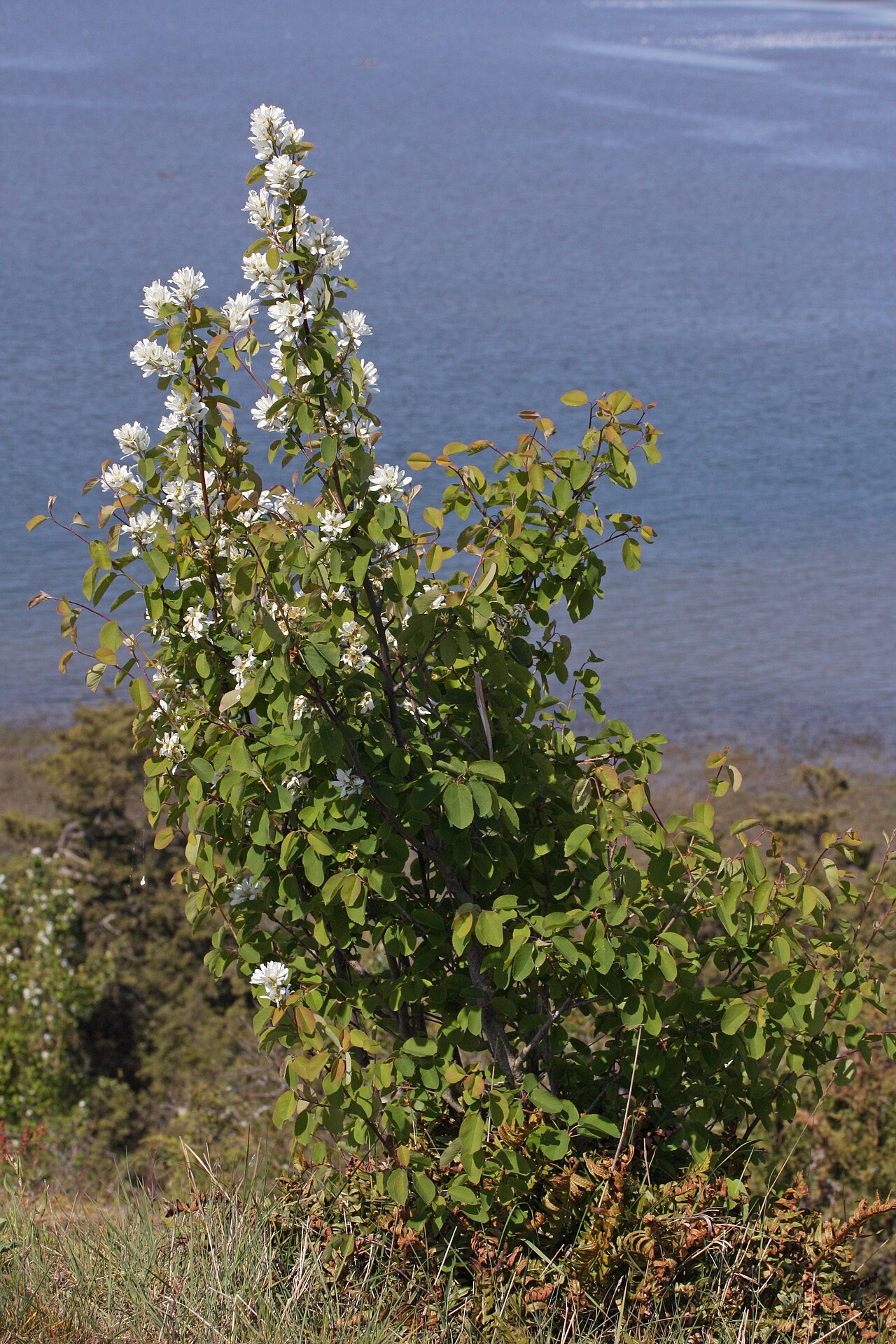
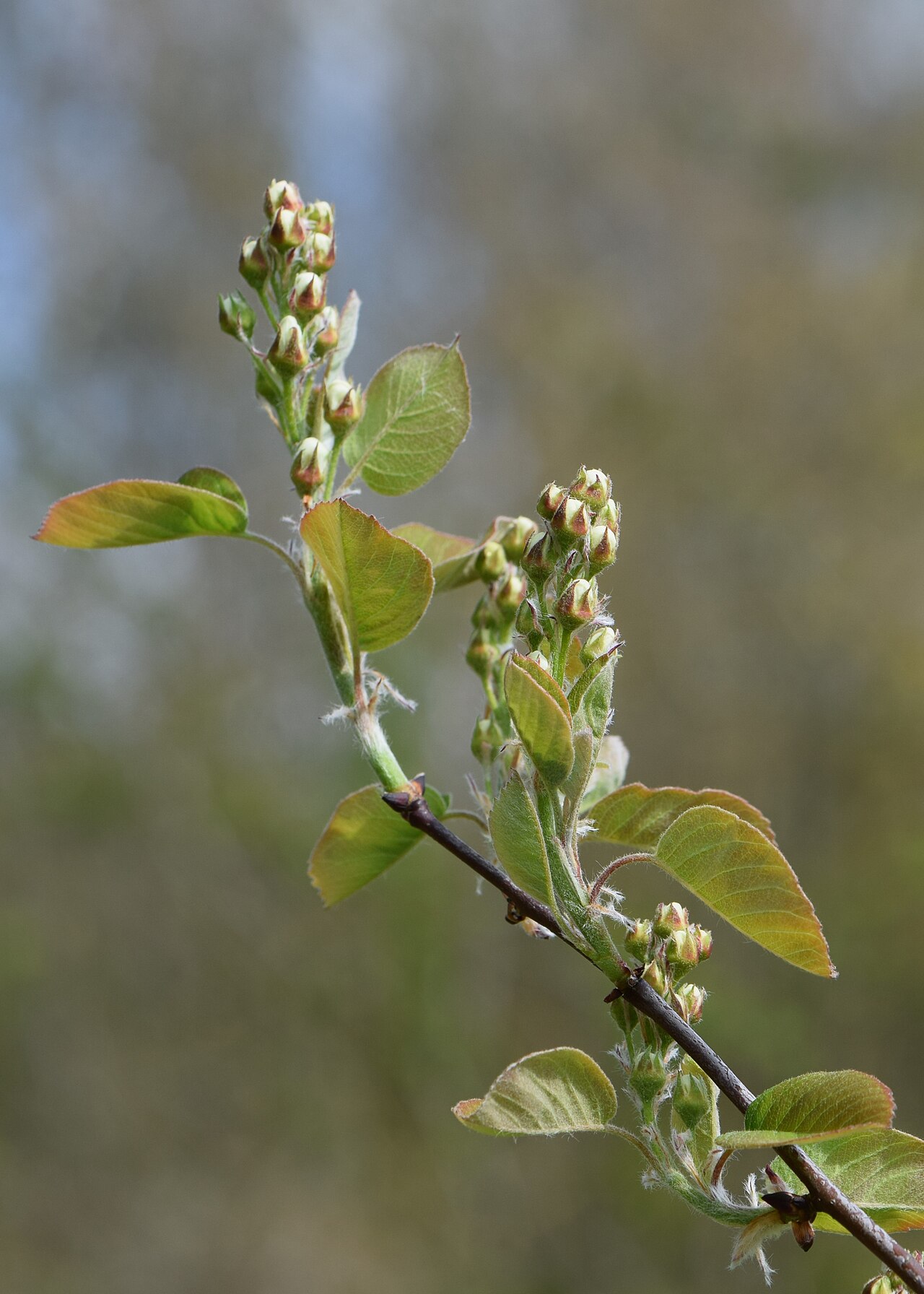
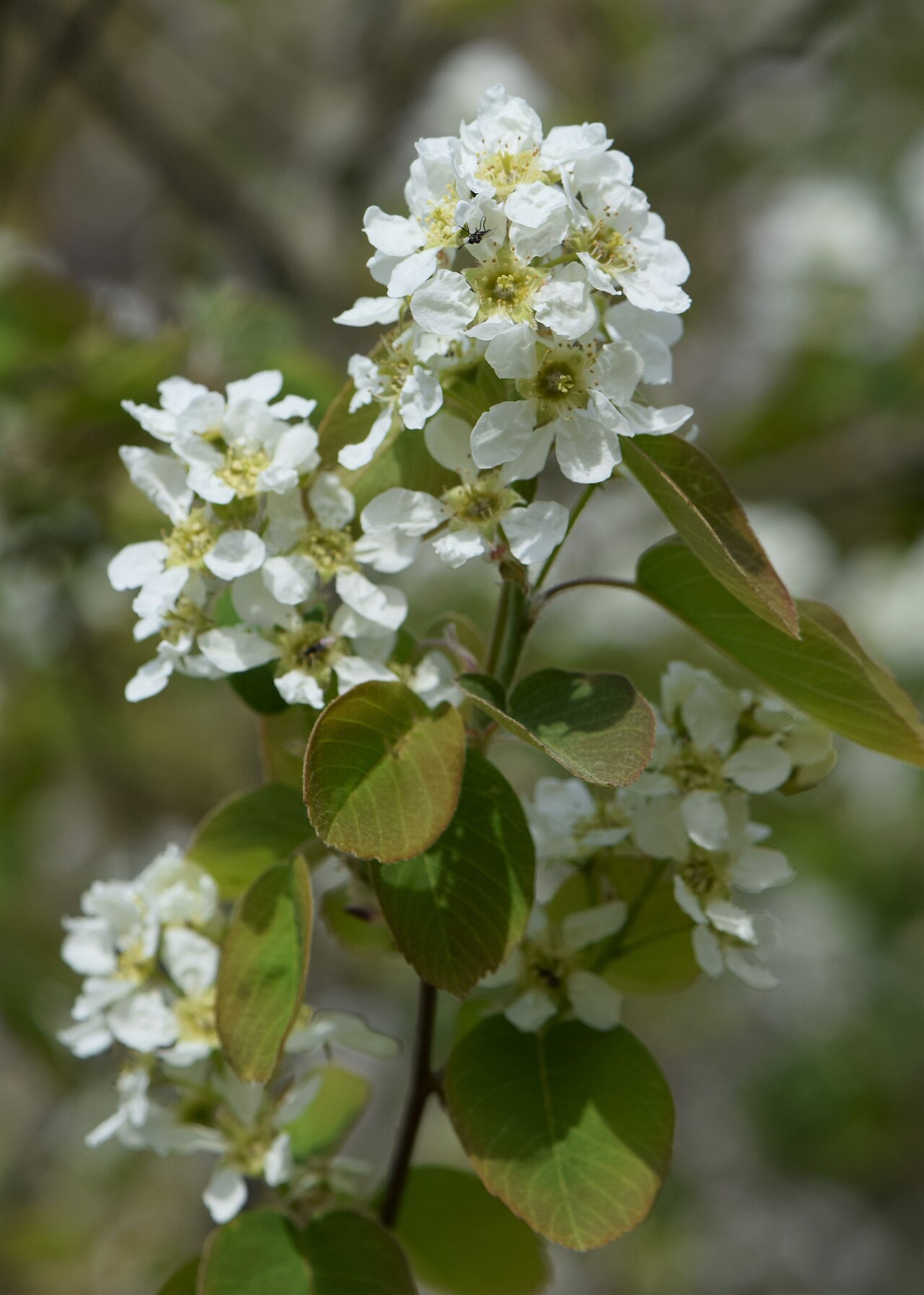
Autumn Brilliance is the serviceberry most nurseries reach for first, and the reasons stack up across all four seasons. It is a hybrid of two eastern North American natives — downy serviceberry (Amelanchier arborea) and Allegheny serviceberry (A. laevis) — discovered as a superior seedling by nurseryman Willet Wandell in Illinois and introduced in 1986. It grows 15–25 feet tall as a multi-stemmed small tree, flowers white in spring, fruits sweet purple-black berries in early summer, and turns brilliant orange-red in fall, with smooth silver-grey bark for winter interest. It is self-fertile, disease-resistant for a serviceberry, and rated for zones 4–9.
The fruit is the quiet star: small, blueberry-like berries — serviceberries are also called Juneberries and shadbush — sweet when fully ripe, excellent fresh, in pies, and as jam, and beloved by birds, which means you will share whether you plan to or not. The fall color is the loud star: Autumn Brilliance was selected specifically for uniformly brilliant red fall foliage, and it delivers color that outperforms most other serviceberry cultivars, which is why it is planted as an ornamental even by people who never taste a berry.
How to grow
Here is the honest Florida part first: serviceberry is a zones 3–9 shrub or small tree, but the zone number flatters its Florida chances: named selections like the ones below need roughly 800–1,000 chill hours, so only north Florida is a plausible trial, and even there a mild winter can mean a light crop. Plant it in the coolest, moistest part of a north-Florida garden, give it afternoon shade, and do not promise yourself a Juneberry harvest further south.
Plant in fall or spring in full sun to part shade, in moist, well-drained soil enriched with compost. Space 10–15 feet apart, water deeply through establishment, and mulch widely. Prune lightly to maintain a multi-stemmed form or train to a single trunk as a small tree; serviceberry needs little pruning beyond removing dead or crossing wood and suckers at the base. In a north-Florida trial, plant in the coolest, moistest part of the garden with afternoon shade, and give it the best soil you have — this is a northern tree asking a favor, and good soil is how you repay it.
Water & feeding
Water about an inch a week, more while establishing and fruiting, and feed with castings or compost in spring; serviceberry is not a heavy feeder, but it does not like drought, and a dry spring means small, sparse berries. Mulch thickly to keep roots cool — in north Florida, cool roots are the whole game for a tree that expects a colder climate.
Common problems
- Birds will take a large share of the fruit; net a young tree if you want a serious harvest, or plant for wildlife and take what is left.
- Rust, leaf spot, and fire blight can appear — Autumn Brilliance is more disease-resistant than many serviceberries, not immune — so prune out affected wood and give the tree airflow.
- The Florida failure mode is climatic: insufficient chill (roughly 800–1,000 hours) means sparse flowering and fruiting, and heat stress shows as scorched leaves and early leaf drop.
- A tree that grows well but fruits poorly in north Florida is telling you about chill, not about your care.
Harvest
Harvest when berries are fully purple-black and soft, usually early summer, picking by hand into a shallow container — serviceberry fruit ripens over a couple of weeks, so pick every few days. Eat fresh, bake into pies, or make jam; the flavor is sweet and almond-like when fully ripe, and underripe berries are tart and astringent, so wait for full color and softness. Birds will help themselves to the upper branches, so pick the lower fruit first and consider the top of the tree a wildlife donation.
Browse all plant & pest guides
Saving seeds
Autumn Brilliance is a hybrid seedling selection, so seed saved from it won’t come true — buy a nursery tree instead. The Saving seeds section of the Serviceberry guide covers seed for the straight species.