
🍁 Bloodgood Japanese Maple
What it looks like
Why this variety
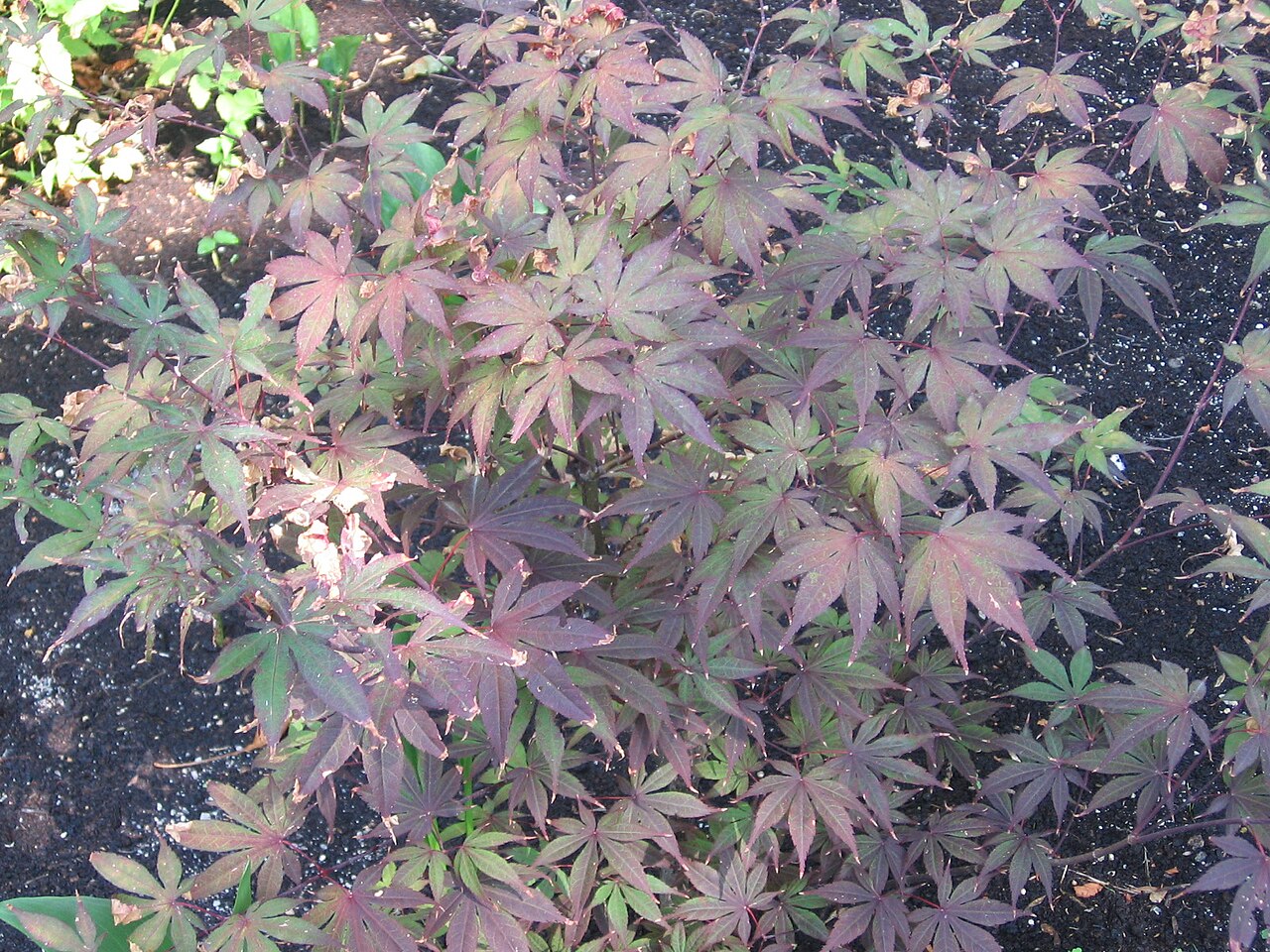
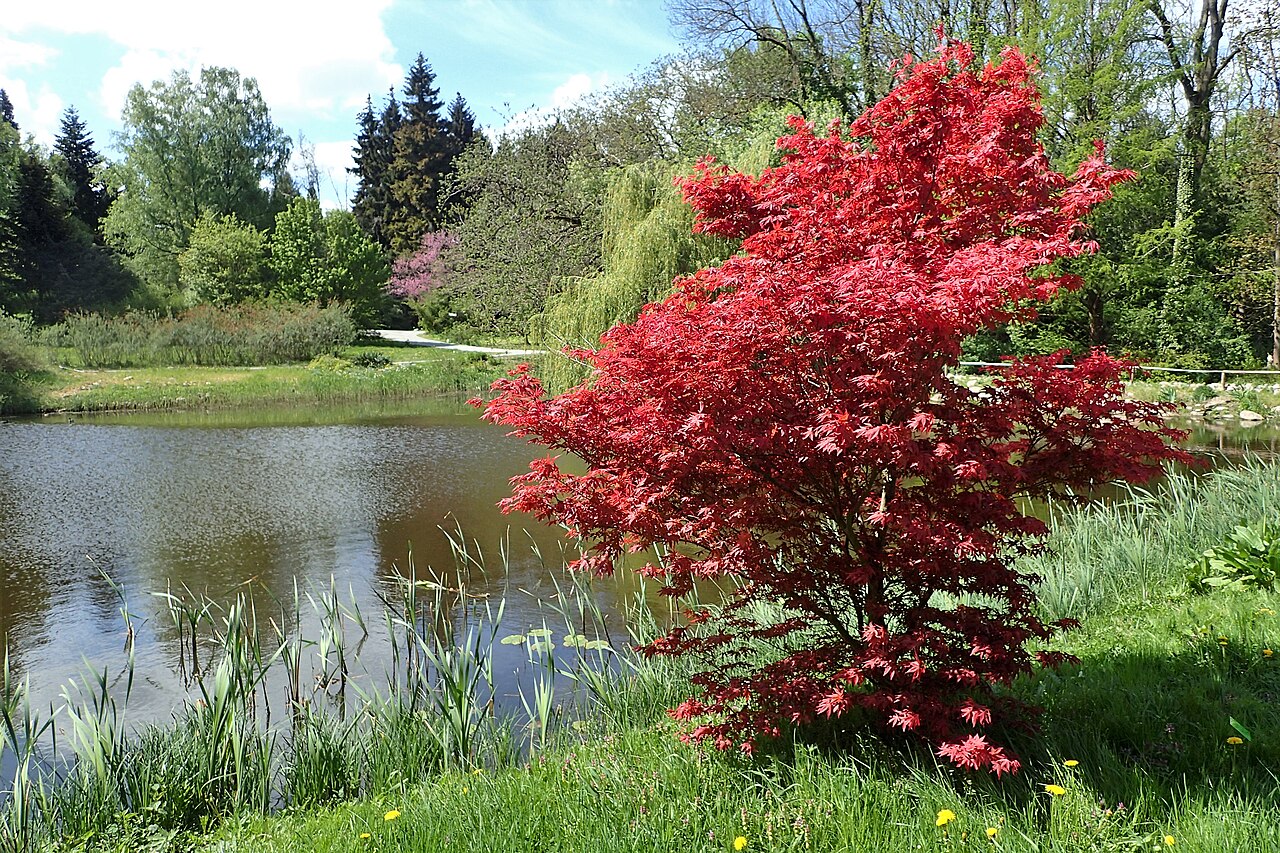
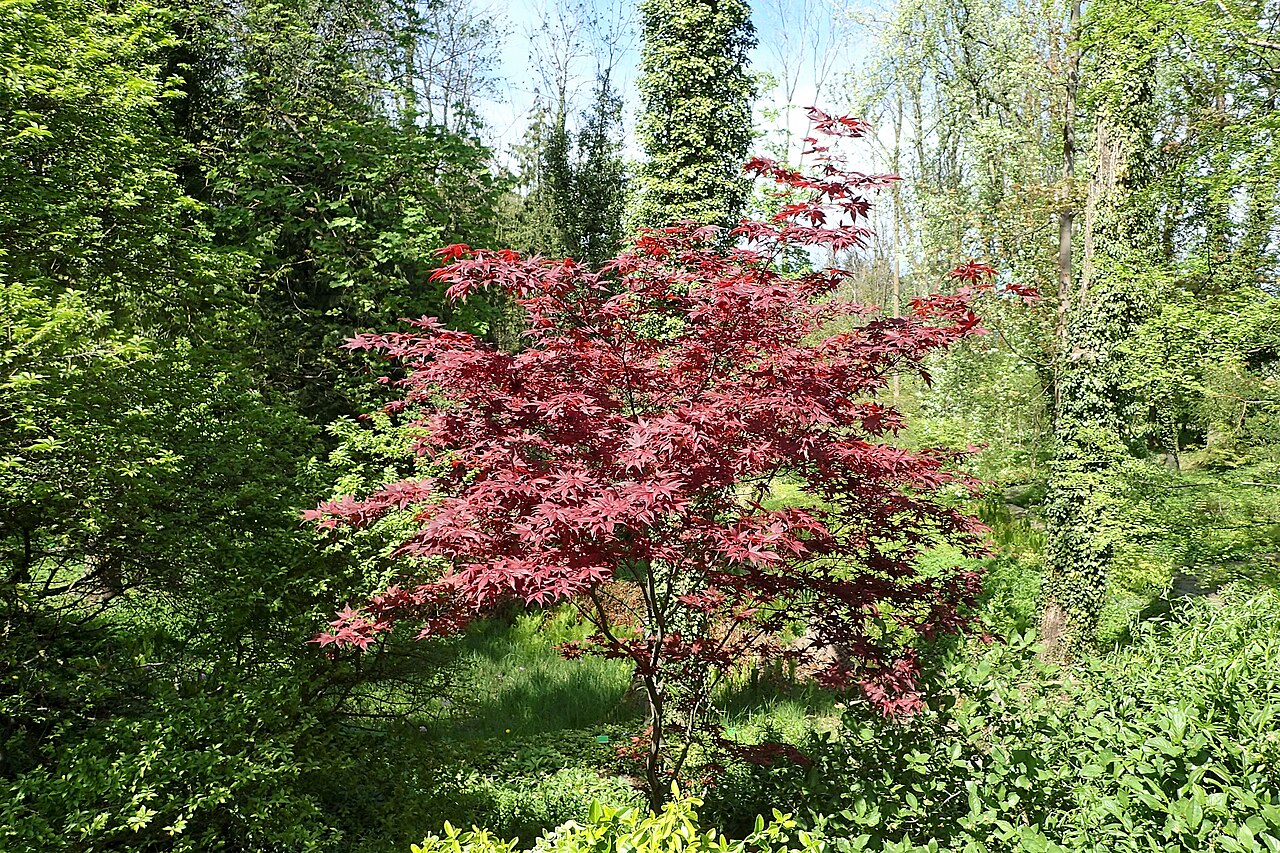
Bloodgood is the Japanese maple most people picture: deeply dissected or palmate leaves in a rich purple-red that holds through summer instead of greening out, turning scarlet in fall, on a small tree 15–25 feet tall and wide with a graceful, layered form. It is the most widely planted purple maple in the trade, and the reason is reliability — the colour holds, the form is handsome, and the tree is tougher than its delicate looks suggest, provided it gets shade and water.
Florida honesty first: Bloodgood is a zone 5–8 tree, and in Florida it is a north-Florida plant only, in morning sun and afternoon shade, sheltered from wind and reflected heat, in rich, well-drained, slightly acidic soil, with the root flare visible. A Bloodgood in full Florida sun with no water will scorch, and a Bloodgood in south Florida is a climate verdict, not a care failure — the trial framing is the honest one, and a good north-Florida year is worth it.
How to grow
Florida honesty first: Japanese maple is a zone 5–8 tree, and Florida is the warm, humid edge of its world. Plant it only in north Florida, in morning sun and afternoon shade, sheltered from wind and reflected heat, in rich, well-drained, slightly acidic soil, with the root flare visible at the surface — planted too deep is the most common way to kill one. Morning sun with afternoon shade gives the best leaf colour and the least scorch; in zone 8, shade is not optional for laceleaf types. Water deeply and consistently, mulch thickly to keep roots cool, and do not expect a south-Florida maple to thrive — that is a climate verdict, not a care failure.
Water & feeding
Water deeply and regularly, especially through the first two years and in dry spells; Japanese maple hates drying out and scorches fast when it does. Mulch 3–4 inches deep, kept off the trunk. Feed lightly in spring; heavy nitrogen gives soft growth that scorches worse.
Common problems
Leaf scorch from sun, wind or drought is the main complaint, and it is a siting problem: more shade, more water, more mulch. Verticillium wilt can strike stressed trees; avoid planting where wilt has killed maples. Scale and aphids are minor by comparison. A maple that scorches every summer in full Florida sun is telling you the site was wrong.
Harvest
The harvest is foliage, all season: purple-red in spring and summer, scarlet in fall, then a handsome bare winter silhouette. Prune lightly in late summer or fall if shaping is needed — maples bleed if pruned in late winter — and never shear it; the layered form is the point.
Nerdy fact: Bloodgood’s purple-red colour comes from anthocyanins, the same pigments that colour autumn leaves and red wine — and in a purple maple, the pigments are present all season, not just in fall, which is why the tree looks like it is permanently dressed for October.
Saving seeds
Bloodgood is a named cultivar, so seed saved from it won’t come true — buy a grafted tree instead. The Saving seeds section of the Japanese Maple guide covers seed for the straight species.