
🥥 Malayan Dwarf Coconut
What it looks like
Why this variety
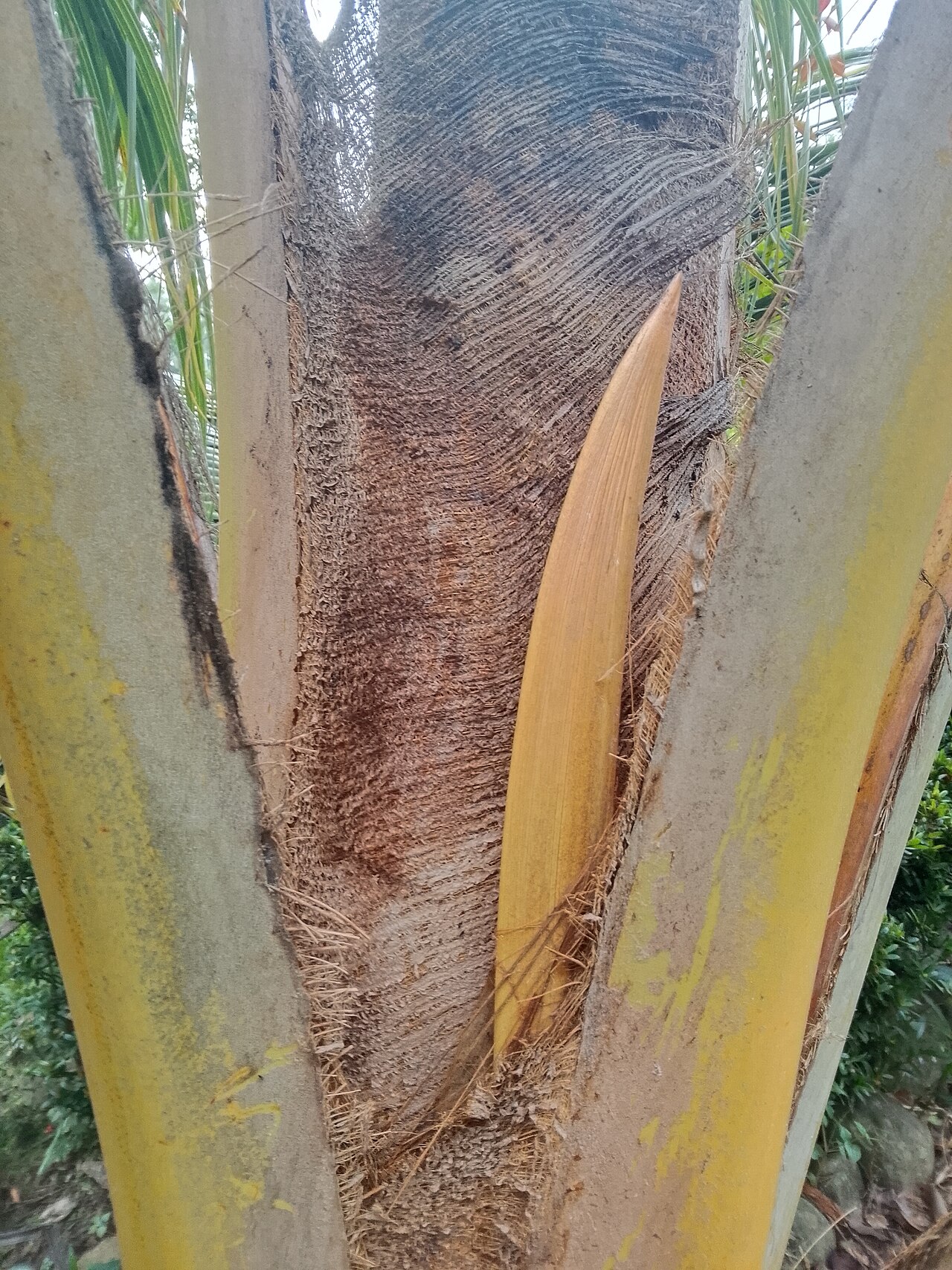
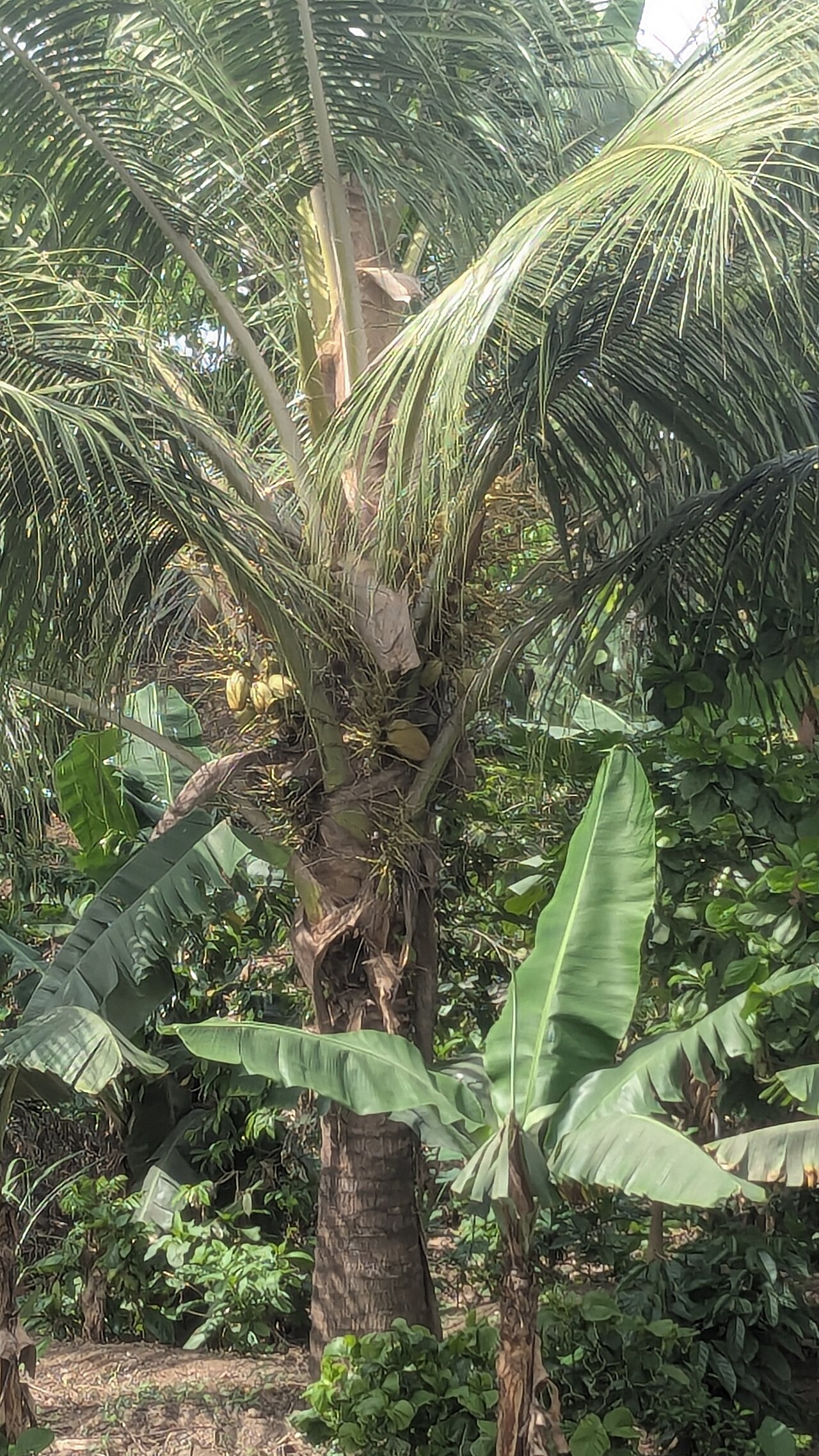
The classic coconut palm is a 60-to-80-foot problem with falling nuts. ‘Malayan Dwarf’ is the answer Florida homeowners actually plant: a semi-dwarf with a narrow, straight, non-swollen trunk that stays short enough to harvest with a ladder for years, in three color forms — green, yellow, and gold — distinguished by petiole and immature fruit color. It is smaller and slower-growing than the old ‘Jamaican Tall’, and that slowness is a feature when the tree is over your patio.
The honest caveat, straight from UF/IFAS trials: ‘Malayan Dwarf’ was widely planted because it was believed highly resistant to lethal yellowing, the fatal disease that wiped out ‘Jamaican Tall’ across South Florida — but long-term trials showed it is only slightly less susceptible than the tall it replaced. Plant it for size and harvestability, not for immunity, and know that no coconut in Florida is a guaranteed survivor of lethal yellowing.
How to grow
Here is the honest Florida part first, and it is a hard line: coconut is a true tropical that freezes north of roughly West Palm Beach on the east coast and Fort Myers on the west. In Florida, ‘Malayan Dwarf’ belongs in the southern coastal counties, in full sun, in sandy soil it tolerates beautifully — including salty, beachside soil that defeats most fruit trees. North of that line, it is a greenhouse curiosity, not a landscape palm.
Plant in full sun with excellent drainage and room for a 25-to-30-foot canopy spread. Coconuts are heavy feeders for palms: regular palm fertilizer with micronutrients (especially magnesium and manganese) prevents the yellowing fronds that plague underfed palms in sandy soil. And plan for falling nuts — do not plant over walkways, patios, or parking spots, because a coconut is a genuine safety hazard.
Water & feeding
Coconuts want steady water when young and tolerate drier conditions once established, but in sandy Florida soil a deep soak during dry spells keeps fronds green and nuts filling. Mulch the root zone (kept off the trunk) and feed with a palm fertilizer on a regular schedule — sandy soil leaches nutrients fast, and a starved palm shows it in yellowed, stunted fronds. Go easy on the lawn fertilizer nearby: excess nitrogen without micronutrients makes weak, yellow growth.
Common problems
- Lethal yellowing — a fatal, phytoplasma disease spread by planthoppers. ‘Malayan Dwarf’ is only slightly less susceptible than ‘Jamaican Tall’; there is no cure, so remove and destroy affected palms promptly.
- Freeze death — coconut has essentially no frost tolerance. One hard freeze north of its range kills it outright; there is no covering a 30-foot palm.
- Micronutrient deficiency — magnesium and manganese deficiencies yellow fronds in sandy soil; use a proper palm fertilizer, not generic lawn feed.
- Falling nuts — a safety hazard, not a joke. Harvest nuts before they drop over any area people walk or park.
Harvest
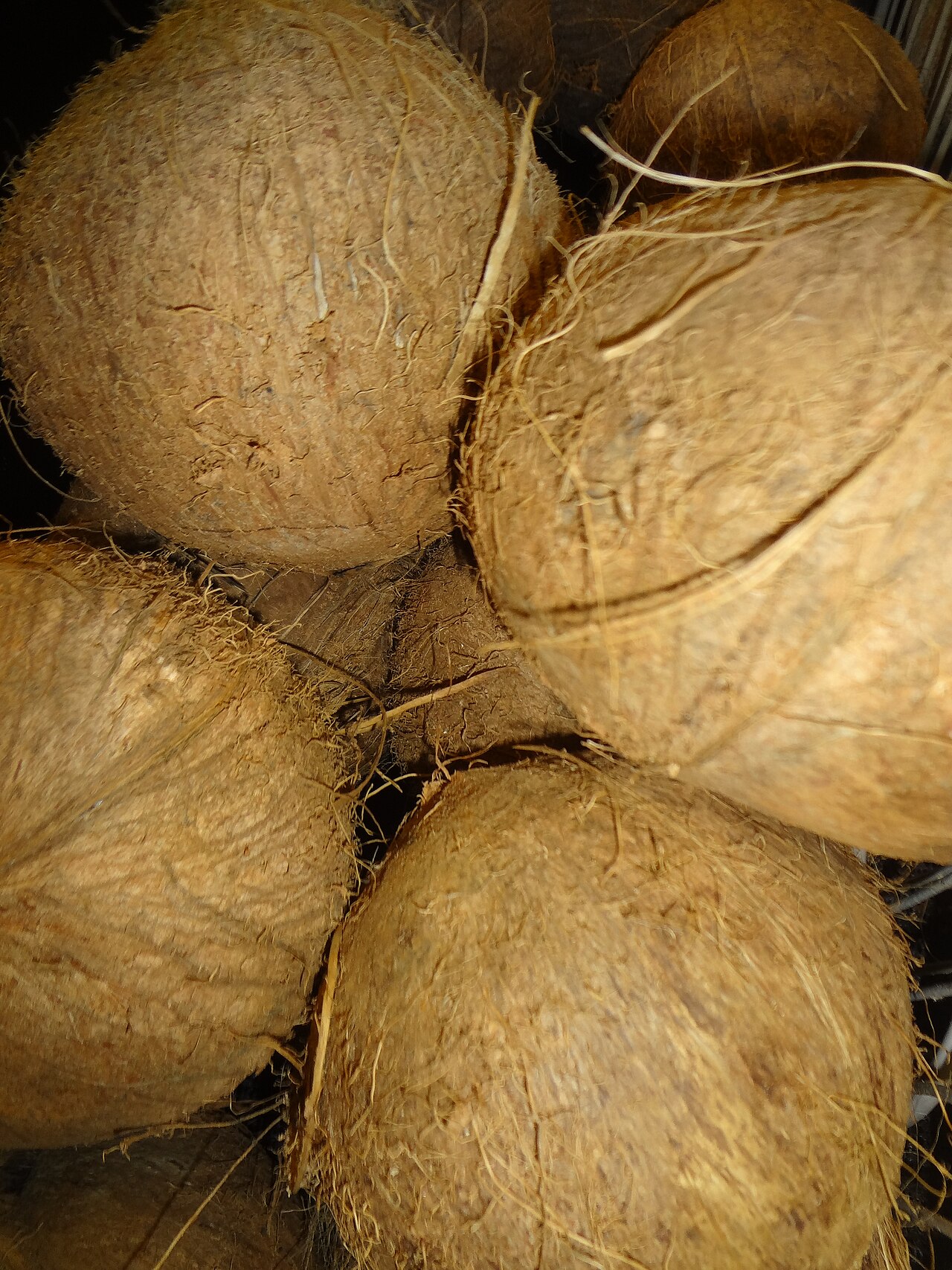
Coconut harvest depends on what you want: young green nuts for drinking water (harvested at 6-7 months, when the water is sweetest), or mature nuts for meat (12 months, brown and fully filled). ‘Malayan Dwarf’ nuts are harvested with a ladder or pole while the palm is still pickable — one of the main reasons to plant a dwarf rather than a tall.
Drink young nuts chilled the day they are cut; mature nuts keep for weeks in the shell. Open mature nuts by scoring around the equator with a machete or heavy knife — and keep fingers clear, because coconut shells do not negotiate.
Browse all plant & pest guides
Saving seeds
Malayan Dwarf is the answer Florida homeowners actually plant: a semi-dwarf with a narrow, straight, non-swollen trunk that stays short enough to harvest with a ladder for years, in three color forms — green, yellow, and gold. Coconuts grow from the nut, and a Malayan Dwarf nut usually grows a dwarf palm, because dwarf coconuts are self-pollinating and genetically uniform — but a tall coconut nearby can cross-pollinate and give you a semi-tall, so for a guaranteed dwarf, buy nursery stock from a verified mother palm. Plant in full sun with excellent drainage and room for a 25-to-30-foot canopy spread, in the southern coastal counties only — coconut freezes north of roughly West Palm Beach on the east coast and Fort Myers on the west. The full method is in the Saving seeds section of the Coconut guide.