
💜 Frederick Passionflower
What it looks like

Why this variety
A necessary clarification first, because this guide sits under the Passionflower heading: the species guide for passionflower covers maypop (Passiflora incarnata), the hardy native vine — and it says plainly that maypop is not the passionfruit vine. ‘Frederick’ is the other vine: Passiflora edulis, the tropical purple passionfruit, grown for fruit rather than flowers alone. Same genus, different plant, different hardiness, different harvest — and this guide is about the fruiting one.
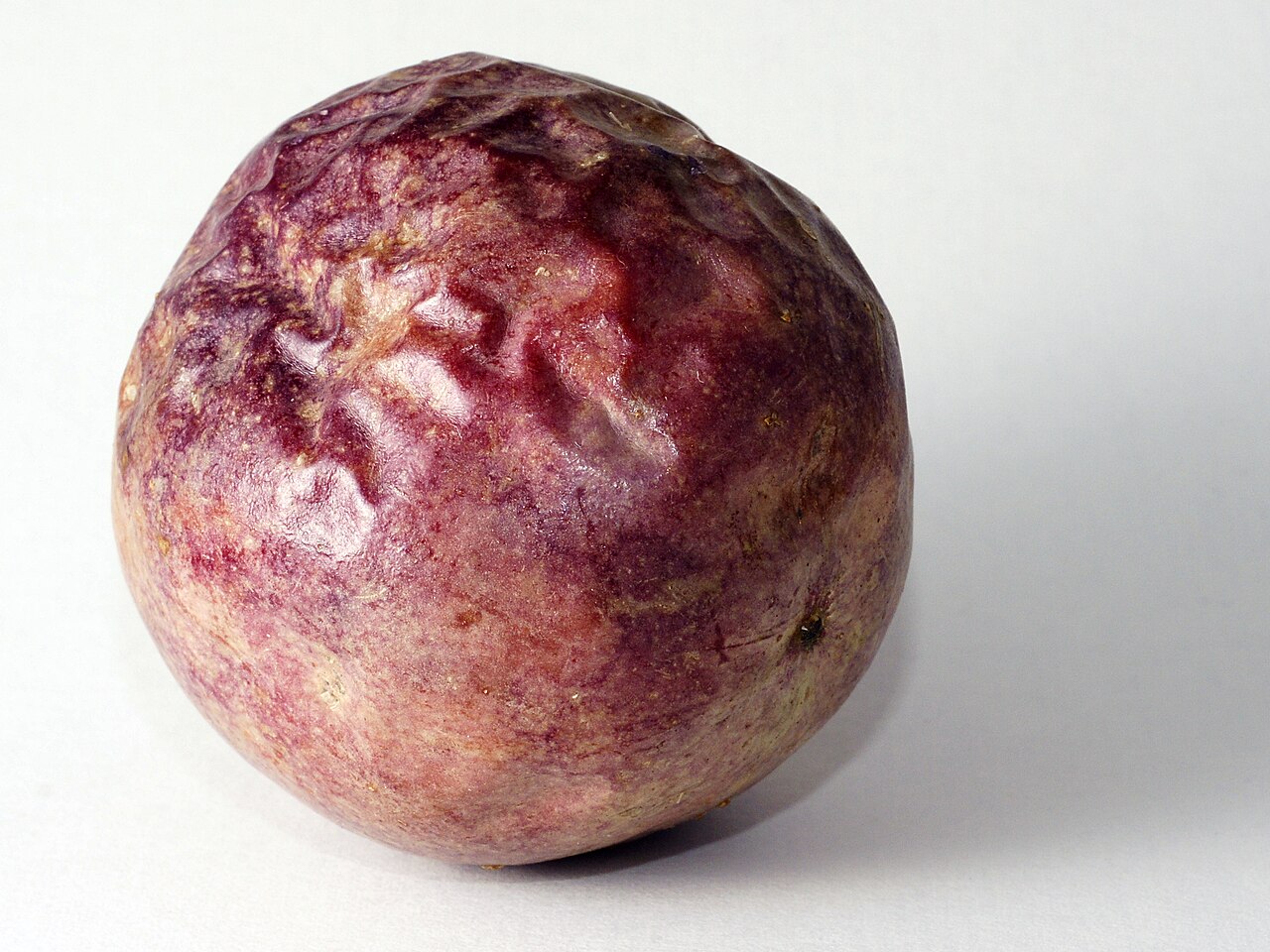
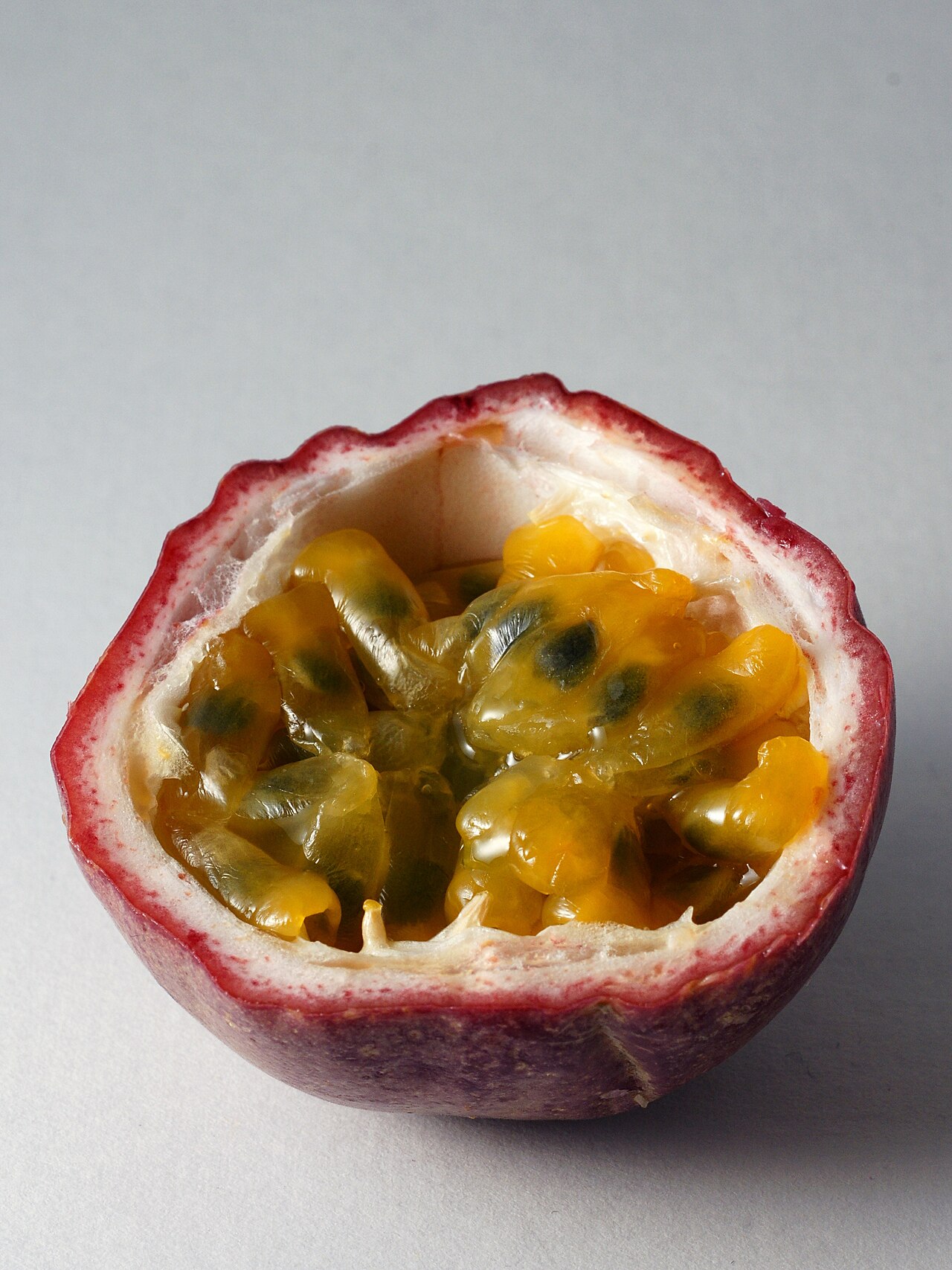
‘Frederick’ is the largest of the easily grown, self-fruitful purple passionfruits: ovoid fruit about twice the size of a standard purple passionfruit, with flowers to match, on a vigorous vine that does not need hand-pollination. The pulp is intensely fragrant, sweet-tart, and famously good fresh or in juice — the flavor people mean by ‘passionfruit’ in the first place.
How to grow
Here is the honest Florida part first: purple passionfruit is far more frost-tender than maypop. ‘Frederick’ is hardy only to brief, light frosts, so in Florida it belongs in the southern and coastal counties and in protected spots further north — or in a container moved under cover. A vine that dies back in a freeze usually regrows from the roots in South Florida, but fruiting wood lost is a season lost.
Plant in full sun against a strong trellis, fence, or arbor — passionfruit vines are vigorous and heavy when fruiting, and a flimsy support will fail at exactly the wrong moment. Give it fertile, well-drained soil, water steadily through flowering and fruiting, and prune after harvest to keep new fruiting wood coming: passionfruit fruits on new growth, so an unpruned vine becomes a tangled, unproductive curtain.
Water & feeding
Passionfruit vines are thirsty in fruit: steady, deep watering through flowering and fruit set, with mulch to hold moisture in sandy soil. Feed with worm castings and a balanced fruit fertilizer through the growing season, and ease off nitrogen late in the season so growth hardens before any cold. Drought during fruiting gives you wrinkled, hollow fruit — the vine’s way of telling you it needed that watering.
Common problems
- Frost damage — ‘Frederick’ is tender compared with maypop. Plant warm, cover on cold nights, and expect dieback in a hard freeze north of its comfort zone.
- Gulf fritillary caterpillars — the orange-and-black caterpillars that eat passionvine leaves. They rarely kill an established vine; plant extra or tolerate them, since they become butterflies.
- Fruit fly and rot on fallen fruit — pick fruit as it drops (ripe passionfruit falls when ready) and do not leave fallen fruit rotting under the vine.
- Root rot from wet feet — well-drained soil only; passionfruit roots rot fast in standing water.
Harvest
Here is the elegant part: ripe passionfruit tells you it is ready by falling off the vine. Collect fallen ‘Frederick’ fruit daily — do not pick hard fruit and hope, because passionfruit does not sweeten much off the vine. Let fallen fruit wrinkle slightly for a day or two for the fullest aroma, then cut open and scoop the fragrant pulp, seeds and all.
Eat fresh with a spoon, strain for juice, or freeze pulp in ice-cube trays for drinks and desserts all year. A mature ‘Frederick’ vine in a good year produces far more than one household eats fresh — which is how passionfruit growers acquire many grateful friends.
Browse all plant & pest guides
Saving seeds
Frederick is a named purple passionfruit cultivar — a different species from the maypop the Passionflower guide covers — and named cultivars are bought as nursery plants or propagated by cuttings, since seedlings won’t reliably match the large, sweet-tart fruit. The Saving seeds section of the Passionflower guide covers seed for maypop generally.