
💛 Jackman’s Blue Rue
What it looks like
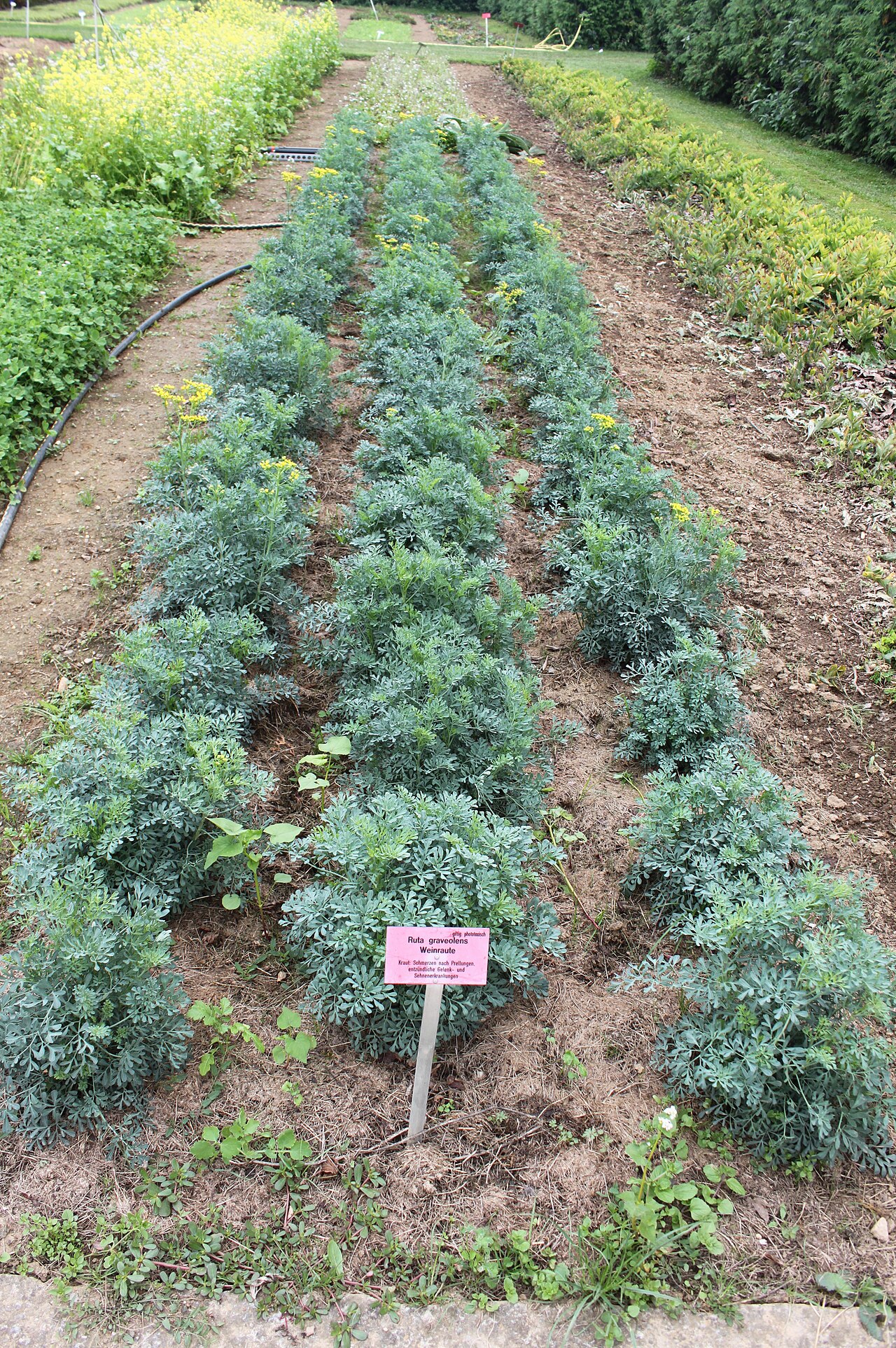
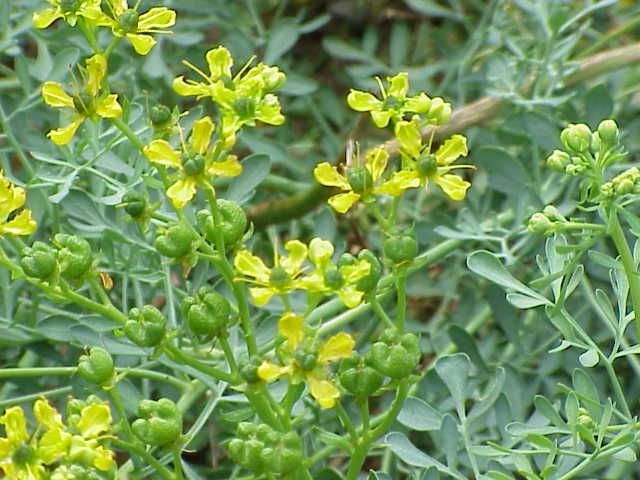
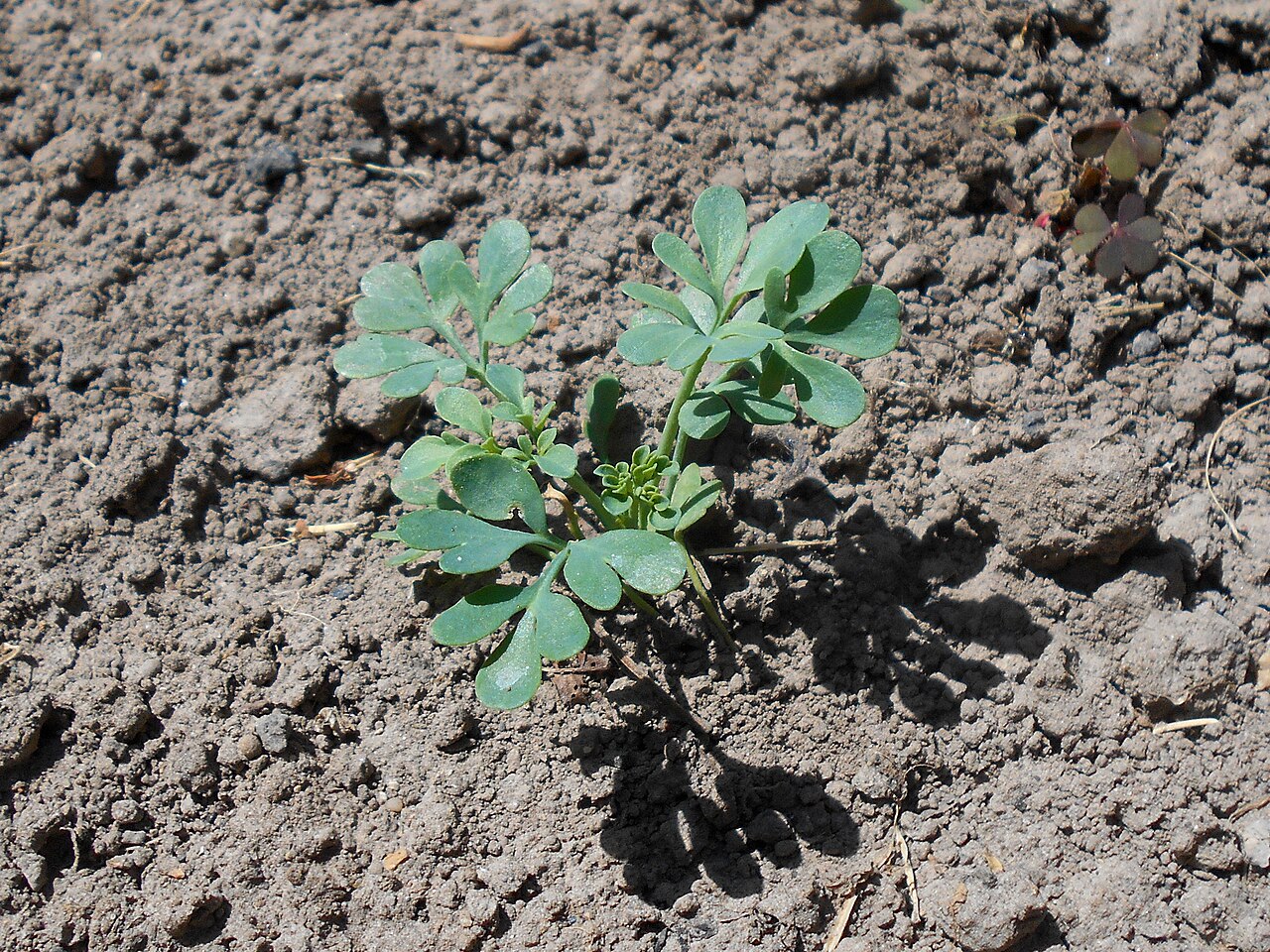
Why this variety
Jackman’s Blue is rue at its most ornamental: a compact, bushy evergreen subshrub, about 2 feet tall and wide, with vividly blue-gray, finely divided leaves and clusters of small yellow flowers in summer — the rue of knot gardens and blue borders, more intensely colored and tidier than the species. It is grown today mostly for that foliage and its powerful, pungent aroma, which deer and rabbits avoid and which gives a border a color no green herb can match.
The warning comes before the praise, because it matters more: rue sap can cause severe skin blistering in sunlight — phytophotodermatitis — in sensitive people, and the plant is toxic if ingested in quantity. Wear gloves and long sleeves when handling Jackman’s Blue, especially on sunny days, wash skin after contact, and site it where children and pets will not brush against it casually. Grown with that respect, it is a tough, drought-tolerant, deer-proof ornamental that asks for almost nothing; grown carelessly, it is a rash waiting for a sunny afternoon.
How to grow
Buy plants or take semi-hardwood cuttings in autumn; seed-grown rue varies, and Jackman’s Blue must come from cuttings to hold its compact, blue form. Plant in spring in full sun to part shade and poor, dry, sharply drained soil — rue positively prefers rough, thin, rocky ground where fussier herbs fail, and it hates rich, wet soil.
Space 18–24 inches apart and do not fertilize or overwater; pampering makes rue leggy and short-lived. Prune in spring to shape and remove winter-damaged wood, wearing gloves, and shear lightly after flowering to keep the mound compact.
Water & feeding
Water at planting and through the first year, then water rarely; established rue is drought-tolerant and prefers dry soil, and overwatering is its main killer in humid gardens. In Florida, a raised bed or pot with gritty mix gives it the drainage it needs through the rainy season.
Feed nothing. Rue in rich soil grows soft, leggy, and short-lived; in poor soil it grows dense, blue, and long-lived. This is one of the few garden plants where neglect is not just tolerated but required.
Common problems
- Phototoxic skin reactions — the serious one. Sap on skin plus sunlight can blister, sometimes severely. Gloves, sleeves, and washing after handling are not optional, and prunings should not be left where children or pets play.
- Toxicity if ingested — rue is poisonous in quantity and should never be eaten casually or brewed as a home remedy. Grow it as an ornamental and a pollinator plant, not as food.
- Root rot in wet, rich soil — sharp drainage and lean soil prevent it; a rue in a puddle is a rue on its way out.
- Self-seeding in favorable spots — deadhead after flowering if volunteers would be unwelcome, and pull seedlings while small.
Harvest
There is no culinary harvest here, and this guide does not recommend one. Harvest Jackman’s Blue as an ornamental: cut stems for dried arrangements (with gloves, in shade, washing hands afterward), shear for shape in spring, and take semi-hardwood cuttings in autumn for new plants — the propagation harvest, which is the only harvest this plant needs.
Leave some flower heads for pollinators and beneficial insects, which visit rue’s yellow flowers readily, and enjoy the foliage as a year-round blue accent. A rue plant’s value is in the border, not the kitchen, and that is a perfectly good reason to grow it.
Browse all plant & pest guides
Saving seeds
Jackman’s Blue is rue at its most ornamental, a compact, bushy evergreen subshrub with vividly blue-gray, finely divided leaves, and it must come from cuttings to hold its compact, blue form — buy plants or take semi-hardwood cuttings in autumn, since seed-grown rue varies. The Saving seeds section of the Rue guide covers seed for the species generally.