
🌳 Italica Poplar
What it looks like
Why this variety
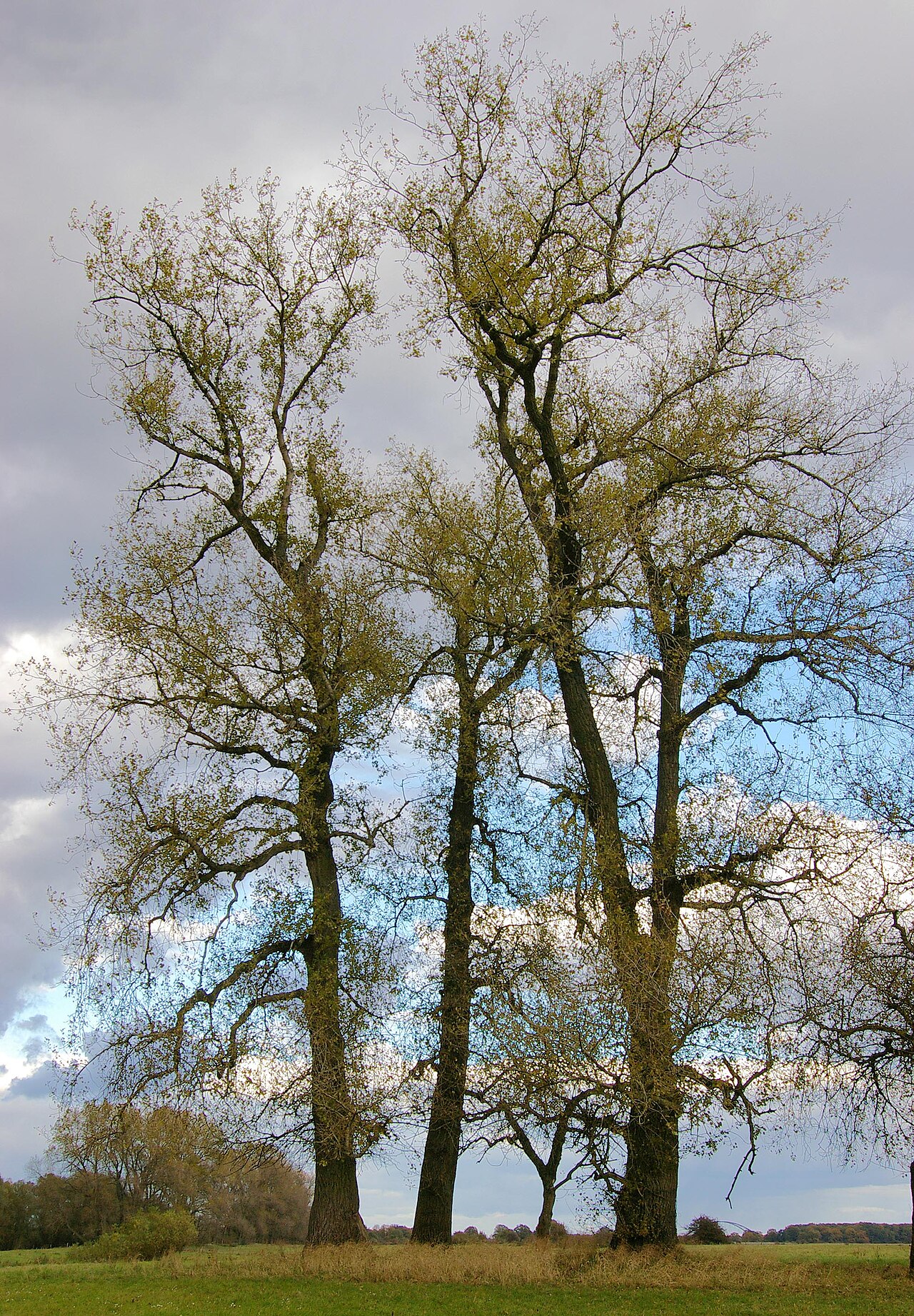
Italica — the Lombardy poplar — is not a shade tree but a punctuation mark: 40–50 feet tall and only 10–15 feet wide, a narrow column of dark green that has lined European roads and farm boundaries for centuries and still makes the fastest formal screen a gardener can plant. Planted 10–15 feet apart, a row of Italica becomes a green wall within a few years, which is why it remains the classic choice for hiding a view, framing a drive, or marking a boundary in a hurry.
In Florida, Italica is a north-Florida trial and it should be planted as one: it wants full sun, moist soil and steady water, and it is short-lived and brittle by tree standards — 15–20 good years is a fair expectation, with storm breakage after that. Plant it where a fast screen is worth a short life, keep it away from drains and pipes, and have a succession plan: a Lombardy screen is a chapter, not a legacy.
How to grow
Poplars are the fast shade trees: plant in fall or spring in full sun in moist, well-drained soil, 30–50 feet from structures, drains, septic systems and sidewalks, because poplar roots are famously thirsty and famously invasive around pipes. They grow several feet a year when young, which is the point and also the warning — a poplar is a short-lived, fast-growing tree, not a 200-year oak, and its wood is brittle in storms. Water deeply and consistently; a poplar denied water grows slowly and sulks, which defeats the entire reason for planting one. In Florida, keep poplars in the north with steady moisture, and accept that a struggling south-Florida poplar is a climate verdict, not a care failure.
Water & feeding
Water deeply and regularly, especially through establishment and in dry spells; poplars drink heavily and grow in proportion to what they drink. Mulch widely. Feed lightly in spring if growth is pale; moisture matters more than fertiliser here.
Common problems
Cankers, leaf rust and borers all visit poplars, and the defence is a vigorous, well-watered tree — stressed poplars collect problems. Brittle wood breaks in storms, so prune for structure while young and remove dead wood promptly. Cottony seed from female cottonwoods is the famous mess; the fix is a named male selection, which is exactly why the Siouxland guide exists.
Harvest
The harvest is the screen itself: privacy and wind protection within a few years of planting, plus a dramatic vertical accent that no broad tree can give. Prune for a single leader while young and remove dead wood promptly — a Lombardy that is allowed to fork becomes a storm hazard, and a storm hazard in a screen row is a liability, not a landmark.
Nerdy fact: Lombardy poplar is a single male clone, propagated by cuttings for centuries — which means every Lombardy poplar on earth is, genetically, the same tree, cloned over and over. Your screen is not a row of trees; it is one tree, standing in a line with itself.
Saving seeds
Italica, the Lombardy poplar, is not a shade tree but a punctuation mark, 40 to 50 feet tall and only 10 to 15 feet wide, and it is a single male clone — plant nursery-grown trees from cuttings, never seedlings, and plant 10 to 15 feet apart for a green wall within a few years. The Saving seeds section of the Poplar guide covers seed for the species generally.