
🐱 Six Hills Giant Catmint
What it looks like
Why this variety
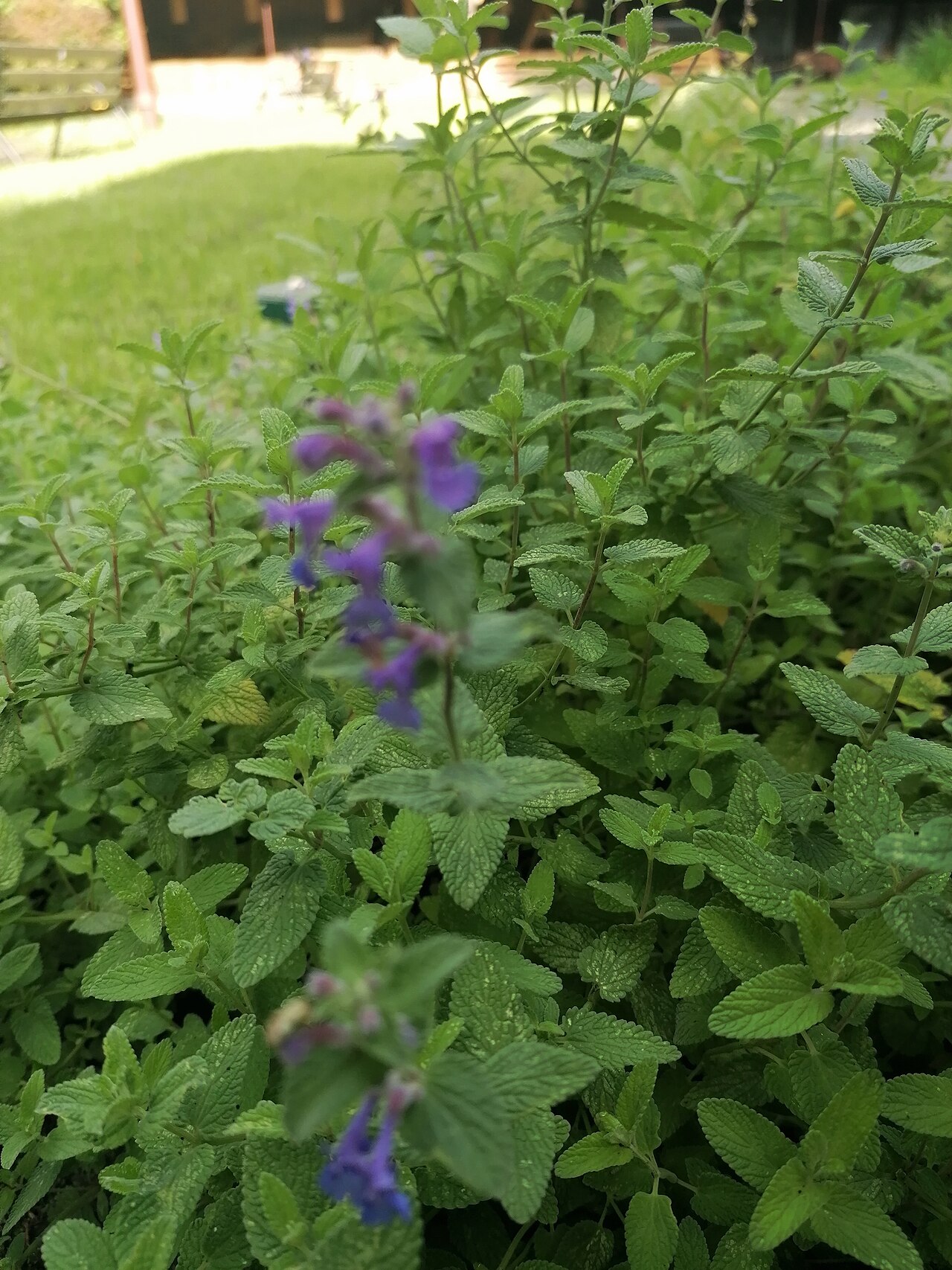
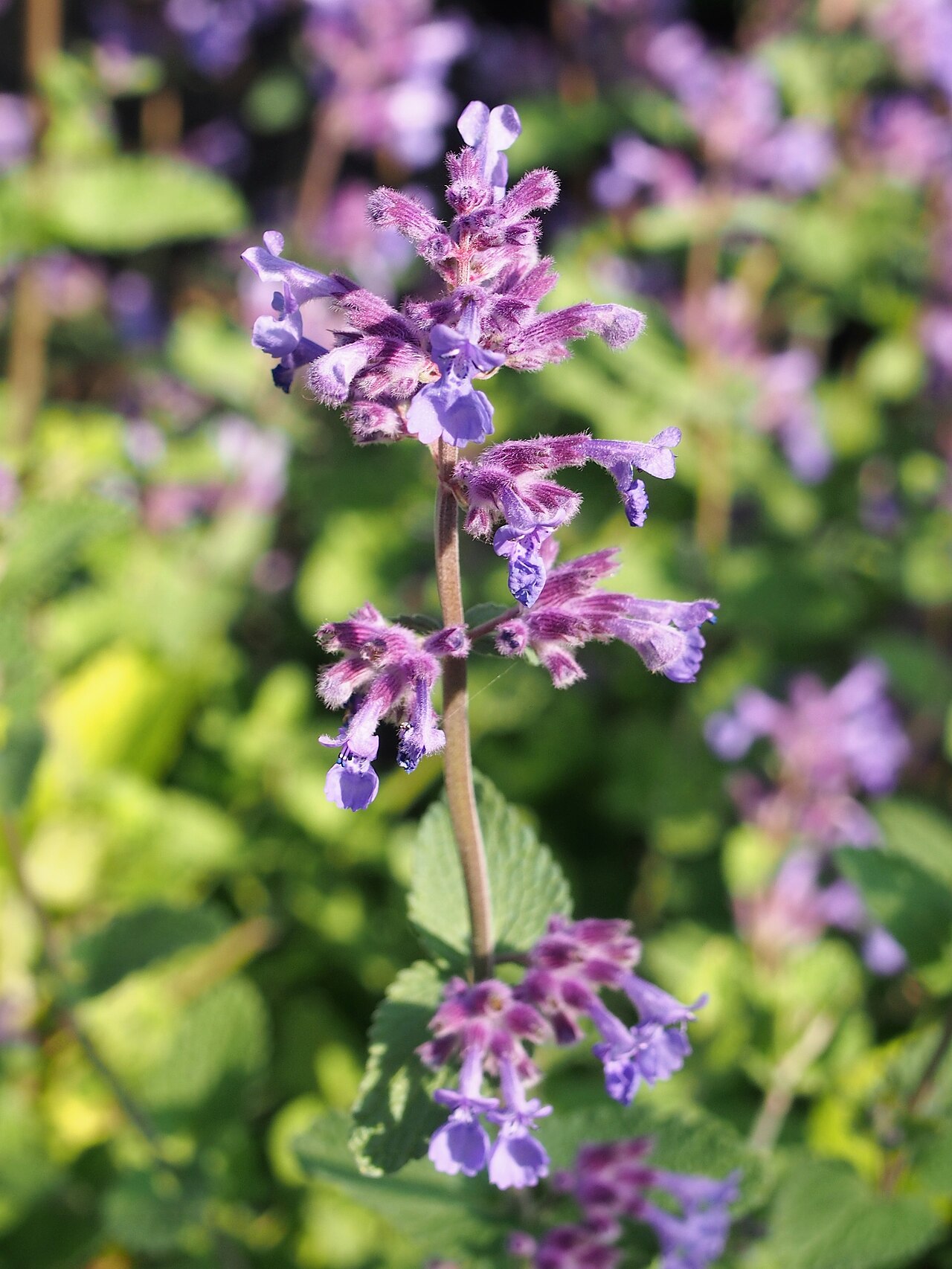
Six Hills Giant is the catmint for gardeners who looked at Walker’s Low and thought, more: a billowing mound 3 feet tall and 4 feet wide, covered in lavender-blue spikes from late spring into summer and again after shearing, over gray-green aromatic foliage. It was raised at Six Hills Nursery in England and named for its size, and it is the catmint to plant where you want a cloud, not a cushion — at the back of a sunny border, flanking a path, or softening a fence, where its sprawl is a feature, not a flaw.
The trade-off is exactly that sprawl: Six Hills Giant will flop open in the middle and swallow its neighbors if you plant it in rich, wet soil or crowd it. Give it sun, lean well-drained soil, and 3 feet of room in every direction, shear it back by half after the first flush, and it will rebloom tidily. Do not plant it in a small bed and expect it to stay small — it will not, and it will not apologize.
If you are new to choosing between cultivars, the Varieties Matter guide explains why the name after the plant matters as much as the plant itself. Six Hills Giant is a perfect example: it is not just a catmint in the abstract, it is a catmint with a specific job, a specific history, and specific strengths.
Florida honesty: catmint is a North and Central Florida trial, not a South Florida perennial, and Six Hills Giant’s size makes drainage and room even more important in Florida’s wet summers. In North Florida it performs as a long-blooming perennial; in Central Florida, give it sun, a raised bed or sharp drainage, shear after bloom, and room to billow. In wet soil it rots, so do not plant it in a low spot that ponds.
How to grow
Plant in spring or fall in full sun and sharply drained, even lean soil — catmint is a sun-and-drainage plant that rots in rich, wet soil faster than it starves in poor soil. Work a little worm castings into the bed at planting, do not overfeed it, and space for air. Shear back by half after the first flush of bloom, and it will rebloom into fall. Do not plant it in shade and expect a cloud; catmint in shade is a rumor, not a plant.
Set plants 24-36 inches apart in soil with a pH around 6.0-7.5. Work worm castings into the bed at planting and mulch to hold moisture. A well-fed catmint plant rewards that care directly: steadier growth, better bloom, and a show that actually shows up.
Water & feeding
Water to establish, then water sparingly — catmint is drought-tolerant once established and rots in wet soil, so the watering mistake is almost always overwatering. Water at the soil line, do not mulch heavily, and feed lightly: castings at planting is usually enough, because rich soil makes floppy catmint instead of tidy catmint.
Common problems
- Flopping open in the middle — rich soil, shade, or no shearing causes sprawl; shear back by half after the first flush.
- Rot in wet soil — catmint’s killer in humid climates; plant in sharp drainage or raised beds and do not overwater.
- Cats rolling in it — nepetalactone attracts cats; plant it where a flattened catmint will not ruin a formal edge, or fence it while young.
- Powdery mildew in humid, crowded plantings — space for air, water at the soil line, and remove affected leaves.
- Short life in hot, wet summers — heat plus wet soil shortens catmint life; in warm zones, treat it as a trial in sharp drainage.
Harvest
Cut stems for small bouquets from late spring into fall, when spikes are fully colored — catmint lasts a few days in water and its lavender-blue suits loose, cottage-style arrangements. Shear back by half after the first flush for rebloom, dry a few stems for sachets (the mint-sage scent holds well), and divide congested clumps in spring or fall every few years. Cats will claim any cut stems left within reach, so dry them behind a closed door.
Browse all plant & pest guides
Saving seeds
Six Hills Giant is the catmint for gardeners who looked at Walker’s Low and thought, more: a billowing mound 3 feet tall and 4 feet wide, covered in lavender-blue spikes from late spring into summer and again after shearing, over gray-green aromatic foliage. It was raised at Six Hills Nursery in England and named for its size, and it is the catmint to plant where you want a cloud, not a cushion — at the back of a sunny border, flanking a path, or softening a fence, where its sprawl is a feature, not a flaw. As a named catmint it is kept true by cuttings or division, not by seed — plant in spring or fall in full sun and sharply drained, even lean soil: catmint is a sun-and-drainage plant that rots in rich, wet soil faster than it starves in poor soil. Work a little worm castings into the bed at planting, do not overfeed it, and space for air. Shear back by half after the first flush of bloom, and it will rebloom into fall. Do not plant it in shade and expect a cloud; catmint in shade is a rumor, not a plant. The full method is in the Propagation section of the Catmint guide.