
🪻 Gateway Joe Pye Weed
What it looks like
Why this variety
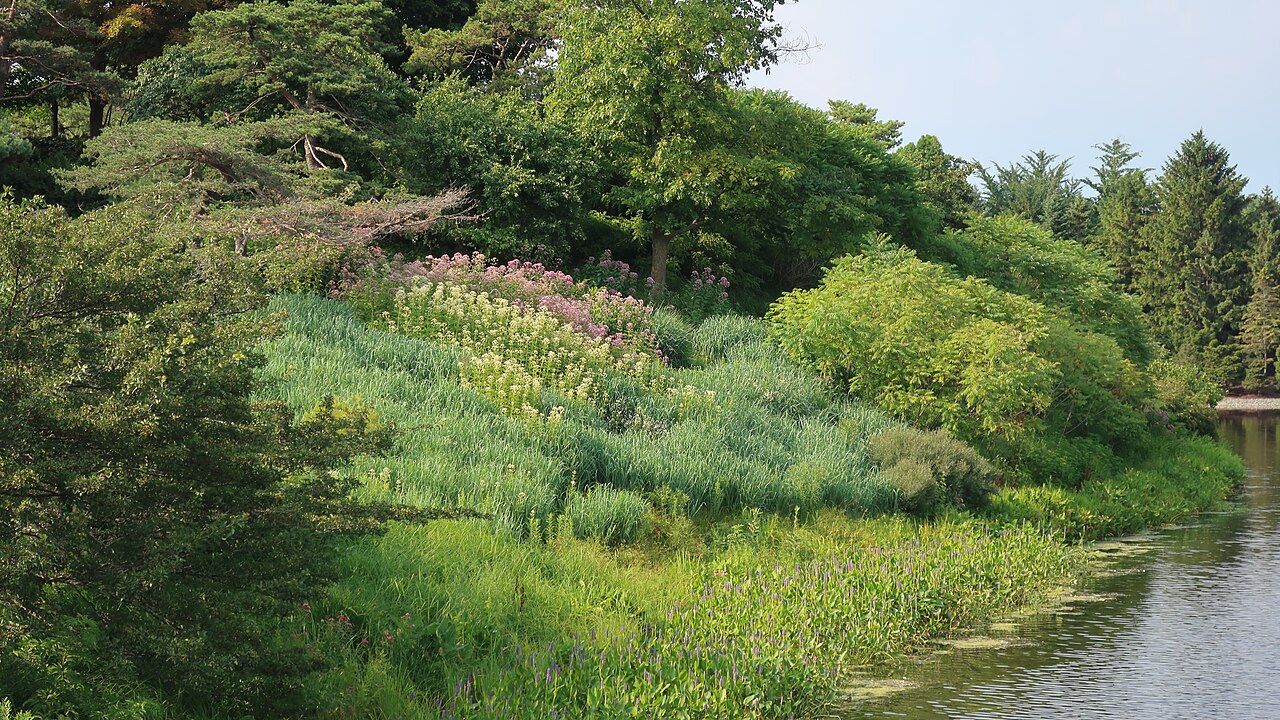
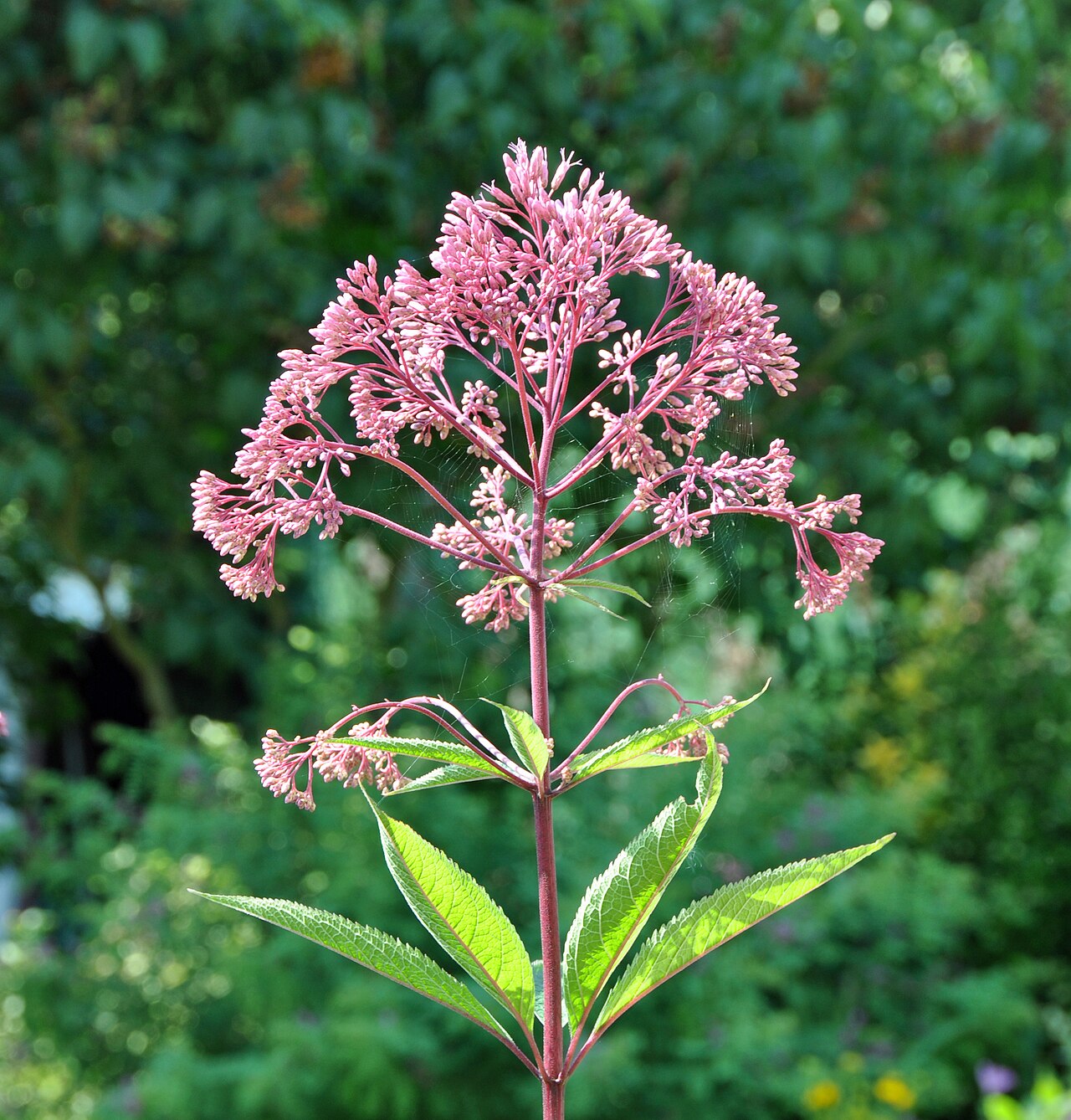
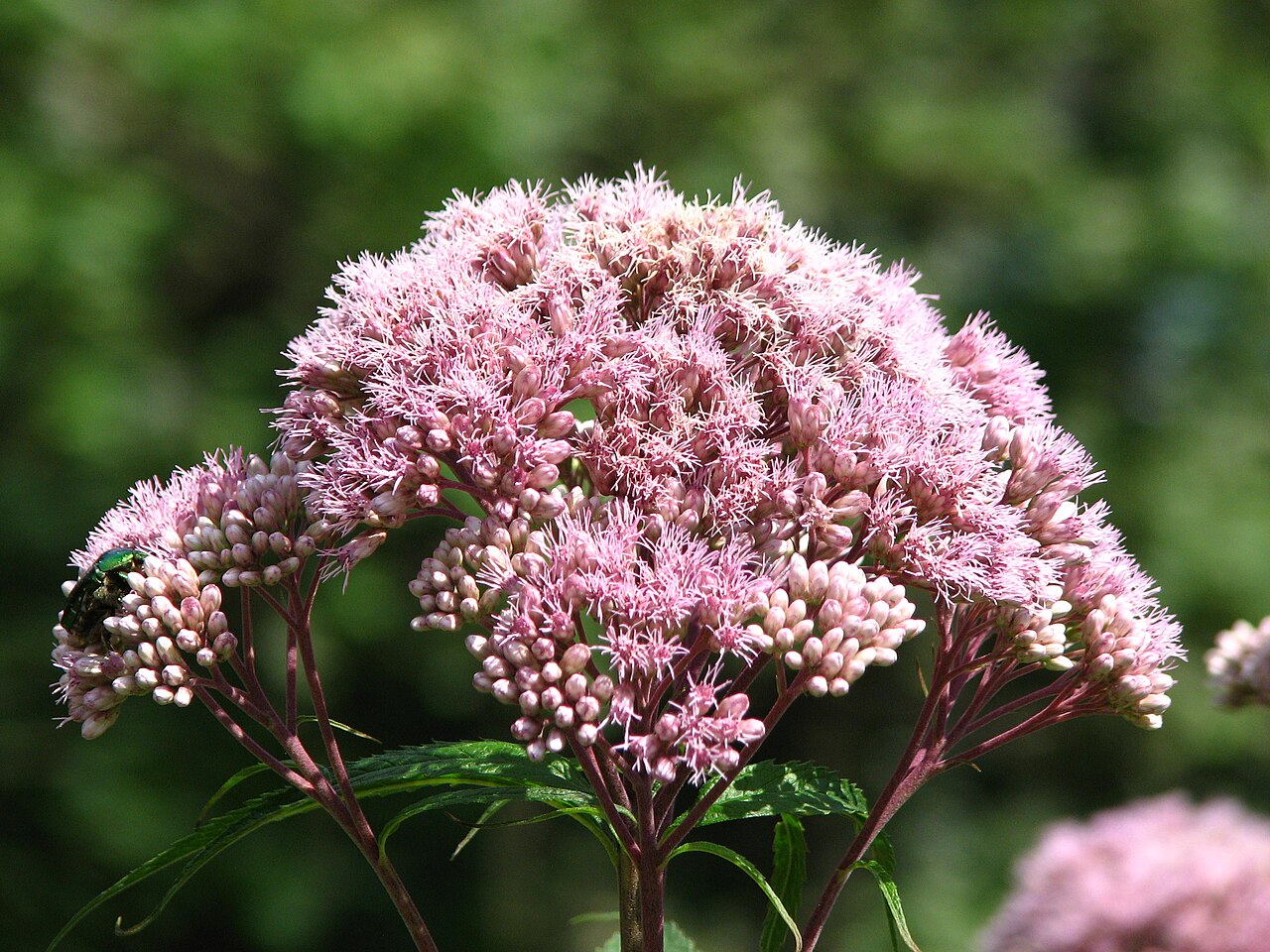
Gateway is the Joe Pye weed for real gardens: a compact form, about 5 feet tall instead of 7, with the same huge, dusty-rose, vanilla-scented flower domes that butterflies, bees, and hummingbird moths mob from mid-summer into fall. It was selected for a bushier, sturdier habit that does not flop the way the wild species can, and it holds its domes upright through rain that would flatten a taller plant. If you love Joe Pye but not the idea of a 7-foot plant swallowing your border, Gateway is the compromise that does not feel like one.
The trade-off is water: Joe Pye is a damp-meadow plant, and Gateway, for all its compactness, still wants moist, rich soil and sulks in dry ground. Do not plant it in a dry, sandy bed and expect domes; give it the moistest part of the garden, mulch deeply, and water through dry spells, and it will be the butterfly magnet of August. Cut it back in late winter, divide congested clumps in spring, and do not deadhead too early — the seed heads feed birds and look handsome into winter.
If you are new to choosing between cultivars, the Varieties Matter guide explains why the name after the plant matters as much as the plant itself. Gateway is a perfect example: it is not just a joe pye weed in the abstract, it is a joe pye weed with a specific job, a specific history, and specific strengths.
Florida honesty, stated plainly: Joe Pye weed is a North Florida trial, not a statewide promise. It wants cool summers, moist soil, and a winter rest that most of Florida cannot offer. In North Florida, plant it in the moistest, coolest part of the garden, in part shade with afternoon protection, and water through dry spells. South of the Panhandle, expect heat stress and short life, and plant a native Florida mistflower or blazing star for the same butterfly show instead.
How to grow
Plant in spring in full sun to part shade and moist, rich soil — Joe Pye is a damp-meadow plant that wants soil that stays damp, not a dry, sandy bed. Work worm castings and compost into the bed at planting, mulch deeply, and give it room: even compact forms reach 3 to 5 feet. Cut back in late winter, divide congested clumps in spring, and water through dry spells, because a Joe Pye that dries out stalls and blooms thinly.
Set plants 3-4 feet apart in soil with a pH around 5.5-7.0. Work worm castings into the bed at planting and mulch to hold moisture. A well-fed joe pye weed plant rewards that care directly: steadier growth, better bloom, and a show that actually shows up.
Water & feeding
Keep soil moist — Joe Pye wants damp-meadow moisture, not swamp and not drought. Water at the soil line, mulch deeply to hold moisture, and feed lightly: castings and compost at planting plus a spring top-dress. In a dry spell, water deeply and regularly, because a Joe Pye that dries out wilts dramatically and blooms thinly.
Common problems
- Wilting in dry soil — Joe Pye wilts fast in drought; water deeply in dry spells, and do not let a young plant dry out.
- Flopping tall types — rich soil and shade cause sprawl; give it sun, leaner soil, and room, and cut back in late winter.
- Powdery mildew in humid, crowded plantings — space for air, water at the soil line, and remove affected leaves.
- Aphids on new growth — blast with water and encourage ladybugs; avoid broad-spectrum sprays.
- Failure in hot climates — heat shortens Joe Pye life; in warm zones, treat it as a cool, moist trial, not a permanent perennial.
Harvest
Cut flower domes for bouquets in mid to late summer, when domes are fully colored — Joe Pye flowers last well in water and their dusty-rose domes suit tall, meadow-style arrangements. Deadhead only if you do not want seed; otherwise, leave seed heads standing for birds and winter interest. Cut the whole plant back in late winter, divide congested clumps in spring, and leave some stems standing over winter where pollinators overwinter in hollow stems.
Browse all plant & pest guides
Saving seeds
Gateway is a named Joe Pye cultivar selected for a compact, bushy habit, and named cultivars are divided, not seed-grown — divide congested clumps in spring to hold the compact form. The Saving seeds section of the Joe Pye Weeds guide covers seed for the species generally.