
❄️ Flore Pleno Snowdrop
What it looks like
Why this variety
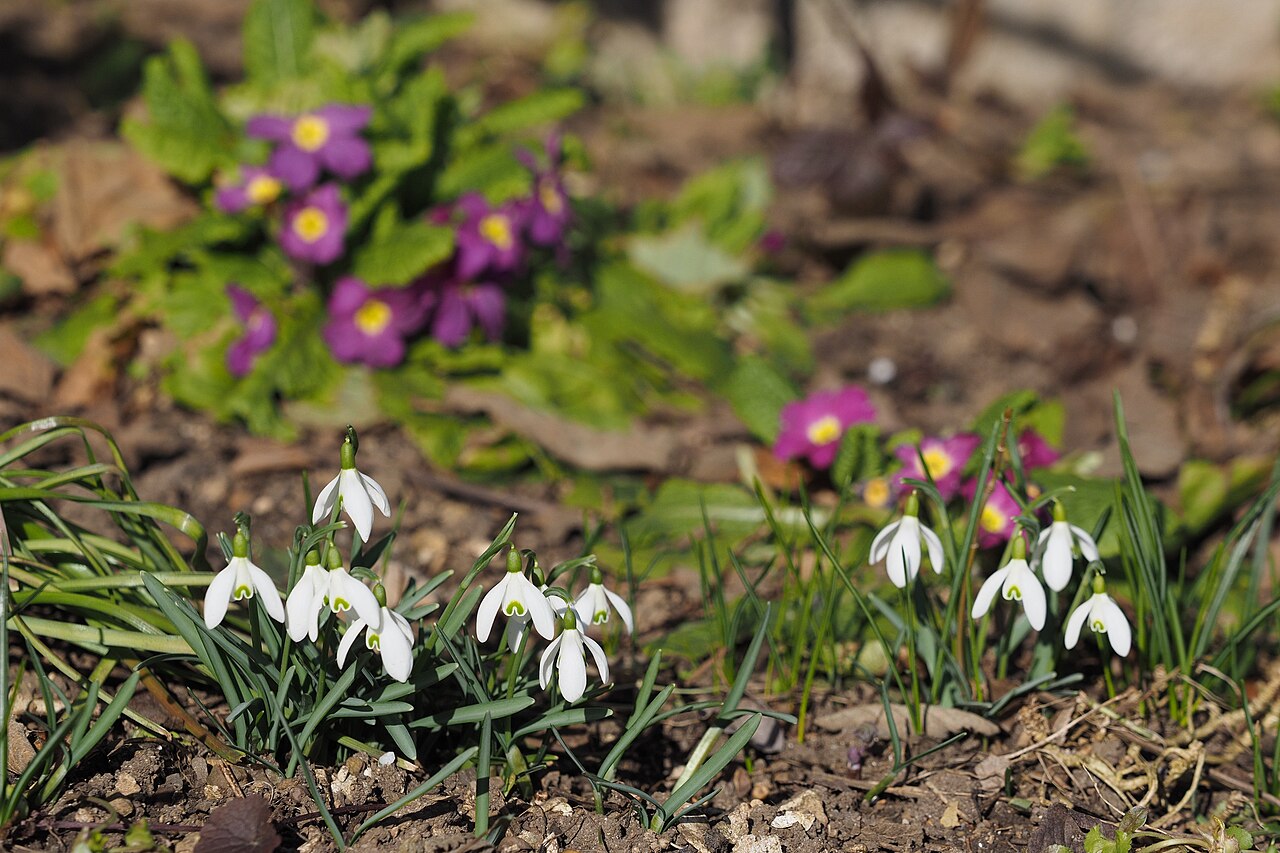
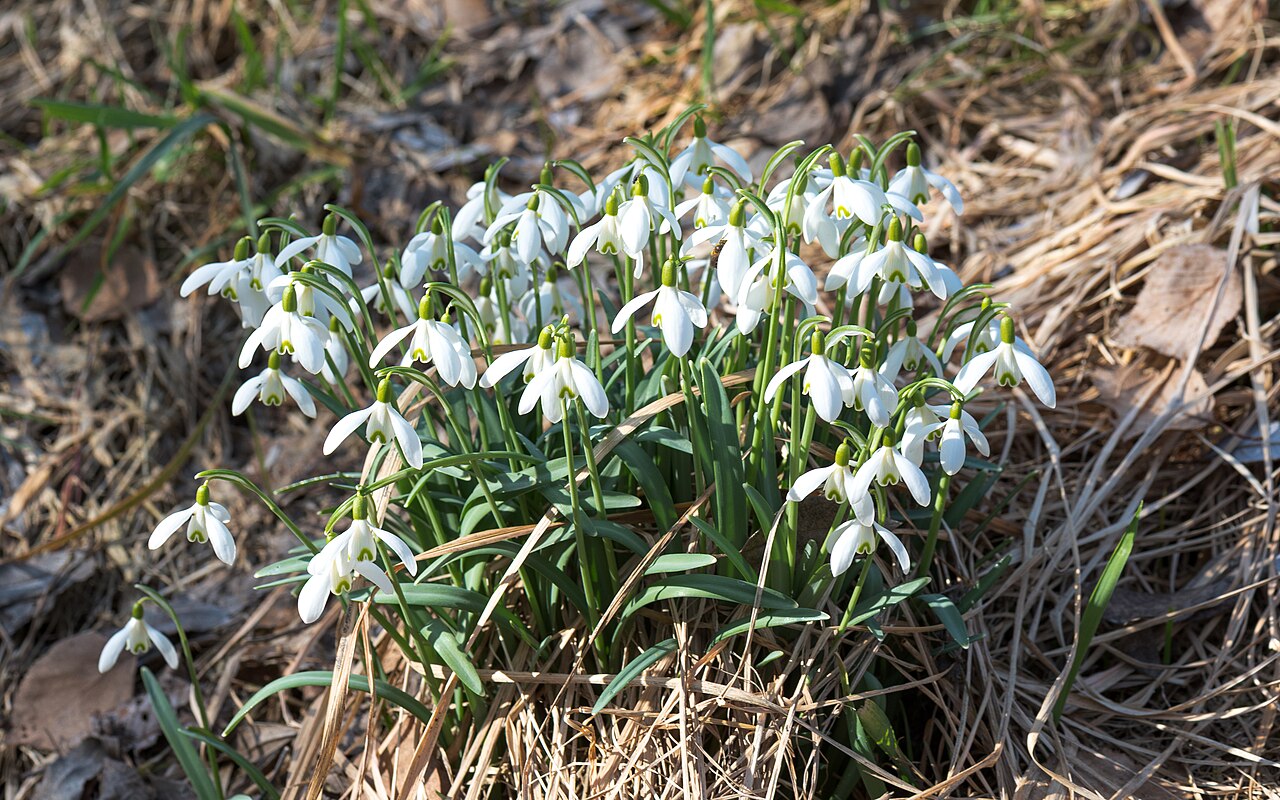
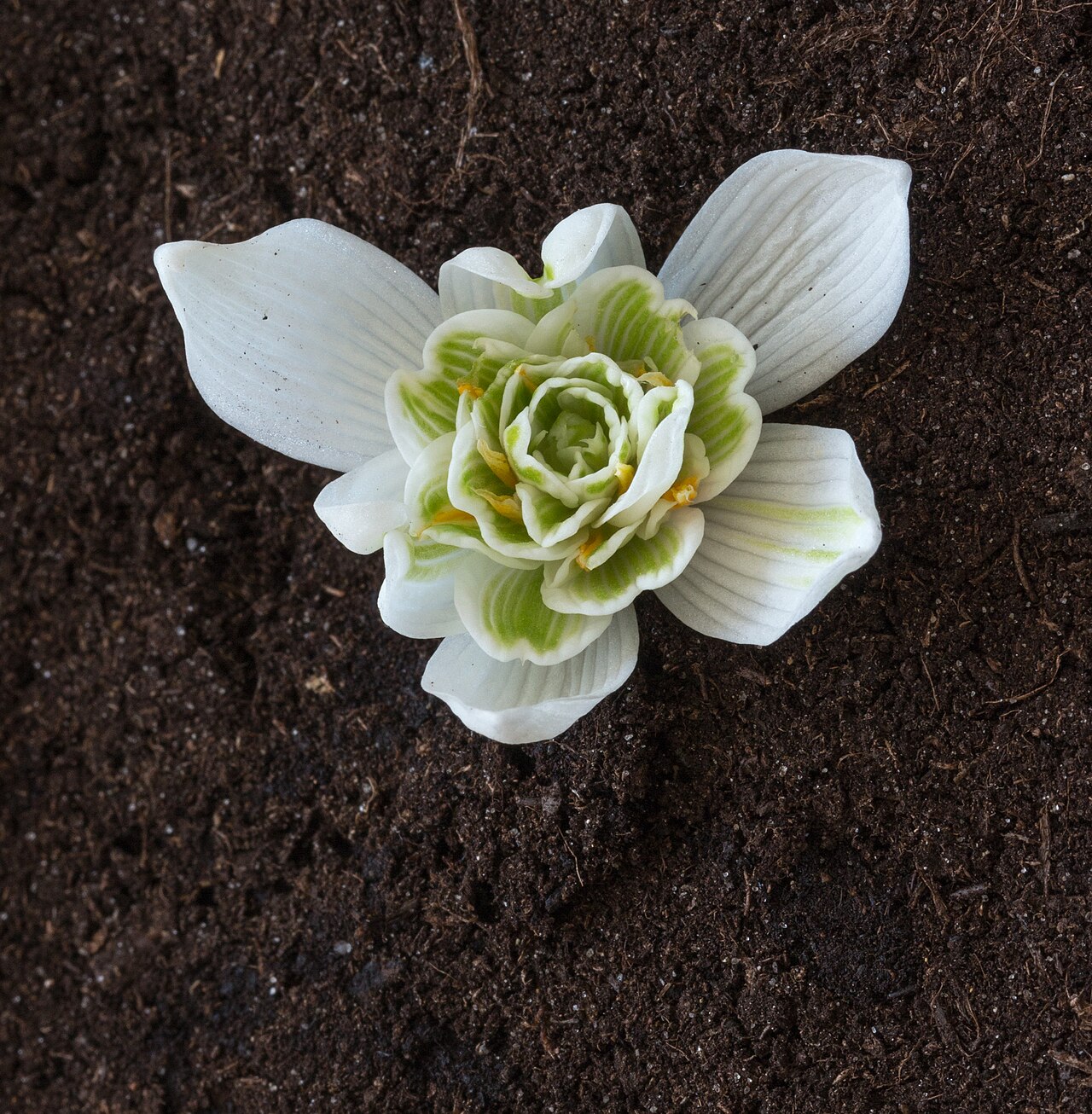
Flore Pleno is the snowdrop for gardeners who want a snowdrop with extra everything: the classic late-winter white bell, but doubled — extra petals packed into a rosette that looks like a tiny white rose nodding over green foliage in February, when almost nothing else is blooming. It is an old variety, grown for centuries, and it has a devoted following among snowdrop collectors, who call themselves galanthophiles and trade Flore Pleno bulbs like currency. Plant it in drifts under deciduous trees, where it gets winter sun and summer shade, and it will naturalize into a white carpet.
The trade-off is that double snowdrops set little seed, so they spread by bulb division rather than self-sowing — slower to naturalize than single forms, but also tidier. Plant bulbs in fall, 3 inches deep, in humus-rich soil that stays moist but never waterlogged, and do not cut the foliage until it yellows naturally, because the leaves feed next year’s bloom. A snowdrop that is mowed early is a snowdrop that does not return.
If you are new to choosing between cultivars, the Varieties Matter guide explains why the name after the plant matters as much as the plant itself. Flore Pleno is a perfect example: it is not just a snowdrop in the abstract, it is a snowdrop with a specific job, a specific history, and specific strengths.
Florida honesty, stated plainly: snowdrops are a North Florida trial only, not a statewide promise — they need winter chill to bloom, and most of Florida cannot offer it. In the Panhandle, plant bulbs in fall in the coolest, shadiest, moistest spot you have, in dappled shade under deciduous trees, and treat bloom as a triumph. South of the Panhandle, expect foliage without flowers at best, and plant a native rain lily for the same late-winter white instead.
How to grow
Plant bulbs in fall, 3 inches deep, in humus-rich, moist soil in dappled shade — snowdrops are woodland bulbs that want cool, moist soil and winter sun under deciduous trees, not hot sun or dry soil. Work worm castings and compost into the bed at planting, mulch lightly, and mark the spot, because the foliage dies back by summer and the bed will look empty. Do not cut the foliage until it yellows naturally.
Set plants 3 inches apart, bulbs 3 inches deep in soil with a pH around 6.0-7.5. Work worm castings into the bed at planting and mulch to hold moisture. A well-fed snowdrop plant rewards that care directly: steadier growth, better bloom, and a show that actually shows up.
Water & feeding
Keep soil moist while the plant is growing in late winter and spring — snowdrops want damp, humus-rich soil, not swamp and not drought. Water at the soil line, mulch lightly to hold moisture, and feed lightly: castings and compost at planting are plenty. After the foliage yellows and dies back in summer, reduce watering and let the bulbs rest until fall rains return.
Common problems
- Failure to bloom without winter cold — snowdrops need a cold rest; in warm zones, treat them as a trial and expect foliage without flowers.
- Bulb rot in waterlogged soil — snowdrops want moist soil, not standing water; improve drainage and do not plant where rain ponds.
- Damage from mowing foliage early — cut foliage only after it yellows naturally, or next year’s bloom will be thin.
- Slow establishment — snowdrops take a season or two to settle; judge them in year two or three, not year one.
- Bulbs dug by mistake — mark the spot, because dormant snowdrop beds look empty and are easy to dig into.
Harvest
Cut a few stems for tiny late-winter bouquets, when bells are fully open — snowdrops last a few days in water and suit small, woodland-style arrangements, though they are best admired in drifts. Do not cut heavily: the plant needs its foliage to feed next year’s bulb, even though it will vanish by summer. Leave the foliage to yellow naturally, do not dig bulbs unless dividing, and divide congested clumps in fall every few years, replanting at the same depth.
Browse all plant & pest guides
Saving seeds
Flore Pleno is a double snowdrop, and double snowdrops set little seed — they spread by bulb division instead, so lift and divide the clump once the foliage yellows. The Saving seeds section of the Snowdrop guide covers seed for the species generally.