
15 Worm Myths, Busted
Worms are the most mythologized animal in the garden, and that’s saying something in a hobby that also gave us moon-phase planting and talking to tomatoes. Everybody has a worm fact, and a shocking number of those facts are wrong — not maliciously wrong, just wrong in the way a story gets wrong when it’s been retold through five garden clubs and a comment section. Some of the myths below will make you laugh. A couple might make you wince, because you’ve repeated them (we all have). Every one of them gets tested against what worms actually do, with a verdict stamp and the science underneath. If you want the positive version of all of this — what worms are, how bins work, how to use the castings — start with Worm Castings 101. This guide is the bouncer at the door: fifteen claims walk in, and only the true ones walk out.
How to read the verdicts: BUSTED means the claim is false. MOSTLY BUSTED means there’s a real kernel inside a wrong claim. TRUE-ISH means the claim is the simplified version of something real — close enough that correcting it is a refinement, not a demolition.
Myth 1: Cut a Worm in Half and You Get Two Worms
🔨 VERDICT: BUSTED
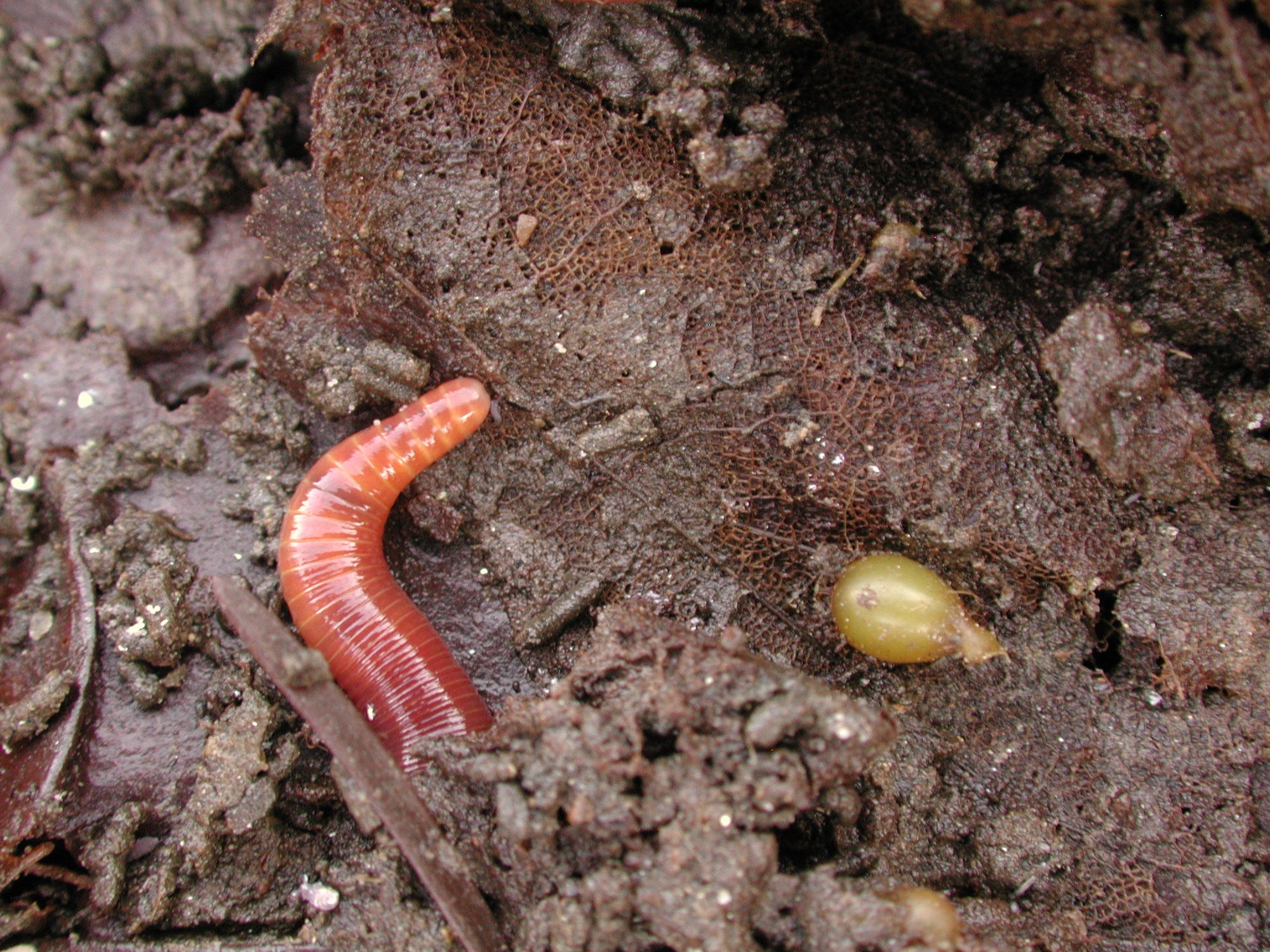
This is the worm myth with the longest rap sheet, and it’s also the cruellest one, so let’s kill it first. Earthworms are not planarians. Planarians — those tiny flatworms in biology class — genuinely can regenerate from fragments, which is probably where this story started, three telephone games ago. An earthworm cut in half does not become two worms. What actually happens depends on where the cut lands, and none of the outcomes are a buy-one-get-one-free deal.
An earthworm’s vital equipment is front-loaded: mouth, nerve cord ganglia (the closest thing to a brain), and the reproductive organs, including the clitellum — that smooth band you see on an adult. If the cut falls behind the clitellum, the front half has everything it needs and may regrow a new tail over weeks. The back half has no mouth, no way to feed, and no future; it dies. If the cut falls ahead of the clitellum, both halves are in trouble. So the honest version is: cut a worm in half and you usually get one injured worm and one dead one, plus a gardener who should feel bad. Cutting is not propagation. If you want more worms, feed the ones you have and let them breed — they are very good at it without your surgical assistance. If you nick one accidentally while digging, leave the head end alone and let it recover; it does not need your help, and it definitely does not need an encore.
Myth 2: Worm Populations Double Every Month
🔨 VERDICT: BUSTED
This one comes from influencer math, and influencer math is the only math where every assumption is optimistic and none of them are checked. The pitch goes: worms breed fast, so your bin doubles monthly, so you’ll be drowning in worms by Christmas. The real numbers are far more polite. A red wiggler cocoon typically holds a few hatchlings, hatching takes around three weeks, and those hatchlings need roughly two to three months to mature and start breeding themselves. That’s a real, satisfying growth curve — a healthy bin absolutely builds its herd over a season — but it’s a curve with generations in it, not a monthly doubling.
The influencer version quietly assumes every cocoon hatches, every hatchling survives, every adult breeds at maximum rate, and nothing ever limits food, space, moisture, or temperature. Real bins have limits, and that’s fine — limits are what keep a bin stable instead of collapsing into a writhing overpopulation crisis. Feed steadily, keep conditions right (see Feeding Your Worms for the how-much question), and your herd grows at the speed of biology, which is to say: noticeably, reliably, and never as fast as the guy selling you a starter kit promised.
Myth 3: Jumping Worms Are Just Regular Earthworms
🔨 VERDICT: BUSTED
This is the myth with actual ecological stakes, so it gets the serious treatment. Jumping worms — Amynthas species, originally from East Asia — are invasive in North America, including the Southeast, and they are not just another earthworm with a jumpy personality. Learn the three field marks, because telling them apart from your composting worms matters. First, the clitellum: on a jumping worm it’s a smooth, pale, milky-white band that sits flush with the body, like a rubber band painted on. On red wigglers and nightcrawlers, the clitellum is raised and pinkish or reddish, like a saddle. Second, the behavior: pick one up (gloves on) and it thrashes violently, snapping side to side like a snake having a bad day. Your composting worms wiggle; jumping worms audition for an action movie. Third, the castings: their droppings are dry, granular pellets that look like coffee grounds, and a heavily infested patch of soil loses its structure and turns into that loose, grainy texture.
Why it matters: jumping worms live in the surface litter and eat it fast — much faster than native decomposers — stripping the organic layer that holds moisture, feeds seedlings, and shelters ground-nesting life. The soil they leave behind erodes more easily and grows plants worse. What to do if you find them: don’t move soil, mulch, or plants from that spot to anywhere else (that’s how they travel), solarize suspect material if you can, and contact your local extension office for identification and local guidance — reporting rules and recommendations vary by state, and extension is the authority that knows yours. And never, ever “rescue” a jumping worm into your compost bin. That bin is a five-star hotel with room service, and you do not want to be the person who introduced an invasive species to it.
Myth 4: There’s a Magic Food That Makes Worms Eat Faster
🔨 VERDICT: MOSTLY BUSTED
Every worm forum has a version of this one: the secret ingredient — some powder, some pulp, some miracle melon — that sends your worms into a feeding frenzy. There is no magic food. There are, however, two very un-magical levers that actually work, and they’re so boring that nobody makes a video about them. Lever one: surface area. Worms don’t have teeth; they suck and grind soft material. A whole potato rots slowly because only its outside is available. That same potato chopped small is dinner for a crowd. Lever two: softness. Worms eat food that’s already softened and colonized by microbes — they graze the microbial bloom as much as the food itself. That’s why pre-rotted, precomposted food disappears so much faster than fresh scraps: the microbes have already done the prep work, and the worms are just showing up for the main course.
That second lever is exactly why this site precomposts before feeding — banked batches of food, aged until soft and crawling with microbes, go into the bin ready to eat instead of sitting there for weeks going through an awkward raw phase. It’s not a secret ingredient; it’s meal prep. Temperature and moisture in the right range matter too, but there’s no powder that overrides physics. If someone is selling you a worm-feeding accelerator, they’re selling you ground grain in a fancy bag. Your kitchen scraps, chopped small and aged a little, already beat it.
Myth 5: A Worm Bin Should Be Wet
🔨 VERDICT: BUSTED
This is the number-one beginner mistake, and it’s the one that drowns the most worms — sometimes literally. A healthy worm bin is damp like a wrung-out sponge: squeeze a handful of bedding and you should get a drop or two, not a stream. Worms breathe through their skin, and skin breathing needs a moist surface and oxygen. Waterlogged bedding has no oxygen in it. A drowned bin goes anaerobic, starts smelling like a swamp, and the worms either flee or die in it. The classic beginner error stack is: too much water, no drainage holes, and overfeeding on top — a soup that no worm signed up for.
And here’s the Florida footnote, because our climate weaponizes this mistake: an outdoor bin in a Florida summer doesn’t just get humid, it gets deluged. A single afternoon thunderstorm can pour inches into an uncovered bin. Humidity is not drainage. Outdoor bins here need drainage holes in the bottom and a rain cover on top — a lid that sheds water while still breathing, or a sheltered spot under an eave. If you’re collecting liquid from the bottom of your bin on a regular basis, that’s not a feature. That’s the bin waving a flag. (More on that liquid in Myth 12 — it’s a whole myth of its own.) The full Florida setup, placement and all, is in Florida Worm-Bin Setup, and the from-scratch build is How to Make a Worm Bin.
Myth 6: Worms Have Five Hearts
🔨 VERDICT: TRUE-ISH
Here’s our one TRUE-ISH, and it’s here because the myth is the kindergarten version of a real fact rather than a falsehood. Worms do not have five chambered hearts like you do — no atria, no ventricles, no lub-dub. What they have is five pairs of muscular aortic arches: thick-walled blood vessels that squeeze rhythmically and pump blood through the body, doing a heart’s job with a vessel’s anatomy. The circulatory system is closed (blood stays in vessels, unlike an insect’s open system), with a big dorsal vessel carrying blood forward and the arches doing the pumping work.
So “five hearts” gets the count roughly right (five pairs of pumps) and the organ wrong (arches, not hearts). If a kid tells you worms have five hearts, they’re not wrong enough to correct at a birthday party. If an adult tells you, you now get to be the most interesting person at the garden club meeting by explaining aortic arches. Use this power responsibly.
Myth 7: Worms Eat Their Body Weight in Food Every Day
🔨 VERDICT: MOSTLY BUSTED
This number gets quoted everywhere, usually by people selling worms, and it’s the ceiling quoted as if it were the average. The honest figure: under ideal conditions — right temperature, right moisture, soft pre-rotted food, a mature herd — composting worms process roughly half their body weight per day. Some days more, many days less, and a new or stressed bin eats far less than a settled one. A pound of worms working through half a pound of scraps daily is still a gloriously productive animal — that’s a kitchen’s worth of peels disappearing into black gold week after week — but it’s not the full body weight, every day, guaranteed.
Why the myth survives: it’s the kind of number that sounds like a superpower, and worm people love superpowers. The practical consequence of believing it is overfeeding — dumping a pound of scraps on a pound of worms daily, watching it rot before the herd can get to it, and then wondering why the bin smells like a science experiment. Feed what the herd actually eats, check whether last week’s food is gone before adding more, and let the real rate — half a body weight on a good day — set your schedule.
Myth 8: Coffee Grounds Are Too Acidic for Worms
🔨 VERDICT: BUSTED
This one sounds like chemistry, which is why it survives: coffee is acidic, therefore coffee grounds must be acidic, therefore worms (who dislike strong acidity) must hate them. The flaw is in step two. Brewed coffee grounds are nearly neutral — around pH 6.5 to 6.8 — because most of the acid went into your cup, which is where it belonged. What’s left in the filter is a damp, nitrogen-bearing, microbe-friendly material that worms genuinely love, and worm keepers have been feeding it for decades with excellent results.
The usual caveats apply, and they’re about quantity, not chemistry: don’t bury the bin in grounds alone, because any single food in excess throws the bin’s balance off and can compact into a dense mat. Mix grounds in with other scraps and bedding, like any other ingredient. One honest distinction: unbrewed coffee is a different animal — fresh grounds are more acidic and much stronger stuff, and a pound of them dumped in at once is a bad idea. But your morning filter? That’s worm food, not worm poison. The caffeine question comes up too, and the answer is reassuringly dull: at normal kitchen quantities, it’s a non-issue. The worms are not staying up all night.
Myth 9: Citrus Kills Worms
🔨 VERDICT: MOSTLY BUSTED
Here in Florida, this myth has a special comedy to it, because we live in a state that grows citrus the way other states grow lawns. The kernel of truth: citrus peels contain d-limonene, an oil that worms avoid, and a big pile of fresh citrus is acidic enough that worms will vacate that corner of the bin. Dump a whole bag of oranges in at once and you’ve created a no-worm zone. But “worms avoid a citrus pile” is not “citrus kills worms,” and a few peels mixed into a balanced bin break down just fine — the oils dissipate, the microbes move in, and the worms eventually eat the remains like everything else.
The rule is proportion, as usual: your bin gets a slice, not the grove. A couple of peels a week in a working bin is nothing. A citrus-only diet would be a problem, but so would a diet of anything only. If you see worms fleeing a spot where you buried a grapefruit half, that’s avoidance behavior doing its job — the worms are telling you the dose was too high, not that citrus is poison. Respect the signal, bury smaller amounts, and keep the orange juice jokes to yourself. The worms have heard them.
Myth 10: Worms Will Eat Any Kitchen Scrap
🔨 VERDICT: BUSTED
A worm bin is not a garbage disposal with a lid on it, and treating it like one is how bins turn into crime scenes. Worms are enthusiastic eaters, but they eat on a schedule set by microbes: food has to soften and rot a little before a worm can touch it, and some foods rot in ways that ruin the bin long before the worms get a look in. Meat, dairy, oils and grease, and very salty or spicy foods all fall in this category. They go rancid instead of composting, they stink, they attract flies and rodents, and they can harbor pathogens that have no business in a bin whose whole product ends up on your garden. The worms don’t eat them faster out of gratitude. They avoid the mess while it festers.
The safe menu is the boring one, and boring is beautiful here: fruit and vegetable scraps, coffee grounds, grains and bread in moderation, leaves, and cardboard bedding. That’s the menu the bin can actually process, and it’s the menu Feeding Your Worms and the Worm Menu are built around — including the never-on-the-menu strip, which exists precisely because somebody, somewhere, put a pork chop in a bin and wondered why it smelled like a crime scene. When in doubt, leave it out. The worms have plenty to eat without your leftovers staging a coup.
Myth 11: Worms Don’t Have Brains
🔨 VERDICT: BUSTED
Worms are not tiny philosophers, but they are also not headless tubes of appetite. A worm has a simple brain — a pair of cerebral ganglia sitting above the mouth — wired to a ventral nerve cord that runs the length of the body, with smaller ganglia in each segment acting as local relay stations. It’s a distributed system, not a single command center, but it is unmistakably a nervous system: the worm senses light, touch, vibration, and chemicals, and it acts on what it senses.
That sensing is why so much worm behavior makes sense once you know it’s there. Light drives worms down into the bedding because their skin detects it and their simple brain files it under “danger, go deeper” — which is exactly why a light over a new bin settles a herd instead of scattering it. Vibration sends them burrowing because, in the wild, vibration means a predator digging. Chemical cues tell them which corner of the bin is food and which corner has gone sour. A brainless animal couldn’t do any of that; it would just sit there, waiting to be eaten. The worm brain is small, but it is doing a real job, and the bin behaviors every keeper recognizes — the diving from light, the fleeing from bad conditions — are that brain at work.
Myth 12: Leachate Is Worm Tea
🔨 VERDICT: BUSTED
This is the myth we take most seriously on this site, because it’s the one that can hurt your plants. Leachate is the liquid that drains out of the bottom of a worm bin. It is not worm tea, and the two liquids have almost nothing in common except that both are brown and both came from somewhere near worms. Leachate is excess water that has passed through a bin that was too wet — and if the bin was too wet, it may also have been low on oxygen, which means that liquid can carry anaerobic microbes you do not want on your plants. Do not pour it on your garden. Do not bottle it. Do not gift it to your neighbor with a wink.
Real worm tea — the thing worth making — is an aerated water extract of finished castings, brewed with oxygen so the good aerobic microbes multiply, and used promptly. That’s a different product made a different way for a different reason, and Castings Tea, Honestly covers it without the hype. And here’s the part people miss: if you’re collecting leachate regularly, the liquid isn’t the harvest — it’s the warning light. A bin that drains liquid is a bin that’s too wet (see Myth 5). Fix the moisture, and the “tea” problem solves itself, because there won’t be any.
Myth 13: Worm Castings Are Fertilizer
🔨 VERDICT: MOSTLY BUSTED
Open a bag of synthetic fertilizer and you’ll see three big numbers: nitrogen, phosphorus, potassium. Open a bag of worm castings and the numbers are small — often around 1-1-1 or lower, varying by feedstock. By the fertilizer-bag standard, castings look unimpressive, and that’s exactly why the standard is the wrong tool. Castings aren’t a nutrient bag. They’re a biological amendment: a dense, living community of microbes, humic substances, plant-available micronutrients in gentle amounts, and a physical structure that holds water and air in the root zone like a sponge that also happens to be alive. Plants fed with castings don’t just get fed — they get a soil food web installed around their roots, and that web keeps cycling nutrients long after a fertilizer spike would have washed away.
Two honest corollaries. First, castings have a low burn risk compared to synthetic fertilizers — that’s the qualified form of the claim, and it’s real, because the nutrients release slowly through biology rather than flooding the root zone as salts. “Low burn risk” is not “impossible to overdo” — a whole bed of pure castings would still be a bad idea for most plants — but at the published rates, burning is not the worry. Second, if you used castings and saw nothing, the answer is usually rate, timing, or expectations, not magic: Why Didn’t the Castings Seem to Work? works through the real reasons, and Harvesting Worm Castings covers how to tell finished castings from almost-finished ones. Think probiotic, not pill. The microbes are the point.
Myth 14: All Worms Are the Same
🔨 VERDICT: BUSTED
Ask a gardener to picture “a worm” and they picture one animal. Nature made at least three lifestyles, and they are not interchangeable. Epigeic worms live in surface litter and eat decaying organic matter — these are your composting worms: red wigglers (Eisenia fetida) and African nightcrawlers (Eudrilus eugeniae). Endogeic worms live in the soil itself, eating their way horizontally through it. Anecic worms — the big nightcrawlers (Lumbricus terrestris) — dig deep vertical burrows and drag surface litter down into them. A compost bin needs an epigeic worm: an animal evolved to live in a crowded pile of rotting food at the surface. Put a garden nightcrawler in a bin and you’ve put a deep-burrowing animal in a shallow box with no burrow to go home to — it will be miserable, and then it will leave or die.
Species choice also matters by climate, and this is where Florida gets specific. Red wigglers are the classic composting worm and they work fine in many setups, but African nightcrawlers are tropical animals that handle Florida heat with a shrug, grow larger, and double as fishing bait — which is why they’re this site’s pick for Florida bins. The point isn’t that one species is universally “best.” It’s that “worm” is a job description with several very different employees, and hiring the right one for your climate and your bin is half the hobby.
Myth 15: Worms Are Fine Outside All Winter
🔨 VERDICT: MOSTLY BUSTED
Florida gardeners love this myth because it feels like it should be true here — we don’t get real winters, so why would a worm bin care? Because Florida is a long state, and winter is not the same animal in Pensacola as it is in Miami. The honest verdict depends on where your bin lives and which worms live in it, and “fine outside all winter” glosses over both.
Start with the species, because that’s where the myth breaks. African nightcrawlers (Eudrilus eugeniae) — this site’s Florida pick — are tropical animals. A hard freeze in an unprotected North Florida bin can kill them outright; they simply don’t have the cold tolerance to ride it out. Central and South Florida cold snaps are usually survivable for them, but “usually survivable” is not “fine” — a bin left exposed through a cold snap still deserves insulation, a cover, or a move under shelter for the coldest nights. Red wigglers tolerate cold better than African nightcrawlers, but “better” is doing heavy lifting there: they still slow down, stop breeding, and suffer in a freeze, and no composting worm is happy in a bin that turns into an icebox. The lazy, correct move is the same one that covers the summer deluge: give the bin a roof, some insulation around the sides, and a spot that doesn’t catch the worst of the weather, and check it after a cold snap instead of assuming the best. The full Florida setup — placement, insulation, and all — is in Florida Worm-Bin Setup.
So there it is: fifteen claims, tested. Most of them busted, a few mostly busted, one true-ish — and every one of them a reminder that worms reward the keeper who learns how they actually work instead of how the internet says they work. Keep the bin damp, not wet. Feed soft food in reasonable amounts, from the right menu. Don’t pour the leachate on anything you love. And when the bin tells you something — with a warning sign, or a pile of coffee-ground castings where they shouldn’t be — believe it. The worms have been honest with you the whole time. Return the favor.
🌱 Keep learning
New to the herd? Start with Worm Castings 101 and How to Make a Worm Bin, and keep Worm Bin Troubleshooter bookmarked for the day something looks off. Find the rest of the collection at the Living Root Academy.
🪱 Your Soil Needs This
Reading about healthy soil is great. Growing in it is better. Our small-batch, traceable worm castings are the shortcut your garden deserves.
Shop Worm Castings Subscribe & SaveEvery bag comes with a lot certificate. Know what's in your soil.