
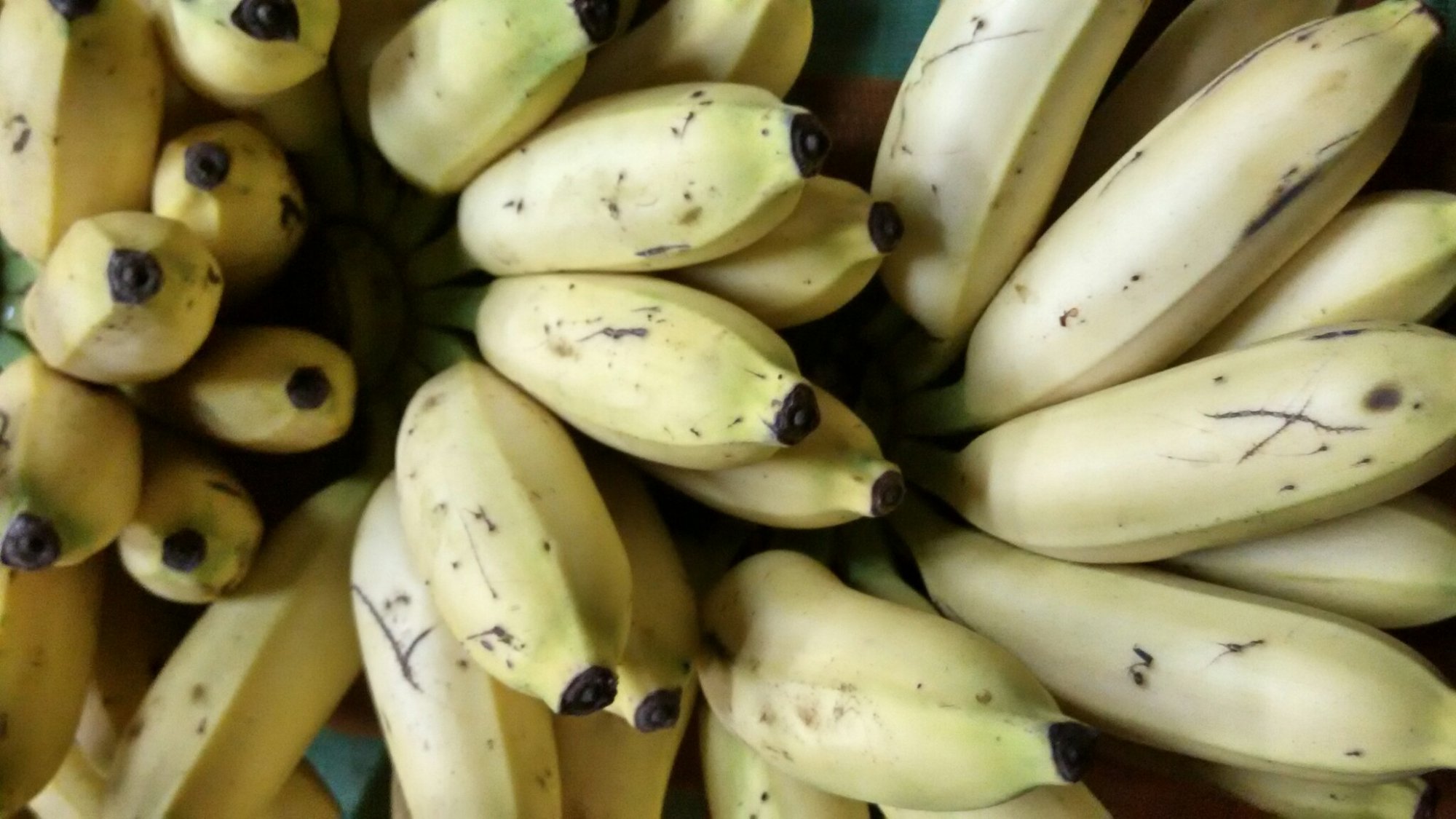
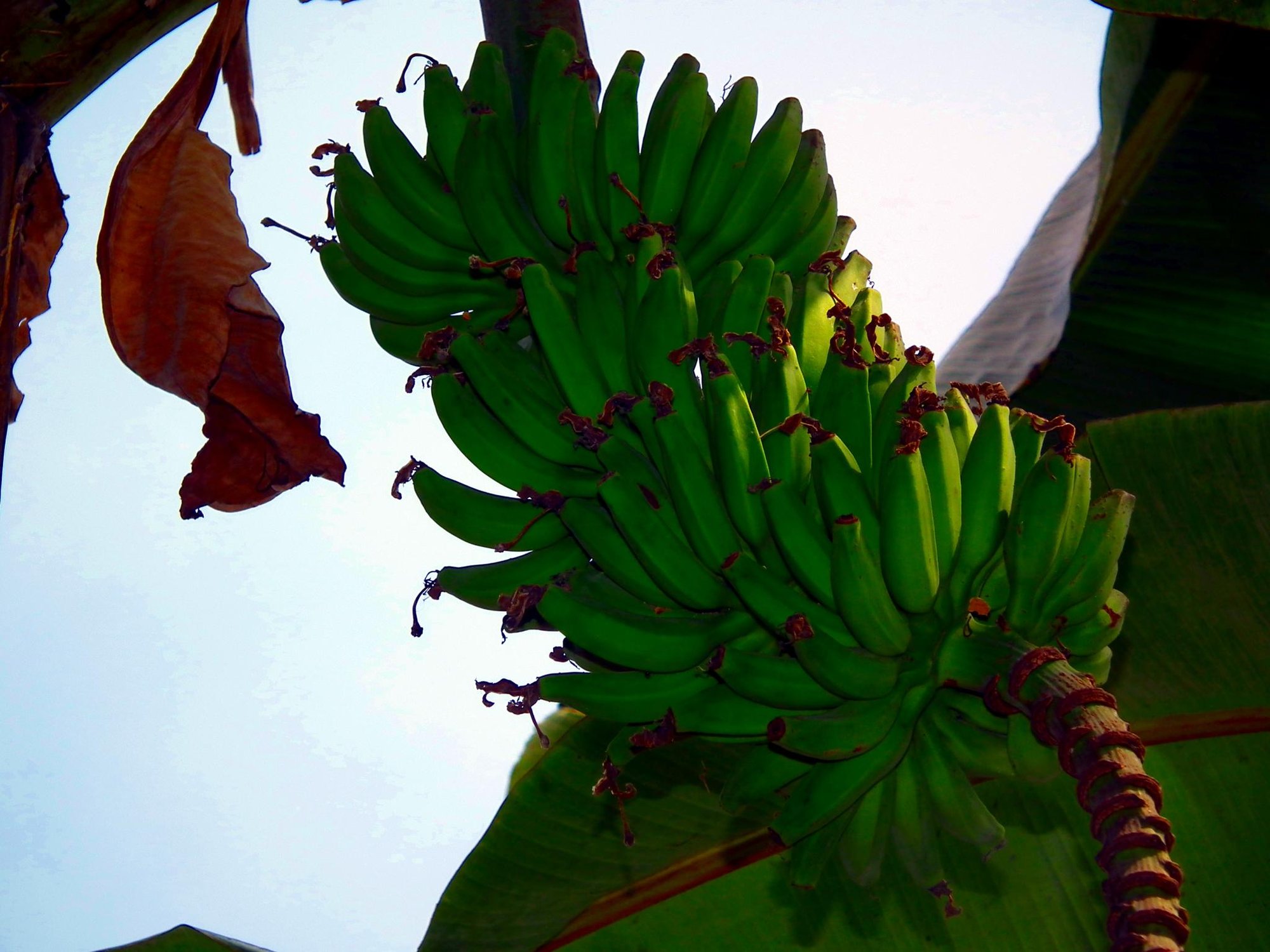
Bananas are the yard fruit that ripens on your schedule. A stalk hangs there, green and patient, and then — all at once — you have more bananas than any household can eat before they turn. That is not a problem. That is the whole point of this guide.
First, the identity check: a banana is botanically a berry. A big, curved, peelable berry, which is another sign botany enjoys a joke. What matters in the kitchen is ethylene: bananas ripen by releasing ethylene gas, which triggers more ripening, which is why one ripe banana in a paper bag ripens the green ones next to it, and why a banana left alone on the counter goes from green to spotted in days. The paper-bag trick is not folklore — it is gas management.
Why banana deserves the garden
Three reasons. One: the yield. One stalk is a lot of fruit, and it all ripens at once, which forces you to actually cook with it instead of just snacking. Two: the range. Banana goes from breakfast bread to frozen dessert to a caramelized side dish, and every stage of ripeness has a job. Three: the schedule. Unlike fruit that must be picked at peak ripeness, bananas finish ripening off the plant, so you pick when it suits you and let the counter do the rest.
The science that matters: ripening converts starch to sugar. A green banana is starchy and bland; a spotted one is sweet and fragrant because the conversion is nearly done; a black one is almost all sugar, which is why it bakes so well. Do not throw black bananas away — they are not ruined, they are ready for the oven.
Growing tie-in (the short version)
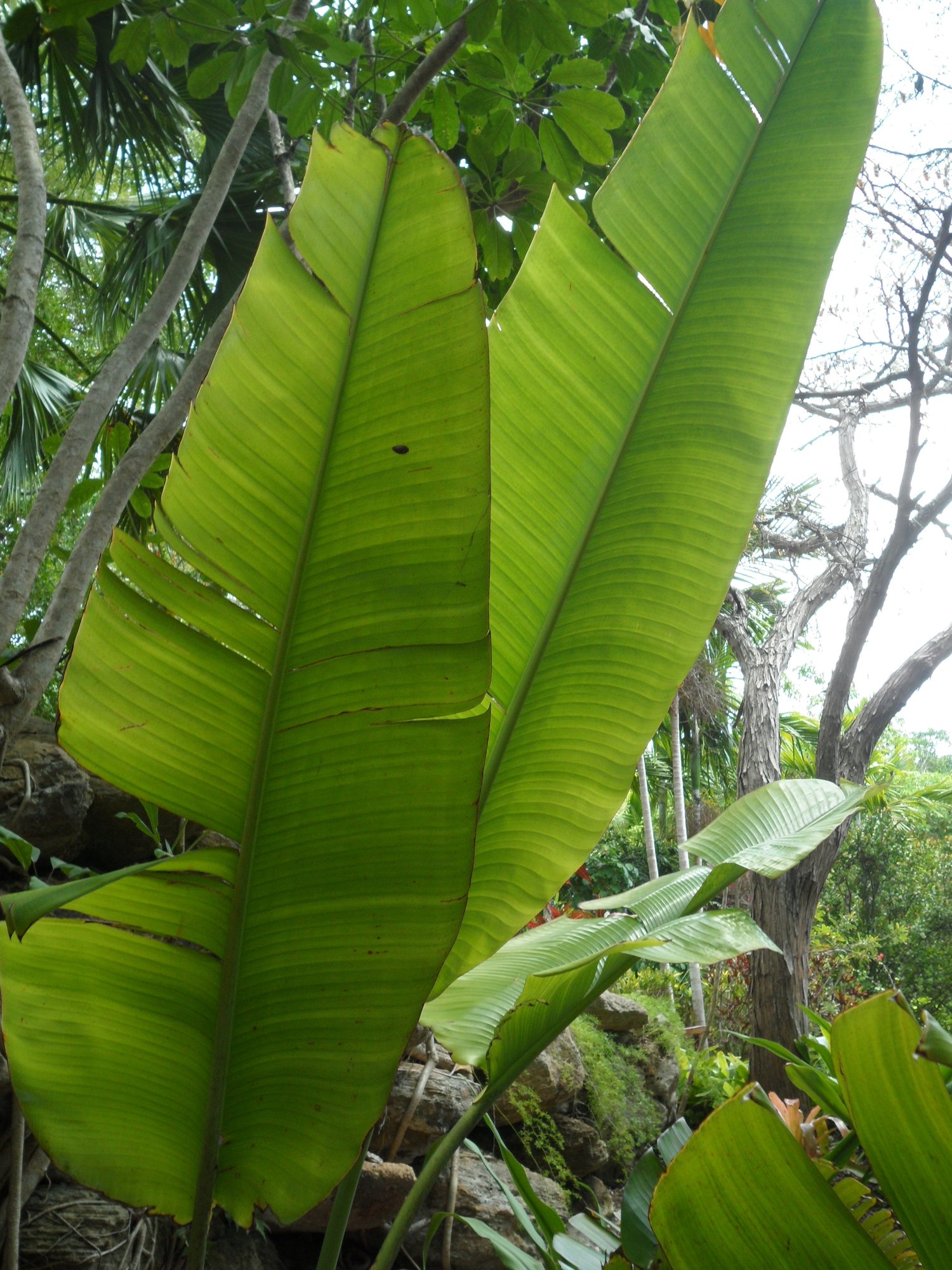
Bananas grow in South Florida and in protected spots in Central Florida, where cold snaps are the enemy — a hard freeze can knock a plant back to the ground, though it usually regrows from the base. After a stem fruits, it dies back, and new shoots called ratoons replace it, so a banana patch is a relay team, not a single plant. That is the whole growing story; the rest of this guide is what to do with the pile that results.
Four ways to cook them
1. Banana bread (the black-banana rescue)
Mash overripe, black-skinned bananas and bake them into bread with flour, eggs, butter, and a pinch of salt. The overripe part is not a compromise — it is the recipe. Black bananas bring the most sugar and the most banana flavor, which is why banana bread made from perfect yellow bananas tastes oddly mild. Add nuts or chocolate if you like; the banana does the heavy lifting either way.
2. Nice cream (the frozen trick)
Freeze peeled, sliced bananas flat in bags, then blend them with nothing but a splash of milk or coconut milk. The texture science is simple: frozen banana blends into something shockingly close to soft-serve ice cream, no churner, no cream, no added sugar needed. Add cocoa, peanut butter, or a handful of berries and it becomes dessert with a straight face.
3. Smoothies (the everyday glut-buster)
Frozen banana is the backbone of a good smoothie — it thickens, sweetens, and chills all at once, so you need less ice and less sweetener. Blend with mango, berries, greens, or peanut butter. One frozen banana per blender is the ratio that works; two turns it into a milkshake, which is also fine.
4. Grilled or fried (the caramelized side)
Slice firm-ripe bananas and grill or pan-fry them in a little butter until caramelized at the edges. Heat turns the sugars golden and concentrates the flavor, and a pinch of cinnamon or a squeeze of lime keeps it from going one-note. Serve with yogurt, ice cream, or rice and beans. One distinction, stated once: this is not a plantain recipe. Plantains are a different, starchier cooking banana that need full cooking — do not confuse the two, or your dessert will taste like a side dish.
Storing the banana
Counter to ripen, fridge when ripe — the skin will blacken in the fridge, but the flesh stays fine, so do not judge a fridge banana by its skin. For the glut, freeze peeled bananas flat in bags for nice cream and smoothies all year; our Freezing the Harvest guide covers the method, and the Florida Preserving Calendar tells you when the harvest lands. Peel before freezing — a frozen unpeeled banana is a wrestling match you will lose.
That is the banana deal: a plant that fruits in a rush, ripens on your counter, and turns into bread, dessert, smoothies, and a caramelized side without a single complaint. Plant a patch. You will wonder why you ever let a stalk beat you.
🌱 Keep learning
Three related guides worth reading next:
- Water-Bath Canning Without Fear — The safety-first guide to preserving your harvest: botulism science, the pH 4.6 rule, and water-bath canning step by step.
- Fermented Hot Sauce — Let the microbes do the cooking: lacto-fermented hot sauce from garden peppers, with the safety science built in.
- Drying Herbs the Right Way — Which herbs dry beautifully, which ones should be frozen instead, and the methods that actually preserve flavor.
🪱 Your Soil Needs This
Reading about healthy soil is great. Growing in it is better. Our small-batch, traceable worm castings are the shortcut your garden deserves.
Shop Worm Castings Subscribe & SaveEvery bag comes with a lot certificate. Know what's in your soil.