
Megan Graham writes for HortOS, a free directory of American wholesale plant growers with their published availability and trade prices.
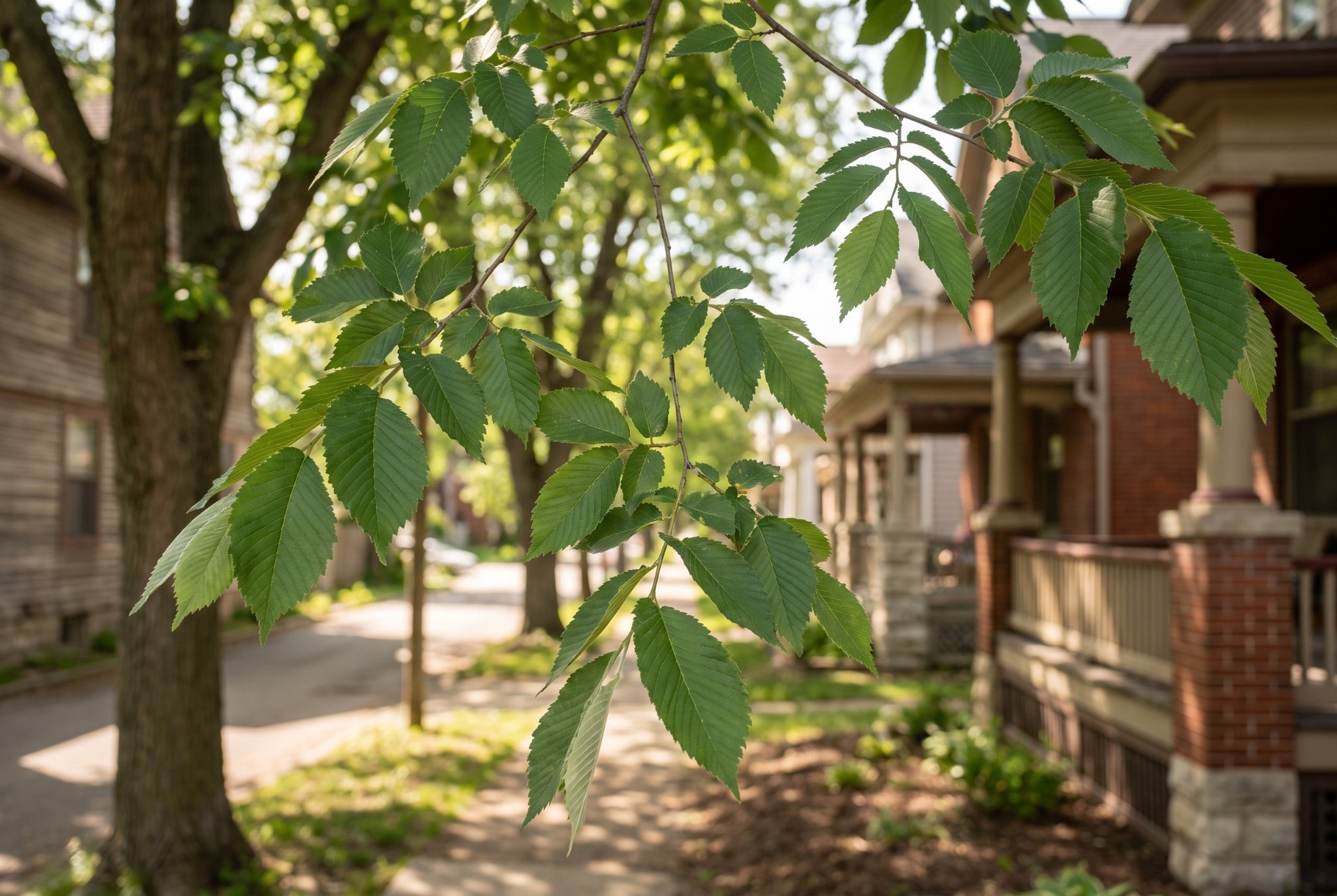
Few trees shade a yard as well as an American elm. The trunk rises straight, then divides into arching branches that spread into a wide vase, and the leaves turn a clean yellow in fall. Baltimore orioles often hang their nests from the outer twigs, and the caterpillars of many native moths feed on the leaves. Streets across the eastern United States were once roofed over with elms, and then a disease took most of them.
What Dutch elm disease does
Dutch elm disease is caused by fungi of the genus Ophiostoma that grow in the tree’s water-carrying vessels and block them. It reached North America on imported elm logs, was found in Ohio in 1930, and spread across the East over the following decades. Elm bark beetles carry the spores from tree to tree, and the fungus also moves underground through roots that have grafted together between neighboring elms. The first sign is a branch whose leaves wilt and turn yellow in summer, while the branches around it are still green. The whole tree can follow within a season or two.
As the American Elm guide on this site notes, the disease has not yet been detected in Florida. That is a reason to plant a tolerant selection now, not a reason to plant a seedling and hope.
Resistant does not mean immune
A resistant elm is one that was inoculated with the fungus in trials and mostly survived. It can still be infected in a bad year, but it usually loses a few branches and recovers. A seedling raised from seed is not reliably resistant, because every seed is a fresh roll of the genetic dice. The selection has to be a named cultivar, propagated from one tested tree.
The named selections worth looking for
Princeton is one of the oldest, in the trade for about a century, with a classic vase shape and good tolerance. Valley Forge, New Harmony and Jefferson came out of the USDA National Arboretum’s testing program, and they are among the best proven American elm cultivars today. Jefferson came from the old elms of the National Mall in Washington, and Valley Forge keeps a tall, upright vase shape. Prairie Expedition was selected for the far north and the prairies, so it is more cold-hardy than a Florida yard needs, but it is a good one to know.
The hybrids are worth a look too. Accolade and Triumph were bred at the Morton Arboretum from Asian elms, and they grow fast and show strong resistance in trials. They are not American elms, so they will not feed native wildlife the way the species does, but they give you an elm-shaped shade tree at a far lower risk.
Whichever you choose, ask the grower for the cultivar name and check it is on the tag. A tree sold simply as American elm is a gamble. Our guide to Dutch elm disease resistant elms shows the growers that list each one.
Pick and plant one
Look for a single straight leader, a trunk without wounds, and a visible root flare where the trunk widens. A trunk about two inches thick is a good size to plant. Larger trees cost more and sulk longer.
Plant in fall or early spring, when the soil is warm but the weather is mild. Dig a wide hole, not a deep one, and set the tree so the flare sits at or just above the soil level. Backfill with the soil that came out, water thoroughly, and spread three to four inches of mulch in a wide ring, kept a hand’s width away from the trunk. Skip the stakes unless the tree cannot stand on its own.
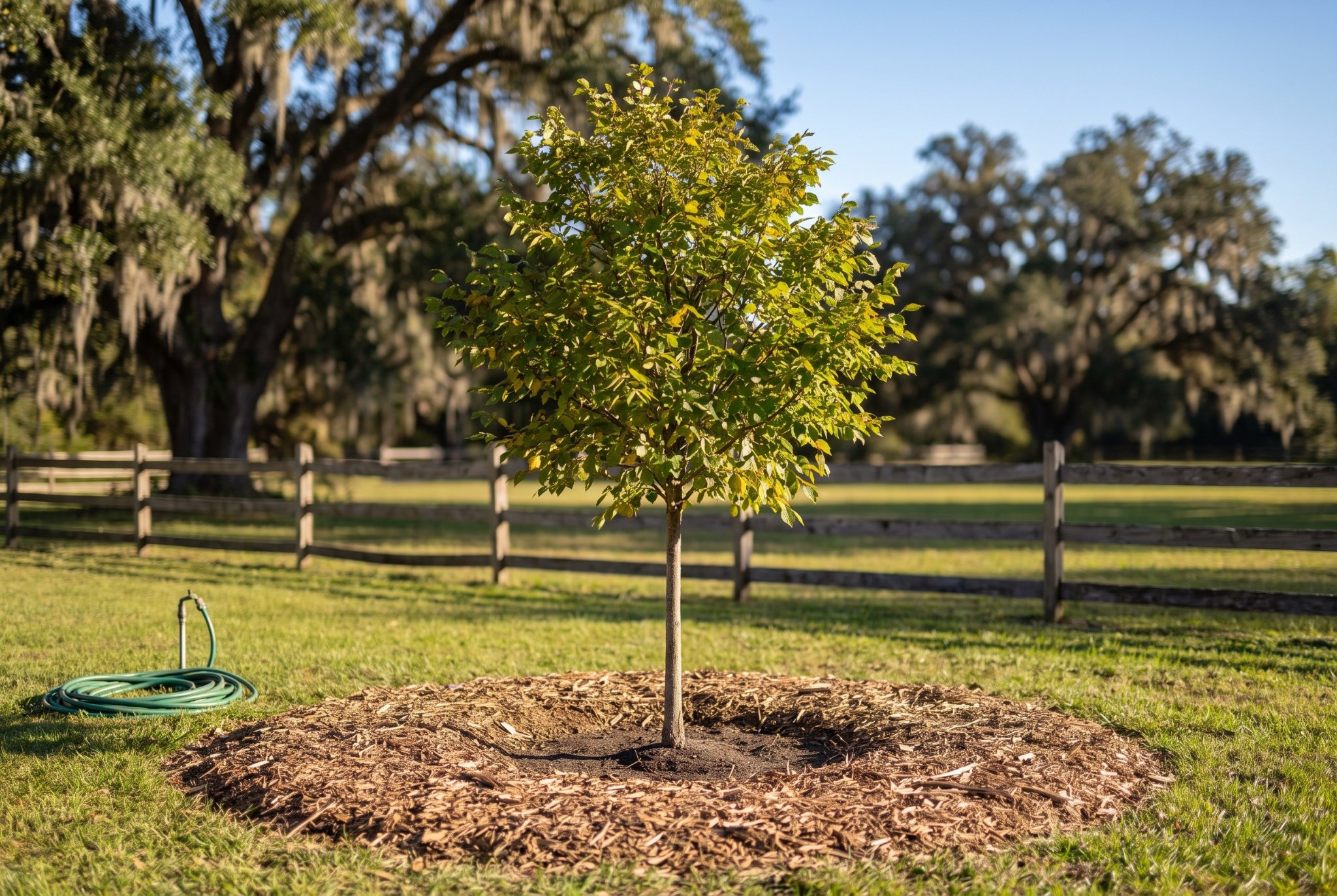
Give it room. An American elm grows 60 to 80 feet tall and nearly as wide, so keep it at least 25 feet from the house and away from power lines. Do not plant elms in a tight row, because root grafts are how the disease moves between trees. Mix in other species.
Prune only in late fall and winter, when the beetles are not flying, and remove any dead wood promptly. Water weekly in dry weather for the first two years, and the tree will largely look after itself.
Keep learning 🌱
Where to go next:
🪱 Your Soil Needs This
Reading about healthy soil is great. Growing in it is better. Our small-batch, traceable worm castings are the shortcut your garden deserves.
Shop Worm Castings Subscribe & SaveEvery bag comes with a lot certificate. Know what's in your soil.