
Beach Morning Glory (Ipomoea imperati)
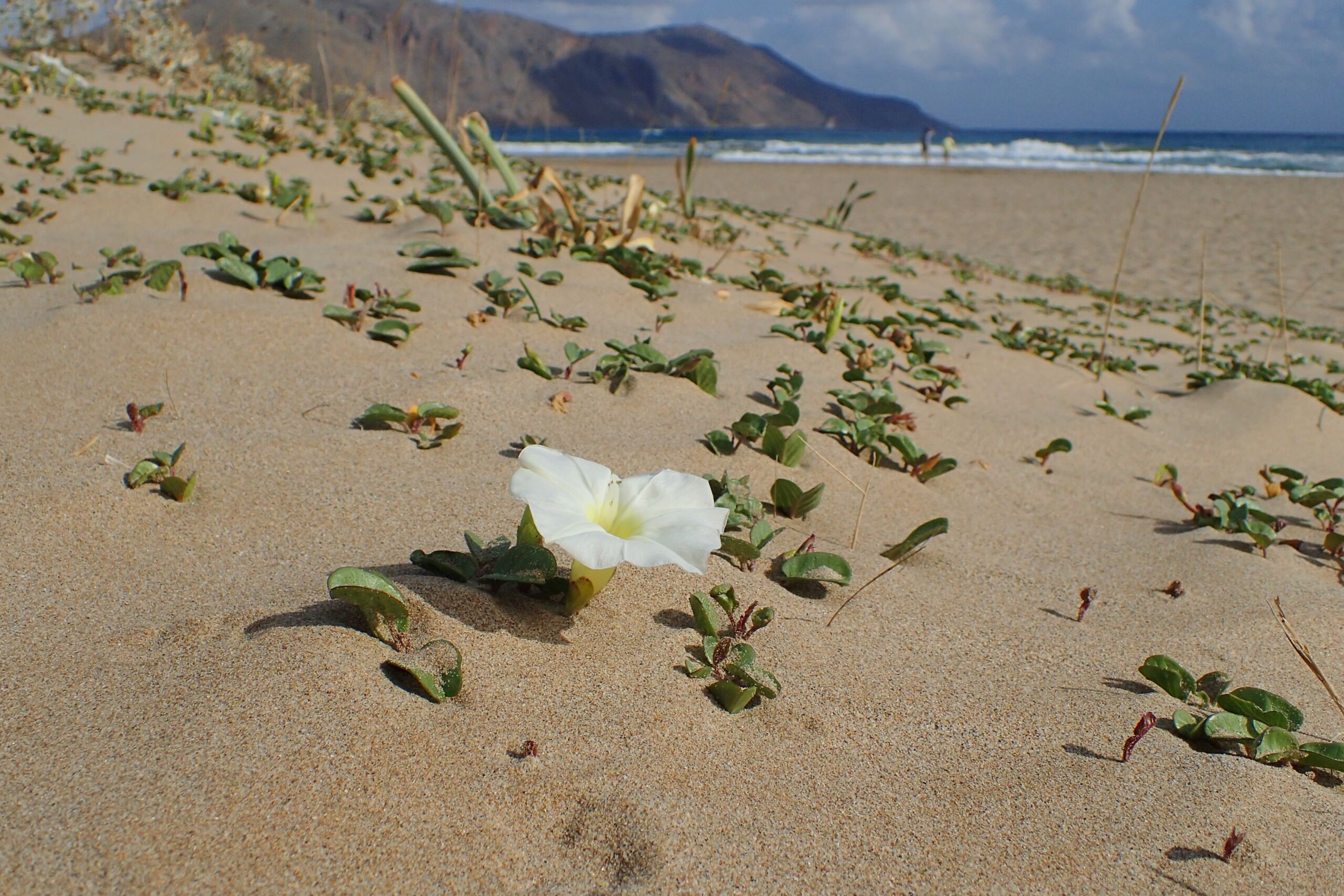
Also known as: Beach Morningglory
Quick Facts
- Type: vine
- Size: up to 6 in tall, spreading 10-20 ft or more
- Sun: full
- Water: dry to medium; drought tolerant
- Soil: dry to moist, well-drained sand; low-nutrient tolerant
- USDA zones: 8-11
A trailing evergreen dune vine with fleshy, lobed leaves and large, showy white funnel flowers with yellow centers. It knits coastal sand together where almost nothing else can grow.
Native to Florida's coastal dunes from the Panhandle through the peninsula to the Keys, where it is an important sand stabilizer and a first colonizer after storms. Best suited to coastal landscapes and dune restoration sites where it can sprawl freely — it will spread fast even in a garden bed.
In the Landscape
The go-to native groundcover for beachfront homes, dune restoration, and any hot, sandy, salt-blasted spot. Inland gardeners can use it as a sprawling groundcover in poor sandy soil, but give it room — it spreads quickly — and companions like sea oxeye and beach verbena.
Care & Propagation
Almost absurdly low maintenance: full sun, sandy soil, no fertilizer, and essentially no pests or diseases. Do not overwater or amend the soil rich — lean conditions suit it best. Trim edges if it wanders where it shouldn't.
Propagates by seeds, stem cuttings, or division. Sow large seeds in sandy mix, or press stem sections with nodes into moist sand — they root readily where they touch soil. Plant in spring or early summer in a coastal or sandy site.
Wildlife Value
The big white morning blooms draw butterflies and hummingbirds, and its seed capsules provide important forage for coastal wildlife, including endangered beach mice. As a dune stabilizer its stems root at the nodes, forming living sand-trapping mats that shelter countless small beach creatures.
🌱 Fun fact: Each flower lasts a single morning — blooming at dawn and wilting by afternoon — and the vine's seeds are a favorite food of the endangered beach mice that live in Florida's dunes.
← Browse all Florida native plants
🌴 In Florida
Native to Florida's coastal dunes from the Panhandle through the peninsula to the Keys, where it is an important sand stabilizer and a first colonizer after storms. Best suited to coastal landscapes and dune restoration sites where it can sprawl freely — it will spread fast even in a garden bed.
🌿 Keep exploring
More Florida natives worth meeting:
- American Wisteria (Wisteria frutescens)
- Atlantic Pigeonwings (Clitoria mariana)
- Carolina Jessamine (Gelsemium sempervirens)
🪱 Your Soil Needs This
Reading about healthy soil is great. Growing in it is better. Our small-batch, traceable worm castings are the shortcut your garden deserves.
Shop Worm Castings Subscribe & SaveEvery bag comes with a lot certificate. Know what's in your soil.