
Buccaneer Palm (Pseudophoenix sargentii)
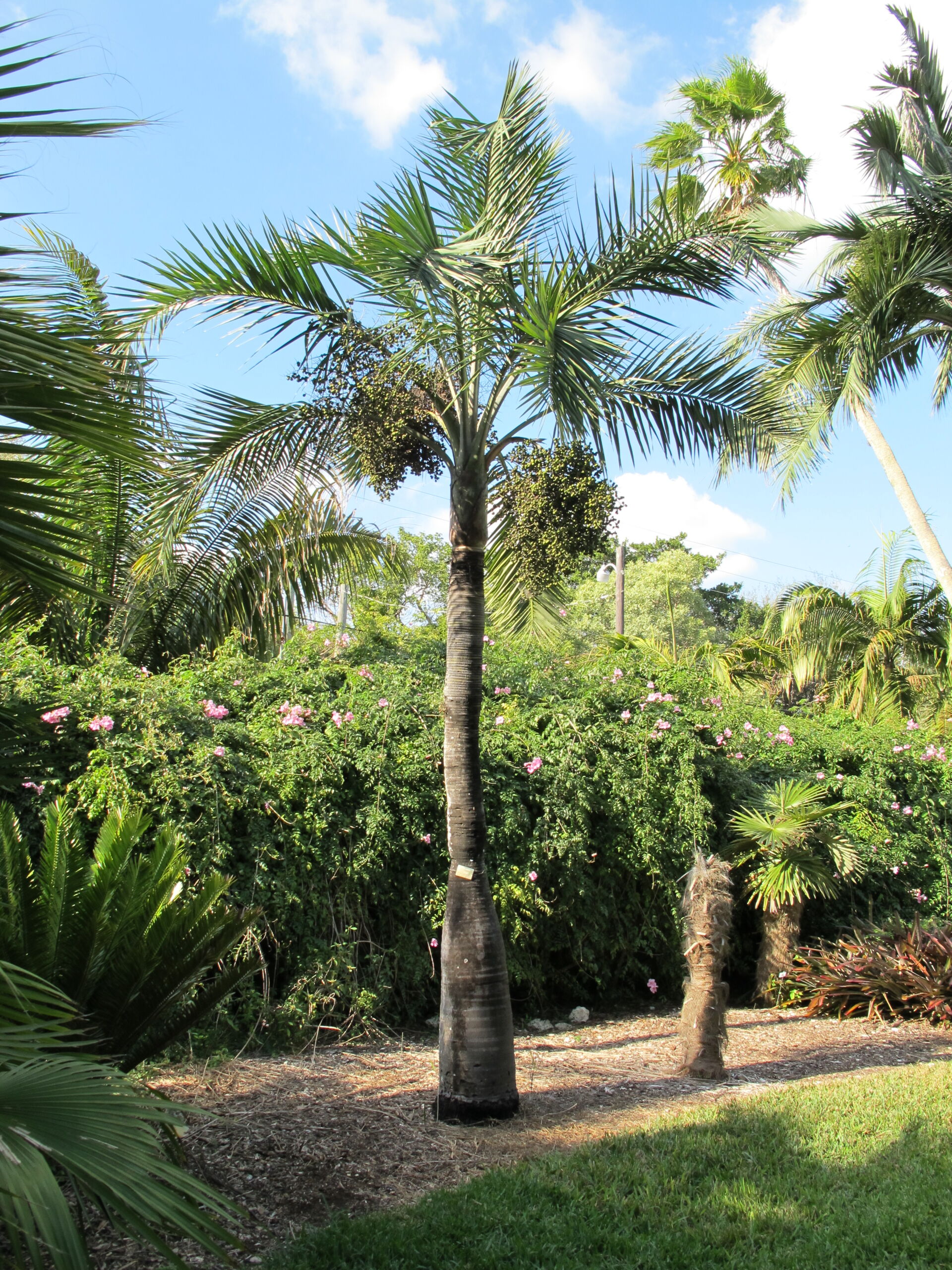

Also known as: Sargent's cherry palm
Quick Facts
- Type: palm
- Size: 10-20 ft tall
- Sun: full
- Water: low
- Soil: Rocky, well-drained soils; salt tolerant
- USDA zones: 10-11
A stout, bottle-shaped palm with cherry-red fruit – endangered in the wild.
Growing this endangered Keys native is conservation in action; give it sun and drainage.
In the Landscape
A rare collector's palm for frost-free coastal gardens: specimen planting, large containers, or a windswept beachfront where its salt tolerance shines. Its slow growth makes it a superb long-lived potted palm.
Care & Propagation
Plant in full sun in well-drained, rocky or sandy alkaline soil. Among the most drought-, salt-, and wind-tolerant palms — established plants shrug off conditions that kill lesser palms. Needs almost no pruning or feeding.
Grow from seed; it's extremely slow — seedlings may produce only one or two fronds a year. Patience is the whole technique. Buy nursery-grown plants only.
Wildlife Value
Birds eat the cherry-red fruits. The dense crown offers shelter and nesting cover.
🌱 Fun fact: Fewer than 50 wild plants remain in Florida, all on Elliott Key — so every nursery-grown buccaneer palm in a garden is a small act of conservation.
← Browse all Florida native plants
🌴 In Florida
Growing this endangered Keys native is conservation in action; give it sun and drainage.
🌿 Keep exploring
More Florida natives worth meeting:
🪱 Your Soil Needs This
Reading about healthy soil is great. Growing in it is better. Our small-batch, traceable worm castings are the shortcut your garden deserves.
Shop Worm Castings Subscribe & SaveEvery bag comes with a lot certificate. Know what's in your soil.