
Calico Aster (Symphyotrichum lateriflorum)
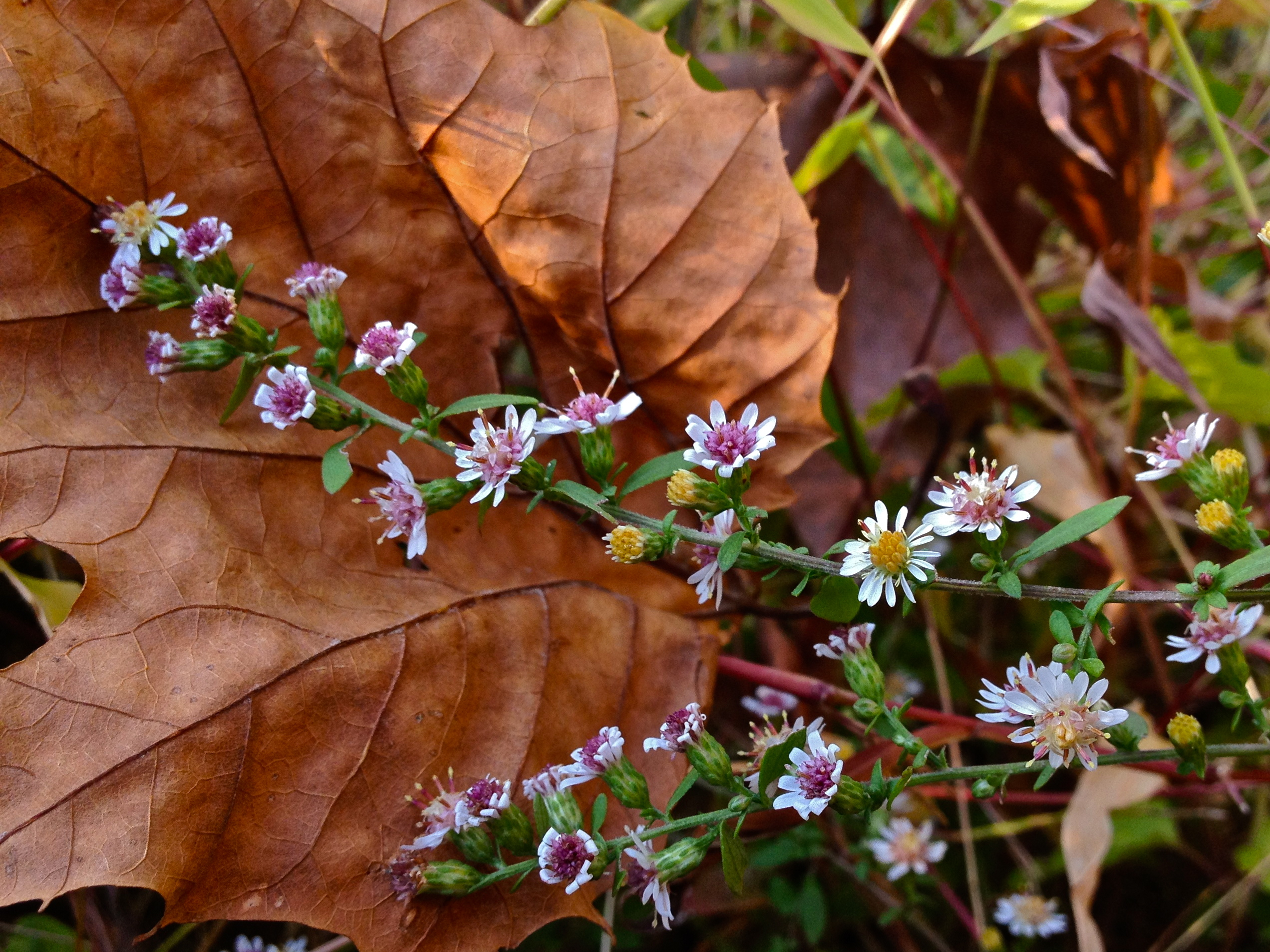

Also known as: Side-Flowering Aster
Quick Facts
- Type: wildflower
- Size: 2-5 ft tall, branching
- Sun: full-part
- Water: moderate
- Soil: Moist clay to loamy sand; tolerates Florida's sandy soils if mulched and watered.
- USDA zones: 8-9
Clouds of tiny white-to-lavender daisies that shift color as they age, blooming when almost nothing else dares.
Native from North Florida into Central Florida as far south as Lake County. One of the last nectar sources of the year — often still blooming in November.
In the Landscape
Woodland edges, pond and stream banks, and pollinator borders; lovely massed where its airy branching habit can sprawl.
Care & Propagation
Give it afternoon shade and moisture-retaining soil to keep lower leaves from crisping in drought. Cut back by half in midsummer for bushier fall bloom.
From seed (surface sow, cold stratification helps) or by division in spring.
Wildlife Value
Late-season lifeline for native bees, migrating monarchs, and hoverflies; seeds feed small birds and the branching stems shelter overwintering insects.
🌱 Fun fact: The 'calico' name comes from its two-tone flower heads: fresh blooms have yellow centers while older, pollinated ones turn reddish-purple, all on the same branch.
← Browse all Florida native plants
🌴 In Florida
Native from North Florida into Central Florida as far south as Lake County. One of the last nectar sources of the year — often still blooming in November.
🌿 Keep exploring
More Florida natives worth meeting:
- Alligator Flag (Thalia geniculata)
- American White Waterlily (Nymphaea odorata)
- Anisescented Goldenrod (Solidago odora)
🪱 Your Soil Needs This
Reading about healthy soil is great. Growing in it is better. Our small-batch, traceable worm castings are the shortcut your garden deserves.
Shop Worm Castings Subscribe & SaveEvery bag comes with a lot certificate. Know what's in your soil.