
Chapman's senna (Senna mexicana var. chapmanii)
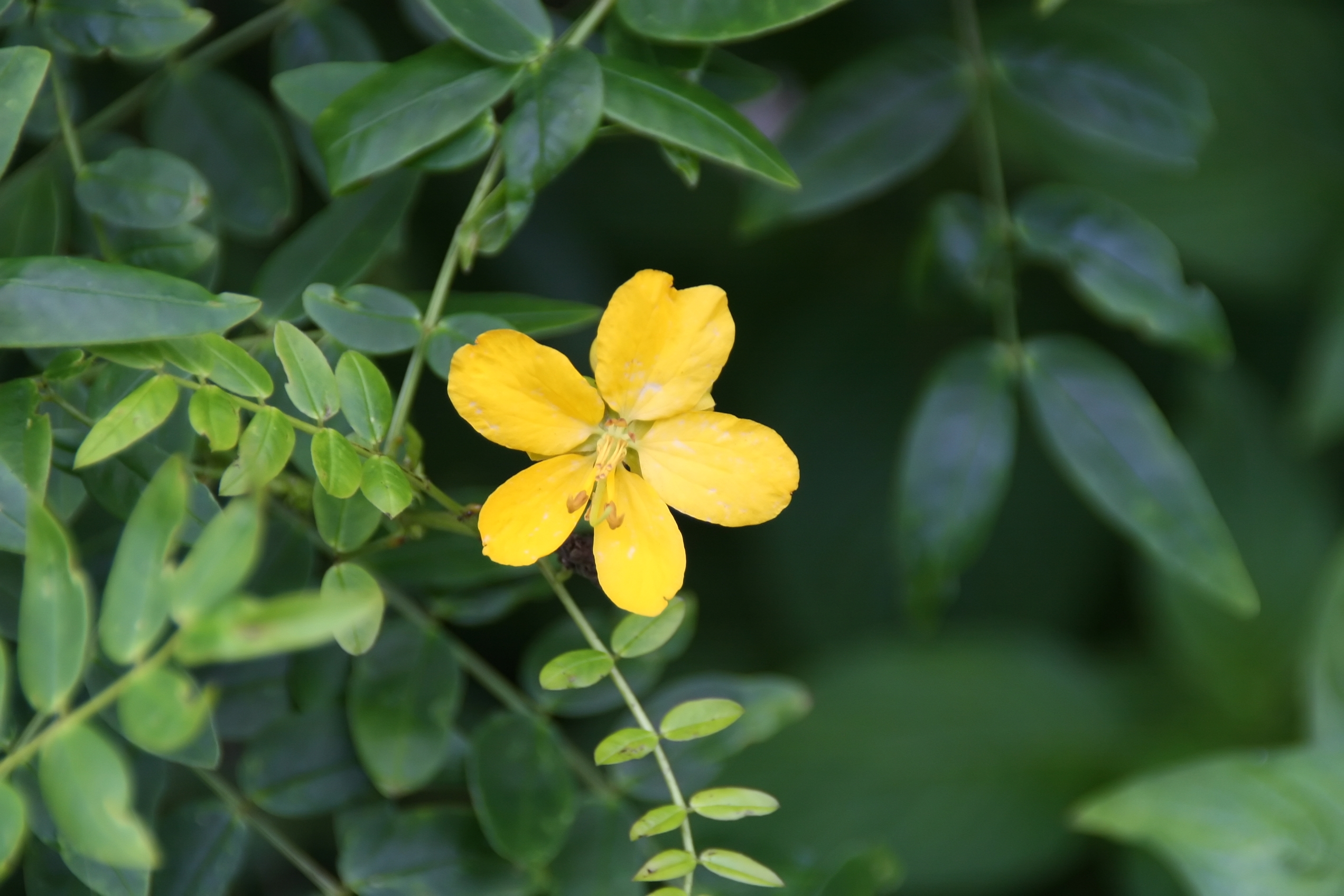

Also known as: Chapman's wild sensitive plant, Bahama senna
Quick Facts
- Type: wildflower
- Size: 3-6 ft tall and wide (habit variable, upright to sprawling)
- Sun: full
- Water: drought tolerant once established
- Soil: sandy, well-drained; tolerates poor, rocky soils; salt tolerant
- USDA zones: 9b-11
A robust evergreen shrub with buttery-yellow flowers marked with subtle red veins — one of the showiest native sennas. Larval host for the Cloudless Sulphur and Orange-barred Sulphur; named for botanist Alvan Chapman, who catalogued Florida's flora.
Native to the southernmost Florida — Miami-Dade and Monroe counties, including the Keys — where it's also salt tolerant enough for coastal plantings; state-listed as threatened because of its limited natural range, so garden plantings genuinely help the species.
In the Landscape
Use as a specimen shrub, massed planting, or flowering border in South Florida butterfly gardens. Space 3-4 ft apart. Pair with wild lime, firebush, and coontie for a South Florida native wildlife border.
Care & Propagation
Plant in full sun and water until established; then it needs almost nothing — it handles drought, poor soil, and salt. Prune after flowering to shape it and control self-seeding. Protect from hard freezes in the northern edge of its range.
Propagate by seed, sown in spring after scarification or a hot-water soak — senna seeds are hard-coated and germinate poorly without it. It self-seeds prolifically. Cuttings are possible but seed is the standard method.
Wildlife Value
Chapman's senna is a larval host for the Cloudless Sulphur (Phoebis sennae) and the Orange-barred Sulphur (Phoebis philea). Its stalked flower clusters bloom in spring and fall, feeding bees and adult butterflies, while the foliage feeds sulphur caterpillars. All Senna species are sulphur hosts, but this one pairs the ecological value with real ornamental punch.
🌱 Fun fact: It's named for Alvan Wentworth Chapman, the 19th-century physician-botanist whose 'Flora of the Southern United States' was the first great catalog of the region's plants — he described Florida's flora while practicing medicine in Apalachicola.
← Browse all Florida native plants
🌴 In Florida
Native to the southernmost Florida — Miami-Dade and Monroe counties, including the Keys — where it's also salt tolerant enough for coastal plantings; state-listed as threatened because of its limited natural range, so garden plantings genuinely help the species.
🌿 Keep exploring
More Florida natives worth meeting:
- Alligator Flag (Thalia geniculata)
- American White Waterlily (Nymphaea odorata)
- Anisescented Goldenrod (Solidago odora)
🪱 Your Soil Needs This
Reading about healthy soil is great. Growing in it is better. Our small-batch, traceable worm castings are the shortcut your garden deserves.
Shop Worm Castings Subscribe & SaveEvery bag comes with a lot certificate. Know what's in your soil.