
Chickasaw Plum (Prunus angustifolia)
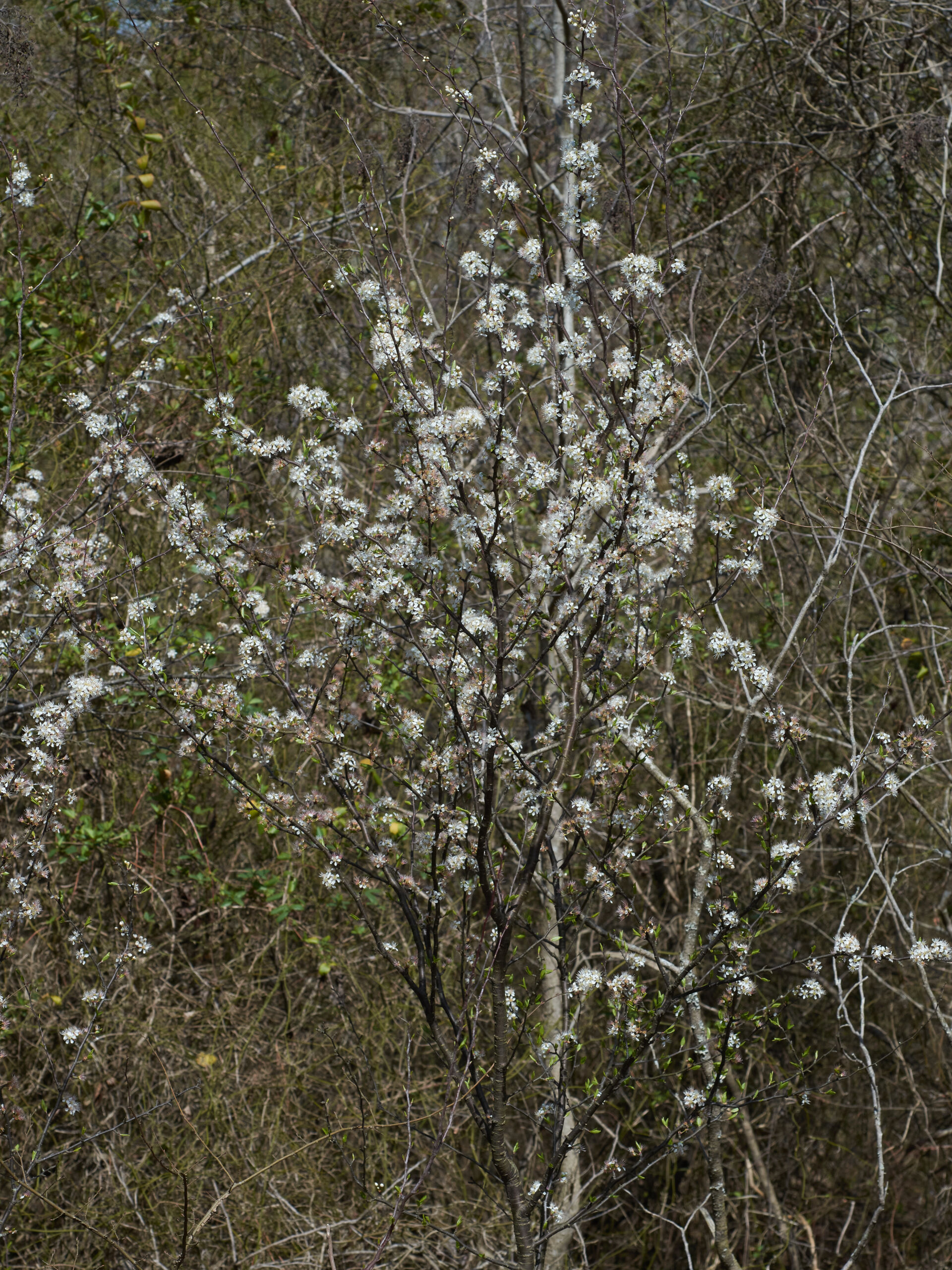

Quick Facts
- Type: tree
- Size: 10-20 ft tall
- Sun: full
- Water: low
- Soil: Sandy, well-drained soils
- USDA zones: 7-9
Forms fragrant white-flowered thickets; the small red plums make legendary jelly.
Suckers into a wildlife thicket – plant where it can spread and feed everything.
In the Landscape
A spreading native plum for naturalized areas and wildlife thickets — fragrant white blooms, edible red plums, and great cover. Let it form a colony where you have room.
Care & Propagation
Plant in fall in full sun; tolerates poor sand. Suckers freely — mow the perimeter to keep it in bounds. Prune dead wood after fruiting. Tough and drought-tolerant.
Cold-stratified seed sown in fall, or root suckers transplanted in winter. Forms colonies readily on its own.
Wildlife Value
Fruit feeds deer, foxes, raccoons, and songbirds. The thorny thickets are prime nesting cover for mockingbirds, cardinals, and rabbits; spring flowers feed native bees.
🌱 Fun fact: Chickasaw plum is one of the parents of many cultivated Japanese plums — Luther Burbank and other breeders crossed it with Asian species to create the plums in grocery stores today.
← Browse all Florida native plants
🌴 In Florida
Suckers into a wildlife thicket – plant where it can spread and feed everything.
🌿 Keep exploring
More Florida natives worth meeting:
🍽️ Also see the edible-plant profile for this same species: Chickasaw plum (Prunus angustifolia) — how to eat it and harvest notes.
🪱 Your Soil Needs This
Reading about healthy soil is great. Growing in it is better. Our small-batch, traceable worm castings are the shortcut your garden deserves.
Shop Worm Castings Subscribe & SaveEvery bag comes with a lot certificate. Know what's in your soil.