
Cinnamon fern (Osmundastrum cinnamomeum)
Also known as: Osmunda cinnamomea, fiddlehead fern
Quick Facts
- Type: fern
- Size: 2-4 ft tall, 2-3 ft wide
- Sun: part-shade
- Water: wet
- Soil: rich, moist to wet, acidic; thrives in muck and along water
- USDA zones: 4-9
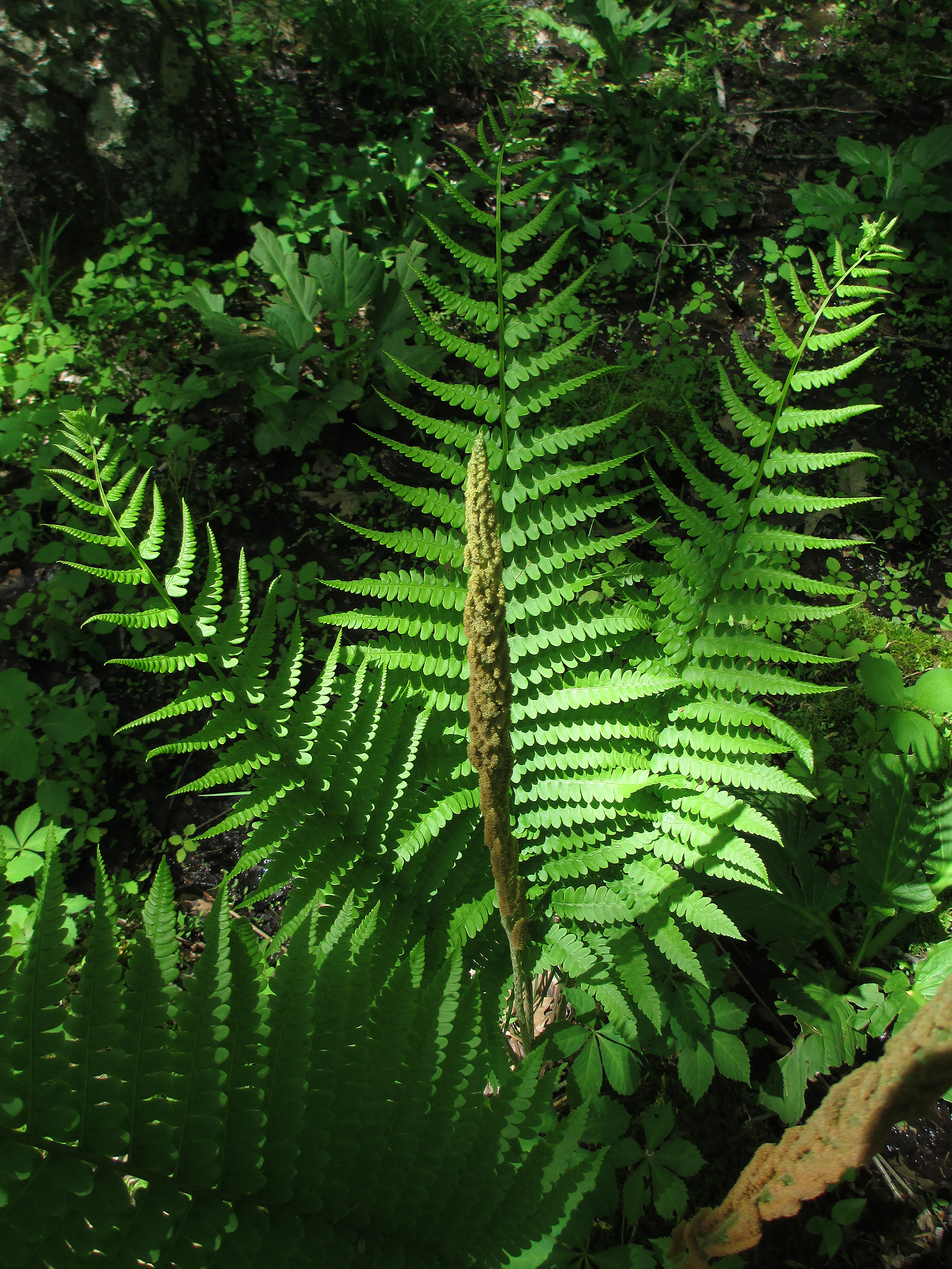
A stately native fern with large arching green fronds — and in spring, separate cinnamon-brown fertile fronds that rise from the center like their namesake spice. The fiddleheads are among the earliest signs of spring in wet Florida woods.
Native to wet hammocks, swamps, and stream banks of the northern and central peninsula; one of the most cold-hardy Florida ferns and a classic for pond edges and rain gardens.
In the Landscape
Use in shade gardens, rain gardens, pond margins, and woodland plantings. Space 2-3 ft apart for massing. Pair with royal fern, lizard's tail, and swamp milkweed for a lush wetland-edge planting.
Care & Propagation
Plant in spring in reliably moist to wet soil — this fern wants wet feet and sulks in dry shade. Mulch with leaves to hold moisture. Cut back tattered fronds in late winter before the fiddleheads emerge; no fertilizer needed.
Propagate by dividing established clumps in early spring before new growth emerges — the crown is tough, so use a sharp spade. Spores are possible but slow and finicky; division is the practical route. Replant divisions in consistently moist soil immediately.
Wildlife Value
Cinnamon fern has no documented butterfly larval-host role, but its dense, arching fronds are prime shelter — frogs, toads, salamanders, lizards, and ground-nesting birds all use fern clumps for cover and humidity. The moist microclimate under the fronds supports a whole community of invertebrates too.
🌱 Fun fact: The cinnamon-colored fertile fronds are a separate set of fronds from the green sterile ones — the plant literally grows two different kinds of leaves, and the brown spore-bearing ones wither away by midsummer after releasing their spores.
← Browse all Florida native plants
🌴 In Florida
Native to wet hammocks, swamps, and stream banks of the northern and central peninsula; one of the most cold-hardy Florida ferns and a classic for pond edges and rain gardens.
🌿 Keep exploring
More Florida natives worth meeting:
- Brittle Maidenhair Fern (Adiantum tenerum)
- Broad beech fern (Phegopteris hexagonoptera)
- Cinnamon Fern (Osmunda cinnamomea)
🪱 Your Soil Needs This
Reading about healthy soil is great. Growing in it is better. Our small-batch, traceable worm castings are the shortcut your garden deserves.
Shop Worm Castings Subscribe & SaveEvery bag comes with a lot certificate. Know what's in your soil.