
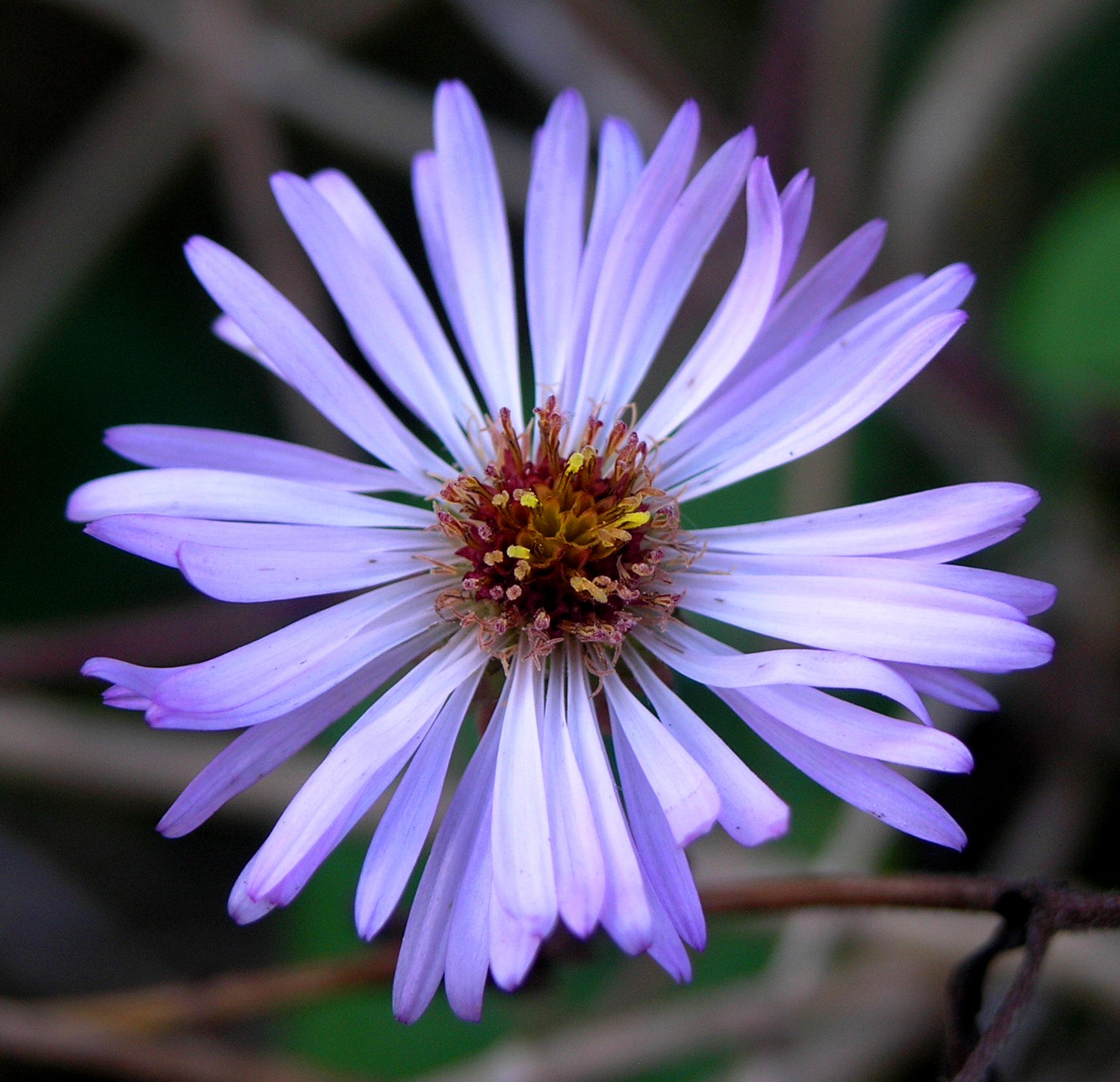
Climbing Aster (Symphyotrichum carolinianum)

Quick Facts
- Type: wildflower
- Size: 6-10 ft sprawling/climbing
- Sun: full
- Water: high
- Soil: Wet soils; pond and ditch edges
- USDA zones: 8-10
A scrambling aster smothered in lavender daisies each fall; let it climb a fence or sprawl as a bank cover.
Give it moisture and something to lean on; cut back hard in winter and it returns with enthusiasm.
In the Landscape
Let it scramble up a fence, trellis, or arbor for a spectacular fall waterfall of lavender daisies, or allow it to sprawl as a bank cover on slopes. It also works at the back of a large wildflower border if given a sturdy support.
Care & Propagation
Plant in spring in moist soil and provide something to climb from day one. Cut the whole plant back hard in late winter; it returns with enthusiasm each spring. Give it room and consistent moisture, and it will reward you with one of the showiest fall displays of any native.
Divide established clumps in early spring, or take stem cuttings in late spring. Sow seed in fall for natural winter chilling.
Wildlife Value
The profuse fall daisies feed migrating monarchs, native bees, and late-season butterflies when few other flowers remain. Dense tangled stems offer shelter for small wildlife.
🌱 Fun fact: It is one of the only asters that truly climbs, scrambling 10 feet or more with stems that twine and lean on neighbors. The genus name Symphyotrichum refers to the joined hairs of the fluffy seed tufts.
← Browse all Florida native plants
🌴 In Florida
Give it moisture and something to lean on; cut back hard in winter and it returns with enthusiasm.
🌿 Keep exploring
More Florida natives worth meeting:
- Alligator Flag (Thalia geniculata)
- American White Waterlily (Nymphaea odorata)
- Anisescented Goldenrod (Solidago odora)
🪱 Your Soil Needs This
Reading about healthy soil is great. Growing in it is better. Our small-batch, traceable worm castings are the shortcut your garden deserves.
Shop Worm Castings Subscribe & SaveEvery bag comes with a lot certificate. Know what's in your soil.