
Swamp Milkweed (Asclepias incarnata)

Quick Facts
- Type: wildflower
- Size: 3-5 ft tall
- Sun: full
- Water: high
- Soil: Wet soils; pond edges and swales
- USDA zones: 8-10
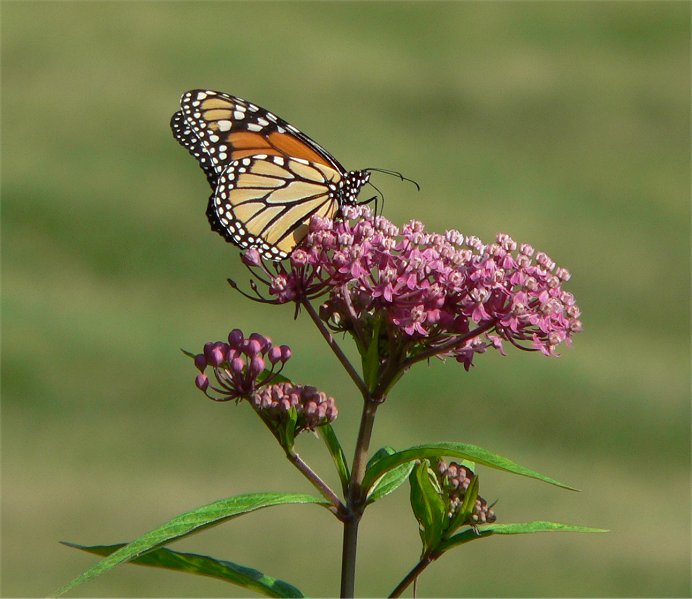
Vanilla-scented pink flower clusters in summer feed a parade of butterflies; monarch caterpillars devour the leaves.
The milkweed for wet spots; unlike butterfly weed it tolerates transplanting when young.
In the Landscape
The milkweed for rain gardens, swales, pond edges, and any consistently moist sunny spot. Pairs beautifully with Joe-Pye weed and ironweed.
Care & Propagation
Plant in full sun in moist to wet soil and water steadily until established — it sulks in dry sand. Cut back in late fall after the seed pods form, and leave some pods for winter interest. It self-sows modestly.
Sow seeds in fall or cold-stratify and sow in spring. Unlike butterfly weed, young plants tolerate transplanting, so it's the easiest milkweed to start from nursery pots.
Wildlife Value
A monarch host plant whose vanilla-scented pink clusters are a butterfly magnet. Expect monarch caterpillars to strip the leaves clean — that's the whole point of planting it.
🌱 Fun fact: Its flowers smell distinctly of vanilla, making swamp milkweed one of the few milkweeds you can identify with your nose.
← Browse all Florida native plants
🌴 In Florida
The milkweed for wet spots; unlike butterfly weed it tolerates transplanting when young.
🌿 Keep exploring
More Florida natives worth meeting:
- Alligator Flag (Thalia geniculata)
- American White Waterlily (Nymphaea odorata)
- Anisescented Goldenrod (Solidago odora)
🪱 Your Soil Needs This
Reading about healthy soil is great. Growing in it is better. Our small-batch, traceable worm castings are the shortcut your garden deserves.
Shop Worm Castings Subscribe & SaveEvery bag comes with a lot certificate. Know what's in your soil.