
This guide started as Florida’s garden birds, and Florida is still the core of it, because Florida’s yard birds are the ones this site knew first. But birds do not stop at the state line, and neither should this guide. What follows now covers the garden birds of the whole country: the Florida catalog is Part 1, and Part 2 adds the birds you will meet in the rest of the United States, by region.
One honest scope note before you dive in. The United States has more than 1,100 bird species on its official list, and a single guide cannot hold all of them without becoming a field guide the size of a phone book. This guide covers the garden birds: the species you can realistically see in a yard, on a lawn, at a feeder, or from a porch, anywhere in the country. That is about 165 species, which is exhaustive for a garden guide and still readable in one sitting, or several sittings, or however long it takes. The rare vagrants, the deep-forest specialists, and the birds you need a boat to find are not here. Everything else is.
Birds already covered in Part 1 are not repeated in Part 2, even when they also live in your region. If you live in Ohio and you are looking for the cardinal, it is in Part 1. Part 2 is the birds Part 1 does not have.
Part 1: Florida and the East
The Florida catalog below is the core of this guide. Most of these birds also live across the eastern United States, which is why Part 1 pulls double duty: it is the Florida guide and, for much of the East, simply the guide.
How this guide works
Each entry gives you the bird’s name, its Latin name (because two birds can share a common name and only one of them is eating your strawberries), how to recognize it in one line, what it does in a garden, what it eats, and how to attract it or, where needed, politely discourage it. Each entry ends with one nerdy fact, because a guide with no nerdy facts is just a list, and lists are for groceries.
Birds are grouped by when and how you will meet them: the year-round regulars, the winter visitors, the summer voices, the raptors and owls, the water visitors, and one very special Florida bird that deserves its own section even though it will probably never visit your yard. Part 1 groups birds this way for Florida. Part 2, later in this guide, adds the rest of the country by region.
The jobs birds do in your garden
Before the catalog, here is why you want birds around at all, beyond the obvious fact that a yard full of birdsong is better than a yard full of silence and aphids.
Pest patrol. This is the big one. Wrens, chickadees, titmice, warblers, and phoebes glean insects off leaves and bark all day, including caterpillars, aphids, and beetles you would otherwise be spraying. A nesting pair of chickadees feeds its chicks almost entirely on caterpillars. That is free pest control with feathers on it. Woodpeckers go after borers and grubs in trees. Even blue jays, for all their drama, eat plenty of insects in breeding season.
Pollination. Hummingbirds are the headline act here. The ruby-throated hummingbird, Florida’s main hummingbird, moves pollen between flowers while chasing nectar, and it favors the long, tube-shaped, red or orange blooms. Plant those and the hummingbirds will do the rest.
Seed spreading. Birds eat fruit and drop seeds elsewhere, sometimes with a little fertilizer included. This is how elderberry, beautyberry, and wild coffee spread themselves around Florida yards without anyone planting them. It is also how you end up with a mystery plant by the fence, which is either a gift or a weed depending on your attitude that morning.
Cleanup crew. Vultures get no respect and deserve more. Turkey vultures and black vultures remove carrion before it becomes a problem, which is a public service nobody applauds. Crows and grackles clean up spilled seed and the occasional dead thing. It is not glamorous. Neither is compost, and you love compost.
Early warning system. Birds notice hawks, cats, and snakes before you do, and they say so loudly. A sudden chorus of scolding jays and wrens is the yard’s alarm system going off. If every bird in your yard just went silent at once, look up. Something with wings and intentions is overhead.
Seasons in a Florida yard
Florida does not really do winter the way the rest of the country does, but birds still keep a calendar, and it matters for what you will see.
Year-round residents are the backbone of this guide: cardinals, mockingbirds, blue jays, wrens, doves, woodpeckers, and the rest of the regulars. They are here in January and July, which is why they feel like neighbors.
Winter visitors arrive when the weather cools and stay until spring: yellow-rumped warblers, palm warblers, sparrows, juncos, cedar waxwings, and the tree swallows that swarm over fields on mild days. They are the reason a Florida yard in February can feel more birdy than a Florida yard in August.
Summer breeders come north to raise chicks and leave in fall: ruby-throated hummingbirds (roughly March through September in Florida), purple martins, chimney swifts, barn swallows, and great crested flycatchers.
Migration peaks in spring (roughly March through early May) and fall (roughly September through October), when birds funnel down the peninsula and back. On a good migration morning, your yard can hold warblers you will not see again for six months. That is the best kind of surprise.
How to make your yard a bird yard
You do not need a feeder to have birds, but it helps to understand what birds are actually shopping for: food, water, shelter, and a safe place to raise chicks. Give them three of the four and they will come. Give them all four and they will bring friends.
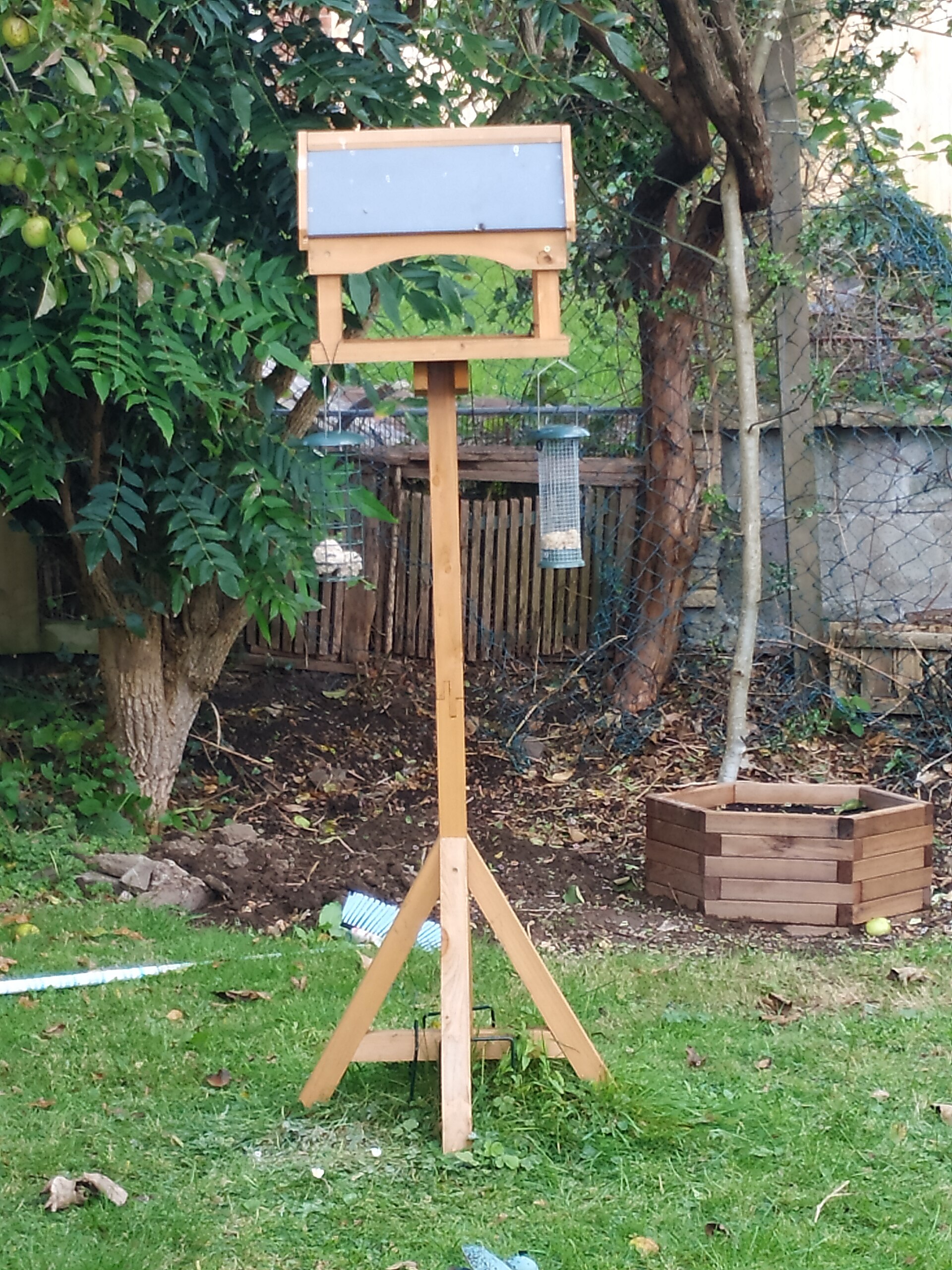
Food: plant it first, supplement second. Native plants beat feeders, because native plants feed birds in three ways at once: nectar for hummingbirds, fruit for mockingbirds and catbirds, and insects for everybody, since native plants host the caterpillars that parent birds feed their chicks. Beautyberry, elderberry, firebush, coral honeysuckle, and coneflowers are all strong Florida choices. Then add feeders if you like: sunflower seed for cardinals and finches, nyjer for goldfinches, suet for woodpeckers. Keep feeders clean, because a dirty feeder is a disease vector with good marketing.
Water: a birdbath, kept clean. Birds need water for drinking and bathing, and a shallow bath with a rough surface (so tiny feet can grip) is the single cheapest bird magnet there is. Dump and refill it every few days. Standing water that never changes grows mosquitoes, and mosquitoes are the one thing in this guide nobody invited.
Shelter: layers, not lawn. Birds need cover at different heights: trees for hawks to perch in and owls to hide in, shrubs for wrens and towhees to skulk through, and dense ground cover for sparrows. A yard that is nothing but lawn is a desert with good grass. Leave a brush pile in a back corner. It is ugly and the wrens will love it, which is the correct priority order.
Nest boxes, done right. Eastern bluebirds, chickadees, titmice, wrens, and wood ducks will use boxes, but a box with the wrong hole size becomes a sparrow condo or a starling hotel. Match the hole to the bird you want, face the box away from prevailing wind and afternoon sun, and clean it out between broods. A box full of old nesting material is a mite farm.
What not to do. Do not put red dye in hummingbird nectar. Plain sugar water (one part sugar to four parts water) is all they need, and the dye is unnecessary chemistry in a tiny bird. Do not spray broad-spectrum insecticides on plants birds feed from, because the birds eat the poisoned insects and the caterpillars their chicks need. And if you have an outdoor cat, understand that cats are one of the biggest killers of backyard birds anywhere. A bell helps a little. Keeping the cat inside helps a lot. This is the part of the guide where the cat lobby writes angry letters, and the birds do not care.
The troublemakers, handled humanely
Not every bird is a garden ally, and pretending otherwise would make this guide a brochure. Here is the honest list, and the humane answer to each.
European starlings and house sparrows are introduced species that bully native cavity nesters out of nest boxes and hog feeders. Answer: use feeders and boxes designed for the birds you want (small holes, weight-sensitive perches), and do not feed cheap mixed seed full of milo, which starlings and sparrows love and most natives ignore.
Grackles and crows will raid nests and steal fruit, and a flock of grackles at a feeder looks like a tiny feathered mob. Answer: safflower seed (grackles dislike it, cardinals do not mind it), feeders they cannot easily perch on, and netting over ripening fruit.
Herons and egrets at a pond will eat fish if you stock them, because to a heron your koi pond is a sushi bar you built for it. Answer: netting, deep water with steep sides, and plants at the margins that break up the bird’s sight lines. Do not harm herons; most are protected, and the fish were arguably asking for it by being delicious.
Woodpeckers on your house are usually drumming for territory in spring or hunting insects in siding, not renovating. Answer: check for insects in the siding first (the woodpecker may be telling you something), hang reflective deterrents near the drumming spot, and repair holes promptly. The drumming stops when breeding season does.
Mockingbirds dive-bombing you means you walked too close to a nest. Answer: walk a different way for a week or two. The mockingbird is not evil. It is a parent, and you are a large mammal near its children. You would do the same.
The regulars: year-round, everywhere
These are the birds that make a Florida yard feel like a Florida yard. Learn these first and you will recognize most of what lands in front of you.
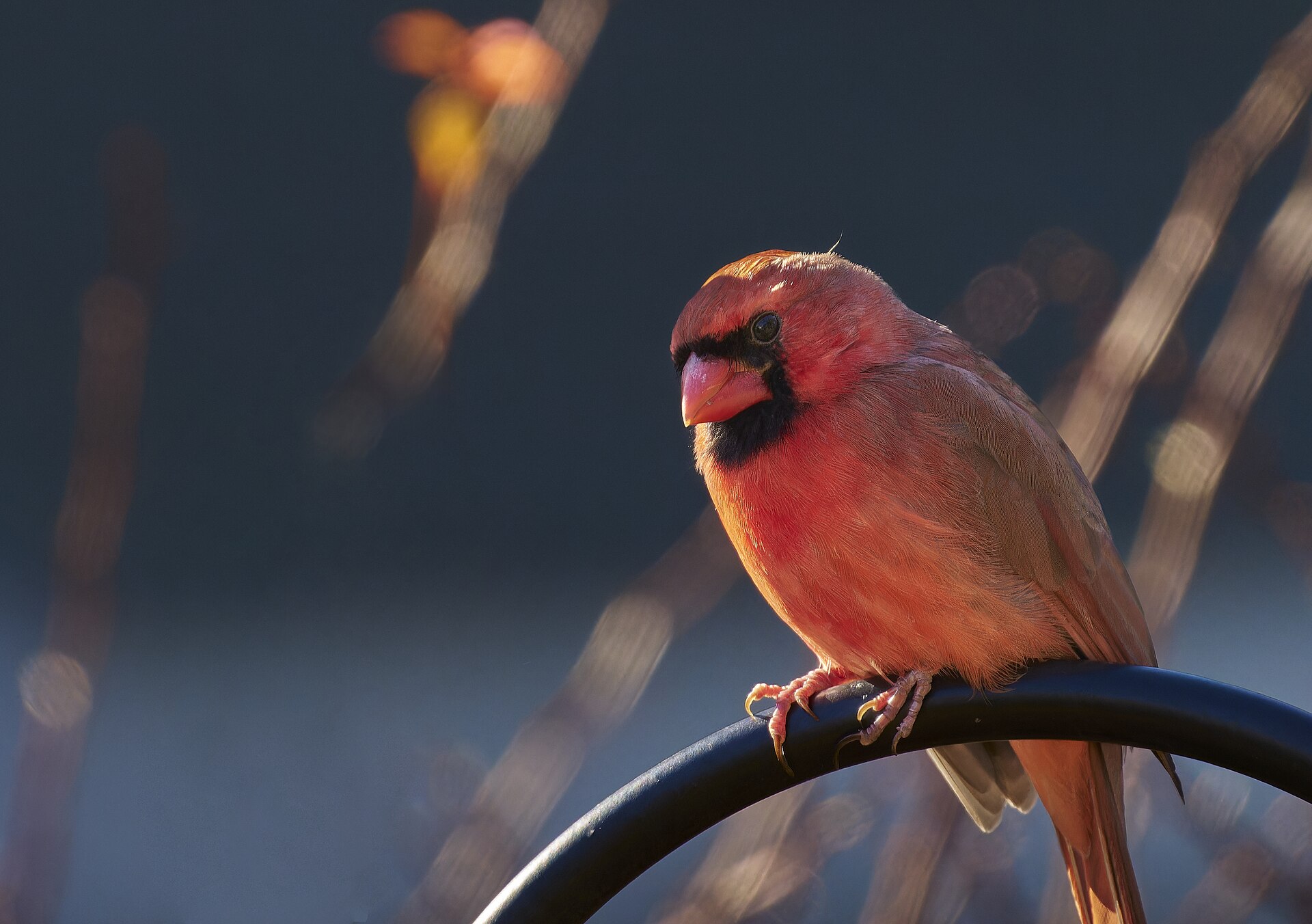
Northern Cardinal (Cardinalis cardinalis)
The red one. Males are unmistakable scarlet with a crest and black face mask; females are warm brown with red accents on the crest, wings, and tail. Loud, clear whistles, often described as sounding like “cheer-cheer-cheer.” Garden role: seed eater and fruit lover, a daily feeder visitor and a good neighbor. Eats sunflower seed, safflower, and fruit from elderberry and beautyberry. Attract it with sunflower seed in a sturdy feeder and dense shrubs to nest in. Nerdy fact: cardinals do not migrate, which is why that flash of red is the most reliable color in a Florida winter yard.
Northern Mockingbird (Mimus polyglottos)
Gray, long-tailed, with white wing patches that flash when it flies. Sings all day and half the night, stitching together the songs of other birds, car alarms, and whatever else it heard this week. It is Florida’s state bird, and it acts like it knows. Garden role: insect eater in summer, fruit eater in winter, and the yard’s self-appointed security guard. Eats insects, berries, and the occasional fig you were saving. Attract it with fruiting shrubs and open lawn to hunt in. Nerdy fact: a mockingbird can learn hundreds of songs, and it sings them in sets, repeating each phrase several times as if making sure you heard it the first time.
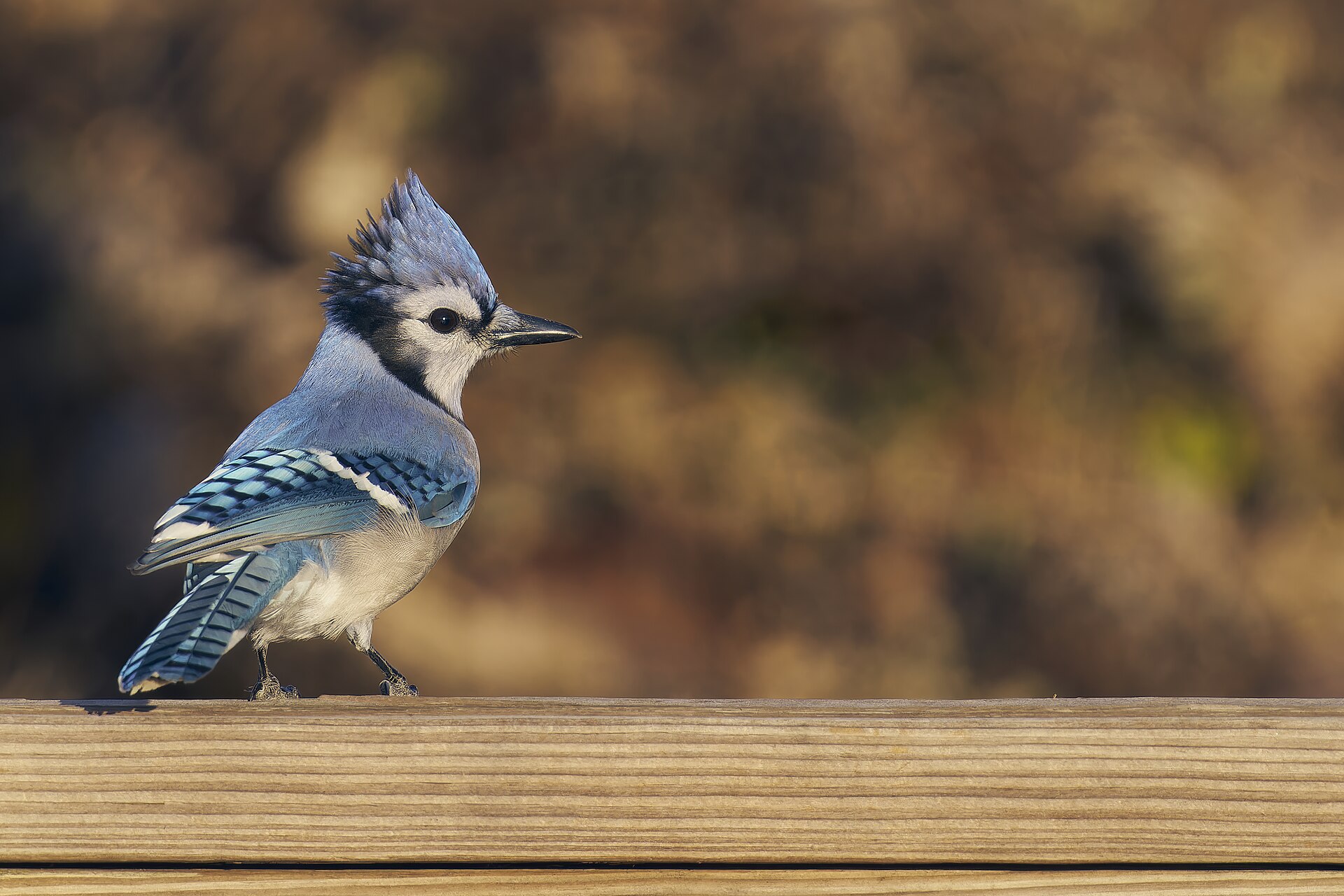
Blue Jay (Cyanocitta cristata)
Big, blue, crested, loud, and fully aware of itself. White face, black necklace, and a call that sounds like a rusty gate hinge. Garden role: complicated. Jays eat insects and acorns, plant oak trees by forgetting where they buried them, and also raid other birds’ nests. They are also the yard’s hawk alarm; when jays start screaming, something with talons is nearby. Eats acorns, seeds, insects, and eggs when it can get them. Attract it (or tolerate it) with peanuts and oak trees. Nerdy fact: blue jays can mimic hawk calls convincingly enough to fool other birds, and possibly you.
Carolina Wren (Thryothorus ludovicianus)
Small, rusty-brown, with a bold white eyebrow and a voice far too big for its body. Its song sounds like “teakettle-teakettle-teakettle,” delivered at full volume from a brush pile. Garden role: pest patrol at ground level and in shrubs, gleaning insects and spiders from bark and leaf litter. Eats insects, spiders, and the occasional bit of suet. Attract it with brush piles, dense shrubs, and a yard that is not entirely lawn. Nerdy fact: Carolina wrens often nest in the strangest places available, including mailboxes, flowerpots, and old shoes left on a porch. Check before you put your foot in.
Carolina Chickadee (Poecile carolinensis)
Tiny, round, black cap and bib, white cheeks, and a “chick-a-dee-dee” call that speeds up when it is alarmed. The more “dees,” the more danger it thinks you are. Garden role: elite caterpillar hunter. A nesting pair feeds its chicks almost entirely on caterpillars, which makes chickadees one of the best pest-control birds you can host. Eats insects, caterpillars, and sunflower seed in winter. Attract it with native trees (oaks host the most caterpillars), sunflower seed, and a small nest box. Nerdy fact: chickadees hide seeds and remember where they put them, which is more than most gardeners can say about their trowels.
Tufted Titmouse (Baeolophus bicolor)
Small, gray, with a pointed crest and big dark eyes that make it look permanently surprised. Whistles “peter-peter-peter” from the treetops. Garden role: same pest-control crew as the chickadee, gleaning insects from branches and bark, often in mixed flocks with chickadees and warblers in winter. Eats insects, caterpillars, seeds, and nuts. Attract it with sunflower seed, peanut pieces, and a nest box with a small hole. Nerdy fact: titmice pluck hair from sleeping animals (and occasionally pets) to line their nests. Your dog may be contributing to a titmouse nursery right now.
Mourning Dove (Zenaida macroura)
Soft gray-brown, slender, with a long pointed tail and a low, mournful coo that sounds like it is apologizing for something. Garden role: seed eater and ground cleaner, hoovering up spilled seed under feeders. Gentle to a fault; everything in the yard bullies a mourning dove and it never seems to mind. Eats seeds, especially millet and cracked corn, from the ground. Attract it with a ground feeder or seed scattered on bare dirt. Nerdy fact: mourning doves can drink without lifting their heads, using suction like a straw. Most birds cannot do this. Doves are the weirdos of the birdbath, and it works for them.
White-winged Dove (Zenaida asiatica)
Like a mourning dove that went on vacation and came back with white wing bars and a slightly different accent. Its call sounds like “who cooks for you,” which is a question you should answer with seed. Garden role: seed and fruit eater, common across central and south Florida, and increasingly in the north. Eats seeds, grains, and fruit. Attract it the same way as mourning doves: ground seed and a reliable water source. Nerdy fact: white-winged doves are important pollinators of the saguaro cactus out west, which is not relevant to your Florida garden but is a good fact for parties.
Eurasian Collared-Dove (Streptopelia decaocto)
Pale gray, chunky, with a black collar on the back of its neck and a three-syllable coo. An introduced species that spread across Florida fast after arriving in the Bahamas and hopping over. Garden role: seed eater, mostly harmless, though it competes with native doves for nest sites. Eats seeds and grain from the ground. Attract it (or don’t) with ground seed. Nerdy fact: collared-doves went from a handful of birds in the Bahamas in the 1970s to most of Florida in a few decades, which is either inspiring or a warning about invasive species, depending on your mood.
Red-bellied Woodpecker (Melanerpes carolinus)
Zebra-striped black-and-white back, red cap, and a name that lies to you: the red belly is a faint wash you will probably never see. The red head is the actual field mark. Garden role: bark insect hunter and fruit eater, drilling for borers and grubs and occasionally stealing oranges from your tree. Eats insects, nuts, seeds, and fruit. Attract it with suet, peanut pieces, and dead trees or snags left standing where safe. Nerdy fact: red-bellied woodpeckers have tongues nearly two inches long that wrap around their skulls, which is horrifying and efficient.
Downy Woodpecker (Dryobates pubescens)
The smallest woodpecker in North America, black-and-white, with a short bill and a quiet “pik” call. Males have a red patch on the back of the head. Garden role: bark gleaner, picking insects and larvae out of small branches and stems, including the stems of garden plants. Eats insects, larvae, seeds, and suet. Attract it with suet and peanut feeders. Nerdy fact: downy woodpeckers often join chickadee flocks in winter, which is either social behavior or a very effective way to find food someone else already located.
American Crow and Fish Crow (Corvus brachyrhynchos and Corvus ossifragus)
Big, black, and clever, and in Florida you get two of them that look nearly identical. Tell them apart by voice: the American crow says “caw-caw,” and the fish crow says a nasal “uh-uh.” If it sounds like it has a cold, it is a fish crow. Garden role: cleanup crew and alarm system, eating carrion, insects, fruit, and spilled seed, and warning the whole yard about hawks and cats. Eats nearly anything, which is both their charm and their problem. Attract them (or not) with peanuts and open lawn. Nerdy fact: crows recognize individual human faces and remember who was rude to them, so be polite. They will tell their friends.
Eastern Bluebird (Sialia sialis)
Males are bright blue on top with a rusty breast; females are the same pattern in softer focus. Perches low and drops to the ground for insects. Garden role: premier insect hunter of open lawns and pastures, eating grasshoppers, crickets, beetles, and caterpillars. Eats insects in summer and berries in winter. Attract it with a nest box in an open area (the right hole size keeps starlings out) and a lawn it can hunt over. Nerdy fact: bluebirds declined sharply when starlings and house sparrows took their nest cavities, and they came back largely because people put up boxes. Your nest box is conservation you can see from the kitchen window.
American Robin (Turdus migratorius)
Gray back, rusty breast, white eye ring, and a habit of cocking its head at the lawn like it is listening for something. It is listening for earthworms. Garden role: lawn hunter, pulling earthworms and grubs out of turf, and a fruit eater in winter when northern robins flood into Florida. Eats earthworms, insects, and berries. Attract it with lawn (it will find the worms), fruiting shrubs, and a birdbath. Nerdy fact: robins do not actually hear worms. They see them, and the head-cock is about getting a better look. The listening thing is a myth that sounds better in poems.
Gray Catbird (Dumetella carolinensis)
Plain slate-gray all over, black cap, and a call that sounds like a cat complaining. Hides in dense shrubs and scolds you from inside them. Garden role: fruit eater and insect gleaner, one of the best birds for a shrubby Florida yard because it lives in the shrubs you already have. Eats fruit, berries, and insects. Attract it with dense shrubs, especially fruiting natives like elderberry and beautyberry, and a birdbath it can skulk to. Nerdy fact: catbirds are mimics like mockingbirds, but quieter about it, and they can hide their nests so well that you can stand three feet away and not see them.
Brown Thrasher (Toxostoma rufum)
Rich brown back, streaked breast, yellow eyes, and a long curved bill it uses to thrash leaf litter side to side looking for insects. Garden role: ground-level pest patrol, turning over mulch and litter for beetles, caterpillars, and other invertebrates. Eats insects, fruit, and seeds. Attract it with leaf litter left in garden beds (do not rake everything bare), dense shrubs, and fruiting plants. Nerdy fact: brown thrashers have one of the largest song repertoires of any North American bird, with thousands of song types. It sings them in pairs, which is how you tell it from a mockingbird, which repeats in sets.
Eastern Towhee (Pipilo erythrophthalmus)
Black (male) or brown (female) on top, rusty sides, white belly, and a call that sounds like “drink-your-tea.” Scratches the ground with both feet at once, like a tiny chicken doing a dance. Garden role: ground forager, turning over leaf litter for insects and seeds. Eats insects, seeds, and fruit from the ground. Attract it with leaf litter, dense shrubs, and a brush pile. Nerdy fact: the towhee’s double-footed backward scratch is so distinctive that you can identify the bird by the sound of the leaves moving before you ever see it.
House Finch (Haemorhous mexicanus)
Males are rosy red on the head and breast (or orange-yellow if they ate poorly as nestlings); females are streaky brown. Cheerful warbling song from rooftops and wires. Garden role: seed eater, a steady feeder bird that also eats buds and fruit. Eats seeds, especially sunflower and nyjer, plus buds and berries. Attract it with sunflower seed and a tube feeder. Nerdy fact: a male house finch’s redness depends on what he ate while growing his feathers, which means his color is literally a record of his diet. You are what you eat, but for birds it is visible from across the yard.
American Goldfinch (Spinus tristis)
Males in breeding plumage are bright yellow with a black cap and black wings; in winter they turn a muted olive-yellow and everyone forgets what they are. Bouncy flight and a “per-chick-o-ree” call. Garden role: seed eater, especially fond of thistle and sunflower, and a late nester that times its chicks to seed availability. Eats seeds, especially nyjer and sunflower, and some insects. Attract it with nyjer in a finch feeder and seed heads left standing (coneflowers, sunflowers) instead of deadheaded. Nerdy fact: goldfinches are strict vegetarians, one of the few songbirds that feed their chicks regurgitated seeds instead of insects. Their chicks have never tasted a caterpillar.
Northern Flicker (Colaptes auratus)
A woodpecker that spends half its life on the ground. Brown with black bars, a black bib, spotted belly, and a flash of yellow under the wings in flight. Garden role: ant specialist. Flickers eat ants off the ground in large numbers, along with beetles and other ground insects, which makes them one of the few woodpeckers your lawn will benefit from directly. Eats ants, beetles, and other ground insects, plus fruit. Attract it with open lawn, suet, and a snag or dead tree left standing. Nerdy fact: a flicker’s tongue extends two inches past its bill, and it is sticky, which is exactly what you want if your job is eating ants.
Pileated Woodpecker (Dryocopus pileatus)
Enormous, crow-sized, black with white face stripes and a red crest that looks like a punk haircut. Its call is a wild, laughing “kuk-kuk-kuk” that sounds like the jungle got loose in your neighborhood. Garden role: carpenter ant and wood-borer specialist, excavating big rectangular holes in dead trees and stumps. Those holes later become nest sites for owls, ducks, and other birds, which makes the pileated a landlord for half the yard. Eats carpenter ants, beetle larvae, and fruit. Attract it by leaving large dead trees standing where safe. Nerdy fact: pileated woodpeckers excavate so much wood that a single pair’s feeding tree can look like it was attacked with a chisel by someone with strong opinions.
Red-winged Blackbird (Agelaius phoeniceus)
Males are black with scarlet shoulder patches edged in yellow; females are streaky brown and often mistaken for a large sparrow. The song, “konk-la-ree,” is the sound of a Florida marsh. Garden role: seed and insect eater, common around lawns, fields, and any yard near water. Males defend territories with great seriousness and will scold anything that moves. Eats seeds, grains, and insects. Attract it (or tolerate it) with mixed seed and a yard near open ground. Nerdy fact: male red-winged blackbirds display their shoulder patches by fluffing them out, and the redder and bigger the patch, the more seriously other males take him. It is a shoulder-pad contest with feathers.
Common Grackle and Boat-tailed Grackle (Quiscalus quiscula and Quiscalus major)
Long-tailed, iridescent blackbirds with pale yellow eyes and an attitude. Boat-tailed grackles (the coastal ones, with the males’ tails like a boat rudder) are the ones screaming in grocery store parking lots. Common grackles are their slightly less theatrical inland cousins. Garden role: opportunists. They eat insects, seeds, fruit, eggs, and anything left unattended, and they will empty a feeder with the confidence of birds that have never been told no. Eats insects, seeds, fruit, and eggs. Manage them with safflower seed (they dislike it), feeders they cannot easily perch on, and fruit netting. Nerdy fact: male boat-tailed grackles display by pointing their bills at the sky and ruffling their feathers, which looks ridiculous and works, which is more than can be said for most human display behavior.
Brown-headed Cowbird (Molothrus ater)
Males are glossy black with a brown head; females are plain gray-brown. They do not build nests. They lay eggs in other birds’ nests and let those birds raise their chicks, which is the bird version of never learning to cook. Garden role: brood parasite, and the reason some songbirds raise a chick twice their size that begs louder than their own. Eats seeds and insects from the ground, often around livestock and lawns. Attract it (you will not need to try) with open ground and seed. Nerdy fact: cowbirds followed bison herds historically, which is why they never settled down to nest: they had to keep moving with the herd. The behavior is ancient. The nerve is timeless.
European Starling (Sturnus vulgaris)
Short-tailed, speckled in winter, glossy iridescent in breeding season, with a yellow bill and a talent for mimicry. Travels in flocks that move like a single animal. Garden role: officially a troublemaker. Starlings evict native birds from nest boxes, eat fruit and grain, and dominate feeders in numbers. They are also, annoyingly, beautiful in flight and excellent mimics. Eats insects, fruit, seeds, and grain. Manage them with starling-resistant feeders, small nest-box holes, and no cheap milo seed. Nerdy fact: starlings were introduced to North America by a man who wanted every bird mentioned in Shakespeare to live in America. He succeeded. The birds did the rest.
House Sparrow (Passer domesticus)
Small, chunky, brown and gray, with males sporting a black bib and chestnut cap. Chirps constantly around buildings, eaves, and feeders. Garden role: introduced competitor that takes nest boxes from bluebirds and wrens and eats seed and grain. It is the most common bird in most Florida parking lots, which tells you something about its standards. Eats seeds, grain, and insects. Manage it with small nest-box holes, no ground millet piles, and feeders designed for clinging birds. Nerdy fact: house sparrows are not native to North America at all; they arrived with European settlers and now live on every continent except Antarctica, which is the most successful invasion nobody talks about at dinner.
Loggerhead Shrike (Lanius ludovicianus)
Gray, black-masked, with a hooked bill and a habit of perching on the highest wire around, surveying its kingdom. Garden role: the yard’s tiny raptor. Shrikes hunt insects, lizards, and small mammals, and they are famous for impaling prey on thorns and barbed wire to eat later, which is why they are nicknamed butcher birds. Eats insects, lizards, and small rodents. Attract it with open lawn, scattered shrubs, and a fence or wire to perch on. Nerdy fact: shrikes impale prey partly because they lack the strong talons of hawks, so they use thorns as a third hand. It is tool use, and it is metal.
Eastern Phoebe (Sayornis phoebe)
Plain gray-brown, with a habit of pumping its tail up and down like it is nodding at you. Says its own name: “fee-bee.” Garden role: flycatcher, snapping insects out of the air from a low perch, and one of the best pest-control birds for a yard with open space and a water feature. Eats flying insects. Attract it with open perches near water and a ledge or beam under an eave to nest on (they reuse nest sites year after year). Nerdy fact: phoebes were one of the first birds ever banded for study in North America, back in 1804, because someone noticed the same bird kept coming back to the same spot. It still does.
Great Crested Flycatcher (Myiarchus crinitus)
Gray head, yellow belly, rusty wings and tail, with a loud rising “wheep.” Nests in cavities and lines its nest with shed snakeskins, which is either clever camouflage or a warning to intruders, and possibly both. Garden role: summer insect hunter, catching flying insects and gleaning caterpillars from treetops. Eats insects and fruit. Attract it with a large nest box in a wooded yard and native trees. Nerdy fact: the snakeskin thing is real and common, and nobody is entirely sure why they do it. Theories include deterring predators and scaring away nest competitors. Either way, it works, and it is the most metal decorating choice in the bird world.
Blue-gray Gnatcatcher (Polioptila caerulea)
Tiny, blue-gray, with a long white-edged tail it flicks constantly and a whiny, squeaky call like a tiny dog toy. Moves through trees in a restless, twitchy way that makes it look nervous about something. Garden role: gnat and small insect gleaner, picking tiny insects off leaves and twigs all day. Eats gnats, small insects, and spiders. Attract it with native trees and shrubs, especially oaks. Nerdy fact: gnatcatchers build a neat cup nest decorated with lichens, so well camouflaged it looks like a knot on the branch. You will walk past it a dozen times before you see it.
Ruby-crowned Kinglet (Corthylio calendula)
Smaller than a chickadee, olive-green, with a white eye ring and wing bars, and a habit of flicking its wings constantly. Males hide a bright red crest they only flash when excited, which is most of the time. Garden role: tiny insect gleaner, eating small insects and eggs from foliage, especially in winter when it joins mixed flocks. Eats insects, insect eggs, and some berries. Attract it with native trees and shrubs and a yard that keeps some insects around through winter (do not spray everything). Nerdy fact: kinglets can survive cold nights by huddling and dropping their body temperature, and they weigh less than a quarter. The whole bird is a rounding error.
Winter visitors: the cool-season crowd
These birds spend summer elsewhere and winter in Florida, which means your yard gets a whole second cast of characters just when the garden slows down. Winter is bird season in Florida, and these are why.
Yellow-rumped Warbler (Setophaga coronata)
Gray, streaked, with yellow patches on the rump, sides, and crown, and a habit of showing up everywhere in winter. In Florida it is often the most common warbler in a yard from fall through spring. Garden role: insect and berry eater, gleaning insects from foliage and eating wax myrtle berries, which most warblers cannot digest. Eats insects and berries, especially wax myrtle. Attract it with wax myrtle and other fruiting natives, and native trees. Nerdy fact: yellow-rumped warblers can digest the waxy coating on bayberries and wax myrtle fruit, which is why they can winter farther north than most warblers and why your wax myrtle is a warbler restaurant.
Palm Warbler (Setophaga palmarum)
Brownish-olive with a rusty cap and yellow under the tail, and a habit of pumping its tail up and down while walking on the ground. The most ground-loving warbler in a Florida yard. Garden role: ground and low-shrub insect gleaner, eating insects and some berries through winter. Eats insects and berries. Attract it with open ground, lawn edges, and shrubs. Nerdy fact: palm warblers pump their tails constantly, even when standing still, which looks like nervous energy and is actually just how they are. Nobody knows exactly why. It is charming either way.
Pine Warbler (Setophaga pinus)
Olive-yellow, plain-faced, and almost always in a pine tree. If you hear a musical trill from the top of a pine, it is probably this bird. Garden role: pine insect gleaner, eating caterpillars, beetles, and other insects from pine needles and bark. Eats insects and some seeds. Attract it with pine trees (longleaf or slash, if you have room) and suet in winter. Nerdy fact: pine warblers are one of the few warblers that regularly eat seeds, which is why they will visit feeders when other warblers will not. They are warblers with a backup plan.
Northern Parula (Setophaga americana)
Tiny, blue-gray on top with a yellow throat, a rusty chest band on males, and a buzzy song that rises and then stops, like it ran out of breath. Garden role: canopy insect gleaner, picking small insects and caterpillars from treetops, especially in oaks draped with Spanish moss, which it uses for nesting. Eats insects and caterpillars. Attract it with oaks and Spanish moss left in place. Nerdy fact: parulas in Florida often nest in Spanish moss, weaving their nests into the hanging strands. The moss is not just decoration. It is the nursery.
Black-and-white Warbler (Mniotilta varia)
Striped black and white like a tiny zebra, creeping along branches and trunks like a nuthatch, which it is not. Garden role: bark insect hunter, probing bark crevices for insects and larvae that other warblers miss. Eats insects and larvae from bark. Attract it with mature trees with rough bark (oaks are ideal) and a yard that keeps its insects. Nerdy fact: black-and-white warblers have a longer hind claw than most warblers, which helps them cling to bark while creeping. It is a woodpecker lifestyle with warbler equipment.
Common Yellowthroat (Geothlypis trichas)
Males wear a black bandit mask with a yellow throat; females are plain olive-yellow. Skulks in dense shrubs and marshy edges, singing “wichity-wichity-wichity” from inside the thicket. Garden role: low-shrub insect gleaner, eating insects and caterpillars in dense cover. Eats insects and caterpillars. Attract it with dense shrubs, brushy edges, and a yard that is not manicured to within an inch of its life. Nerdy fact: yellowthroats are one of the most widespread warblers in North America, and the males’ masks are individually distinctive enough that researchers can tell birds apart by them. The mask is a name tag.
Ovenbird (Seiurus aurocapilla)
Olive-brown on top, streaked below, with an orange crown stripe, walking on the forest floor like a tiny chicken and singing “teacher-teacher-teacher” at increasing volume. Garden role: ground insect hunter, eating insects and larvae from leaf litter. Eats insects, larvae, and some seeds. Attract it with leaf litter left in beds and wooded areas. Nerdy fact: ovenbirds build a domed nest on the ground that looks like a tiny clay oven, which is where the name comes from. It is a bird that named itself after its architecture.
Cedar Waxwing (Bombycilla cedrorum)
Sleek, crested, tan-gray with a black mask, yellow-tipped tail, and waxy red tips on the wing feathers that look like sealing wax. Travels in flocks and descends on fruiting trees like a well-dressed flash mob. Garden role: fruit specialist, eating berries and fruit in winter flocks. Eats fruit, especially cedar berries, holly, and any soft fruit it can find. Attract it with fruiting natives (holly, cedar, beautyberry) and a yard with fruit in winter. Nerdy fact: waxwings sometimes get tipsy on fermented fruit and have been known to fly into windows while intoxicated. They are the only birds in this guide with a drinking problem.
Chipping Sparrow (Spizella passerina)
Small, rusty-capped, with a black eye line and a clean gray breast. In winter the cap turns brown and the bird turns into “just another sparrow,” which is unfair. Garden role: ground seed eater, foraging in lawns and open ground in small flocks. Eats seeds and insects. Attract it with ground seed and open lawn edges. Nerdy fact: chipping sparrows line their nests with animal hair, and they are so tame around houses that they will nest in hanging baskets and wreaths. Check the wreath before you hang it.
White-throated Sparrow (Zonotrichia albicollis)
Streaky brown with a bright white throat, yellow spots between the eyes and bill, and a clear whistled song that sounds like “oh sweet Canada.” Garden role: ground seed and insect eater, scratching in leaf litter through winter. Eats seeds, fruit, and insects. Attract it with ground seed, leaf litter, and dense shrubs to hide in. Nerdy fact: white-throated sparrows come in two color morphs (white-striped and tan-striped) that almost always mate with the opposite morph, which is the bird version of opposites attracting, enforced by genetics.
Song Sparrow (Melospiza melodia)
Streaky brown with a dark central breast spot and a long, pumping tail. Sings a varied, cheerful jumble from a low perch. Garden role: ground and shrub forager, eating seeds and insects. Eats seeds, insects, and berries. Attract it with ground seed, shrubs, and a brush pile. Nerdy fact: song sparrows have regional dialects, and males learn their songs from neighboring males, which means a Florida song sparrow sounds different from a New England one. It is an accent, and it is adorable.
Dark-eyed Junco (Junco hyemalis)
Slate-gray on top, white belly, pink bill, and white outer tail feathers that flash when it flies. The classic “snowbird” that shows up in Florida yards in winter and vanishes in spring. Garden role: ground seed eater, foraging in flocks on lawns and bare ground. Eats seeds and some insects. Attract it with ground seed (millet is a favorite) and open ground. Nerdy fact: juncos are one of the most studied birds in North America, partly because they are common and partly because they hybridize and vary so much that scientists cannot stop arguing about them. The bird is a taxonomic headache and a yard regular at the same time.
Eastern Meadowlark (Sturnella magna)
Chunky, streaky brown on top with a bright yellow breast and black V, singing a clear, sweet whistle from a fence post. Garden role: field insect hunter, eating grasshoppers, crickets, beetles, and caterpillars from open ground. Eats insects and seeds. Attract it with open lawn or field edges (it needs space, not shrubs). Nerdy fact: meadowlarks sing from perches and hide their nests in grass so well that you can walk past one for years without knowing. The song gives them away. The nest never does.
Killdeer (Charadrius vociferus)
Brown on top, white below, with two black breast bands and a loud “kill-deer” call. Runs across lawns, driveways, and gravel lots, stopping suddenly like it forgot what it was doing. Garden role: ground insect hunter, eating beetles, grasshoppers, and other invertebrates from open ground. Eats insects and invertebrates. Attract it with open lawn, bare dirt, and gravel areas (it nests on the ground in the open, which is brave and occasionally disastrous). Nerdy fact: killdeer fake a broken wing to lure predators away from their nests, dragging a wing and crying pitifully until the predator follows, then flying off perfectly fine. It is the best actor in the yard.
Summer voices: the warm-season cast
These birds arrive in spring, raise chicks, and leave in fall. They are the sound of a Florida summer, especially at dawn.
Ruby-throated Hummingbird (Archilochus colubris)
Tiny, iridescent green, with a long bill and wings that beat so fast they blur. Males flash a ruby-red throat in direct light and look plain dark in shade, which is a magic trick, not a different bird. Garden role: pollinator, moving pollen between tube-shaped flowers while chasing nectar, and also eating small insects and spiders for protein. Eats nectar and small insects. Attract it with native nectar plants (coral honeysuckle, firebush, coralbean, salvia) and, if you use a feeder, plain sugar water with no red dye, cleaned often. Nerdy fact: a hummingbird’s heart can beat over a thousand times a minute in flight, and it enters a torpor at night, slowing everything down to survive until morning. It is a tiny engine with a sleep mode.
Chimney Swift (Chaetura pelagica)
Small, dark, cigar-shaped, with stiff wings that beat in a fluttery, bat-like way. Chatters in flight over neighborhoods at dusk. Garden role: aerial insect hunter, eating flying insects all day, including mosquitoes, flies, and beetles. Eats flying insects. Attract it by leaving a chimney uncapped during nesting season (they nest in chimneys, hence the name) or putting up a swift tower. Nerdy fact: chimney swifts cannot perch like other birds. Their feet are built for clinging to vertical surfaces, so they spend almost their entire lives either flying or clinging to a wall. They even sleep clinging up.
Purple Martin (Progne subis)
The largest swallow in North America. Males are deep blue-purple and glossy; females are duller with gray bellies. Nests in colonies, and in the eastern U.S. it nests almost exclusively in human-provided housing. Garden role: aerial insect hunter, eating flying insects over lawns and fields. Eats flying insects. Attract it with a martin house or gourd rack in an open area, away from trees. Nerdy fact: purple martins east of the Rockies are completely dependent on human housing, which means every martin you see is living in a house someone built for it. You are its landlord, and it pays rent in mosquitoes.
Barn Swallow (Hirundo rustica)
Steely blue on top, rusty throat and forehead, deeply forked tail, and a habit of swooping low over lawns and ponds. Builds mud-cup nests under eaves and bridges. Garden role: aerial insect hunter, eating flies, mosquitoes, and beetles on the wing. Eats flying insects. Attract it with open areas, mud for nesting, and a ledge under an eave it can build on. Nerdy fact: barn swallows return to the same nest sites year after year, sometimes the same nest, and they recognize their own nests among dozens. They are the most loyal tenants in the yard.
Tree Swallow (Tachycineta bicolor)
Iridescent blue-green on top, clean white below, with a slightly forked tail. In Florida it is mostly a winter visitor, swarming over fields and wetlands in large flocks, but it nests in boxes farther north. Garden role: aerial insect hunter and berry eater, one of the few swallows that can survive cold snaps by switching to berries. Eats flying insects and berries. Attract it with a nest box near open water or fields (in nesting range) and berrying shrubs. Nerdy fact: tree swallows can eat bayberries when insects are scarce, which is why they can winter in Florida while other swallows have to keep going south. It is a swallow with a pantry.
Raptors and owls: the pest patrol bosses
These are the birds other birds warn each other about. They are also the reason your yard has fewer rats, fewer snakes, and fewer rabbits eating your lettuce, and they deserve respect, distance, and zero interference.
Red-shouldered Hawk (Buteo lineatus)
Medium hawk, rusty-barred breast, checkered black-and-white wings, and a loud, piercing “kee-aah” call that blue jays love to imitate. The most common hawk in Florida yards and neighborhoods. Garden role: rodent and snake control, hunting rats, mice, snakes, lizards, and large insects from a perch. Eats rodents, snakes, lizards, frogs, and large insects. Attract it with tall perches (trees, poles) and a yard that has not been stripped of every hiding place. Nerdy fact: red-shouldered hawks sometimes hunt with crows following them, because the crows know the hawk will flush prey. It is an uneasy partnership, and the hawk tolerates it.
Cooper’s Hawk (Accipiter cooperii)
Medium, blue-gray on top with a rusty-barred breast, long tail, and short rounded wings built for chasing through trees. The hawk that shows up at your bird feeder, and not for the seed. Garden role: bird hunter, specializing in medium-sized birds, which means your feeder is its grocery store. This is nature, not malice, and the feeder birds know the risk. Eats mostly birds, plus small mammals. Attract it (you do not need to try) by having a feeder with birds on it. Nerdy fact: Cooper’s hawks can fly through dense trees at speed without hitting branches, threading gaps that look impossible. They are fighter jets with feathers.
Red-tailed Hawk (Buteo jamaicensis)
Big, broad-winged, with a brick-red tail and a scream that Hollywood uses for every bird of prey, including eagles. Soars over fields and perches on poles along roads. Garden role: rodent control at scale, hunting rats, mice, rabbits, and snakes from high perches and soaring flight. Eats rodents, rabbits, snakes, and other small mammals. Attract it with open ground and tall perches. Nerdy fact: the red-tailed hawk’s scream is the most recorded bird sound in movies, and it is almost always dubbed over other raptors. The hawk is famous. The eagle is lip-syncing.
American Kestrel (Falco sparverius)
The smallest falcon in North America, robin-sized, with a rusty back, blue-gray wings (males), and a face pattern that looks like sideburns. Hovers over fields and perches on wires, pumping its tail. Garden role: insect and small rodent hunter, eating grasshoppers, dragonflies, beetles, mice, and lizards. Eats insects, small mammals, and lizards. Attract it with open lawn or fields, a nest box designed for kestrels, and wires or poles to perch on. Nerdy fact: kestrels can see ultraviolet light, which means they can follow the urine trails of voles like a glowing map. They hunt by following pee trails. Science is wonderful and disgusting.
Barred Owl (Strix varia)
Big, round-headed, mottled brown and white, with dark eyes and a call that sounds like “who cooks for you, who cooks for you all.” The owl most Florida yards will hear, usually at night, sometimes in daylight. Garden role: night-shift rodent control, hunting rats, mice, frogs, and large insects after dark. Eats rodents, frogs, and large insects. Attract it with large trees and a yard that is not lit up like a stadium at night. Nerdy fact: barred owls have asymmetrical ears (one higher than the other), which lets them pinpoint prey by sound in complete darkness. They hunt by hearing, and they are better at it than you are at anything.
Eastern Screech-Owl (Megascops asio)
Small, gray or rusty, with ear tufts and a trembling, whinnying call that sounds like a tiny horse. Nests in cavities and nest boxes, and is far more common in Florida yards than people realize, because it is small, quiet, and nocturnal. Garden role: night insect and rodent hunter, eating large insects, mice, and small birds. Eats insects, mice, and small birds. Attract it with a screech-owl nest box in a tree and a yard with large insects at night (which means not spraying everything). Nerdy fact: screech-owls come in gray and rusty color morphs, and the same parents can produce both. It is not a different species. It is a wardrobe choice.
Great Horned Owl (Bubo virginianus)
Big, powerful, with prominent ear tufts, yellow eyes, and a deep “hoo-hoo-hoo” that carries across a neighborhood. The apex night predator of the Florida yard. Garden role: top rodent, rabbit, and opossum control, hunting at night from high perches. Eats rabbits, rodents, opossums, and other birds, including other owls. Attract it (do not try too hard) with large trees and open hunting ground. Nerdy fact: great horned owls have no sense of smell, which is why they can eat skunks without regret. They are the only predator that considers a skunk a reasonable dinner option.
Osprey (Pandion haliaetus)
Big, white-headed, dark-eyed, with a wingspan that looks too large for the bird and a habit of hovering over water before plunging in feet-first. Garden role: fish hawk, and relevant to your yard only if you have a pond or live near water, in which case it is the reason your fish disappear. Eats almost exclusively live fish. Attract it (or protect your fish from it) with a nesting platform near water, or pond netting if you stock fish. Nerdy fact: ospreys have reversible outer talons and barbed foot pads for gripping slippery fish, and they carry fish head-first for aerodynamics. They are flying fishing boats with a design degree.
Water visitors: yards with ponds, or near them
These birds are not lawn birds, but in Florida a yard with a pond, a retention basin, or a canal nearby is a waterbird yard, and these are the ones you will meet.
Great Blue Heron (Ardea herodias)
Tall, gray-blue, with a dagger bill and a habit of standing motionless in shallow water for so long you start to wonder if it is a statue. Then it strikes faster than you can blink. Garden role: fish, frog, and large insect hunter, and the bird most likely to eat your pond fish if you stock them. Eats fish, frogs, large insects, and the occasional small mammal. Attract it (or protect fish from it) with shallow water edges, or pond netting and steep sides if you keep fish. Nerdy fact: great blue herons swallow fish whole, head-first, and their neck vertebrae are specially shaped to let them strike with incredible speed. The statue impression is a hunting strategy, and it works.
Great Egret (Ardea alba)
All white, tall, with a yellow bill and black legs, and a neck that folds into an S in flight. The bird on the Audubon logo, and the reason egrets were once hunted nearly to extinction for their plumes. Garden role: fish and frog hunter in shallow water, same pond-fish caveat as the heron. Eats fish, frogs, and aquatic insects. Attract it (or protect fish from it) the same way as herons. Nerdy fact: great egrets were hunted for their breeding plumes to decorate hats, which led directly to the founding of the Audubon Society. The bird on the logo is there because people almost loved it to death.
Snowy Egret (Egretta thula)
Smaller than the great egret, all white, with a black bill, black legs, and bright yellow feet that look like it stepped in paint. Stirs the water with its feet to flush prey, then snaps it up. Garden role: small fish and aquatic insect hunter in shallow water. Eats small fish, aquatic insects, and crustaceans. Attract it (or protect small fish from it) with shallow water and pond margins. Nerdy fact: snowy egrets were also plume-hunted, and their recovery is one of the earliest conservation success stories. The yellow feet are called “golden slippers,” which is the best nickname in this guide.
White Ibis (Eudocimus albus)
White with black wingtips, a long curved red bill, and a habit of walking across lawns in flocks, probing the grass like a team of tiny metal detectors. Garden role: lawn grub and insect hunter, probing turf for beetle larvae, earthworms, and other invertebrates. Eats insects, larvae, crustaceans, and small aquatic animals. Attract it with lawn (it will find the grubs) and shallow water nearby. Nerdy fact: white ibis flocks in a yard are usually a sign of a grub population, which means the ibis are doing you a favor and also telling you something about your lawn. Listen to the ibis.
Wood Stork (Mycteria americana)
Big, white, with a bald dark head, a long thick bill, and black flight feathers. The only stork in North America, and it looks like it knows it. Garden role: fish and aquatic animal hunter in shallow water, feeding by touch, sweeping its bill through the water and snapping shut on contact. Eats fish and aquatic animals. Attract it (or just enjoy it) with shallow water and wetlands nearby. Nerdy fact: wood storks feed by touch, not sight, and their bills snap shut in a fraction of a second when they feel a fish. It is one of the fastest reflexes in the bird world, and it happens underwater where nobody can see it.
Anhinga (Anhinga anhinga)
Dark, snake-necked, with a long pointed bill and a habit of swimming with only its head above water, which is why it is nicknamed the snakebird. After swimming it perches with wings spread to dry, because its feathers get waterlogged. Garden role: fish hunter in ponds and slow water. Eats fish and aquatic animals. Attract it (or protect fish from it) with a pond and perches overhanging the water. Nerdy fact: anhingas deliberately let their feathers get wet so they can swim deeper and spear fish, then they have to dry out in the sun like laundry. It is a terrible design that works perfectly.
Muscovy Duck (Cairina moschata)
Big, dark, with white wing patches and red, warty skin on the face. Feral muscovies are everywhere in Florida neighborhoods, waddling across lawns and parking lots with the confidence of birds that have never paid rent. Garden role: lawn grazer and insect eater, eating grass, seeds, and insects, and leaving large droppings everywhere, which is their main contribution and main complaint. Eats grass, seeds, insects, and aquatic plants. Attract it (or discourage it) with lawn and water; discourage it by not feeding it, because feeding muscovies is how a neighborhood ends up with fifty of them. Nerdy fact: muscovies are not native to Florida as a wild bird (they are a domesticated South American species gone feral), which is why they are simultaneously common, beloved, and a management headache. The ducks do not care about any of this.
Mallard (Anas platyrhynchos)
Males have a green head, white neck ring, and chestnut breast; females are mottled brown. The classic duck, and the ancestor of most domestic ducks. Garden role: dabbling duck, eating seeds, aquatic plants, and insects from ponds and lawns. Eats seeds, plants, and insects. Attract it with a pond and lawn (it will find both). Nerdy fact: mallards are so widespread that they hybridize with other ducks, including mottled ducks in Florida, which is a conservation concern for the mottled duck. Your mallard may be part of a complicated family story.
Black-bellied Whistling-Duck (Dendrocygna autumnalis)
Long-legged, long-necked, chestnut and black with a white wing stripe, a red bill, and a call that sounds like a high-pitched whistle, hence the name. Perches in trees, which ducks are not supposed to do, and nobody told it. Garden role: seed and plant eater around ponds and lawns, often in noisy flocks at dusk. Eats seeds, plants, and insects. Attract it with a pond and trees to perch in. Nerdy fact: whistling-ducks are named for their calls, not their whistling ability, and they are one of the few ducks that regularly perch in trees. They are ducks that did not read the manual.
Big strutters: too large to ignore
Sandhill Crane (Antigone canadensis)
Tall, gray, with a red forehead patch and a bugling call that sounds like it comes from the Pleistocene. Walks through Florida neighborhoods, golf courses, and lawns with the slow dignity of a bird that has been here longer than the neighborhood. Garden role: omnivore, eating seeds, grains, insects, and small animals from lawns and fields. Eats seeds, insects, and small animals. Attract it (it will come on its own) with open lawn and shallow water. Nerdy fact: sandhill cranes mate for life and dance together, leaping into the air with wings spread, even outside breeding season. It is either a pair bond or the world’s oldest dance party, and it is wonderful to watch from a respectful distance.
Wild Turkey (Meleagris gallopavo)
Big, dark, iridescent, with a fan tail and a gobble that carries across a neighborhood. Florida has its own subspecies, the Osceola, found only in the peninsula. Garden role: ground forager, eating seeds, acorns, insects, and berries from lawns and woods. Eats seeds, nuts, insects, and berries. Attract it with open ground, oaks, and a yard that is not fenced to within an inch of its life. Nerdy fact: wild turkeys can fly, despite what Thanksgiving cartoons suggest, and they roost in trees at night. The bird on your table is a domesticated version of a bird that sleeps in a tree.
The special one: Florida Scrub-Jay (Aphelocoma coerulescens)
This bird gets its own section because it is Florida’s only endemic bird species, found nowhere else on Earth, and because it will probably never visit your yard. That is the point. Florida scrub-jays live in scrub habitat: sandy, fire-maintained oak scrub, mostly in central Florida. They are blue and gray, crestless, with a long tail and a curious, bold personality. They are also federally threatened, having declined sharply as scrub was developed and fire was suppressed, because scrub-jays need scrub that burns regularly to stay open and shrubby.
You cannot attract a scrub-jay to a typical yard, and you should not try to lure one. What you can do is support scrub conservation, leave scrub habitat alone when you encounter it, and appreciate that Florida has a bird that exists nowhere else. If you live near scrub and a scrub-jay shows up, consider it a gift and keep your distance. Some birds are rare because their world is small. The scrub-jay’s world is small, and it is ours to protect.
Part 2: Beyond Florida
Western garden birds
The West has its own jays, its own chickadees, its own towhees, and hummingbirds that stay all winter. If you garden west of the Rockies, this is your cast. Many of these birds never occur in Florida at all, which is why they get their own section instead of a footnote.
Steller’s Jay (Cyanocitta stelleri)
Big, dark, crested, with a black head and deep blue body, and a call that sounds like a blue jay that moved to the mountains and got serious. The western counterpart to the blue jay, and just as loud, just as bold, and just as likely to steal your peanuts. Garden role: acorn and seed eater, insect hunter, and nest raider, same complicated deal as its eastern cousin. Eats acorns, seeds, insects, and eggs when it can get them. Attract it with peanuts, oak trees, and conifers. Nerdy fact: Steller’s jays are named after Georg Steller, an 18th-century naturalist, and they are one of the few birds whose scientific name honors a person without sounding like it. They do not care. They are busy yelling.
California Scrub-Jay (Aphelocoma californica)
Blue and gray, crestless, long-tailed, and bold enough to land on your table if you eat outside. The western scrub-jay, and not the same bird as Florida’s scrub-jay, despite the similar name. Garden role: acorn planter and insect hunter, caching acorns all fall and forgetting enough of them to plant oak trees. Eats acorns, seeds, insects, and fruit. Attract it with oaks and peanuts. Nerdy fact: scrub-jays remember where they hid thousands of acorns and also remember which other jays watched them hide them, and they re-hide the ones that were observed. It is espionage with acorns.
Woodhouse’s Scrub-Jay (Aphelocoma woodhouseii)
Like the California scrub-jay but grayer underneath, living in the interior West: pinyon-juniper country, mountain foothills, and high desert edges. Garden role: same acorn-caching, insect-hunting deal, adapted to drier country. Eats acorns, pinyon seeds, insects, and fruit. Attract it with pinyon pines, junipers, and peanuts. Nerdy fact: California and Woodhouse’s scrub-jays were considered one species until recently, and they still look almost identical. The split is a reminder that birds do not read field guides, and field guides occasionally catch up.
Western Bluebird (Sialia mexicana)
Males are blue on top with a rusty breast and a blue throat patch; females are the same pattern in softer focus. Perches low and drops to the ground for insects, just like its eastern cousin. Garden role: insect hunter of open lawns and fields, eating grasshoppers, crickets, beetles, and caterpillars. Eats insects in summer and berries in winter. Attract it with a nest box in an open area and a lawn it can hunt over. Nerdy fact: western bluebirds sometimes nest in pairs with a helper, usually a son from a previous brood, which is the bird version of moving back in with your parents and actually helping out.
Mountain Bluebird (Sialia currucoides)
Males are sky blue all over, with no rusty breast at all, like someone forgot to finish painting them. Females are gray-brown with blue tints. Garden role: open-country insect hunter, hovering and dropping on insects in fields and lawns at higher elevations. Eats insects and berries. Attract it with a nest box in open country and a lawn or field to hunt over. Nerdy fact: mountain bluebirds are the state bird of both Idaho and Nevada, which means two states agreed on one bird, and the bird did not have to campaign for either.
Mountain Chickadee (Poecile gambeli)
Like a black-capped chickadee wearing a white eyebrow stripe, living in mountain conifer forests across the West. Calls “chick-a-dee-dee” with a hoarser voice than its eastern cousins. Garden role: conifer insect gleaner, eating insects, caterpillars, and seeds from pines and firs. Eats insects, seeds, and berries. Attract it with conifers, sunflower seed, and a nest box. Nerdy fact: mountain chickadees hide thousands of seeds and remember where they put them, using a hippocampus that grows larger in fall. Their brains literally expand for winter. Yours just gets colder.
Chestnut-backed Chickadee (Poecile rufescens)
Tiny, with a brown back, black cap and bib, white cheeks, and a habit of moving through conifers in busy flocks. The Pacific coast’s chickadee. Garden role: conifer insect gleaner, eating insects, caterpillars, and seeds. Eats insects and seeds. Attract it with conifers, sunflower seed, and a nest box. Nerdy fact: chestnut-backed chickadees use fur and hair to line their nests, and they will use hair from any mammal that holds still long enough, including yours if you brush your dog outside.
Oak Titmouse (Baeolophus inornatus)
Small, plain gray-brown, with a short crest and a scratchy, scolding call. Lives in oak woodlands in California and Oregon, and it is the plainest bird in this guide, which it makes up for by being everywhere. Garden role: oak insect gleaner, eating caterpillars, beetles, and seeds from oaks. Eats insects, caterpillars, and seeds. Attract it with oaks, sunflower seed, and a nest box. Nerdy fact: oak titmice are so plain that they were once lumped with the juniper titmouse as one species, the “plain titmouse,” which is the least flattering species name ever given to a bird that did nothing wrong.
Juniper Titmouse (Baeolophus ridgwayi)
Like the oak titmouse but grayer, living in pinyon-juniper country across the interior West. Garden role: juniper and pinyon insect gleaner, eating insects, caterpillars, and seeds. Eats insects and seeds. Attract it with junipers, pinyon pines, sunflower seed, and a nest box. Nerdy fact: juniper titmice do not migrate, which means they spend winter in the same harsh, high-desert country they bred in, eating whatever they can find. They are tougher than they look, and they look like a gray puffball.
Bushtit (Psaltriparus minimus)
Tiny, gray, long-tailed, traveling in flocks of a dozen or more that move through shrubs like a single, chattering animal. Garden role: shrub insect gleaner, eating tiny insects, spiders, and eggs from foliage. Eats insects and spiders. Attract it with dense shrubs and a yard that keeps its small insects around (do not spray everything). Nerdy fact: bushtits build a hanging sock-shaped nest woven from moss, lichen, and spiderwebs, which can stretch as the chicks grow. It is a sock that expands. The birds thought of everything.
Pygmy Nuthatch (Sitta pygmaea)
Small, gray, with a brown cap and a habit of roosting in communal cavities, sometimes a dozen birds piled into one hole. Garden role: pine insect gleaner, eating insects, larvae, and seeds from pine bark and needles. Eats insects and seeds. Attract it with pines, suet, and sunflower seed. Nerdy fact: pygmy nuthatches are one of the few North American songbirds that roost communally in winter, and they can lower their body temperature to save energy. A dozen birds in a hole is not a party. It is a heating strategy.
Brown Creeper (Certhia americana)
Small, brown and streaky, with a curved bill, spiraling up tree trunks and then flying down to the bottom of the next tree to start again. Garden role: bark insect hunter, probing bark crevices for insects, larvae, and eggs. Eats insects and larvae. Attract it with mature trees with rough bark and a yard that keeps its insects. Nerdy fact: brown creepers are so well camouflaged against bark that you can stare directly at one and not see it until it moves. They are the closest thing to invisible in this guide.
Bewick’s Wren (Thryomanes bewickii)
Small, brown, with a long white eyebrow and a long tail with white corners, singing a varied, buzzy song from brush piles and fences. Garden role: brush insect hunter, gleaning insects and spiders from shrubs, brush, and ground litter. Eats insects and spiders. Attract it with brush piles, dense shrubs, and a nest box. Nerdy fact: Bewick’s wrens have declined in the East as house wrens expanded, but they hold on in the West, where they are still one of the most common wrens in gardens. The name is pronounced “Buick,” like the car, which is the only car reference in this guide.
Cactus Wren (Campylorhynchus brunneicapillus)
Big for a wren, speckled brown and white, with a curved bill and a harsh, chugging call like a car that will not start. Builds football-shaped nests in cactus, which is either brilliant or a cry for help. Garden role: desert insect hunter, eating insects, spiders, and fruit from cactus and shrubs. Eats insects, fruit, and seeds. Attract it with cactus, native shrubs, and a yard that does not water everything into a lawn. Nerdy fact: cactus wrens get most of their water from food and almost never drink, which is why they thrive in deserts that would dehydrate most birds. They are the camels of the wren family.
Curve-billed Thrasher (Toxostoma curvirostre)
Gray-brown, speckled breast, orange eyes, and a curved bill it uses to dig in desert soil. Perches on cactus and sings a sharp, whistled phrase. Garden role: ground insect and fruit hunter, digging for beetles, caterpillars, and seeds in desert yards. Eats insects, fruit, and seeds. Attract it with cactus, native shrubs, and open ground to dig in. Nerdy fact: curve-billed thrashers are so common in desert neighborhoods that they are the default bird of the Southwest yard, the way cardinals are the default bird of the Southeast yard. Every region has its regular, and this is theirs.
Verdin (Auriparus flaviceps)
Tiny, gray, with a yellow face and a rusty shoulder patch, flitting through desert shrubs with a high, thin call. Garden role: desert insect and nectar feeder, eating insects, spiders, and nectar from desert flowers. Eats insects and nectar. Attract it with desert shrubs, especially those with flowers, and a water source. Nerdy fact: verdins build large, round nests that they also use for roosting outside breeding season, which means their house is also their bedroom, and they are efficient in a way most birds are not.
Phainopepla (Phainopepla nitens)
Sleek, black (males) or gray (females), with a crest and red eyes, perching on the tops of shrubs and sallying out for insects. Garden role: mistletoe berry specialist and insect hunter, eating berries (especially mistletoe) and flying insects. Eats berries and insects. Attract it with mistletoe-bearing trees (do not remove all mistletoe; it is bird food) and shrubs. Nerdy fact: phainopeplas are one of the few birds that specialize in mistletoe berries, and they plant mistletoe by dropping seeds on branches, which means they farm their own food supply. The berries are the crop. The bird is the farmer.
Acorn Woodpecker (Melanerpes formicivorus)
Clown-faced, black and white with a red cap and yellow throat, living in noisy family groups in oak woodlands. Garden role: acorn storer and insect hunter, drilling thousands of holes in granary trees and stuffing them with acorns. Eats acorns, insects, and sap. Attract it with oaks and a dead tree to use as a granary (if you have room). Nerdy fact: acorn woodpeckers live in cooperative family groups where siblings help raise the next brood, and a single granary tree can hold tens of thousands of acorns. It is a warehouse with feathers.
Nuttall’s Woodpecker (Dryobates nuttallii)
Black and white, ladder-backed, with a red patch on the back of the head (males), living in California oak woodlands and streamside trees. Garden role: bark insect hunter, probing bark for insects and larvae. Eats insects, larvae, and sap. Attract it with oaks, streamside trees, and suet. Nerdy fact: Nuttall’s woodpeckers hybridize with downy woodpeckers where their ranges meet, which is why some California “downy” woodpeckers look slightly off. The birds do not care about species boundaries. Scientists do, and they are still arguing.
Gila Woodpecker (Melanerpes uropygialis)
Zebra-backed, gray-breasted, with a red cap (males), living in desert country and nesting in saguaro cactus cavities. Garden role: cactus insect hunter and fruit eater, eating insects, cactus fruit, and seeds. Eats insects, fruit, and seeds. Attract it with saguaro (if you have them), desert trees, and suet. Nerdy fact: Gila woodpeckers excavate nest cavities in saguaro cactus, and when they move out, elf owls, sparrows, and other birds move in. The cactus is an apartment building, and the woodpecker is the contractor.
Ladder-backed Woodpecker (Dryobates scalaris)
Small, ladder-striped black and white, with a red crown patch (males), living in desert scrub and mesquite across the Southwest. Garden role: bark and cactus insect hunter, probing bark and cactus for insects and larvae. Eats insects and larvae. Attract it with mesquite, desert shrubs, and suet. Nerdy fact: ladder-backed woodpeckers are one of the smallest woodpeckers in the U.S., and they are common enough in desert yards that they are the default woodpecker of the Southwest, the way downy woodpeckers are the default woodpecker of the East.
Golden-fronted Woodpecker (Melanerpes aurifrons)
Zebra-backed, gray-breasted, with a golden-orange patch on the forehead and nape, living in Texas and parts of Oklahoma. Garden role: insect hunter and fruit eater, eating insects, pecans, and fruit. Eats insects, nuts, and fruit. Attract it with pecan trees, oaks, and suet. Nerdy fact: golden-fronted woodpeckers love pecans so much that they will stash them and defend pecan trees, which makes them either a pest or a fellow pecan enthusiast, depending on whether you were saving those pecans.
Red-breasted Sapsucker (Sphyrapicus ruber)
Red-headed, mottled black and white, drilling neat rows of holes in trees and returning to drink the sap and eat the insects the sap attracts. Garden role: sap drinker and insect hunter, and a tree doctor in reverse: its sap wells feed hummingbirds, butterflies, and other birds that cannot drill their own. Eats sap and insects. Attract it with birch, willow, and other sap-producing trees. Nerdy fact: sapsucker wells are a food source for an entire community of animals, including the rufous hummingbird, which follows sapsuckers around to drink from their wells. The sapsucker does the drilling. Everyone else drinks.
Anna’s Hummingbird (Calypte anna)
Males have a rose-red crown and throat that flash magenta in sunlight; females are green and gray with a small red throat patch. Stays all winter along the West Coast, which surprises everyone who thinks hummingbirds leave in fall. Garden role: pollinator and insect hunter, feeding on nectar and small insects year-round. Eats nectar and small insects. Attract it with native nectar plants, a feeder with plain sugar water (no red dye), and a yard that blooms in winter (flowering currant, manzanita). Nerdy fact: Anna’s hummingbirds have expanded their range dramatically as people planted exotic flowers and put up feeders, which means your garden is part of the reason this bird now lives where it did not used to. You are the range expansion.
Black-chinned Hummingbird (Archilochus alexandri)
Males have a black throat with a purple band at the bottom that only shows in the right light; females are plain green and gray. The most widespread western hummingbird, found from Texas to California. Garden role: pollinator and insect hunter, feeding on nectar and small insects. Eats nectar and insects. Attract it with native nectar plants and a feeder with plain sugar water. Nerdy fact: black-chinned hummingbirds are so small and quiet that they are often overlooked at feeders dominated by Anna’s hummingbirds, which is unfair, because they are just as good at hovering and arguably more polite about it.
Costa’s Hummingbird (Calypte costae)
Males have a purple crown and throat that flares out at the sides like a mustache; females are plain green and gray. Lives in desert country, visiting desert flowers and feeders. Garden role: desert pollinator, feeding on nectar and insects from desert blooms. Eats nectar and insects. Attract it with desert nectar plants (ocotillo, chuparosa) and a feeder. Nerdy fact: Costa’s hummingbirds can enter torpor on cold desert nights, slowing their metabolism to survive until morning, which is the desert version of turning the thermostat down and hoping for the best.
Rufous Hummingbird (Selasphorus rufus)
Males are bright orange-rufous all over, like a tiny flying ember; females are green and rusty. Migrates farther, relative to its size, than almost any bird on Earth, from Mexico to Alaska and back. Garden role: pollinator and feeder bully, chasing other hummingbirds away from flowers and feeders with complete confidence despite weighing less than a nickel. Eats nectar and insects. Attract it with nectar plants and a feeder (put up more than one feeder if you want other hummingbirds to get a turn). Nerdy fact: rufous hummingbirds remember every flower they have visited and when it will refill, which means they have a better memory for your garden than you do.
California Towhee (Melozone crissalis)
Plain brown, long-tailed, with a rusty patch under the tail that is the only bright color on the whole bird. Scratches the ground with both feet, like its eastern cousin. Garden role: ground seed and insect eater, foraging in leaf litter and open ground. Eats seeds, insects, and berries. Attract it with leaf litter, dense shrubs, and a brush pile. Nerdy fact: California towhees are so plain that they are often overlooked, which is a shame, because they are one of the most common birds in California yards and they have a call that sounds like a squeaky toy. The plain ones deserve love too.
Spotted Towhee (Pipilo maculatus)
Black (males) or brown (females) on top with white spots on the wings and back, rusty sides, white belly, and a call that sounds like a catbird with a cold. Garden role: ground forager, scratching leaf litter for insects and seeds. Eats insects, seeds, and berries. Attract it with leaf litter, dense shrubs, and a brush pile. Nerdy fact: spotted towhees were once considered the same species as eastern towhees, and they hybridize where their ranges meet, which is why some towhees in the middle of the country look like a mix of both. The birds are not confused. The field guides are.
California Quail (Callipepla californica)
Plump, gray and brown, with a black face, white stripes, and a forward-drooping head plume that looks like a single feather someone glued on as a joke. Runs in coveys across lawns and brush, calling “chi-ca-go.” Garden role: ground seed and insect eater, foraging in coveys on lawns and open ground. Eats seeds, leaves, and insects. Attract it with open ground, shrubs to hide in, and seed on the ground. Nerdy fact: California quail are the state bird of California, and they are so social that a covey can number in the dozens, all running together like a tiny, feathered flash mob.
Gambel’s Quail (Callipepla gambelii)
Like the California quail but with a rusty cap and a more desert-adapted lifestyle, living in the Southwest’s cactus and mesquite country. Garden role: desert ground forager, eating seeds, leaves, and insects. Eats seeds, leaves, and insects. Attract it with desert shrubs, open ground, and seed. Nerdy fact: Gambel’s quail chicks leave the nest within a day of hatching and follow their parents around like tiny, fluffy wind-up toys. They are precocial, which is the scientific word for “born ready.”
Greater Roadrunner (Geococcyx californianus)
Big, long-tailed, streaky brown, with a crest and a habit of running across desert roads and yards at surprising speed. Garden role: desert predator, eating lizards, snakes, insects, and small mammals, including rattlesnakes, which it kills by grabbing them and beating them against rocks. Eats lizards, snakes, insects, and small mammals. Attract it (it will come on its own) with desert landscaping and open ground. Nerdy fact: roadrunners really do run fast, and they really do eat rattlesnakes, and the cartoon got the “beep beep” wrong (that is not a roadrunner sound) but the attitude right.
Bullock’s Oriole (Icterus bullockii)
Males are bright orange with a black throat line, black back, and a white wing patch; females are yellow-gray. Sings a rich, whistled song from treetops. Garden role: insect and fruit eater, eating caterpillars, beetles, fruit, and nectar. Eats insects, fruit, and nectar. Attract it with fruiting trees, a nectar feeder, and an orange half nailed to a post (orioles love oranges). Nerdy fact: Bullock’s orioles weave hanging basket nests from plant fibers, which is one of the most impressive nests in North America, and they do it every year like it is no big deal.
Hooded Oriole (Icterus cucullatus)
Males are bright orange-yellow with a black throat and back; females are yellow-olive. Nests in palm trees, often using palm fibers in its hanging nest. Garden role: insect, fruit, and nectar eater, especially fond of palm flowers. Eats insects, fruit, and nectar. Attract it with palms, fruiting trees, and a nectar feeder. Nerdy fact: hooded orioles are sometimes called “palm-leaf orioles” because they nest in palms and use palm fibers, which is the most literal nickname in this guide and also accurate.
Lazuli Bunting (Passerina amoena)
Males are brilliant blue on top with a rusty breast and white belly; females are plain brown. Sings a high, jumbled song from shrubs and fences. Garden role: seed and insect eater, foraging in shrubs and open ground. Eats seeds and insects. Attract it with seed (especially millet) and shrubs. Nerdy fact: lazuli buntings are named after lapis lazuli, the blue stone, which is the fanciest naming in this guide, and the bird lives up to it. The males look like someone dropped a piece of sky into a shrub.
Black-headed Grosbeak (Pheucticus melanocephalus)
Males have a black head, orange breast, and black-and-white wings; females are streaky brown with an orange wash. Sings a rich, robin-like song, but sweeter. Garden role: insect and seed eater, eating caterpillars, beetles, seeds, and fruit. Eats insects, seeds, and fruit. Attract it with sunflower seed and fruiting shrubs. Nerdy fact: black-headed grosbeaks are one of the few birds that can eat monarch butterflies, because they have learned to eat only the less toxic parts. Most birds cannot do this. Grosbeaks figured it out.
Lesser Goldfinch (Spinus psaltria)
Males are black-capped with a yellow body and white wing patches (in the West); females are dull yellow-olive. Smaller and more compact than the American goldfinch, with a sweeter, more jumbled song. Garden role: seed eater, especially fond of thistle and sunflower. Eats seeds, especially nyjer and sunflower. Attract it with nyjer in a finch feeder and seed heads left standing. Nerdy fact: lesser goldfinches are year-round residents in much of the West, which means they are at your feeder in January when the American goldfinches have gone quiet and gray. The lesser goldfinch is not lesser. It is just smaller.
White-crowned Sparrow (Zonotrichia leucophrys)
Streaky brown with a bold black-and-white striped crown and a pink bill, singing a clear, whistled song that starts with a long note and ends in a jumble. Garden role: ground seed eater, foraging in flocks on lawns and open ground, especially in winter. Eats seeds and insects. Attract it with ground seed and open ground. Nerdy fact: white-crowned sparrows have regional song dialects, and young males learn their songs from neighboring males, which means a California white-crowned sparrow sounds different from an Alaska one. It is an accent, and researchers study it like linguists.
Golden-crowned Sparrow (Zonotrichia atricapilla)
Streaky brown with a golden-yellow crown patch bordered in black, and a call that sounds like “oh dear me,” which is either sad or melodramatic depending on your mood. Garden role: ground seed eater, foraging in flocks in winter along the West Coast. Eats seeds and insects. Attract it with ground seed and shrubs. Nerdy fact: golden-crowned sparrows breed in Alaska and northern Canada and winter along the Pacific coast, which means the bird at your California feeder in January flew thousands of miles to get there, and it is still complaining “oh dear me.”
Fox Sparrow (Passerella iliaca)
Big for a sparrow, rusty and gray, with heavy streaking and a habit of scratching the ground with both feet like a towhee. Garden role: ground seed and insect eater, foraging in leaf litter and dense shrubs. Eats seeds, insects, and berries. Attract it with leaf litter, dense shrubs, and ground seed. Nerdy fact: fox sparrows come in several color forms across the country (red in the East, sooty on the Pacific coast, slate in the interior), and scientists argue about whether they are one species or several. The sparrows do not care. They are busy scratching.
Lincoln’s Sparrow (Melospiza lincolnii)
Small, streaky, with a buffy breast band, fine streaks, and a habit of skulking in dense shrubs and marshy edges. Garden role: ground and low-shrub seed and insect eater, foraging quietly in cover. Eats seeds and insects. Attract it with dense shrubs, brushy edges, and ground seed. Nerdy fact: Lincoln’s sparrows are named after Abraham Lincoln, who accompanied John James Audubon on a trip when the bird was collected, which is the most presidential naming in this guide, and the bird is far too shy to appreciate it.
Western Meadowlark (Sturnella neglecta)
Chunky, streaky brown with a bright yellow breast and black V, singing a flute-like, melodic song that is completely different from the eastern meadowlark’s whistle. Garden role: field insect hunter, eating grasshoppers, crickets, beetles, and caterpillars from open ground. Eats insects and seeds. Attract it with open lawn or field edges. Nerdy fact: western meadowlarks are the state bird of six states, more than any other bird, which means six states agreed on one bird, and the bird did not even have to run a campaign.
Brewer’s Blackbird (Euphagus cyanocephalus)
Males are glossy black with a yellow eye; females are plain brown-gray. Walks around parking lots, lawns, and parks with its tail up, looking for dropped food. Garden role: ground opportunist, eating insects, seeds, and human leftovers. Eats insects, seeds, and scraps. Attract it (it will come on its own) with open ground and lawn. Nerdy fact: Brewer’s blackbirds are so comfortable around people that they nest in urban trees and forage in grocery store parking lots, which makes them the most urban blackbird in the West, and possibly the most judgmental.
Great-tailed Grackle (Quiscalus mexicanus)
Males are huge, glossy black, with a long keel-shaped tail and yellow eyes, and a call that sounds like a rusty gate mixed with a wolf whistle. Females are brown. Garden role: urban opportunist, eating insects, seeds, fruit, and anything left unattended, and dominating parking lots and parks across Texas and the Southwest. Eats insects, seeds, fruit, and scraps. Manage it with feeders it cannot easily perch on and fruit netting. Nerdy fact: great-tailed grackles have expanded their range dramatically northward in recent decades, following humans and their parking lots, which means the grackle’s range map is basically a map of where people built things.
Bronzed Cowbird (Molothrus aeneus)
Males are glossy black with a bronze sheen and red eyes; females are plain brown-gray. Like the brown-headed cowbird, they lay eggs in other birds’ nests and let those birds raise their chicks. Garden role: brood parasite, same deal as the brown-headed cowbird, but in Texas and the Southwest. Eats seeds and insects from the ground. Attract it (you will not need to try) with open ground and seed. Nerdy fact: male bronzed cowbirds display by hovering with their wings spread and their feathers puffed out, which looks like a tiny black helicopter and is, somehow, attractive to female cowbirds.
Burrowing Owl (Athene cunicularia)
Small, long-legged, brown and white spotted, with a habit of standing on the ground near burrows and staring at you with yellow eyes. Garden role: ground insect and small mammal hunter, eating insects, small mammals, and lizards from open ground. Eats insects, small mammals, and lizards. Attract it with open ground, short grass, and burrows (or artificial burrows) to nest in. Nerdy fact: burrowing owls decorate their burrow entrances with animal dung, which attracts dung beetles, which the owls then eat. It is bait, and it is brilliant, and it is also disgusting.
Barn Owl (Tyto alba)
Pale, heart-faced, with dark eyes and a screeching call that sounds nothing like an owl is supposed to sound. Nests in barns, nest boxes, and old buildings. Garden role: night rodent hunter, eating rats, mice, and voles in large numbers. A single barn owl family can eat thousands of rodents in a year, which makes them the best pest control you can get that does not require a sprayer. Eats rodents and small mammals. Attract it with a barn owl nest box in a barn, pole, or tree, and open hunting ground. Nerdy fact: barn owls hunt by sound in complete darkness, and their heart-shaped face funnels sound to their ears like a satellite dish. They are silent, pale, and terrifyingly efficient, and farmers love them for it.
Western Screech-Owl (Megascops kennicottii)
Small, gray, with ear tufts and a bouncing-ball song that speeds up and then stops. Nests in cavities and nest boxes across the West. Garden role: night insect and small mammal hunter, eating large insects, mice, and small birds. Eats insects, mice, and small birds. Attract it with a screech-owl nest box and a yard with large insects at night. Nerdy fact: western screech-owls are so well camouflaged against bark that they are almost impossible to spot during the day, which is why most people hear them long before they ever see one. The song gives them away. The camouflage does the rest.
Common Raven (Corvus corax)
Huge, black, with a deep, croaking call and a habit of soaring over deserts, mountains, and the occasional parking lot. Garden role: scavenger and opportunist, eating carrion, insects, seeds, and anything it can find, and occasionally playing with objects for fun. Eats carrion, insects, seeds, and scraps. Attract it (it will come on its own in the West) with open country and tall perches. Nerdy fact: ravens can solve puzzles, use tools, and mimic human speech, which makes them one of the smartest birds on Earth, and also the most likely to judge you. They have been observed playing games, like dropping sticks and catching them in midair, for fun. Fun is not a survival strategy. Ravens do it anyway.
Green Jay (Cyanocorax yncas)
Bright green on top, yellow below, with a blue head and black throat, looking like a tropical bird that got lost and ended up in Texas. Garden role: fruit and insect eater, foraging in flocks in thorn scrub and yards in south Texas. Eats fruit, insects, and seeds. Attract it with fruiting trees and shrubs in south Texas (it does not range much farther north). Nerdy fact: green jays are one of the most colorful birds in the United States, and they live in family groups where young birds help raise the next brood, which is cooperative breeding with a tropical color scheme.
Black Phoebe (Sayornis nigricans)
Black on top, white below, with a habit of pumping its tail and perching near water. Says “fee-bee” like its eastern cousin, but in a black-and-white outfit. Garden role: flycatcher, snapping insects out of the air near water and lawns. Eats flying insects. Attract it with open perches near water and a ledge to nest on. Nerdy fact: black phoebes are almost always near water, and they will nest on bridges, culverts, and buildings near streams, which makes them the most reliable bird of the western water’s edge.
Western Kingbird (Tyrannus verticalis)
Gray head, yellow belly, white outer tail feathers, and a habit of perching on wires and fences in open country, chasing insects and anything that flies too close to its nest. Garden role: flycatcher and nest defender, eating flying insects and chasing hawks, crows, and anything else away from its territory. Eats flying insects. Attract it with open country, wires to perch on, and a tree to nest in. Nerdy fact: western kingbirds will chase hawks much larger than themselves, which is either brave or foolish, and since the hawks usually leave, it is apparently brave.
Townsend’s Warbler (Setophaga townsendi)
Males have a black throat, yellow face, and black-and-yellow crown; females are duller but still yellow-faced. Winters along the West Coast and migrates through the interior. Garden role: conifer insect gleaner, eating insects and caterpillars from foliage. Eats insects and caterpillars. Attract it with conifers and suet in winter. Nerdy fact: Townsend’s warblers hybridize with hermit warblers where their ranges meet, producing birds that look like a mix of both, which is why some warblers in the Pacific Northwest look like they could not decide which species to be.
Wilson’s Warbler (Cardellina pusilla)
Tiny, yellow all over, with a black cap (males) and a habit of flitting through shrubs and willows, catching insects. Garden role: shrub insect hunter, eating insects and caterpillars from foliage. Eats insects and caterpillars. Attract it with willows, shrubs, and a yard that keeps its insects. Nerdy fact: Wilson’s warblers are one of the smallest warblers in North America, and they migrate all the way to Central America for winter, which means a bird smaller than your thumb flies thousands of miles twice a year and does not complain about it once.
Varied Thrush (Ixoreus naevius)
Orange and slate, with a black breast band and orange wing bars, looking like a robin that got dressed up for a formal event. Winters along the Pacific coast and in the interior West. Garden role: ground fruit and insect eater, foraging on lawns and in leaf litter. Eats fruit, insects, and berries. Attract it with fruiting shrubs, leaf litter, and ground seed in winter. Nerdy fact: varied thrushes are shy and secretive in summer, hiding in dense forests, but in winter they come down to yards and feeders, which is why most people only see them when it is cold and they are hungry. Hunger makes everyone social.
Eastern and Midwestern garden birds
These are the birds the Florida catalog does not have, or has differently. If you garden east of the Mississippi and north of Florida, this is the rest of your cast, including the chickadee that replaces the Carolina chickadee, the nuthatch that walks down trees headfirst, and the oriole that eats oranges off your picnic table.
Black-capped Chickadee (Poecile atricapillus)
Like the Carolina chickadee but with a slightly larger bib and a slower, more deliberate “chick-a-dee-dee” call, living across the northern U.S. and into the Midwest. Garden role: caterpillar hunter and seed eater, same elite pest-control deal as its southern cousin. Eats insects, caterpillars, and sunflower seed. Attract it with native trees, sunflower seed, and a nest box. Nerdy fact: black-capped chickadees hide thousands of seeds and remember where they put them, and they can remember for weeks, which is more than most people can say about where they parked.
White-breasted Nuthatch (Sitta carolinensis)
Blue-gray on top, white below, with a black cap and a habit of walking down tree trunks headfirst, which looks impossible until you watch it do it. Garden role: bark insect hunter, probing bark crevices for insects, larvae, and eggs, often in the same trees chickadees are working. Eats insects, larvae, seeds, and nuts. Attract it with mature trees, suet, and sunflower seed. Nerdy fact: white-breasted nuthatches wedge nuts into bark crevices and hammer them open, which is tool use, and they also smear blister beetles around their nest holes, possibly to deter predators. The beetles are toxic. The nuthatches figured that out.
House Wren (Troglodytes aedon)
Small, brown, bubbly, with a long, jumbled song that sounds like someone pouring out a bag of notes. Nests in boxes, cans, boots, and anything with a hole in it. Garden role: insect hunter, eating caterpillars, beetles, spiders, and other small invertebrates from shrubs and ground litter. Eats insects and spiders. Attract it with a nest box (small hole, to keep sparrows out) and dense shrubs. Nerdy fact: male house wrens build several dummy nests and let the female pick one, which is the bird version of showing a house hunter multiple listings and hoping she likes one. The female then finishes the chosen nest herself.
Hairy Woodpecker (Dryobates villosus)
Like a downy woodpecker but bigger, with a longer, dagger-like bill and a cleaner white back. Garden role: bark insect hunter, drilling for borers, beetle larvae, and ants in trees. Eats insects, larvae, and suet. Attract it with suet and mature trees. Nerdy fact: hairy woodpeckers are one of the few woodpeckers that will eat bark beetles in large numbers, which makes them useful in forests hit by beetle outbreaks, and also in yards where a tree has borers. The woodpecker is the diagnosis and the treatment.
Yellow-bellied Sapsucker (Sphyrapicus varius)
Black and white with a red forehead, yellow wash on the belly, and a habit of drilling neat rows of holes in trees and returning to drink the sap. Garden role: sap drinker and insect hunter, and like its western cousin, its sap wells feed hummingbirds, butterflies, and other birds. Eats sap and insects. Attract it with birch, maple, and other sap-producing trees. Nerdy fact: yellow-bellied sapsuckers drill two kinds of wells: round holes for sap and rectangular holes for insects, which is either specialization or the bird equivalent of having a favorite restaurant and a favorite bar.
Rose-breasted Grosbeak (Pheucticus ludovicianus)
Males are black and white with a rose-red triangle on the breast, like someone painted a bib on them; females are streaky brown with a white eyebrow. Sings a rich, robin-like song, but sweeter and faster. Garden role: insect and seed eater, eating caterpillars, beetles, seeds, and fruit, including potato beetles, which makes them a gardener’s friend. Eats insects, seeds, and fruit. Attract it with sunflower seed and fruiting shrubs. Nerdy fact: rose-breasted grosbeaks are one of the few birds that eat potato beetles in numbers, which is why old-time gardeners loved them. The grosbeak is pest control with a paint job.
Indigo Bunting (Passerina cyanea)
Males are brilliant indigo blue all over, like a piece of sky that learned to sing; females are plain brown. Sings a high, jumbled song from shrubs and fences in summer. Garden role: seed and insect eater, foraging in shrubs and open ground. Eats seeds and insects. Attract it with seed (especially millet) and shrubs. Nerdy fact: indigo buntings navigate by the stars, and young birds learn the night sky during their first summer, which means they study astronomy before they migrate. The blue is not paint. It is structural color, which means the feathers have no blue pigment at all.
Scarlet Tanager (Piranga olivacea)
Males are scarlet red with black wings and tail; females are olive-yellow. Sings a hoarse, robin-like song from high in the canopy, where it hides despite being bright red. Garden role: canopy insect hunter, eating caterpillars, beetles, and other insects from treetops. Eats insects and fruit. Attract it with tall trees, especially oaks, and a yard that keeps its canopy insects. Nerdy fact: scarlet tanagers are so high in the canopy that most people hear them long before they see one, and the males’ red color comes from carotenoids in their diet, which means they are literally what they eat, and what they eat is red.
Summer Tanager (Piranga rubra)
Males are rose-red all over, with no black wings at all; females are mustard-yellow. Sings a robin-like song from treetops in the South and lower Midwest. Garden role: bee and wasp hunter, catching flying insects on the wing, including bees and wasps, which it beats against a branch to remove the stinger before eating. Eats bees, wasps, and other flying insects. Attract it with tall trees and a yard that has bees (which means not spraying everything). Nerdy fact: summer tanagers are one of the few birds that regularly eat bees and wasps, and they have a technique for it: catch the bee, beat it on a branch to remove the stinger, then eat it. It is a recipe, and it works.
Baltimore Oriole (Icterus galbula)
Males are bright orange with a black head and back; females are yellow-orange. Sings a rich, whistled song from treetops in spring and summer. Garden role: insect, fruit, and nectar eater, eating caterpillars, beetles, fruit, and nectar. Eats insects, fruit, and nectar. Attract it with an orange half nailed to a post, a nectar feeder, and fruiting trees. Nerdy fact: Baltimore orioles are named after Lord Baltimore, whose coat of arms was orange and black, which is the most aristocratic naming in this guide, and the bird lives up to it by being extremely particular about its oranges.
Orchard Oriole (Icterus spurius)
Males are chestnut and black, smaller and darker than the Baltimore oriole; females are yellow-olive. Sings a fast, jumbled song from shrubs and small trees. Garden role: insect and fruit eater, eating caterpillars, beetles, fruit, and nectar. Eats insects, fruit, and nectar. Attract it with fruiting shrubs, a nectar feeder, and an orange half. Nerdy fact: orchard orioles are the smallest orioles in North America, and they nest in shrubs and small trees rather than tall canopy, which means they are the oriole you are most likely to actually see, instead of just hearing from fifty feet up.
Purple Finch (Haemorhous purpureus)
Males are raspberry-red all over, like someone dipped them in wine; females are streaky brown with a white eyebrow. Sings a fast, warbling song from treetops. Garden role: seed eater, especially fond of sunflower seed, and a winter visitor in much of the East and Midwest. Eats seeds, especially sunflower, and buds. Attract it with sunflower seed in a tube feeder. Nerdy fact: purple finches are not actually purple. They are raspberry-red, and the name is either a mistake or a very generous description of raspberry. The bird does not care. It is busy eating your sunflower seed.
American Redstart (Setophaga ruticilla)
Males are black with orange patches on the wings, tail, and sides; females are gray with yellow patches. Fans its tail and wings to flush insects, then catches them in midair. Garden role: insect hunter, eating caterpillars, beetles, and flying insects from foliage. Eats insects. Attract it with native trees and shrubs, especially in wooded yards. Nerdy fact: redstarts flash their tails and wings to startle insects into flight, then catch them, which is a hunting strategy based on scaring your food into moving. It works, and it looks like the bird is dancing.
Yellow Warbler (Setophaga petechia)
Males are bright yellow all over with rusty streaks on the breast; females are duller yellow. Sings a sweet, whistled “sweet-sweet-sweet, I’m so sweet” from shrubs and willows. Garden role: insect hunter, eating caterpillars, beetles, and other insects from shrubs and trees. Eats insects. Attract it with willows, shrubs, and a yard that keeps its insects. Nerdy fact: yellow warblers recognize cowbird eggs in their nests and will bury them by building a new nest floor on top, sometimes stacking several layers, which means some yellow warbler nests are multi-story buildings built to hide a parasite’s egg.
Black-throated Green Warbler (Setophaga virens)
Olive-green on top, yellow face, black throat (males), and a buzzy song that sounds like “trees-trees, I love trees.” Garden role: conifer and hardwood insect gleaner, eating caterpillars and insects from foliage. Eats insects and caterpillars. Attract it with conifers and hardwoods, especially in wooded yards. Nerdy fact: black-throated green warblers sing two different songs, one for attracting mates and one for defending territory, which is the bird version of having a work voice and a home voice.
Magnolia Warbler (Setophaga magnolia)
Males are yellow below with black streaks, black mask, and a white wing patch, with a black-tipped tail that has a white band. Sings a short, musical phrase from conifers. Garden role: conifer insect gleaner, eating caterpillars and insects from foliage. Eats insects and caterpillars. Attract it with conifers, especially spruce and hemlock, in wooded yards. Nerdy fact: magnolia warblers are named after the magnolia tree, not because they live in magnolias, but because the first specimen was collected in a magnolia during migration. The name is a souvenir, not a habitat description.
Chestnut-sided Warbler (Setophaga pensylvanica)
Yellow cap, chestnut sides, white cheeks, and a habit of cocking its tail and singing a pleased “pleased-pleased-pleased-to-meet-cha.” Garden role: shrub insect hunter, eating caterpillars and insects from young shrubs and second-growth. Eats insects and caterpillars. Attract it with young shrubs, brushy edges, and a yard that is not all mature forest. Nerdy fact: chestnut-sided warblers benefited from forest clearing in the 1800s, because they love young, brushy growth, which means they are one of the few birds that did better when people cut down old forest. They are the silver lining of a clear-cut, with a yellow cap.
Hooded Warbler (Setophaga citrina)
Males have a black hood around a yellow face, like they are wearing a balaclava; females are yellow-olive with no hood. Sings a loud, ringing “ta-wit-ta-wit-ta-wit-tee-yo” from dense shrubs. Garden role: understory insect hunter, eating caterpillars and insects from dense shrubs. Eats insects and caterpillars. Attract it with dense shrubs and a wooded yard with understory. Nerdy fact: hooded warblers flash the white spots in their tails to flush insects, which is the same trick as the redstart, and it works just as well, which suggests that scaring your food is a solid strategy across warbler species.
Wood Thrush (Hylocichla mustelina)
Warm brown on top, white below with bold black spots, and a flute-like song that is one of the most beautiful sounds in North American woods. Garden role: ground and shrub insect and fruit eater, eating insects, caterpillars, and berries from leaf litter and shrubs. Eats insects and fruit. Attract it with leaf litter, dense shrubs, and fruiting plants in a wooded yard. Nerdy fact: wood thrushes sing with a syrinx that can produce two notes at once, which is why their song sounds like a flute with harmony. They are the only thrush in this guide that can harmonize with itself.
Hermit Thrush (Catharus guttatus)
Brown on top, spotted below, with a rusty tail that it raises slowly and then lowers, like it is thinking about something. Garden role: ground insect and fruit eater, foraging in leaf litter and shrubs, especially in winter. Eats insects, fruit, and berries. Attract it with leaf litter, dense shrubs, and fruiting plants. Nerdy fact: hermit thrushes are one of the few thrushes that winter in the U.S., and they are famously shy, which is why most people hear their ethereal song in summer woods long before they ever see one in a yard.
Swainson’s Thrush (Catharus ustulatus)
Olive-brown on top, buffy breast with light spots, and a rising, flute-like song that spirals upward like a question. Garden role: shrub and ground insect and fruit eater, eating insects, caterpillars, and berries. Eats insects and fruit. Attract it with dense shrubs, leaf litter, and fruiting plants in a wooded yard. Nerdy fact: Swainson’s thrushes migrate at night and navigate by the stars, which means they fly thousands of miles in the dark, guided by constellations, and they do it without a single map app.
Veery (Catharus fuscescens)
Warm reddish-brown on top, faintly spotted below, with a descending, flute-like song that sounds like it is spiraling down a drainpipe in the most beautiful way possible. Garden role: ground and shrub insect and fruit eater, eating insects, caterpillars, and berries. Eats insects and fruit. Attract it with leaf litter, dense shrubs, and fruiting plants in a wooded yard. Nerdy fact: veeries sing a song that descends in pitch, which is unusual among thrushes, and their song is one of the most ethereal sounds in the woods, which is why people who hear it once tend to remember it forever.
Red-eyed Vireo (Vireo olivaceus)
Olive-green on top, white below, with a gray cap, white eyebrow, and red eyes (adults), singing a robin-like phrase all day, over and over, like it is narrating its own life. Garden role: canopy insect hunter, eating caterpillars and insects from treetops. Eats insects and caterpillars. Attract it with tall trees, especially in wooded yards. Nerdy fact: red-eyed vireos sing more songs in a day than almost any other bird, sometimes thousands, which means they are the most talkative bird in the woods, and they do not seem to mind that nobody is listening to all of it.
Warbling Vireo (Vireo gilvus)
Plain gray-olive, no wing bars, no eye ring, singing a long, warbling song that sounds like someone humming while doing dishes. Garden role: canopy insect hunter, eating caterpillars and insects from treetops. Eats insects and caterpillars. Attract it with tall trees, especially willows and cottonwoods, in open woodlands. Nerdy fact: warbling vireos are so plain that they are often overlooked, which is a shame, because their song is one of the most pleasant sounds in the West and Midwest, and they sing it all day without repeating themselves much.
Eastern Wood-Pewee (Contopus virens)
Gray-olive, with a habit of perching on a dead branch and sallying out to catch insects, then returning to the same perch. Says “pee-a-wee” in a sad, whistled voice. Garden role: flycatcher, eating flying insects from open perches. Eats flying insects. Attract it with open perches (dead branches are ideal) and a wooded yard. Nerdy fact: eastern wood-pewees are one of the last migrants to arrive in spring and one of the first to leave in fall, which means they have the shortest summer of any bird in this guide, and they spend it catching insects and sounding melancholy about it.
Eastern Kingbird (Tyrannus tyrannus)
Black on top, white below, with a white-tipped tail and a habit of chasing hawks, crows, and anything else away from its nest with complete fearlessness. Garden role: flycatcher and nest defender, eating flying insects and chasing predators. Eats flying insects. Attract it with open country, wires to perch on, and a tree to nest in. Nerdy fact: eastern kingbirds are named “tyrannus” because they are tyrants about their territories, and they will chase birds ten times their size, which is either brave or a complete lack of self-preservation, and since it works, it is brave.
Field Sparrow (Spizella pusilla)
Small, rusty-capped, with a pink bill and a song that sounds like a bouncing ball slowing down, “pee-pee-pee-pee-pee.” Garden role: ground and shrub seed and insect eater, foraging in old fields and brushy edges. Eats seeds and insects. Attract it with brushy edges, old fields, and ground seed. Nerdy fact: field sparrows sing a song that accelerates and then slows, which is the opposite of most birds, and it sounds like a ping-pong ball bouncing to a stop. It is the most distinctive sparrow song in the East, and it is easy to learn.
American Tree Sparrow (Spizelloides arborea)
Rusty-capped, with a dark spot on the breast and a bicolored bill (dark on top, yellow below), visiting feeders in winter across the northern U.S. Garden role: ground seed eater, foraging in flocks on open ground in winter. Eats seeds and insects. Attract it with ground seed (millet is a favorite) and open ground. Nerdy fact: American tree sparrows do not nest in trees. They nest on the ground in the Arctic tundra, which means the name is wrong in two ways (they are not really tree sparrows, and they are not really American in the sense of living here year-round). They are winter visitors with a misleading name.
Golden-crowned Kinglet (Regulus satrapa)
Tiny, olive-green, with a bright orange-yellow crown stripe and a high, thin call that sounds like a tiny sewing machine. Garden role: conifer insect gleaner, eating small insects and eggs from foliage, especially in winter. Eats insects and insect eggs. Attract it with conifers and a yard that keeps its small insects around through winter. Nerdy fact: golden-crowned kinglets are one of the smallest birds in North America, and they can survive winter nights by huddling and shivering, which burns fat at an incredible rate. They are tiny furnaces with wings.
Winter Wren (Troglodytes hiemalis)
Tiny, brown, almost tailless, with a long, cascading song that is far too big for the bird, delivered from a brush pile or a fallen log. Garden role: ground and brush insect hunter, eating insects and spiders from leaf litter and brush. Eats insects and spiders. Attract it with brush piles, fallen logs, and dense shrubs. Nerdy fact: winter wrens sing one of the longest and most complex songs of any North American bird, relative to their size, which means a bird smaller than a golf ball can out-sing most of the birds in this guide. Size is not volume.
Dickcissel (Spiza americana)
Chunky, sparrow-like, with a yellow breast, black throat patch (males), and a song that sounds like “dick-dick-cissel,” which is where the name comes from. Garden role: grassland seed and insect eater, foraging in fields and tall grass. Eats seeds and insects. Attract it with tall grass, fields, and seed. Nerdy fact: dickcissels are named after their own song, which is the most onomatopoeic naming in this guide, and they are one of the few birds whose name tells you exactly what they sound like.
Bobolink (Dolichonyx oryzivorus)
Males in breeding plumage are black below, white above, with a buffy nape, looking like someone spilled paint on them backwards; females are streaky brown. Sings a bubbly, jumbled song in flight over fields. Garden role: grassland insect and seed eater, eating insects, caterpillars, and seeds from fields. Eats insects and seeds. Attract it with fields and tall grass (it needs space, not shrubs). Nerdy fact: bobolinks migrate farther than almost any other North American songbird, from northern fields to South America and back, which means the bird in your field in summer spent winter in Argentina. The commute is incredible.
Yellow-billed Cuckoo (Coccyzus americanus)
Slender, brown on top, white below, with a long tail with white spots, a yellow bill, and a call that sounds like a hollow “ka-ka-ka-ka-kow-kow.” Garden role: caterpillar specialist, eating caterpillars (including tent caterpillars) and other insects from treetops. Eats caterpillars and insects. Attract it with native trees, especially those with caterpillars, and a yard that does not spray everything. Nerdy fact: yellow-billed cuckoos can eat tent caterpillars that other birds avoid, because their stomachs can handle the hairs, which makes them one of the few birds that will clean up a tent caterpillar outbreak. They are pest control for the pest other birds will not touch.
Winter finches and northern visitors
Some winters, the northern forests send their finches south in large numbers, and feeders across the country suddenly host birds that were not there last year. These are the irruptive visitors: unpredictable, nomadic, and wonderful when they show up.
Evening Grosbeak (Coccothraustes vespertinus)
Big, chunky, with a huge pale bill, yellow forehead and body (males), and black-and-white wings. Travels in noisy flocks and descends on feeders like a feathered flash mob. Garden role: seed eater, especially fond of sunflower seed, and a winter visitor across much of the country in irruption years. Eats seeds, especially sunflower, and buds. Attract it with sunflower seed in a large feeder (it eats a lot). Nerdy fact: evening grosbeaks are named for singing in the evening, which they do, but they also sing all day, which means the name is either poetic or the person who named them only heard them once, in the evening.
Pine Siskin (Spinus pinus)
Small, streaky brown, with yellow wing bars and a habit of hanging upside down at feeders. Travels in flocks and visits feeders in winter, especially in irruption years. Garden role: seed eater, especially fond of nyjer and sunflower. Eats seeds, especially nyjer and sunflower. Attract it with nyjer in a finch feeder. Nerdy fact: pine siskins are so nomadic that they can show up anywhere in the country in winter, and they are one of the few finches that can become dependent on feeders, which means your nyjer feeder might be the reason a siskin survives a cold snap.
Common Redpoll (Acanthis flammea)
Small, streaky, with a red cap and a black chin, visiting feeders in winter in the northern U.S. and Canada, and occasionally farther south in irruption years. Garden role: seed eater, especially fond of nyjer and small seeds. Eats seeds, especially nyjer. Attract it with nyjer in a finch feeder. Nerdy fact: common redpolls can survive extreme cold by eating constantly and storing seeds in a throat pouch, which means they are tiny, red-capped eating machines that do not stop for weather.
Red Crossbill (Loxia curvirostra)
Medium, with a bill whose tips cross over each other, which looks like a deformity until you watch it pry seeds out of pine cones. Males are brick-red; females are olive-yellow. Garden role: conifer seed specialist, eating seeds from pine, spruce, and fir cones. Eats conifer seeds. Attract it with conifers and sunflower seed (in irruption years, it will visit feeders). Nerdy fact: red crossbills have different bill sizes adapted to different conifer species, and they are so specialized that some populations barely interbreed, which means the crossbill might actually be several species wearing one name. Scientists are still sorting it out.
Pine Grosbeak (Pinicola enucleator)
Big, plump, with a short, stubby bill, males rosy-red and gray, females gray with a yellow wash. Visits feeders in winter in the northern U.S. and Canada, eating seeds and fruit with great calm. Garden role: seed and fruit eater, especially fond of sunflower seed and mountain ash berries. Eats seeds and fruit. Attract it with sunflower seed and fruiting trees. Nerdy fact: pine grosbeaks are so tame that they will let people approach closely, which is either trust or a complete lack of fear, and since they live in remote northern forests, they have not learned to be afraid of people yet. Enjoy it while it lasts.
Bohemian Waxwing (Bombycilla garrulus)
Like a cedar waxwing but bigger, grayer, with rusty undertail coverts and white wing patches, traveling in flocks and descending on fruiting trees in winter. Garden role: fruit specialist, eating berries and fruit in winter flocks. Eats fruit, especially mountain ash berries. Attract it with fruiting trees (mountain ash is a favorite) and a yard with fruit in winter. Nerdy fact: Bohemian waxwings are named for wandering, like the Bohemians of old, because they travel in nomadic flocks that show up unpredictably, which means the bird is named after being unreliable, and it lives up to it beautifully.
That is the country, as far as a garden guide can hold it: the Florida core, the western cast, the eastern and Midwestern regulars, and the winter finches that show up when they feel like it. If a bird visits your yard and it is not in this guide, snap a photo and run it through the What’s This? photo ID tool. If it turns out to be a garden bird this guide missed, that is a gap worth closing, and the guide will grow.
If you only do three things
First, plant native fruiting and nectar plants, because plants feed birds in more ways than feeders ever will. Second, keep a clean birdbath, because water brings birds that seed never will. Third, leave some mess: leaf litter in beds, a brush pile in a corner, a dead tree standing where it is safe. A tidy yard is a quiet yard, and a slightly messy yard is a bird yard.
And when you see a bird you do not recognize, snap a photo and run it through the What’s This? photo ID tool. It will name the bird and, if Living Root has a guide for it, link you straight to it. For the kids’ version of birding, with games and a gentler pace, see Backyard Birds for Kids. And if you want to pick the plants that bring these birds in the first place, start with the Florida native plants hub.
The birds in this guide are the garden’s unpaid workforce, its alarm system, its pollinators, and its entertainment, all at once. Learn the regulars, welcome the visitors, respect the raptors, and leave the scrub-jays their scrub. The birds will handle the rest.
🌱 Keep learning
Three related guides worth reading next:
- Ponds, Ducks, Fish & Chickens — The backyard ecosystem guide: stacking animals, water, and garden into one system.
- Grow Your Own Chicken Feed — Cut feed costs with duckweed, forage crops, and fermented feed.
- The Living Root Reading List — Books and resources that make better gardeners without requiring a lab coat.
🪱 Your Soil Needs This
Reading about healthy soil is great. Growing in it is better. Our small-batch, traceable worm castings are the shortcut your garden deserves.
Shop Worm Castings Subscribe & SaveEvery bag comes with a lot certificate. Know what's in your soil.