
You water the bed. The water sits on top like beads on a waxed car. It runs off to the sides, finds a crack, pours straight through, and comes out the bottom while the middle of the pot is still bone dry. Your plants are thirsty, your soil is dry, and you just gave it a gallon of water. Something is wrong, and it is not your watering can.
Your soil has gone hydrophobic. It is repelling water instead of absorbing it. This guide explains why that happens, down to the molecule, how to prove it with two tests you can do in your kitchen, and how to fix it in a Florida garden, where sugar sand, summer downpours, and bone-dry container mixes conspire to make this problem personal.
The science first: why water beads at all
Start with the water molecule, because everything else in this guide is just that molecule’s personality causing trouble.
A water molecule is bent. Two hydrogen atoms hang off one oxygen atom at an angle of about 104.5 degrees, like a pair of ears on a cartoon mouse. Oxygen hogs the shared electrons, so the oxygen end of the molecule carries a slight negative charge and the hydrogen ends carry a slight positive charge. That makes water polar: it has ends, like a magnet, and it is attracted to other polar things and to itself.
That self-attraction has a name: cohesion. Water molecules tug on each other through hydrogen bonds, which are the weak, constant hand-holding between the hydrogen end of one molecule and the oxygen end of the next. Cohesion is why water forms droplets instead of spreading into a thin film. A droplet is water molecules holding hands and refusing to let go.
Adhesion is the other force: water molecules tugging on something that is not water. When adhesion beats cohesion, water spreads out and soaks in. When cohesion beats adhesion, water balls up and rolls away. Every puddle, every bead, every soaked sponge in your life is just these two forces arm-wrestling, and the winner decides whether your garden gets a drink.
Capillary action is what happens when adhesion wins inside a tiny space. In a narrow pore between soil particles, water climbs the walls and pulls itself along, sometimes against gravity. This is how water moves through soil to reach roots: a network of tiny tubes, each one wicking moisture along. But capillarity has a flip side. If the walls of those tiny tubes are coated in something water cannot grip, the meniscus flips, the capillary pull reverses, and the pore pushes water out instead of pulling it in. A soil full of such pores does not just drain fast. It actively refuses to get wet.
Scientists measure this refusal with a contact angle. Put a droplet on a surface and measure the angle where the droplet meets the surface. Below 90 degrees, the droplet flattens and wets the surface. Above 90 degrees, the droplet beads up and the surface is, by definition, water-repellent. Hydrophobic soil is soil whose particles have a contact angle above 90 degrees. The water is not being stubborn. The soil is wearing a raincoat.
Where the raincoat comes from
Nobody sprays your garden with waterproofing. The soil makes its own raincoat, out of perfectly ordinary ingredients.
The main culprit is wax. As leaves, roots, and other organic matter decompose, they leave behind waxy compounds: long-chain fatty acids, hydrocarbons, and lipids, the same family of molecules that waterproofs a leaf’s surface and a bird’s feathers. Fungi add their own waxy contributions as they grow through the soil. These molecules have a split personality: one end likes water, the other end hates it. The water-liking end sticks to the soil particle, and the water-hating end points outward, like a crowd of people all facing away. Coat enough particles this way and water cannot find anything to grip. It beads, it rolls, and it runs off.
Fire makes this dramatically worse. In a hot fire, waxy compounds in the litter layer vaporize, drift downward, and condense onto cooler soil particles below, coating them in a water-repellent layer. This is why burned ground can shed rain like a roof and send floods downhill: the soil is not just bare, it is waterproofed. Florida gardeners rarely deal with wildfire, but the same chemistry happens in miniature every time organic matter bakes dry.
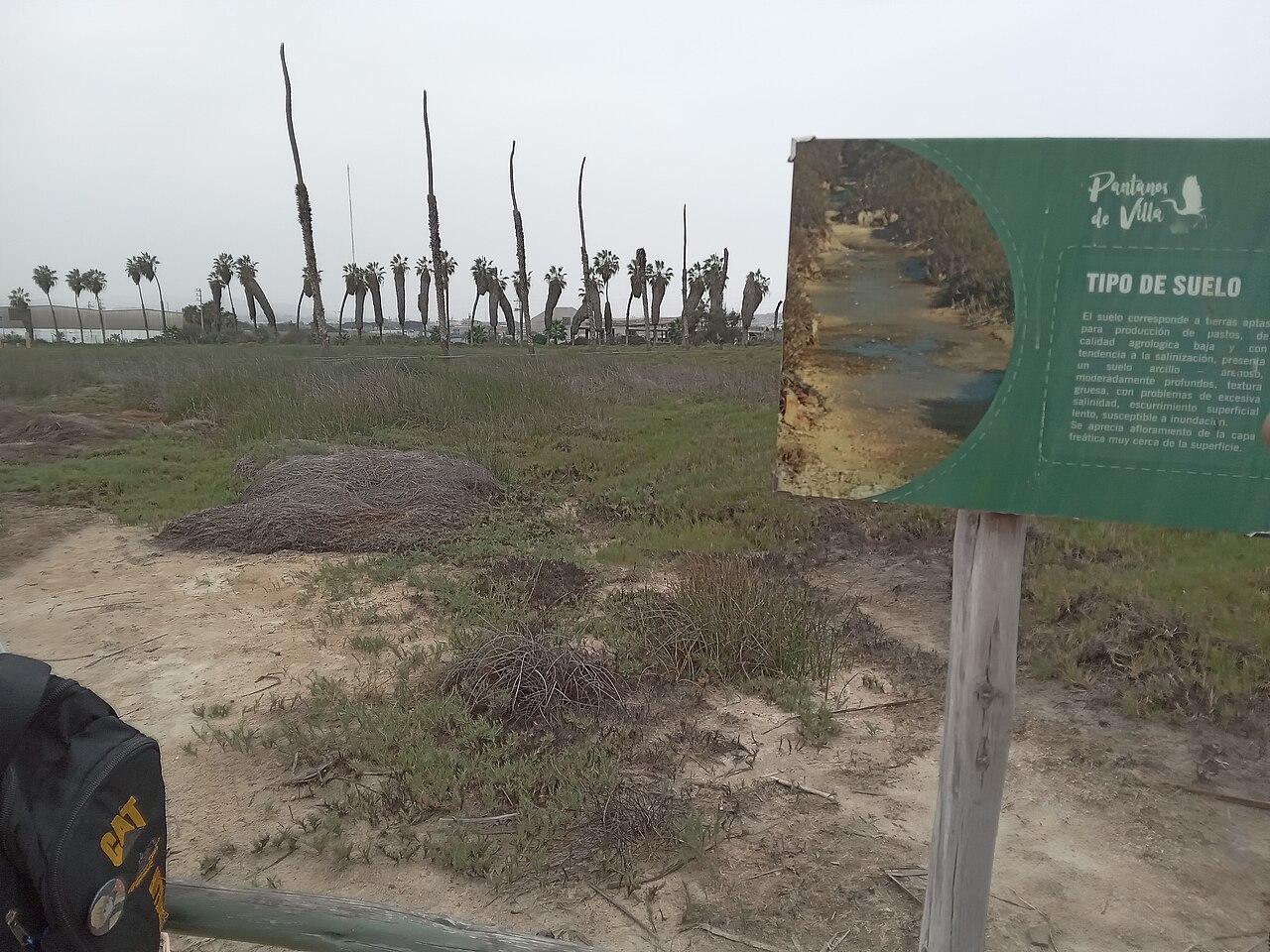
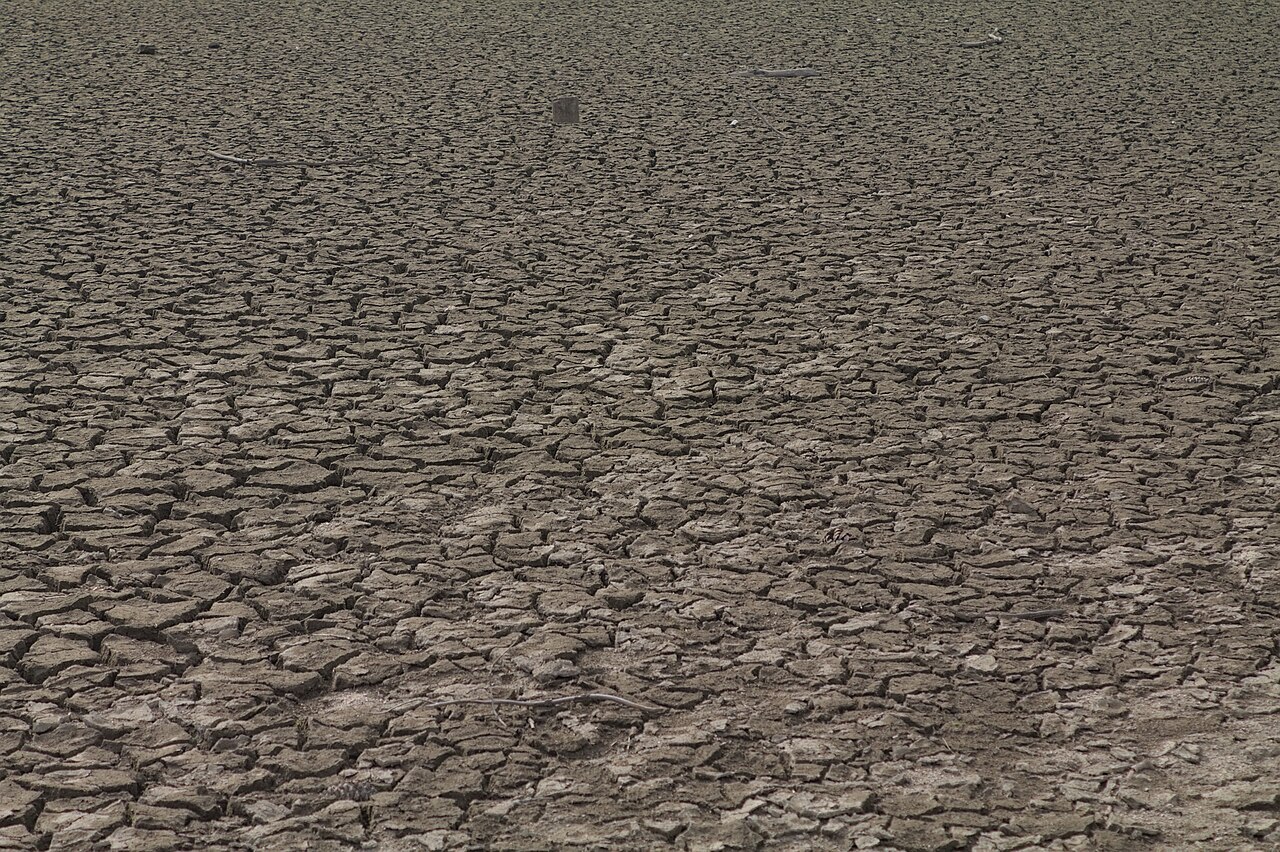
And that brings us to the two most common hydrophobic suspects in a Florida garden. The first is a container mix left to dry out completely. Peat and coir, the spongy fibers that make potting mix hold water, shrink and harden when they dry fully, and their surfaces become difficult to rewet. A bone-dry pot is not just thirsty. It is hydrophobic, and pouring water on top just channels down the sides. The second suspect is Florida sugar sand itself. Sand has big pores, so it drains fast even on a good day. Bake that sand dry in the summer sun, let waxy coatings build up on the grains, and now you have a soil that is both fast-draining and water-repellent. Water pours in, finds no grip, and exits stage bottom, while the root zone stays dry. Fast drainage and water repellency are different problems, and in Florida they love to stack.
Prove it: two tests you can do today
Before you fix a problem, prove you have it. Hydrophobic soil has two wonderfully simple tests, and both beat guessing.
The water-drop test. Find a dry patch of soil and level a small spot. Place several drops of water on the surface and time how long they take to disappear. Soil scientists sort the results roughly like this: under 5 seconds, your soil is not water-repellent. Five seconds to a minute, slightly repellent. One to ten minutes, water-repellent. More than ten minutes, severely repellent. If your drops are still sitting there, round and smug, after ten minutes, you are not imagining things. Your soil is wearing a raincoat and it is a good one.
The container test. Take a dry potted plant and water it slowly. Watch what happens. If water pours out the drainage holes within seconds while the top still looks dry, and a finger poked into the middle comes out dry, you are watching channeling: the water found gaps down the sides of the root ball and bypassed the soil entirely. The pot is not watered. It is rinsed. This is the single most common reason container plants die of thirst in a garden where somebody waters every day.
The fix: slow water, wet compost, mulch, and patience
The fix for hydrophobic soil is not more water. It is slower water, wetter amendments, and a surface that never gets the chance to bake dry in the first place.
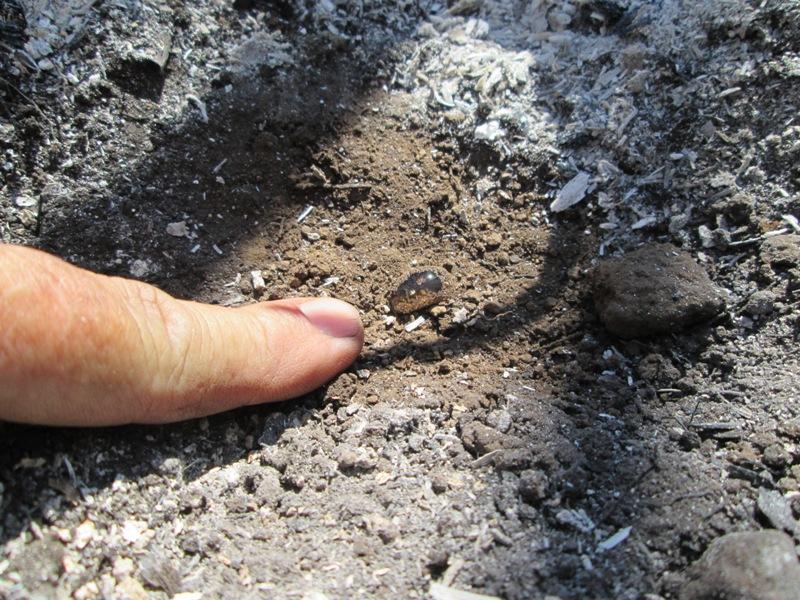
Water in cycles, never in one big dump. This is the single most important habit. Wet the soil lightly, wait twenty to thirty minutes, wet it again, and repeat. The first pass softens the waxy coatings and lets a little water grip. The second pass goes deeper. By the third pass, water is actually infiltrating instead of running off. One big dump does the opposite: it compacts the surface, runs off, and teaches you nothing. Think of it like rehydrating a dried sponge. You do not pour a bucket on a dry sponge and expect instant softness. You let it sit in shallow water and wait. Your soil is the same animal.
Pre-wet your compost before it goes into a bed. Dry compost added to a dry bed is two hydrophobic materials shaking hands. Soak compost before you spread it, so it goes in already moist and stays moist. Rain-barrel water is the best choice here, because it is chlorine-free and room temperature. If you are using tap water, fill a bucket and let it sit uncovered for a day or two first. That lets chlorine gas off. One honest caveat: some water systems use chloramine instead of chlorine, and chloramine is stubborn about leaving. If your water smells like a swimming pool even after sitting, you are probably dealing with chloramine, and the sit-and-wait trick will not fully work. Rain-barrel water sidesteps the whole question, which is one more reason to catch rain when Florida offers it by the bucketful.
Mulch like you mean it. Mulch is not decoration. It is a moisture roof. A layer of pine needles or wood chips shades the soil surface, slows evaporation, and keeps the top inch of soil from baking into a water-repellent crust. Pine needles are a Florida classic: they knit together, let rain through, and break down slowly. Wood chips last longer and feed fungi, which is a feature, not a bug, because fungi are half of what makes soil hold together. The goal is simple: soil that never fully dries out never gets the chance to go hydrophobic. Mulch is how you keep that promise.
Planting a tree in soil that does not want water
Trees are where hydrophobic soil does its most expensive damage, because a tree planted into a dry, repellent hole can die of thirst while you are watering it faithfully. The planting technique matters as much as the watering.
Start by rinsing the container roots. A root-bound tree from a pot often comes with a dry, circling root mass that is hydrophobic in its own right. Rinse it gently until the roots are damp and loose, then spread them outward instead of dropping a tight root ball into the hole. A root ball planted as a tight knot will stay a tight knot, and water will channel around it for years.
Firm the center of the hole, set the tree so the root flare, the widening at the base of the trunk, sits above grade, never buried. Burying the flare is slow suffocation, and no amount of water fixes a buried flare. Then build a soil berm, a low ring of soil around the edge of the hole, like a donut. The berm turns the planting hole into a basin, so water pools over the root zone and soaks down instead of running away across the lawn.
Then water with math, not vibes. At planting, give roughly 6 to 9 gallons of water per inch of trunk caliper, where caliper means trunk diameter measured in inches. A 2-inch-caliper tree gets roughly 12 to 18 gallons at planting. After that, give about 3 gallons per caliper inch daily for at least 2 weeks, except on days when at least half an inch of rain falls. That same 2-inch tree gets about 6 gallons a day. Water slowly, in cycles, so it actually infiltrates. A tree planted this way starts life with wet roots, a basin that holds water, and a root flare breathing free air. A tree planted without it starts life in a dry pocket with a moat that drains the wrong way.
Wide rows and shallow swales: giving water somewhere safe to go
Florida does not have a water shortage problem. It has a water timing problem. Months of dry weather bake soil hydrophobic, and then a summer downpour drops inches in an afternoon. A garden that handles both extremes needs shape, not just soil.
Wide rows and shallow swales are that shape. Rows wide enough to walk comfortably, with shallow swale channels between or around the beds, do two jobs at once. In dry weather, the swales hold water where it falls and let it soak in slowly, keeping moisture even across the bed instead of letting it all run to the lowest corner. In a downpour, the swales give water a safe path, so it moves through the garden instead of over it, carrying soil with it.
This matters most for the heavy drinkers that also hate wet feet: the squash family, okra, tomatoes, and peppers. These are plants that want steady moisture and will punish you for both drought and drowning. A swale beside their row keeps their root zone evenly moist in a dry week and gives a summer deluge somewhere to go besides their crowns. Even moisture and a safe overflow path, in the same ditch. That is not landscaping. That is plumbing the garden can understand.
Surfactants, honestly: the shortcut and its tradeoffs
Sooner or later somebody will suggest a surfactant, also sold as a wetting agent or soil penetrant. Here is the honest version.
Commercial wetting agents exist, and they do work, in the narrow sense. They lower water’s surface tension, which weakens cohesion’s grip and lets water spread across and into waxy surfaces it would otherwise bead off. A surfactant-treated bed will wet up faster than an untreated one. That part is straightforward chemistry, and there is no point pretending otherwise.
The tradeoff is what happens after the wetting. This site’s preference is biology-first: compost, worm castings, and organic matter, because those fix the cause instead of the symptom. Organic matter feeds microbes and fungi, improves aggregation, and builds a soil structure that holds water in pores instead of shedding it from coated grains. A surfactant makes water enter a broken soil. Biology rebuilds the soil so water wants to enter. Those are different jobs, and only one of them lasts.
And here is the part where honesty requires a shrug: the long-term effects of repeated surfactant use on soil biology are genuinely uncertain. Some products are marketed as biodegradable and gentle. Some research raises questions about effects on microbes and aquatic life when products wash off-site. Nobody in this guide is going to claim surfactants are proven safe or proven unsafe, because that proof does not exist in a form solid enough to stand behind. If you use one, treat it as a rescue tool for a specific hydrophobic bed, not a routine input, and pair it with the biology that actually fixes the problem: compost, castings, mulch, and time. The shortcut gets water in today. The biology keeps it coming in next year.
Where this fits in the bigger soil picture
Hydrophobic soil is not a separate problem from soil health. It is a symptom of soil that has lost its structure, its moisture, or its biology, usually all three at once. The fixes in this guide, slow watering, wet compost, mulch, swales, are the same practices that build living soil generally. That is not a coincidence. Water repellency is what soil does when it is treated like dirt instead of an ecosystem.
If you want to go deeper, our Soil Food Web guide explains the creatures doing the actual work underground: bacteria, fungi, protozoa, nematodes, and the whole food web that turns dead leaves into soil structure. Our Raised Bed guide covers building beds that hold moisture in the first place, and our Glossary defines the terms used here if any of them felt like jargon. And if you want to feed the biology directly, Know Your Castings explains how worm castings add the microbial life and organic matter that keep soil wettable. Compost and castings are not magic. They are just the fastest way to hire a billion tiny workers who rebuild soil structure for free.
So the next time water beads on your bed and runs away, do not blame the water. Water is doing exactly what physics says it should. Blame the raincoat, then take it off: water slowly, wet your compost, mulch the surface, shape the ground, and feed the life underneath. The soil will remember how to drink. It just needs a reason to try.
🌱 Keep learning
Three related guides worth reading next:
- Living Soil — A field guide to everything alive in your dirt: bacteria, fungi, protozoa, nematodes, worms, and the whole food web.
- Soil Microbiology — Meet the billions of microbes doing the real work under your feet.
- Organic Matter: The Pantry — The pantry the entire soil food web eats from — fallen leaves, dead roots, compost, and why it matters more than any fertilizer bag.
🪱 Your Soil Needs This
Reading about healthy soil is great. Growing in it is better. Our small-batch, traceable worm castings are the shortcut your garden deserves.
Shop Worm Castings Subscribe & SaveEvery bag comes with a lot certificate. Know what's in your soil.