
Plants That Clean Soil (And Why You Don’t Eat Them)
Every few years the internet rediscovers a miracle. The headline goes something like this: Sunflowers cleaned up Chernobyl. Plant them in your yard and they’ll suck the poison right out of the ground. It’s a beautiful story. It has heroes (sunflowers — charismatic, photogenic), a villain (contamination), and a resolution you can buy in a seed packet. Like most beautiful stories that fit on a seed packet, it is built on a real science that is smaller, slower, stranger, and more interesting than the legend. The science is called phytoremediation — using living plants to remove, contain, or break down contaminants in soil — and it is genuinely practiced, genuinely researched, and genuinely useful in the right situation. This guide is the honest version: how it actually works, when it’s the right tool, when it’s a dangerous fantasy, and the iron rules that keep a cleanup project from accidentally becoming a contamination delivery system pointed at your dinner plate.
The Three Tricks Plants Actually Do
Plants can’t metabolize a lead atom into something else — nothing biological can; heavy metals are elements, and short of a particle accelerator they stay heavy metals forever. What plants can do with contaminants falls into three honest categories:
Phytoextraction — the plant as mining operation. Some plants absorb certain metals from soil through their roots — because chemically, to a root, a cadmium or zinc ion looks a lot like a nutrient it was shopping for — and move them up into stems and leaves. The metal is now concentrated in harvestable tissue. Cut the plant, remove it, and that fraction of the metal leaves the site in the biomass. Repeat over seasons and you are, very slowly, mining your own dirt. A small club of species called hyperaccumulators do this to a remarkable degree, packing metal concentrations into their leaves that would kill an ordinary plant. They are the specialists the research is built on; common garden plants dabble at far lower rates, which matters for expectations below.
Phytostabilization — the plant as containment cap. Sometimes the goal isn’t removal but immobilization: a dense root system holds contaminated soil in place, keeps it from eroding into the creek or blowing into the neighbor’s yard as dust, and the root-zone chemistry can lock metals into less mobile, less available forms. The contamination stays, but it stays put and stays out of the food chain. For large, low-level contamination, containment is often the professional answer — a green, living lid.
Rhizodegradation — the plant as landlord to a cleanup crew. For organic contaminants — petroleum residues, some solvents and pesticides — the hero isn’t the plant but the microbial city around its roots. Roots leak sugars and oxygen into the soil, feeding bacteria and fungi, some of which break down those compounds as food. The plant farms the microbes; the microbes eat the problem. This one is genuinely elegant and genuinely slow, measured in seasons and years, and it’s the mechanism with the best claim to actually destroying a contaminant rather than relocating it.
The Realistic Use Case (It’s Smaller Than the Legend)
So where does this belong in a home gardener’s life? Not in the movie version — nobody’s backyard is a Superfund site being rescued by marigolds. The realistic scenario is humble and specific: old lead paint. Houses painted before lead paint was banned shed chips and dust for decades, and the soil right along the foundation and fence lines — the drip zone — can carry lead levels that matter, especially where children play and where food gardens get planted. Add old urban lots, former orchard ground (historical orchard sprays included lead arsenate — history is not always quaint), and spots near old painted outbuildings, and you have the map of where a homeowner might genuinely encounter contaminated soil.
Notice what the correct responses to that map mostly are, ranked by how professionals actually think:
- Test first. You cannot manage what you haven’t measured, and you cannot see lead. A laboratory soil test that includes heavy metals is the entry ticket — our Soil Test Translator walks through reading results like these. Testing tells you whether you have a problem at all (many drip zones test fine), where it is, and how big.
- Separate the food from the soil. For most home gardeners with a known hot spot, the standard, sane answer is not extraction — it’s a raised bed with a barrier and clean imported soil, while the hot spot itself gets mulched, planted with ornamentals, or stabilized under groundcover. The problem is contained; dinner never meets it.
- Then, and only then, extraction as a long project. If you want to genuinely reduce a modest, shallow metal load in a specific patch over multiple seasons, phytoextraction with appropriate plants, harvested and disposed of correctly (see the iron rules), repeated with retesting, is a legitimate — if patient — project. It is gardening as slow environmental repair, and some of us find that a satisfying thing to tend.
The Sunflower Question, Answered Carefully
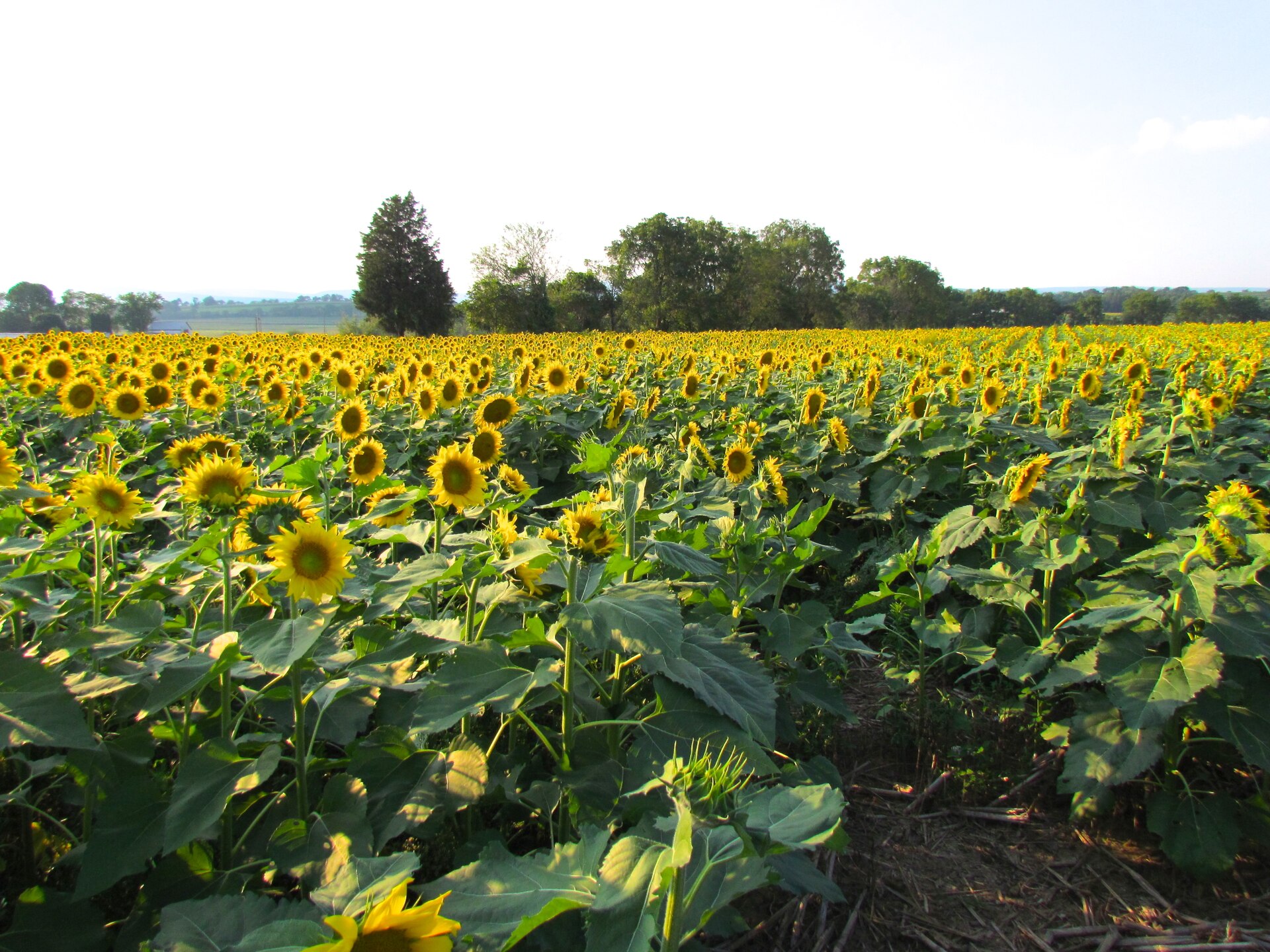
Back to the legend, because it deserves a fair trial rather than a smirk. After the Chernobyl accident, researchers did experiment with sunflowers — most famously in ponds, where sunflower rafts’ roots filtered radionuclides from the water (that’s rhizofiltration, the watery cousin), and sunflowers are also enthusiastic accumulators of lead and other metals from soil in field trials. The plant’s virtues are real: fast, huge biomass, deep enthusiasm for taking up what’s dissolved around its roots.
The qualifications are equally real. Uptake depends heavily on the metal, its chemical form, and the soil’s pH and chemistry — lead in particular tends to stay put in roots rather than traveling to the shoots, which is awkward when the harvestable part is the shoot. Field results are variable, the amounts removed per crop are a small percentage of a contaminated site’s total load, and “planted at Chernobyl” in the legend quietly becomes “studied, with partial success, as one component of research” in the literature. The honest sentence is this: sunflowers can accumulate some metals under some conditions, and no sunflower has ever cleaned a yard in a summer. Treat them as one honest tool with a good publicist, not as a remediation plan in a seed packet.
The Iron Rules
Everything in this section is non-negotiable, and it’s the part of the guide to tattoo on the inside of your gardening hat:
- Never eat a remediation plant. The entire point of an accumulator is that the contamination is now concentrated in its tissue. A plant grown to pull lead from soil is a lead-delivery vegetable wearing a sunflower costume. This applies to the obvious food crops anyone might be tempted to double-purpose, and to “well, just the seeds” reasoning. No. The crop is the waste product.
- Never compost a remediation plant. Composting doesn’t destroy metals; it concentrates them into a smaller, richer pile of exactly what you were trying to remove — and then, in the cruelest garden plot twist available, you’d spread it on the vegetables. The remediation harvest leaves the garden entirely, bagged, disposed of according to your local guidance for such material (your county waste authority and your test lab can advise; at household scale the amounts are usually modest, but ask rather than assume).
- Never feed it to animals, and don’t let animals graze the cleanup patch. Chickens scratching in a remediation bed are concentrating your problem into eggs. The patch is a work site, not a pasture, until retesting says otherwise.
- Retest before you reclassify. A patch graduates from “cleanup” to “garden” on lab numbers, not on vibes, effort, or how nice the sunflowers looked. Test before, test after, and let the paper make the decision.
- Kids and pets get the same rules as the food garden gets: they don’t dig in the treatment bed. Fence it, mulch it, sign it if you must.
The Honest Limits
Phytoremediation is slow — multi-season to multi-year, always. It’s shallow — roots work the topsoil; contamination buried below root depth doesn’t know your plants exist. It’s partial — extraction removes a fraction at a time and some contaminants barely move at all. And it is specific — a plant that’s good at one metal may ignore its neighbor entirely. For high contamination, deep contamination, or contamination near a well or waterway, the correct guide is a phone call to professionals and your state environmental agency, full stop. The home-scale version of this science is for modest, shallow, known problems and the long game — and knowing where its jurisdiction ends is part of practicing it honestly.
The Florida Angle: Sand Changes the Risk Math
Florida soil adds two twists. First, our sand is a sieve: water moves down through it fast, and dissolved contaminants that in clay country might sit politely in the topsoil can travel here — toward a water table that is, in much of Florida, startlingly close to the surface. That cuts both ways for remediation: the site may dilute itself in the worst possible direction (toward groundwater), and a contaminated patch left bare is actively leaking in the rainy season. Which produces the Florida rule: cover first, deliberate second. Mulch it, plant a stabilizing groundcover on it, keep rain from hammering it — stabilization isn’t the consolation prize here, it’s urgent care. Second, our long, hot, year-round growing season is a gift to the patient extractor: more growth cycles per year than a northern garden gets, more biomass, more uptake per calendar year. Florida’s climate is a problem for keeping contamination in place and a blessing for growing the plants that address it. Hold both truths, mulch the patch, and start with a test — the same unglamorous, correct first move as everywhere in the living soil world: measure, then act.
The legend promised a miracle in a seed packet. The truth is better company: plants really can pull poison into the light where you can deal with it — slowly, partially, honestly, and with rules. That’s not a smaller story. That’s just what a real one sounds like.
Meet the Accumulators
A field guide to the famous names, with their report cards left honest:
Indian mustard is the workhorse of extraction research: fast, bulky, and genuinely willing to take up lead, cadmium, and several other metals into harvestable shoots. If a study made phytoextraction look promising, there’s a decent chance mustard was standing in the photo. For the home-scale project, it’s the default candidate — an annual you can sow, grow, cut, and remove in a single season, then repeat.
Alpine pennycress is the true hyperaccumulator celebrity of the scientific literature — a small, unassuming plant shown to load its tissues with zinc and cadmium at concentrations that read like typos. It’s also slow, tiny, and fussy about climate, which is why it’s a research star and a garden footnote: it proves the biology is possible at an extreme the practical plants don’t reach. Knowing it exists recalibrates the imagination correctly — the trait is real, evolution built it, and the useful version is a compromise.
The brake fern is Florida’s own contribution to the field, and it’s a good story told straight: University of Florida researchers discovered that this fern hyperaccumulates arsenic — relevant because arsenic shows up in old cattle-dipping vats, treated lumber sites, and some Florida soils with agricultural pasts. A fern, quietly, had been doing analytical chemistry with its fronds. It’s the single most Florida fact in this entire guide, and it’s real.
Vetiver grass is the stabilization specialist: a clumping grass with a root system like a curtain of rebar, planted worldwide on contaminated and eroding ground to hold soil in place and tolerate what would kill lawn grass. It cleans mostly by refusing to let the problem move — which, per the stabilization section, is frequently the actual job.
Willows and poplars are the rhizodegradation landlords: thirsty, deep-rooted trees whose root zones host enormous microbial activity, used in engineered projects around fuel and solvent contamination. A backyard willow is not a treatment plant for a fuel spill — see the limits section and use the phone — but the mechanism they showcase, roots feeding a cleanup crew, operates at garden scale around the milder organic residues of ordinary land use.
The Chemistry Lever Nobody Puts on the Seed Packet
Here’s the variable that decides whether any of this works: bioavailability — how much of the contaminant is in a form roots can actually absorb. A soil test measures what’s there; a root experiences only the fraction dissolved in soil water, and that fraction is governed largely by pH and chemistry. Lead locked in an insoluble mineral form can sit in soil for a century barely entering any plant, which is simultaneously why contaminated soil is less dangerous than its headline number and why extraction is slower than the same headline promises.
Researchers have tried to cheat this with chelating agents — chemicals that grab metals and force them into solution where roots can drink them — and the results teach the Florida lesson in advance: mobilized metal that a plant doesn’t catch doesn’t vanish; it moves, downward, toward groundwater. In sand country, deliberately mobilizing metals is playing with the water supply. The home gardener’s version of this lever is gentler and slower: keeping the patch biologically active, well-rooted, and growing vigorously, season after season, accepting the pace the chemistry allows. The plant is not a pump. It’s a negotiation.
A Home-Scale Cleanup, Season by Season
So the whole discipline, assembled into the realistic project. Season zero: you test — a proper lab panel, mapped by area, so the drip-line patch and the open yard get separate numbers. The patch by the old fence comes back elevated; the rest of the yard is fine. You redraw the garden plan: food production moves to raised beds on the clean side, and the patch gets its new job title. Season one: the patch is mulched hard (cover first, per Florida rules), ringed so nobody digs in it, and sown with your extractor crop in its growing season. It grows. It is, visually, just a nice stand of mustard or a ferny corner — remediation has no special effects budget. At season’s end you cut it all, bag it, and dispose of it as directed. Nothing was eaten. Nothing was composted. The chickens never saw it. Seasons two and three: repeat. Maybe rotate the tool — a stabilizing grass on the patch’s eroding edge, extractor annuals in the middle. Season four: you retest, and the lab — not hope, not the sunflowers’ charisma — tells you whether the numbers moved, and by how much. However it comes out, you’ve done the thing correctly: measured, contained, worked patiently, and kept the entire problem out of the food chain for the duration. If the numbers barely moved, the patch stays ornamental and stabilized forever, which was always an acceptable ending. The garden got bigger everywhere else anyway.
🌱 Keep learning
Start with the measurement: the Soil Test Translator decodes your lab report, Raised Beds shows the clean-soil workaround, and Living Soil covers the biology underneath all of it. Find the rest of the collection at the Living Root Academy.
🪱 Your Soil Needs This
Reading about healthy soil is great. Growing in it is better. Our small-batch, traceable worm castings are the shortcut your garden deserves.
Shop Worm Castings Subscribe & SaveEvery bag comes with a lot certificate. Know what's in your soil.