
Most pumpkins are tourists in Florida. They show up in October, look decorative for a month, and would not survive a single week of your actual summer. Seminole pumpkin is the exception — it is the pumpkin that belongs here, because it has been here longer than the state has. A Florida heirloom associated with the Seminole people, it is the squash that learned to love the heat instead of surrendering to it.
First, the identity check: Seminole pumpkin is Cucurbita moschata, the same species as butternut squash. That one fact explains most of its superpowers. Moschata squash have solid stems, and solid stems are much harder for the squash vine borer to hollow out — which is why Seminole pumpkin keeps growing in July while other squash wilt and die. Same species, same trick, bigger pumpkin.

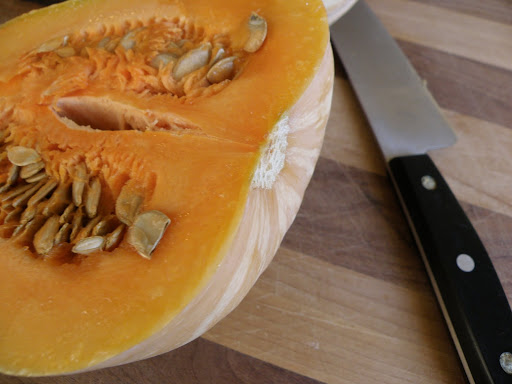

Why Seminole pumpkin deserves the garden
Three reasons. One: it thrives through a Florida summer. While other squash tap out in the heat and humidity, Seminole pumpkin sprawls on, vines and all, and sets fruit anyway. Two: it stores. A cured Seminole pumpkin keeps for months in a cool, dry, ventilated spot, which means a summer harvest is still dinner in January. Three: it actually tastes like pumpkin is supposed to taste — dense, sweet, and rich, not watery and stringy like the carving pumpkins from the grocery store.
The science that matters: that deep orange flesh is beta-carotene, the pigment your body converts to vitamin A. The color is the nutrition. And the thick, hard skin is not just armor — it is the storage system. Cure a harvested pumpkin (a week or two in a warm, dry, airy spot) and the skin toughens further while the flesh sweetens. That is why a whole Seminole pumpkin can sit on a shelf for months and still roast up beautifully.
Growing tie-in (the short version)
Give it sun and room to roam — these vines sprawl, and they mean it. Plant after the soil warms, let it run through summer, and harvest when the skin is hard and tan and the stem is dry. Cure before eating. That is the whole growing story; the rest of this guide is what to do with the pumpkin that results.
Four ways to cook them
1. Roasted (the weeknight default)
First, the safety talk, because hard squash and knives deserve respect: cut a flat, stable base on the pumpkin first so it cannot roll, use a sharp knife (a dull knife slips), and always cut away from yourself. Then halve it, scoop the seeds (save them — see method four), cut into wedges, toss with oil and salt, and roast in a single layer at 400°F for 35–45 minutes, until caramelized at the edges. The single layer is the whole trick, and Seminole pumpkin makes it easy: its dense flesh holds less water than a carving pumpkin, so it roasts instead of steaming. Caramelization is where the flavor lives.
2. Soup (the silky one)
Roast the pumpkin first, then blend the flesh with broth, onion, garlic, and a splash of cream or coconut milk. The dense flesh is what makes this soup silky — less water in, less thinning out, more body in the bowl. And that beta-carotene color does the plating for you: this soup comes out glowing orange with zero food coloring. One safety note for blending hot soup: fill the blender only halfway, hold the lid down with a folded towel, and let steam escape — or skip the drama entirely and use an immersion blender right in the pot.
3. Pie (the holiday argument-ender)
The classic: 2 cups roasted Seminole pumpkin puree, 2 eggs, 3/4 cup sugar, a half cup of cream, and cinnamon, nutmeg, and ginger, baked in a pie crust until set. Two differences from canned pumpkin pie filling: this puree is denser and richer, so the pie sets up with more body — and it is already sweet, so you can ease back on the sugar. Spice balance matters here: cinnamon leads, nutmeg and ginger follow. Get that right and nobody at the table will ask where the can went.
4. Roasted seeds (the pepitas)
Do not throw the seeds away. Rinse them, dry them very well, toss with oil and salt, and roast at 325°F, shaking the pan every few minutes, until golden and popping. The crunch science is simple: dry seeds crisp, wet seeds steam, and salt sticks to oil — so the drying step is not optional, it is the whole recipe. Eat them warm, straight off the pan, and try to save some for the soup topping. You will fail. That is fine.
Storing the harvest
Whole cured pumpkins keep for months in a cool, dry, ventilated spot — check them occasionally and use any that soften first. Cut pumpkin keeps about a week in the fridge, wrapped. Cooked puree freezes beautifully: roast, puree, cool, and freeze flat in bags for winter soups and pies. Our Freezing the Harvest guide covers the method, and the Florida Preserving Calendar tells you when the harvest lands.
That is the Seminole pumpkin deal: a pumpkin that loves your worst weather, stores through winter, and turns into dinner four different ways without a single complaint. Grow one vine. You will wonder why you ever bought a pumpkin that was only good for sitting on a porch.
🌱 Keep learning
Three related guides worth reading next:
- Water-Bath Canning Without Fear — The safety-first guide to preserving your harvest: botulism science, the pH 4.6 rule, and water-bath canning step by step.
- Fermented Hot Sauce — Let the microbes do the cooking: lacto-fermented hot sauce from garden peppers, with the safety science built in.
- Drying Herbs the Right Way — Which herbs dry beautifully, which ones should be frozen instead, and the methods that actually preserve flavor.
🪱 Your Soil Needs This
Reading about healthy soil is great. Growing in it is better. Our small-batch, traceable worm castings are the shortcut your garden deserves.
Shop Worm Castings Subscribe & SaveEvery bag comes with a lot certificate. Know what's in your soil.