
🌺 Aalii
What it looks like
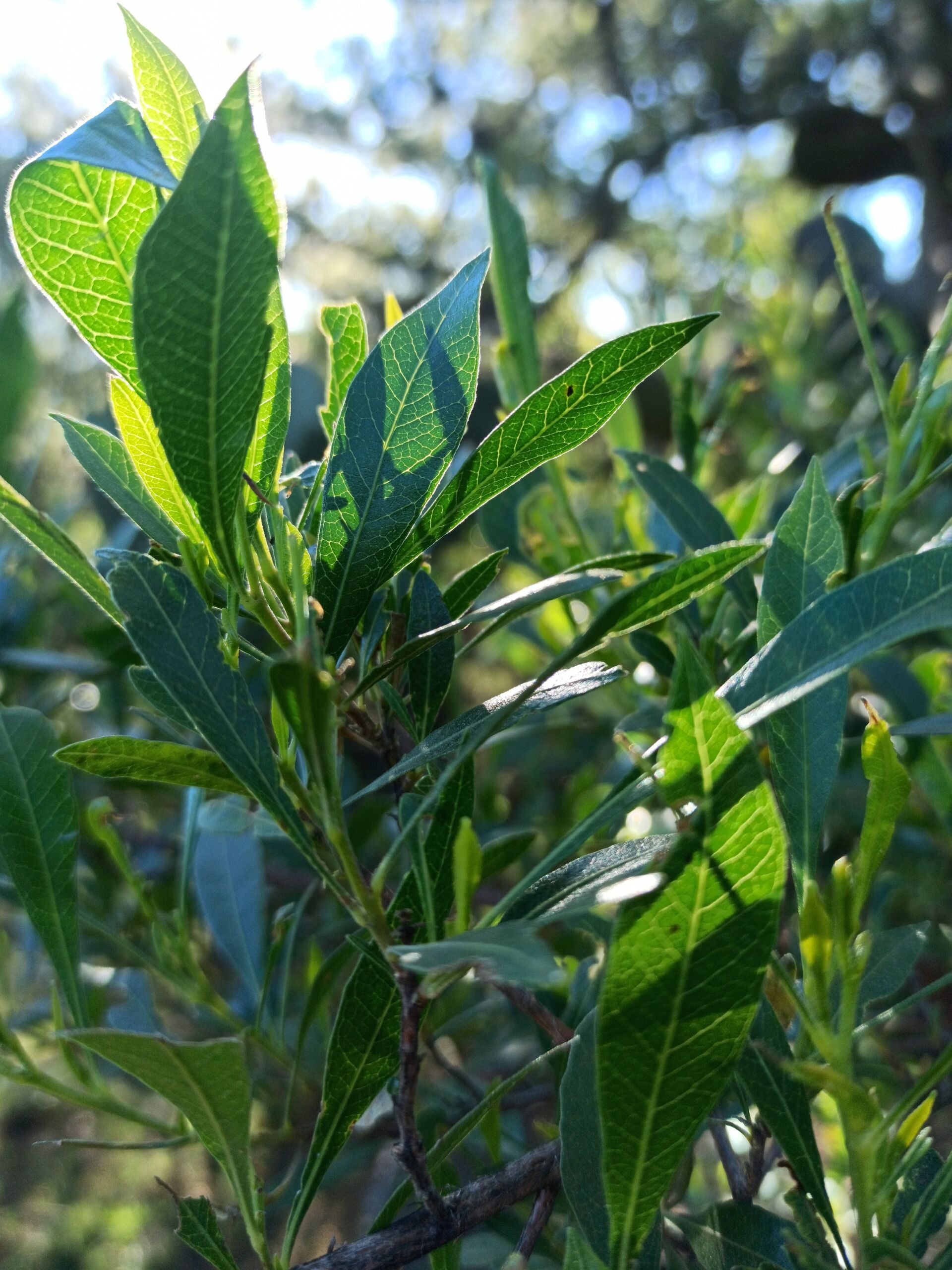
Aalii is the Hawaiian name — spelled ʻaʻaliʻi in Hawaiian, with the ʻokina doing real work — for a shrub that might be the most widely traveled plant you have never heard of. Its Latin name gives the first clue to its character: viscosa means sticky, and the leaves are visibly, touchably sticky, coated in a resinous secretion that hardens with age. Rub a young leaf and your fingers come away tacky and faintly aromatic. That stickiness is not an accident; the resin helps the plant hold onto water in harsh, windswept places, and it is one of the reasons this shrub can colonize ground where almost nothing else will grow.
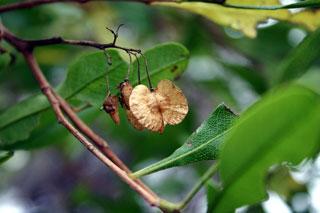
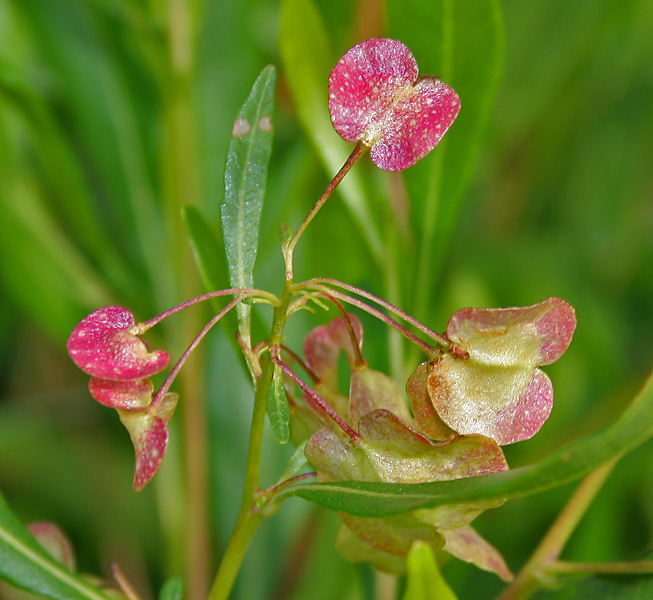
In form, it is a fast-growing, broad-leaved evergreen shrub, typically 10 to 15 feet tall with a spread of 6 to 15 feet, though in the wild it ranges from a low shrub of 3 feet on an exposed lava field to a small tree of 20 feet or more in a sheltered forest, and rarely up to about 30 feet. The leaves are variable — generally oblong to lance-shaped, 4 to 7.5 centimeters long in the classic description, though broader descriptions allow up to 15 centimeters — alternate, leathery, tough but pliable, with a shiny, varnished look that gives the plant its other common name, varnish leaf. The foliage may be green, yellow-green, bronze, or red-purple depending on the plant and the season, and young growth is often the stickiest part of all. The flowers will not stop traffic: small, yellow to orange-red, petal-less, borne in short panicles about 2.5 centimeters long, and wind-pollinated — the plant long ago traded insect advertising for wind exposure. Male and female flowers usually grow on separate plants, though a plant sometimes bears both. The fruit is the showpiece: a capsule about 1.5 centimeters broad, red ripening to brown, with two to four papery wings, like a tiny lantern. In Hawaii those winged capsules are strung into leis, and in a garden they are the reason you plant a female plant rather than settling for whichever seedling comes up male.
The distribution is genuinely absurd, in the best way. This one species grows across tropical, subtropical, and warm temperate regions of Africa, the Americas, southern Asia, and Australasia — from Himalayan foothills to Peruvian valleys, from Nigerian coasts to the Chatham Islands south of New Zealand, from every Australian state to pine woodlands in Florida. It achieved that spread only in the last couple of million years, largely by oceanic dispersal, starting from an Australian origin. Botanists have called it one of the world’s great transoceanic dispersers, which is a grand title for a shrub with sticky leaves and papery fruit, and it has earned it. In the United States it is principally known as a native Hawaiian plant, indigenous across all the main Hawaiian Islands from sea level to subalpine zones above 8,000 feet on Maui and the Big Island, and it is also native to Florida and Arizona, where it goes by Florida hopbush. Same species, two island stories, one sticky leaf.
For butterflies, aalii is a host plant in the Hawaiian blue butterfly’s story, listed alongside koa and other native Hawaiian trees and shrubs. That matters because Hawaiian butterflies and Hawaiian plants evolved together in isolation, and a host list that reads like a roll call of native forest is a conservation story, not just a planting list. Planting aalii outside Hawaii does not summon Hawaiian blues to your yard — they live in Hawaii — but it does connect a Florida garden to the same species that feeds a butterfly on the other side of the Pacific, which is a pleasingly strange thing for a shrub to do.
How to grow
Aalii is an easy shrub in the right climate and a non-starter outside it, and the line between those two facts is a frost line. It is hardy in USDA zones 9 through 11, it is frost sensitive, and it wants full sun in well-drained soil. Within those limits it is gloriously unfussy: it tolerates dry, sandy, or rocky soils, salt spray, windy sites, and drought once established, and it is used for screens, hedges, windbreaks, parking-lot islands, and dune stabilization — the kind of jobs you give a plant that can take a beating and keep its leaves. Plant it in spring or whenever your local nurseries stock it in zones 9 to 11, give it sun and drainage, and then mostly leave it alone.
Propagation is by seed or cuttings. Seed may need pre-treatment in very hot water to break dormancy — a scarification trick that mimics the rough treatment seeds get in the wild — and cuttings are the way to guarantee a female plant, which matters if you want the winged fruit capsules for their looks (or for leis, if you are in Hawaii and so inclined). Because male and female flowers usually grow on separate plants, a lone seedling is a coin flip: it may be a handsome foliage plant that never fruits, or a fruiting female with no male nearby, which still fruits, since the capsules are the plant’s own structures, but the seed inside may not be viable without pollen. For a screen or hedge, sex does not matter. For fruit display, buy a named female or a cutting-grown plant, and ask the nursery which one you are getting.
Pruning is straightforward: it takes shearing as a hedge and shaping as a screen, and it responds to a hard cutback better than many evergreens, though you will lose a season of fruit if you cut at the wrong time. It is fast-growing, so a screen fills in quickly, and its evergreen foliage means the screen works in winter too — in zones 9 and above, at least. One caution that belongs in every aalii guide: it burns quite easily, and it should not be planted in places prone to fire or hard against a house in a fire-risk landscape. A resinous, fast-growing shrub is a ladder of fuel if you site it badly, and the same toughness that makes it a good windbreak makes it a poor choice for a defensible-space planting.
Florida note: Florida gardeners, this is genuinely your plant — Florida hopbush is native to Florida, and the University of Florida’s extension service lists it for zones 9 through 11, which covers central and South Florida. In North Florida, outside zone 9, frost will test it and usually win, so treat it as a central-and-south-Florida shrub, not a statewide staple. It is a good fit for coastal gardens that get salt spray, for sandy soils that defeat fussier shrubs, and for screens where you want something evergreen, fast, and unbothered by drought. It is not a plant for a wet, shady, North Florida woodland garden, and it will tell you so by sulking.
Water & feeding
Water to establish, then back off. Aalii survives long dry periods, it is drought-tolerant once established, and in desert plantings it does best watered every few weeks in summer and monthly in spring and fall — a schedule that tells you everything about its priorities. In a Florida garden, normal rainfall plus occasional deep watering in dry spells is plenty, and overwatering in heavy, poorly drained soil is a faster way to kill it than drought. Drainage is the non-negotiable: wet feet in a soggy bed will do what a dry month cannot.
Feeding: do not bother with much. Aalii is easily cultivated without heavy feeding, and it grows in poor soils precisely because it does not demand rich ones. A light application of compost or a balanced fertilizer in spring, if growth looks weak, is more than enough. Rich feeding produces soft, fast growth that is more flammable and less wind-firm — the opposite of what you planted a tough screen shrub for. The soil science is simple: this is a plant of lava fields, dunes, and rocky slopes, evolved to make do, and its resinous leaves are part of how it holds water while making do. Feed the soil lightly, mulch to hold moisture while young, and let the plant’s own toughness do the rest.
Common problems
- Frost. The hard limit. Aalii is frost sensitive, and a hard freeze in zone 8 or below will damage or kill it. Site it in zone 9 or warmer, and in marginal zone 9 spots give it a sheltered position and a warm wall.
- Fire risk. Resinous foliage burns easily. Do not plant it against a house in a fire-prone landscape, and keep it out of defensible-space plantings where fire codes or common sense say no.
- Wrong-sex plant. Male plants never bear the showy winged capsules. If fruit matters to you, buy a cutting-grown female or a named cultivar, not a random seedling.
- Allelopathy in the wild. The leaves secrete a resinous substance with allelopathic effects, and in coastal Brazil the plant has been shown to reduce the abundance of other native species nearby. In a garden bed, give it room and do not expect delicate neighbors to thrive pressed against it.
- It can be weedy in the right climate. A plant that colonizes lava fields and occupies open areas and secondary forest is a plant that self-seeds where it is happy. In Hawaii and other tropical settings it spreads readily; in a Florida garden, watch for seedlings and pull them while small if you do not want a thicket.
- Ragged leaves. The foliage often looks chewed or ragged from insect damage, which is normal for this species and not a crisis. If the plant is growing well, a few holes are character, not disease.
Harvest
The harvest of aalii depends on where you live and what you value. In Hawaii, the traditional harvests are wood and color: the extremely tough, durable wood was made into house posts, fishing lures, and digging sticks, and a red dye came from the fruit, while the winged seed capsules are still strung into leis. In a garden anywhere in zones 9 to 11, the harvest is simpler: winged capsules in red, pink, tan, yellow, or green, depending on the plant, lasting on the shrub and looking like small paper lanterns; evergreen screening that actually screens; and the quiet satisfaction of growing a plant whose wild range spans half the planet. The leaves and bark have traditional medicinal uses in several cultures, which this guide records as history, not as a recommendation — admire the ethnobotany, and leave the medicine to people who know what they are doing.
Browse all plant & pest guides
Saving seeds
Aalii (Dodonaea viscosa) is one of those plants that practically dares you to save its seed, then rewards you for taking the dare. The papery, winged capsules — the same ones traditionally strung into lei — ripen from green to dry and brown, and each one hides two to four tiny, hard, black seeds about the size of a pinhead. Wait until the capsules are fully dry on the shrub, then pick them, crumble them over a sieve or a bowl, and winnow away the papery chaff. What you are left with looks unpromising: little black beads with a coat like armor. That coat is the whole story.
In the wild, that armor is a survival strategy. It keeps the seed dormant through drought and rough treatment until conditions are right, and it means plain sowing in a pot often gives you sporadic germination over weeks, with some seeds just sitting there, unimpressed. The trick is to get water through the coat. The classic method is hot-water scarification: pour near-boiling water over the seeds and let them soak overnight. In the morning, sow the ones that have swollen to two or three times their size, and repeat the treatment on the stubborn remainder — a few rounds usually gets the whole batch going. A simpler, slower route is soaking in plain tap water for a day or two first, which often speeds things up, or nicking the coat with sandpaper if you have the patience and the eyesight for seeds this small.
Sow shallowly — just a light covering of mix — in a gritty, free-draining seed mix, keep it moist with a fine mist so you do not wash the tiny seeds around, and give the tray partial shade. Germination generally takes a week to a month, sometimes longer for a stubborn seedlot, so do not give up on the tray too soon. Pot seedlings on once they have about four true leaves, and grow them on in full light before planting out.
Two honest caveats. First, aalii seedlings are variable: this is a famously widespread, variable species, so seed-grown plants will not be exact copies of the parent. If you have one particular shrub whose shape or color you love, take cuttings instead — they are the clone machine. Second, Florida humidity is the enemy of stored seed. Dry your saved seed thoroughly, then store it airtight with a little desiccant packet, cool and dark. And because aalii is open-pollinated rather than a named F1 hybrid, seed from a single shrub will still give you aalii — just aalii with its own personality.
Varieties and relatives
Dodonaea viscosa is a highly variable species with a complex, much-debated subspecies taxonomy — botanists have named several subspecies, including Dodonaea viscosa subsp. angustifolia (the sand olive of southern Africa, Arabia, Australia, and New Zealand), and the subspecies intergrade where their ranges meet, so garden plants are usually sold as the species or as a cultivar rather than a subspecies. This guide claims the species only, and treats other Dodonaea species as different plants, not as aalii.
Dodonaea viscosa ‘Purpurea‘ — the most popular cultivar of the genus, with bronze-purple foliage that darkens in winter; seedlings vary greatly in color, so buy a cutting-grown plant if you want reliable purple, and note it is reported to be less cold-hardy than the straight species.
Dodonaea viscosa (straight species) — the green form, the toughest and most widely planted, the one this guide describes.
Other Dodonaea species — the genus holds around 70 species, mostly Australian, and they are not aalii; if a label says only “Dodonaea” without “viscosa,” it is a different plant until proven otherwise.