
🌼 Abbotswood Potentilla
What it looks like
Why this variety
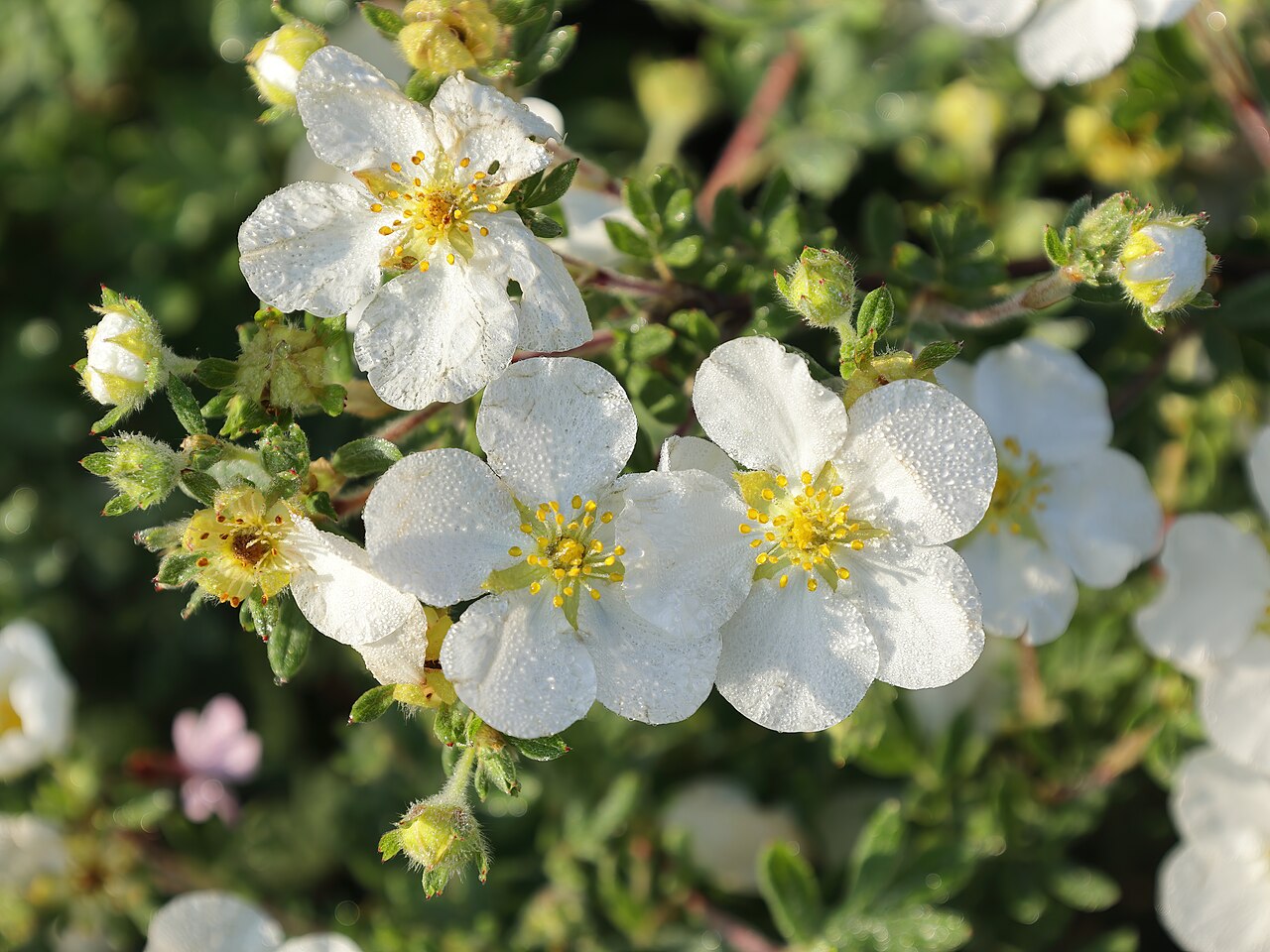
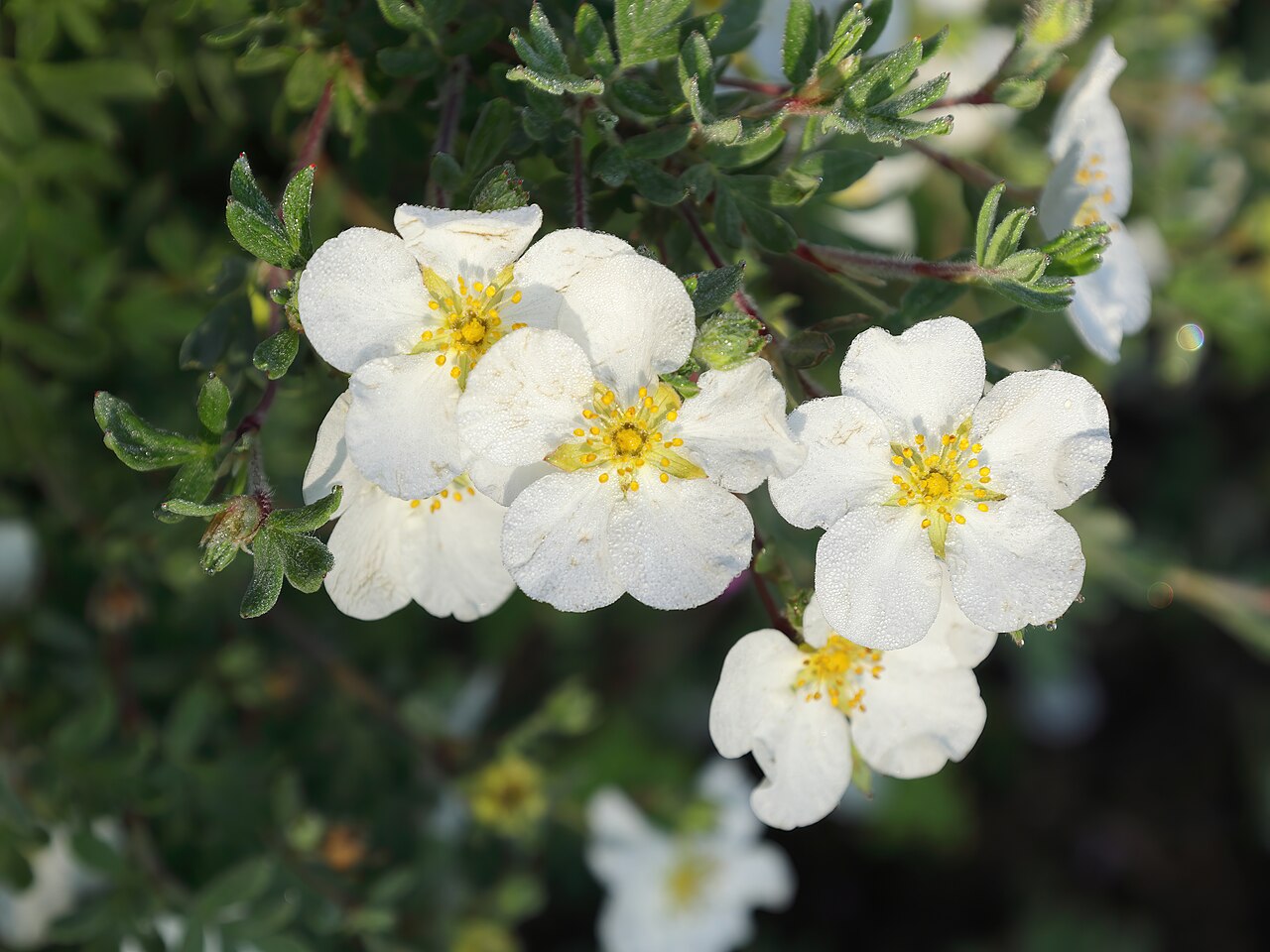
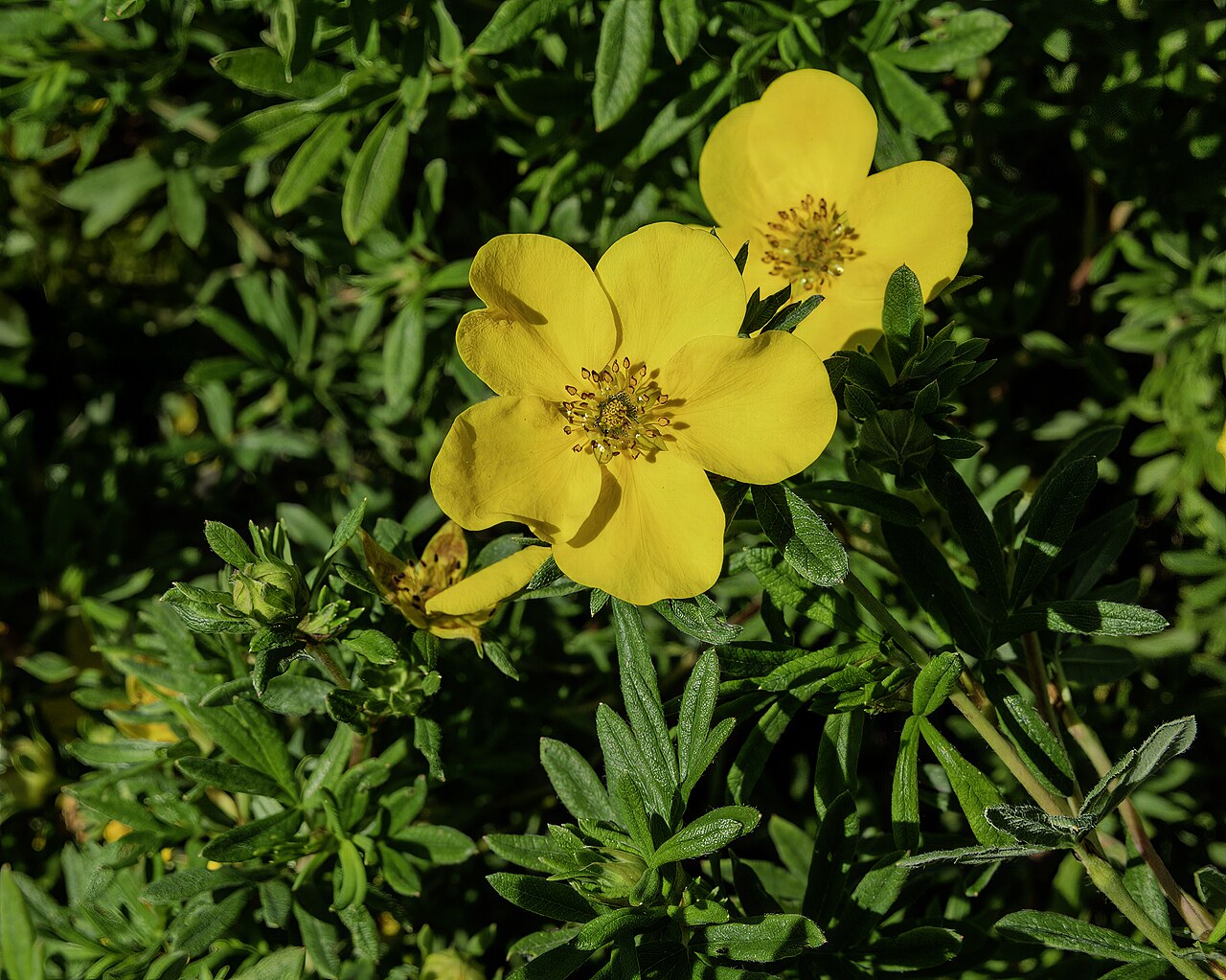
Abbotswood is the white potentilla by which other white potentillas are judged: a bushy, deciduous shrub, 2 to 4 feet tall, with fine, dark green, pinnate leaves and masses of large, pure white flowers, 1-1/2 inches across, with soft yellow centers, from late spring to the first frosts. It won the Royal Horticultural Society’s Award of Garden Merit for garden performance, and it is regarded as one of the best white-flowering cultivars — because it blooms for months, not weeks, it holds its shape without fussing, and its white flowers read as light in a border in a way no yellow potentilla can match. If you want a white shrub that blooms all summer, Abbotswood is the standard.
The trade-off is heat: potentilla is a cold-climate shrub, hardy to zone 2, and it wants cool summers, sun, and drainage — heat and humidity thin its bloom and shorten its life. Give it full sun to part shade, well-drained soil, and light pruning in early spring to shape, and do not overfeed it, because rich soil makes leggy potentilla with fewer flowers. In a cool climate, Abbotswood is a carefree shrub; in a warm climate, it is a trial, and its long bloom season is the reward for giving it the coolest, best-drained spot you have.
If you are new to choosing between cultivars, the Varieties Matter guide explains why the name after the plant matters as much as the plant itself. Abbotswood is a perfect example: it is not just a potentilla in the abstract, it is a potentilla with a specific job, a specific history, and specific strengths.
Florida honesty, stated plainly: potentilla is a North Florida trial only, not a statewide shrub — it needs cool summers and sharp drainage, and most of Florida offers neither. In North Florida, plant Abbotswood in full sun with well-drained soil, prune lightly in spring, and treat a long summer bloom as a triumph. South of the Panhandle, do not bother; plant a heat-loving white shrub instead and save the money. This guide is honest about that, because a potentilla sold as a statewide promise would be a lie.
How to grow
Plant in spring or fall, in full sun to part shade and well-drained, lean to moderately rich soil — potentilla is a cold-climate shrub that wants sun, drainage, and cool summers, and it sulks in heat and wet soil. Work a little worm castings into the bed at planting, do not overfeed, space 3 to 4 feet apart for a hedge or a specimen, and mulch lightly to hold moisture without trapping it against the crown. Prune lightly in early spring to shape and encourage vigorous new growth, because potentilla blooms on new wood.
Set plants 3-4 feet apart in soil with a pH around 6.0-7.5. Work worm castings into the bed at planting and mulch to hold moisture. A well-fed potentilla plant rewards that care directly: steadier growth, better bloom, and a show that actually shows up.
Water & feeding
Water to establish, then water moderately — potentilla wants steady moisture while growing and blooming, but sharp drainage always, because wet crowns rot. Water at the soil line, mulch lightly, and feed lightly: castings at planting plus a balanced organic feed in spring is usually enough, because rich soil makes leggy potentilla with fewer flowers. In a dry spell, deep watering keeps it blooming; in a wet summer, drainage is the care program.
Common problems
- Failure in hot climates — heat and humidity thin potentilla bloom and shorten life; in warm zones, treat it as a North Florida trial, not a statewide shrub.
- Crown rot in wet soil — potentilla wants drainage; do not plant it where rain ponds, and use a raised bed in heavy soil.
- Leggy growth in shade or rich soil — lean soil and full sun make compact potentilla; do not overfeed, and prune lightly in spring.
- Spider mites on stressed plants in hot, dry weather — blast with water and encourage predators before reaching for sprays.
- Short life in hot, wet summers — heat plus wet soil shortens potentilla life; in warm zones, replace after a wet summer if it declines, without mourning.
Harvest
Cut a few flowering stems for small bouquets in summer, when flowers are fully open — potentilla lasts a few days in water and its saucer-shaped flowers suit cottage-style arrangements, though it is best admired as a shrub in full bloom. Deadhead only if you want tidiness; otherwise, let it bloom through fall, because potentilla flowers from late spring to the first frosts. Prune lightly in early spring to shape, divide is not needed — potentilla is a shrub, not a perennial to divide — and cut out dead wood in spring for a fresh flush.
Browse all plant & pest guides
Saving seeds
Abbotswood is a named cultivar, so seed saved from it won’t come true — propagate it from softwood cuttings instead, and buy nursery plants for new shrubs. The Saving seeds section of the Potentilla guide covers the seed method for the straight species.