
🫘 Acaciella
What it looks like
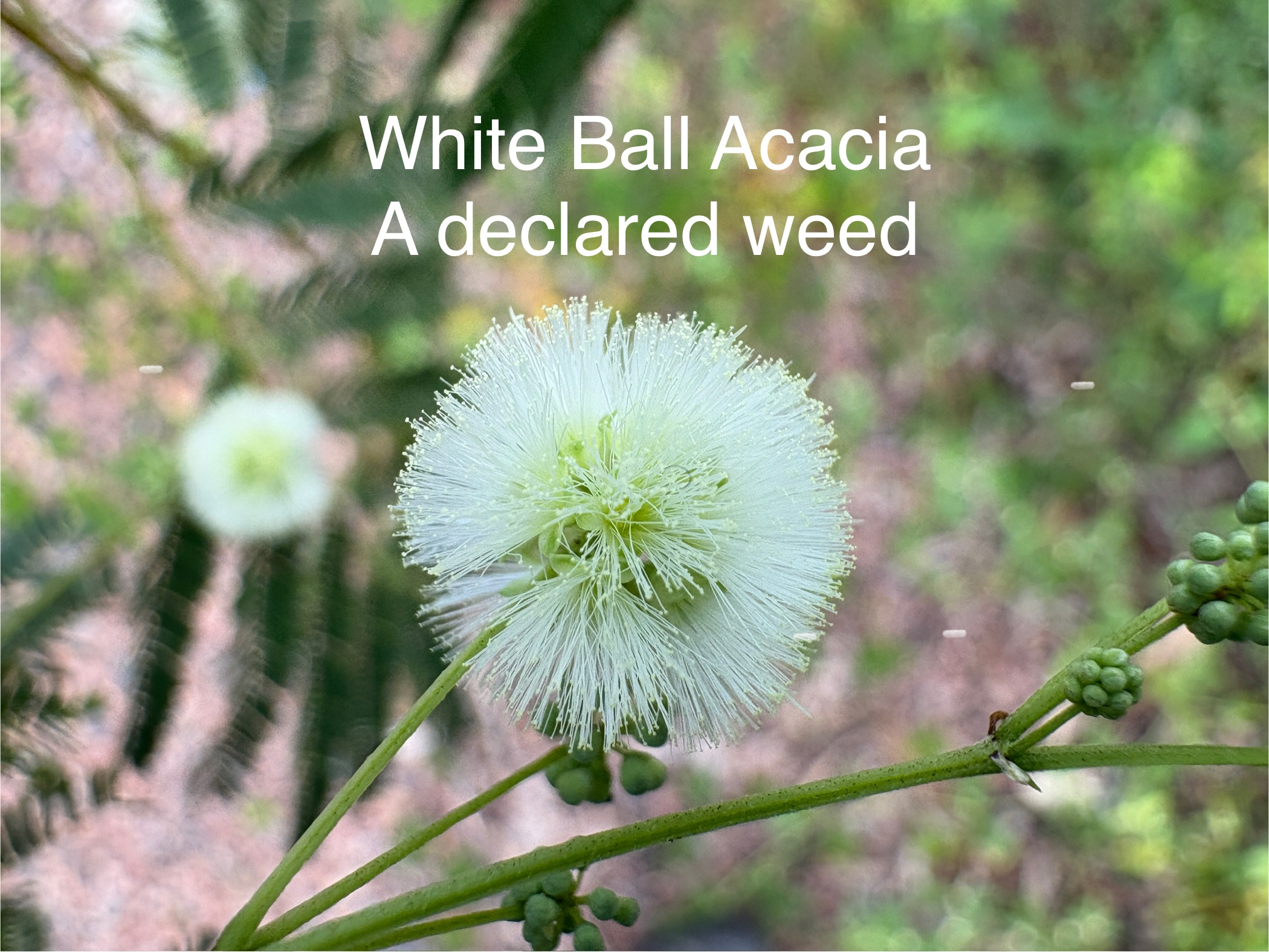
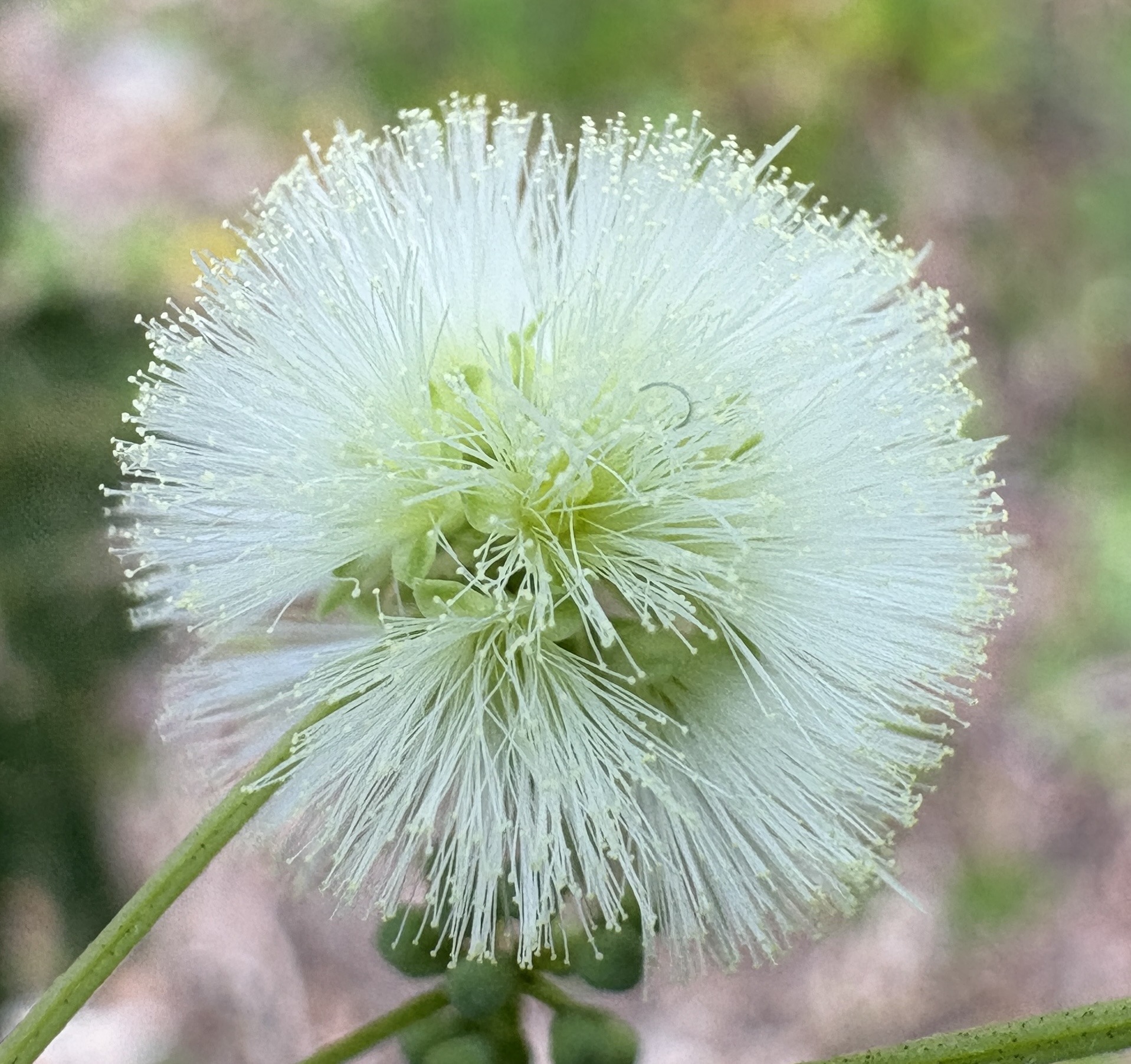
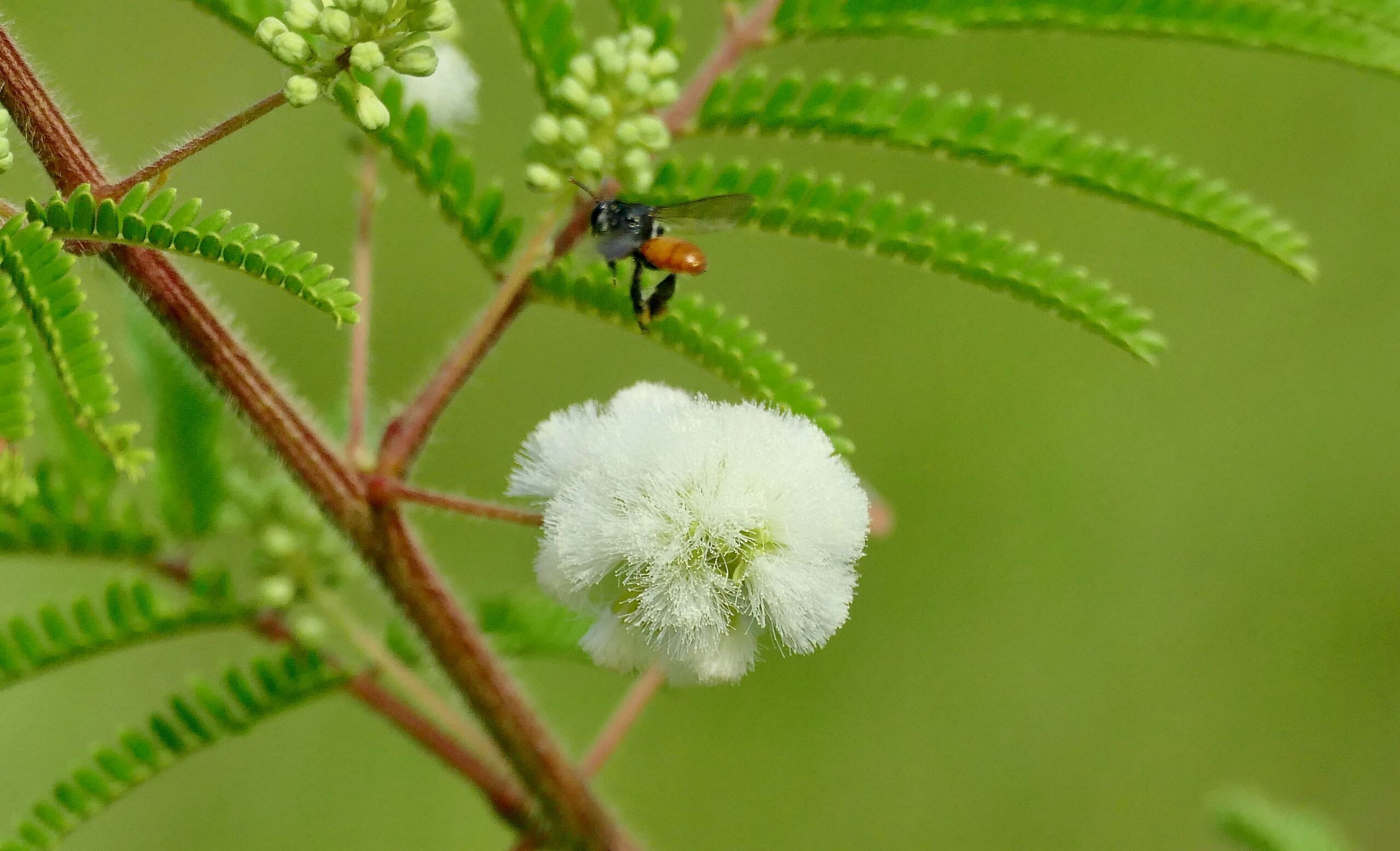
Picture a thornless shrub or small tree with the feathery, twice-divided leaves of a classic acacia, but softer: dozens of tiny, narrow leaflets arranged along slender branches, so the whole plant looks like green lace held up to the light. In bloom, the branches carry round, fluffy heads of small white or cream flowers, each head a little powder-puff of long, threadlike stamens sticking far past the tiny petals. After flowering come flat, narrow seed pods, green at first and brown when ripe, hanging among the foliage. If you have seen a prairie acacia in flower in Texas or Arizona, you have seen the genus at its best: a tough, airy shrub that looks delicate and behaves like it was built for a drought.
Acaciella is a small genus of legumes (Fabaceae) native to the Americas, from the south-central United States through Mexico and Central America into South America. The genus was published by Britton and Rose in 1928, but for most of the twentieth century its species were filed under Acacia, and gardeners still say “acacia” for them — which is exactly what the butterfly guides do. The Acacia Skipper guide puts it plainly: “Acacia species (now mostly placed in the genera Vachellia and Acaciella by botanists, though gardeners still say ‘acacia’).” That sentence is the whole reason this guide is organized under Acaciella: the guides list the genus that way, and the caterpillars do not care what the botanists call it. This guide follows the guides, and states the split openly rather than pretending it never happened.
So what is the split, in plain language? The old, giant genus Acacia turned out to hold several unrelated groups, and botanists divided it up. Acacia in the strict sense now mostly means the Australian wattles. The spiny American acacias — sweet acacia and its kin, armed with thorns — mostly went to Vachellia. The thornless American species, with their feathery leaves and white flower heads, mostly went to Acaciella. A third group went to Senegalia. The differences are real but technical — flower structure, pollen, seed pods — and for a gardener the practical shorthand is: thornless and feathery points toward Acaciella, spiny points toward Vachellia, and a nursery tag that still says Acacia angustissima is selling you Acaciella angustissima under its old name. When in doubt, check the thorns, or rather the lack of them: Acaciella angustissima is famously thornless, unlike most of the plants it used to share a genus with.
The best-known species is prairie acacia (Acaciella angustissima), also called fern acacia, white-ball acacia, and prairie wattle — the names pile up because the plant is widespread and variable, from a low subshrub barely knee-high to a small tree several metres tall, depending on where it grows. It is a perennial legume, which means it fixes nitrogen in root nodules with the help of rhizobium bacteria, and it has been used as a green manure, a forage plant, and a ground cover for erosion control. That usefulness comes with a warning label, covered below: the plant contains tannins, and in high doses it is toxic to livestock, so it is a supplement, not a staple, in forage use. For butterflies, the genus matters as a host: the Acacia Skipper’s caterpillars feed on the foliage of these legume shrubs and small trees, sheltering in nests of leaves tied together with silk, the way skipper caterpillars do. Plant an acaciella, and you are planting skipper habitat — provided you live where the skipper lives, which is the warm south, not everywhere.
How to grow
Grow acaciella in full sun, in well-drained soil, and do not fuss over it. This is a plant of gravelly slopes, roadsides, and prairies, and it wants the same treatment in a garden: sunshine, drainage, and room. It tolerates low-nutrient, acidic soils that would starve fussier shrubs, and it handles drought once established — its leaves are held even through long dry periods, which is part of why it works as a ground cover and erosion plant. Plant in spring, after the soil warms, in a sunny, sheltered spot, and water to establish through the first season. After that, it largely looks after itself, which is the deal you want from a tough legume shrub.
Form varies with species and variety, so buy with the mature size in mind. Prairie acacia can stay a low, spreading subshrub under a metre tall in some forms, or grow into a small tree several metres tall in others; the Flora of North America treatment describes plants from subshrubs to trees over ten metres in the most vigorous forms, which is a range wide enough to swallow a garden plan whole. Ask the nursery for the variety or the expected mature size, and site it accordingly: low forms for ground cover and prairie restoration plantings, taller forms as a small specimen tree or a loose, airy hedge. Pruning is light work — remove dead or crossing wood in late winter, and cut back hard only if a plant outgrows its space, since it resprouts from the base. The plant spreads by rhizomes in some forms, so give it room or a root barrier if you want it to stay put.
Propagation is by seed or cuttings. Seed needs scarification — nicking or soaking the hard seed coat — before it germinates reliably, which is standard legume practice; without it, germination is slow and patchy. Cuttings from somewhat hard wood root in warm conditions. Sow or plant in spring, in soil with good drainage and on the acidic side, and be patient: acaciella is a long-game plant, building roots first and top growth second, and a plant that looks modest in year one may be a substantial shrub by year three. Do not fertilize heavily — as a nitrogen fixer it makes much of its own, and rich soil and extra nitrogen produce soft, floppy growth. A light mulch to hold moisture while it establishes is enough.
Florida note: Florida is at the edge of this genus’s story, not its centre. Prairie acacia is recorded in south Florida, and the plant’s heat tolerance suits the state, but it is not a mainstream Florida garden shrub, and nursery availability is thin. If you find it, site it in full sun with sharp drainage — Florida’s wet summers are the opposite of the gravelly, well-drained slopes it prefers, so raised beds or sandy, free-draining soil matter more here than in Texas. Treat it as a curiosity and a skipper-host experiment rather than a sure thing, and check local rules before planting any legume that spreads by seed and rhizome: a tough plant that self-seeds in Texas will self-seed in Florida too, and the line between “useful ground cover” and “weed” is drawn by whether you can keep it where you put it.
Water & feeding
Water needs are low to moderate once established. Water regularly through the first growing season to build roots, then back off: prairie acacia is drought-tolerant and prefers soil on the dry side to soil that stays wet. In its native range it grows where annual rainfall is modest, and it sulks in waterlogged ground — wet feet rot legume roots faster than drought ever will. In containers or in Florida’s rainy season, drainage matters more than watering frequency: a pot that drains freely and a raised bed beat a careful watering schedule in a boggy spot every time.
Feeding: mostly, do not. As a nitrogen-fixing legume, acaciella supplies much of its own nitrogen when the right rhizobium bacteria are present in the soil, and it evolved for low-nutrient ground. A light compost mulch at planting is plenty. Heavy fertilizer, especially nitrogen, produces rank growth and fewer flowers, and it defeats the point of a plant chosen for toughness. If a plant looks pale and stunted in a new garden, the likely cause is missing rhizobia rather than missing fertilizer — inoculated seed or soil from an established legume planting helps more than a bag of feed.
Common problems
- Wet soil. The main killer. Acaciella wants drainage; waterlogged roots rot. Plant on a slope, in sandy soil, or in a raised bed, and never in a spot where water stands.
- It spreads. Rhizomes and self-sown seed can make prairie acacia weedy, and it is noted as a spreading weed even in parts of its native range. Site it where you can control it, and deadhead pods you do not want reseeding.
- Frost. A warm-climate genus; hard freezes damage or kill top growth. Grow where winters are mild, or accept dieback and regrowth from the base in marginal spots.
- Slow first year. Seedlings and young plants build roots before top growth, and hard seed coats delay germination without scarification. Scarify seed and be patient.
- Tannins and livestock toxicity. The foliage contains tannins — roughly a tenth of the dry weight in some analyses — and in high doses it harms livestock digestion. Use as forage only as a supplement, never as the main feed, and keep it away from hungry animals that might gorge on it.
- Variable size. The same species can be a knee-high subshrub or a small tree. Buy a named variety with a stated mature size, or be ready to prune.
- Missing rhizobia. In new soil without the right bacteria, nitrogen fixation fails and plants look yellow and weak. Inoculate seed or plant into soil where legumes already thrive.
Harvest
There is no kitchen harvest here — this is a working plant, not a food plant, and the tannin warning above rules out casual eating. The harvest is functional: cut foliage for green manure and compost, where the nitrogen-rich leaves break down slowly (their complex structure can take a year to decompose fully) and feed the soil; cut stems for mulch; and leave seed pods to ripen if you want seed for propagation, cleaning the seed from the pod before storage so the pods do not attract insects. The real harvest is what the plant does while it stands: fixing nitrogen, holding soil on a slope, shading smaller plants, and feeding skipper caterpillars in its leaves. A shrub that does all that while asking for almost nothing is a good garden citizen, even if you never eat a bite of it.
Browse all plant & pest guides
Saving seeds
Acaciella is a legume, and its seed behaves exactly like legume seed with opinions: a hard, waterproof coat that laughs at a casual sowing and germinates whenever it feels like it, which may be never. Saving seed from this genus is therefore less about harvesting — that part is easy — and more about talking the seed out of dormancy.
Harvest is simple. Let the slender pods dry fully on the plant until they are brown and papery, then pick them, shell out the small hard seeds, and clean away the pod debris so nothing attracts insects in storage. Before sowing, you need to scarify: nick each seed coat with a file or sandpaper, or pour near-boiling water over the seeds and let them soak overnight. Either way, the goal is the same — let water in. Seeds that swell after soaking are the live ones; floaters that stay hard and bob on the surface are usually duds and can be discarded or given a second round of treatment. Sow the swollen seeds in a well-draining seed-starting mix, keep it consistently moist but never waterlogged, and keep them warm. Germination is famously slow and uneven even after treatment, so sow more than you need and do not declare the tray a failure after two quiet weeks.
As with all open-pollinated seed, seedlings will show natural variation rather than cloning the parent, so if you have one particular plant whose form you want exactly, take cuttings instead — softwood or semi-hardwood cuttings root reasonably well and give you a true copy. But for most purposes, seed is the classic way to raise Acaciella, and it has a bonus: as a nitrogen-fixing legume, a seed-grown plant starts feeding your soil almost as soon as it gets going, which is the whole point of growing it.
Florida storage rules apply as usual: dry the seed completely, store it airtight with a desiccant packet, and keep it cool and dark. Our humidity will happily mold seed that went into the jar even slightly damp, and a hard coat is no protection against mold once the seed is stored wet. One practical caution: some forms spread by underground runners, so think about where a seed-grown plant will live before you raise a dozen of them — enthusiasm is easier to start than to contain.
Species in this group
Prairie acacia (Acaciella angustissima, formerly Acacia angustissima, also treated as Senegalia angustissima in some works) — the widespread, variable flagship: thornless, feathery, white powder-puff flowers, flat pods, from a low subshrub to a small tree; the species behind the prairie acacia, fern acacia, and white-ball acacia names, and the Acacia Skipper’s host.
Prairie acacia varieties (Acaciella angustissima var. angustissima, var. hirta, var. chisosiana, var. texensis, and others) — the named varieties of the flagship species, differing in habit, hairiness, and leaflet size; var. hirta is the form recorded across much of the south-central United States.
Other Acaciella species — a small genus of thornless American legumes beyond angustissima, including species of Mexico, Central America, and South America; nursery availability outside angustissima is limited, and any plant sold under an Acaciella name should be checked against its thornless, feathery description before planting.