
🌼 Aeschynomene
What it looks like
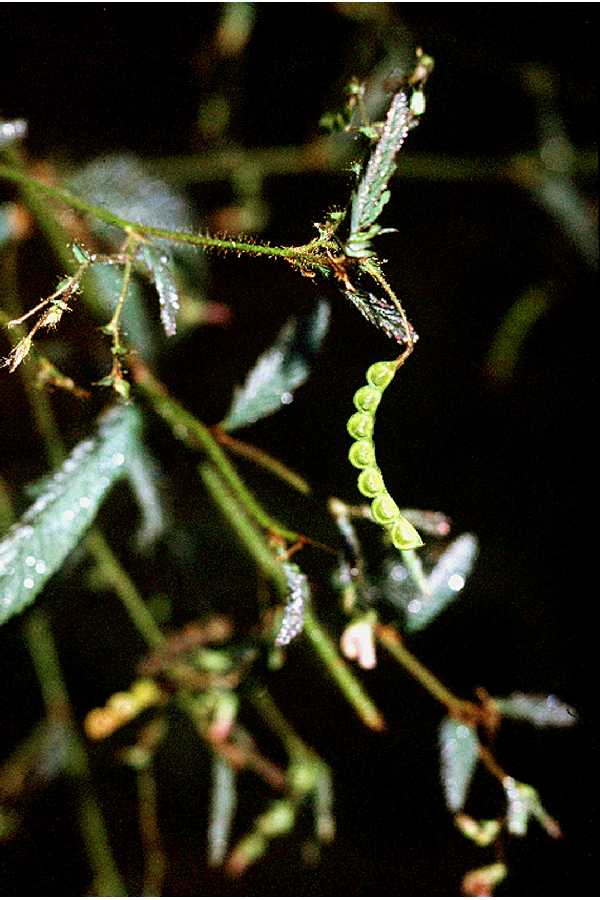
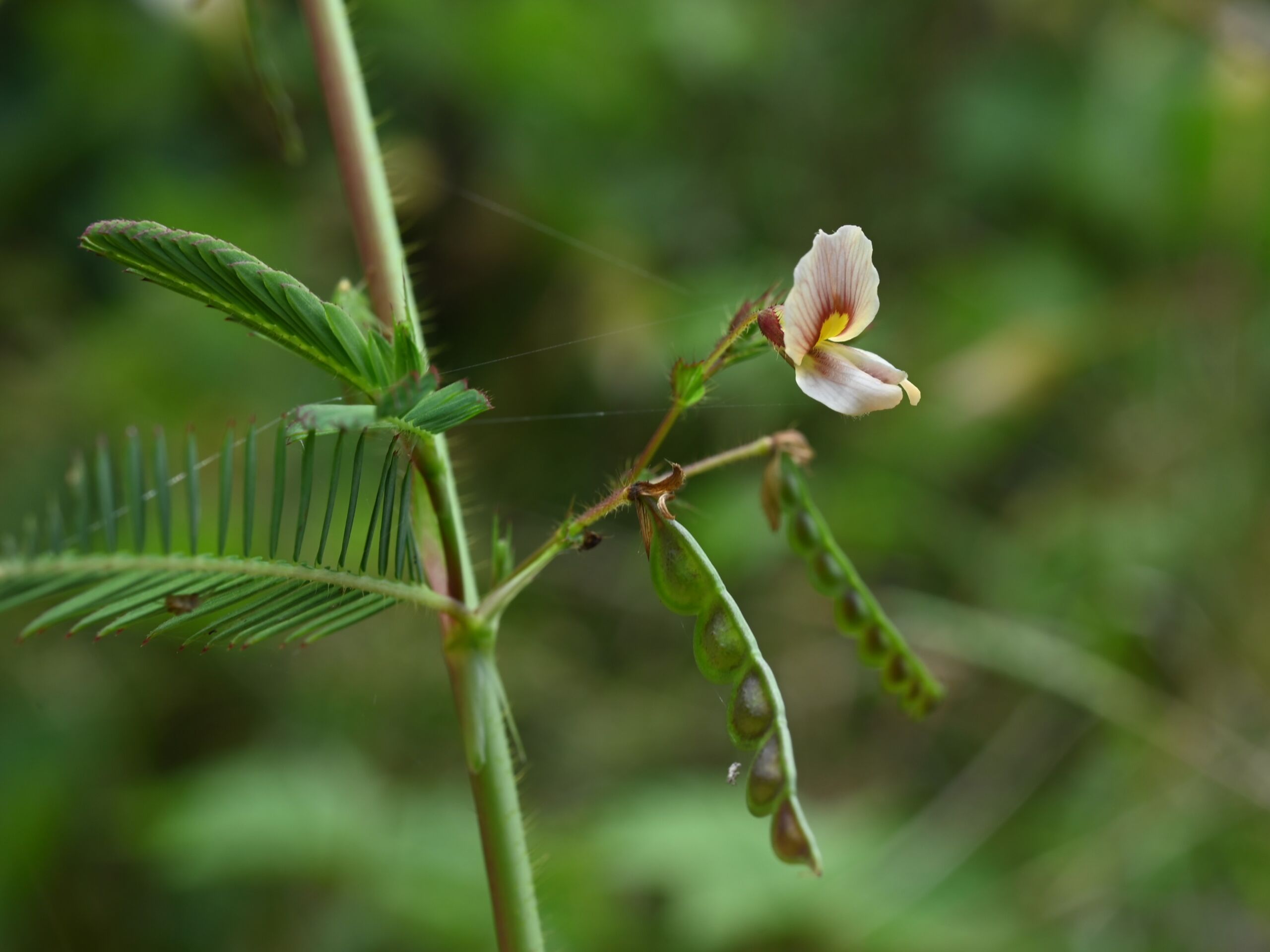
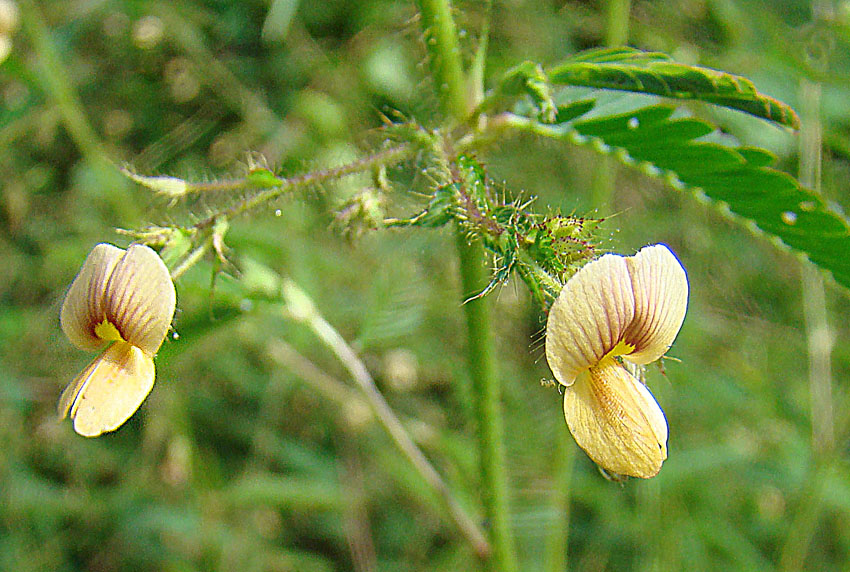
First, the name, because it is gloriously unflattering and entirely on purpose. Aeschynomene comes from Greek words for “shame” and “moon,” a reference to the oddly shaped fruit of some species — and the common name, jointvetch, is the honest one: these are vetches whose pods are jointed, breaking apart at maturity into one-seeded segments like a string of beads snapped between your fingers. The genus sits in the pea family, Fabaceae, in the tribe Dalbergieae, and it is a big, warm-climate genus: Plants of the World Online currently accepts 114 species, while the Flora of North America counts about 150 species with nine in its flora, and this guide reports both counts rather than pretending the taxonomy is settled. The genus as currently drawn is even thought to be paraphyletic, with one subgenus proposed for elevation to its own genus — which is a polite way of saying the jointvetches are still being sorted out, and the sorting will continue.
They range across tropical and subtropical regions of the Americas, sub-Saharan Africa, south, southeast, and east Asia, and Australia, and they are most common in warm regions, with many species aquatic — about seventy of them, by one count, living in or beside water. In habit they are herbs, subshrubs, and occasionally shrubs or small trees, usually unarmed, with erect, decumbent, or prostrate stems that are often covered in tubercular-based hairs. The leaves are the party trick: alternate, pinnately compound, with five to eighty leaflets, and in many species the leaflets are sensitive to light and touch — they fold up on the rachis at night and when poked, which is why the best-known American species is called shyleaf. Touch a jointvetch and it flinches. It is not a trick; it is a thigmonastic movement, the same family of responses that makes a sensitive plant fold, and it never gets old, no matter how many times you demonstrate it to a visitor.
The flowers are small pea flowers, mostly yellow, often lined with purple, with a rounded standard petal, wings, and a bent keel, borne in axillary racemes of one to fifteen flowers. In shyleaf, the best-documented species, the flowers are yellow with dark lines, in loose clusters, and the plant is an upright native annual to short-lived perennial that can be classified as a forb or subshrub growing three to six feet tall, with compound leaves carrying twenty-five to sixty leaflets. The fruit is the signature: a loment, a pod that is transversely jointed, compressed, straight or curved, with two to eighteen one-seeded segments that break apart at maturity. Seeds are kidney-shaped, smooth, and slightly lustrous. If you have ever found a jointvetch pod and pulled it apart segment by segment, you understand the genus better than any description can teach you.
Ecologically, jointvetches are workhorses of warm, wet ground. In the wild they are generally wetland plants, easily taking hold in wet places such as drainage ditches, low coastal ground, and riparian edges, and as legumes they fix nitrogen, which is why they are used around the tropical world as green manure and pasture plants. Shyleaf is grazed by deer and cattle, its seeds are eaten by quail, dove, turkey, and wild birds, and it is used in agroforestry to regenerate pastures, fix atmospheric nitrogen, and as a cut-and-carry forage. It has also, inevitably, become a weed in the places it was introduced as forage — a plant that fixes nitrogen, feeds livestock, colonizes wet ditches, and reseeds itself is a plant that does not ask permission to stay.
And then there is the butterfly reason this guide exists. In the butterfly guides, Aeschynomene appears as its own genus entry in the barred yellow guide’s Host plants list, alongside a separate species entry for shyleaf, Aeschynomene americana. This genus guide covers the genus-level entry — Aeschynomene spp. — and it does not pretend to cover the shyleaf species entry, which is its own plant and will need its own species guide. The barred yellow is a small yellow butterfly of warm regions, and its caterpillars feed on jointvetches among other legumes. A patch of jointvetch in a warm, wet corner is therefore a butterfly nursery as well as a forage patch — but only where the butterfly lives, which is warm country, not a cold-climate garden.
How to grow
Grow jointvetches in full sun, in warm weather, and in soil that stays moist — this is not a dry-garden genus, and treating it like one is the fastest way to disappoint it. They want warm conditions, with daytime temperatures in the low twenties to around thirty degrees Celsius for the best-known species, and they tolerate brief light frosts but are killed by harder frosts, which is why they are perennials only in tropical and subtropical climates and warm-season annuals everywhere else. Plant after all danger of frost, in a sunny spot that holds moisture: a low, damp corner, a ditch edge, a rain garden, or a bed you water generously will suit them far better than a dry slope. In Florida, where shyleaf is native and distributed statewide, they will behave like the native weed-forage plant they are — vigorous, self-seeding, and unbothered by summer rain.
Sow seed in spring once the soil is warm, inoculate seed with a cowpea-type rhizobium or a special Aeschynomene culture if you want reliable nodulation, and space plants two to three feet apart for a bushy stand, allowing for the taller species to reach six feet. Seedling growth is slow at first — one of the documented quirks of the genus — so do not panic if the first month looks unimpressive; the plants catch up fast once the heat arrives. For forage use, the classic management is to cut for hay before maturity or graze down to two or three inches, and to stop grazing after early October if you want a volunteer crop, so plants can bloom, set seed, and reseed. For a garden, the equivalent is simpler: let some plants go to seed if you want them back next year, and pull the rest before the jointed pods scatter.
Florida note: Florida gardeners, this genus is genuinely yours — shyleaf is a Florida native, listed as a native landscape weed distributed throughout tropical regions worldwide, and it grows in low, wet, sunny ground across the state. That “weed” label is doing real work, though: a Florida yard that invites jointvetch in should expect it to behave like a native weed, seeding into damp corners and ditches and returning on its own. Plant it where you want a nitrogen-fixing, butterfly-feeding, wet-corner legume, not where you want a tidy, well-behaved border plant. In a rain garden or a damp back corner, it is an asset; in a formal bed, it is a volunteer you will be pulling.
For gardeners outside the warm belt, grow jointvetch as a summer annual: sow after frost, give it sun and water, enjoy the shy leaves and the jointed pods, and let the first hard frost end the show. It will not overwinter, and that is fine — a summer annual that fixes its own nitrogen, feeds pollinators, and folds its leaves when children poke it has earned its season.
Water & feeding
Water generously. Jointvetches suit moist ground and tolerate flooded or waterlogged soil better than many warm-season legumes — this is a genus with aquatic members and ditch-colonizing habits, not a genus that sulks in a wet summer. In a garden bed, keep the soil evenly moist, mulch to hold moisture, and do not let a stand dry out in the heat if you want it to keep flowering. Preferred annual rainfall for the best-known species runs around one thousand to one thousand five hundred millimeters, which tells you everything about its priorities: this plant drinks.
Feeding: lean, and let the plant do the work. As legumes, jointvetches fix atmospheric nitrogen in root nodules — in this genus the nodules often form near the stem base — so they manufacture a meaningful share of their own fertilizer. Maintain a pH around 5.5 to 6.0 for the forage species, with a preferred range of 5.5 to 7 and tolerance from about 4 to 8, and a light topdressing of compost at planting is plenty. Regular nitrogen fertilizer is counterproductive, encouraging soft growth and suppressing nodulation. If growth looks pale in genuinely poor soil, a legume inoculant at sowing is a smarter intervention than a bag of lawn food.
Soil science note: stem-base nodulation is one of the jointvetches’ neat tricks. Many legumes nodulate only on their roots, but several Aeschynomene species form nodules on their stems as well, in the wet, low-oxygen ground they favor — a hedge against waterlogged soil, where root nodules struggle for air. It is a small anatomical detail with a big ecological payoff, and it is part of why these plants thrive in ditches and rice-field edges where other legumes drown.
Common problems
- Frost. The hard limit outside the tropics. Brief light frosts may be tolerated, but a hard frost kills the top growth, and in cold climates the plant is a summer annual, not a perennial.
- Dry soil. Jointvetches want moisture. A dry bed in summer heat will stall them, while a damp corner will keep them flowering. Do not plant them on a dry slope and expect the ditch performance.
- Slow seedling growth. Documented for the genus: seedlings start slowly, then catch up in the heat. Do not mistake a slow first month for failure.
- Self-seeding and weediness. Jointed pods break apart and scatter seed, and the plants reseed readily in warm, wet ground. Let some go to seed only where you want them back, and pull volunteers while small.
- Wrong species for the job. The genus holds over a hundred species, including aquatic species and dryland species in different subgenera. A tag that says only Aeschynomene is not enough — match the species to your site, wet or dry, before you plant.
- Over-fertilizing. Nitrogen fertilizer feeds competitors and suppresses nodulation. Keep feeding lean and let the plant fix its own.
Harvest
Jointvetches are harvested as forage and green manure, and this guide does not pretend otherwise — that is their job in the tropical world. Cut for hay before maturity, graze down to a few inches, or cut and carry as forage, and the plants will regrow from the base while fixing nitrogen into the soil. As a green manure, cut the stand and dig it in before it sets seed, and the nitrogen in its tissues and nodules feeds the next crop. Seed is harvested by letting plants bloom and set their jointed pods, then collecting the pods before they shatter into segments — or, for a volunteer crop, by simply stopping grazing in early autumn and letting the plants reseed themselves.
The other harvest is the one this guide was built for: butterflies. Leave a patch of jointvetch unmowed through the caterpillar season, watch for small yellow butterflies patrolling low over it, and check the foliage for caterpillars. That is the crop that matters here, and it arrives without a single spray, provided you leave the host plants standing and the pods alone until the caterpillars have finished.
Browse all plant & pest guides
Saving seeds
Aeschynomene, the jointvetches, announce their seed-saving method in their own anatomy. Their pods are jointed, like a string of beads, and when they are ripe they break apart into segments, each segment carrying a seed. That is charming to look at and slightly treacherous to harvest, because a pod left too long will do exactly what it evolved to do and scatter its beads across the bed. Watch for pods turning brown and dry, collect them just as they dry and before they shatter, and finish drying them indoors on a tray if the weather turns wet. Save from healthy, vigorous plants, and save from your own garden plants, not from wild plants you happened to admire, because garden seed should come from garden plants you know.
The genus-level catch, shared with its legume cousins, is the hard seed coat. Aeschynomene seeds wear a tough jacket that keeps water out until something breaks it down, which in nature might be weathering, passing through an animal, or a season of wetting and drying. At home, the practical methods are mechanical scarification, rubbing the seed gently with sandpaper or nicking the coat with a nail clipper, taking care not to gouge the embryo inside, or a hot-water treatment: hot water, not a rolling boil, poured over the seed, followed by an overnight soak. Skip the chemistry-set version you may read about elsewhere; concentrated acid has no place in a home seed-saving routine when sandpaper and hot water do the job. After treatment, sow shallowly, roughly a centimeter or two deep, in a warm, moist, well-drained mix, and keep it evenly moist but not waterlogged. Germination often takes about one to two weeks in warm conditions, though some species take longer, so keep the tray moist and do not declare failure too soon.
Species differences matter here, and this is a genus-level guide, so take the details as a pattern with variations. Most Aeschynomene species are warm-climate plants, tropical and subtropical perennials grown as warm-season annuals where frost bites, and their seedlings want warmth and steady moisture. The wetland species in the genus want a moister seedbed than the dry-ground ones, so match the sowing mix to the species you actually grew rather than treating the whole genus as one plant. A few species also root from stem cuttings, which is a useful backup, but seed is the main home method for the genus, and it is the method that gives you the most plants for the least fuss.
For storage, dry the seed thoroughly with airflow before jarring it, then keep it airtight, cool, and dark, with a desiccant packet if you are storing it in Florida humidity. These are wild and garden species, not F1 bedding hybrids, so seed saved from a single-species patch should stay recognizably that species, but if several Aeschynomene species flowered cheek by jowl in your garden, accept that a little mixing is possible and save from a single-species patch when purity matters. Label the jar with the species and the year, because a jointvetch seed segment looks like a small brown bead, and next spring every small brown bead looks like every other one.
Species
The Aeschynomene genus holds well over a hundred species, and gardeners meet only a handful. This guide claims the genus only — Aeschynomene spp. — and treats each species below as its own plant, not as interchangeable with the genus.
Aeschynomene americana (shyleaf, American jointvetch, forage aeschynomene) — the best-known American species, native to Central America, parts of South America, the West Indies, and Florida, an annual to short-lived perennial subshrub three to six feet tall with sensitive, many-leafleted leaves and yellow flowers with dark lines; it is NOT covered by this genus guide as a species and needs its own species guide.
Aeschynomene indica (Indian jointvetch) — a humid-environment species of the same section as shyleaf, widespread in tropical Asia and beyond.
Aeschynomene villosa — a humid-environment species of the same section as shyleaf, sometimes with solitary flowers or small fascicles rather than the usual racemes.
Aeschynomene fluitans — a floating aquatic species, with corollas notably larger than the erect species, from the genus’s aquatic contingent of about seventy species.
Aeschynomene viscidula (sticky jointvetch) — a prostrate dryland species with viscid stems and densely hairy loment segments, from the genus’s dryland section.
Other Aeschynomene species — the genus holds well over a hundred more, mostly in Central and South America and Africa, and they are not covered by this genus guide beyond the genus-level habits described above; if a label names a species, that species is the plant, not the genus.