
🌿 Akolea
What it looks like
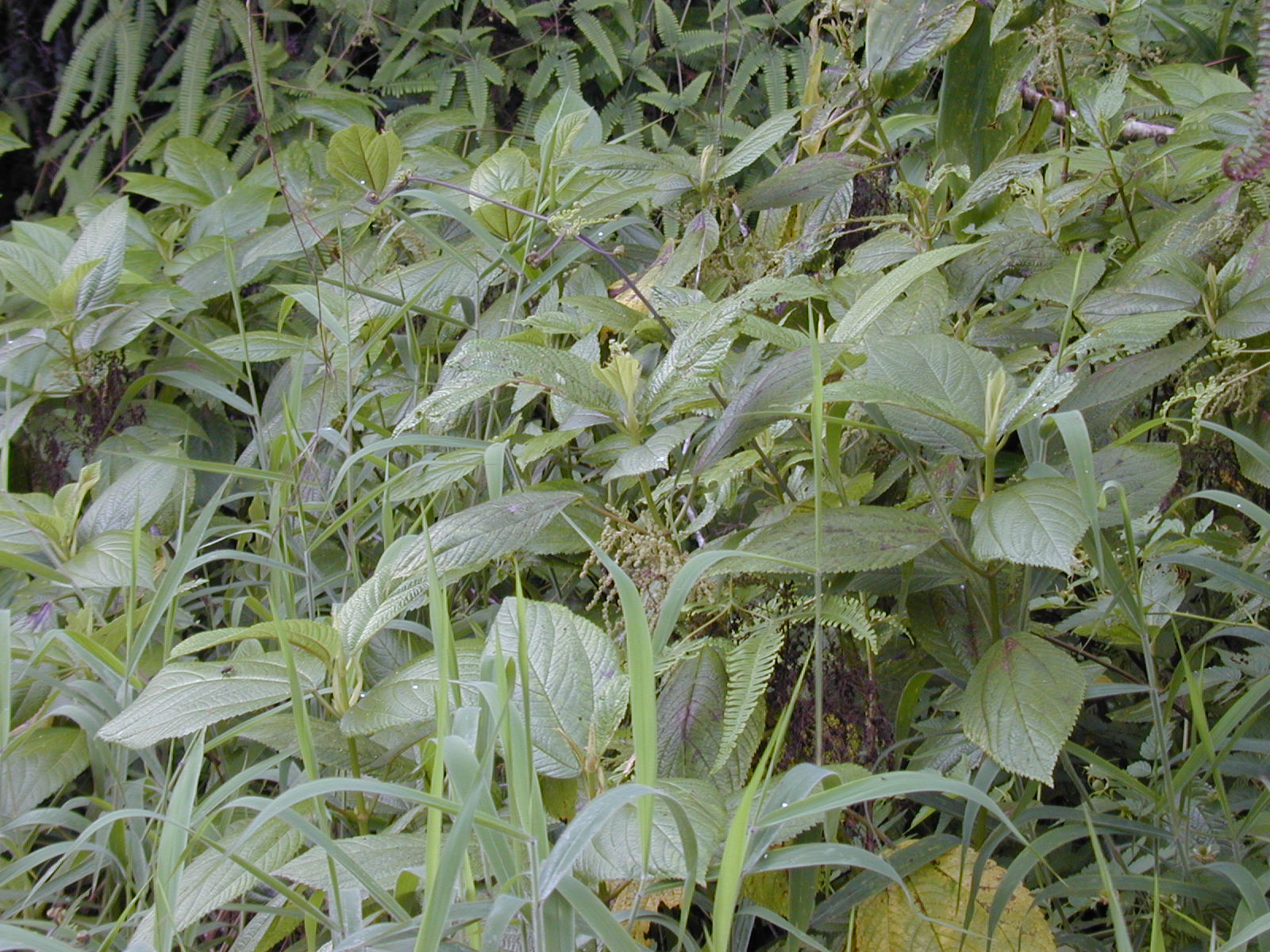
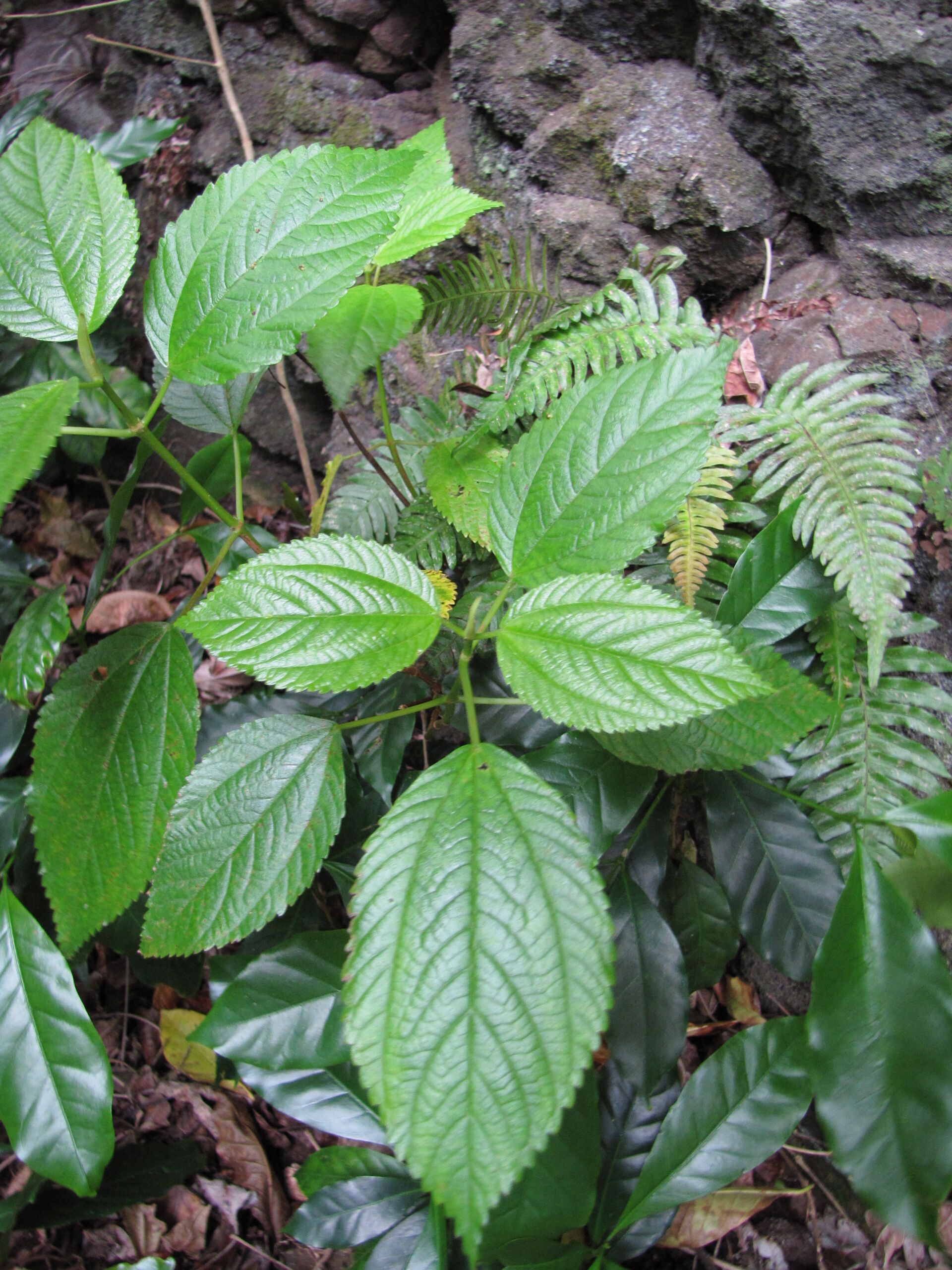
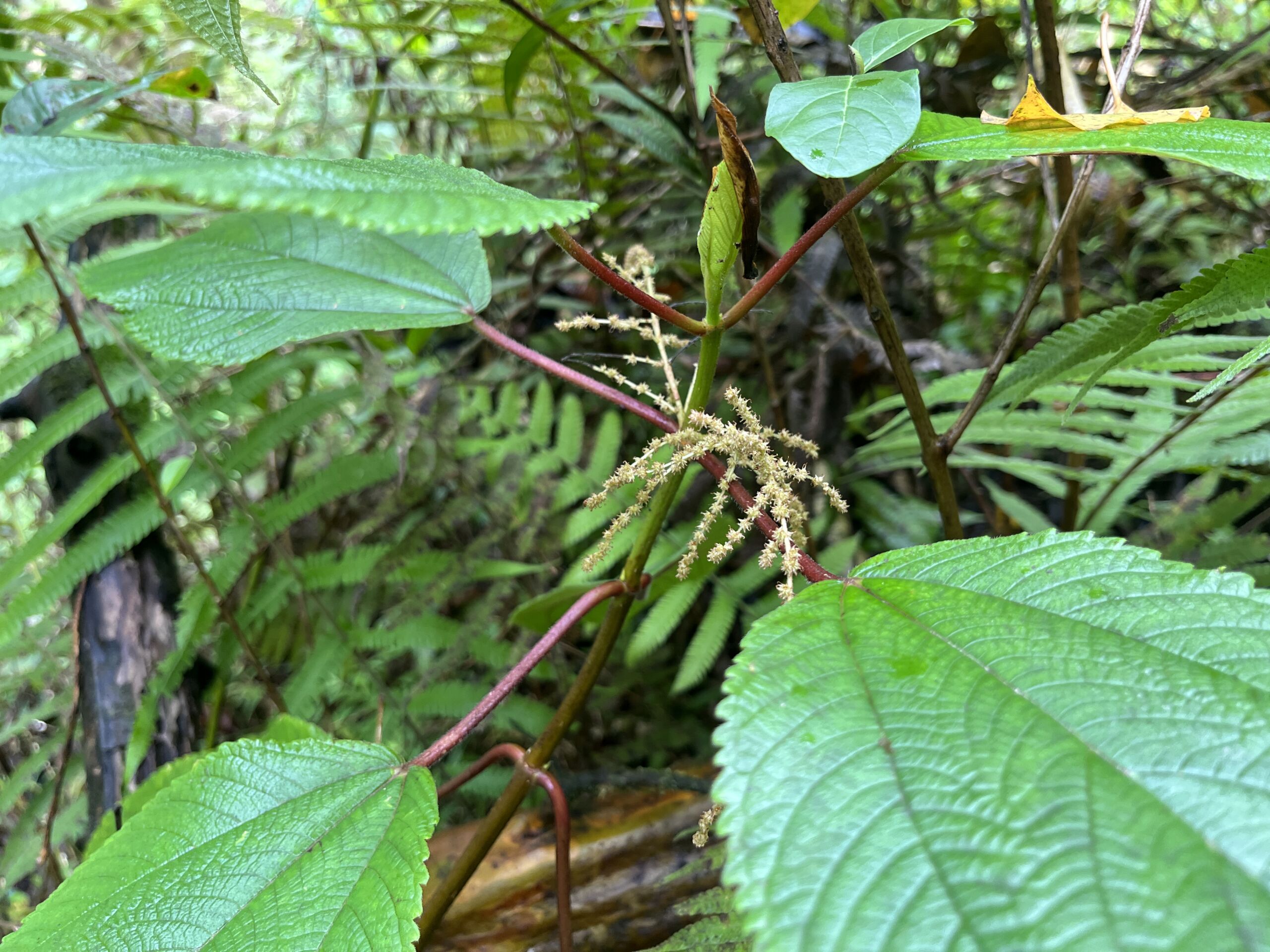
First, the disambiguation, because this name is shared and the sharing causes real confusion. The akolea of this guide is Boehmeria grandis, a shrub in the nettle family, Urticaceae, endemic to the Hawaiian Islands. It is not the fern that is also called akolea — a small Hawaiian fern in an entirely different family that happens to share the Hawaiian name — and it is not false nettle, Boehmeria cylindrica, its mainland cousin with its own growing guide, nor ramie, Boehmeria nivea, the fiber plant of Asia. Same genus, three different plants, and this guide claims one of them only: Boehmeria grandis, the Hawaiian endemic, full stop.
What it looks like is a stout-branched shrub, growing one to seven meters tall, with the soft, leafy presence of a forest understory plant rather than the bristling menace the word “nettle” suggests. And here is the first surprise for anyone who flinches at nettles: although it belongs to the nettle family, plants in this genus do not have stinging hairs. You can touch akolea without the sting a true nettle would give you — which is a useful thing to know, because the plant it is most often confused with, mamaki (Pipturus albidus), is another Hawaiian nettle-family endemic, and the two look alike enough that even careful observers mix them up. The differences are subtle and worth learning: akolea’s stamens are exerted, standing out from the flowers, while mamaki carries its seeds in tightly grouped clusters on the branches, and the leaves differ in small ways that are difficult to notice without both plants side by side. If you cannot tell them apart at a glance, you are in good company — the confusion is documented, not a personal failing.
Its home is the Hawaiian forest, and only the Hawaiian forest. Akolea is endemic to the Hawaiian Islands, found in mesic to wet forests across Hawaii along streams, on ridges, and on valley floors, in ravines and clearings in rainforest, on exposed slopes and ridges, often forming dense thickets, at elevations from about 130 to 1,100 meters. It is a plant of woodland shade and moist but well-drained soil, a forest plant through and through — not a garden plant that happens to live in a forest, but a forest plant that happens to be beautiful enough to want in a garden. Its range is the archipelago and nothing else, which makes every thicket of it a small, irreplaceable piece of an island ecosystem.
Its conservation story deserves honesty, not a single label. One tropical-plant reference, citing an IUCN Red List assessment from 2013, classifies the species as Vulnerable, and notes that it is known from around three hundred collections, most of them more than fifty years old, with habitat destruction on all the Hawaiian Islands offset partly by conservation efforts and forest reserves. That assessment is more than a decade old, and this guide does not pretend it is current — the honest statement is that akolea is a narrow endemic with a limited, pressured range, that its status deserves a fresh look, and that no one should collect it from the wild. If you want this plant, you want it from a reputable Hawaiian native nursery, grown from seed or cuttings, with the forest left exactly as you found it.
And then there is the butterfly reason this guide exists, and it is the best reason of all. Akolea is one of only four endemic host plants for the pulelehua, the Kamehameha butterfly (Vanessa tameamea), Hawaii’s state butterfly — meaning the pulelehua’s caterpillars will only reproduce where these host plants are found. The other three are mamaki, olona, and opuhe, all Hawaiian nettle-family endemics, and together they are the entire reproductive world of a butterfly found nowhere else on Earth. In the butterfly guides, akolea appears as its own species entry in the Kamehameha lady guide’s Host plants list, paired with the Latin Boehmeria grandis. A thicket of akolea is therefore not just a shrub; it is a nursery for a state symbol, and planting one in Hawaii — where it belongs — is conservation work disguised as gardening.
How to grow
Grow akolea the way it grows in the wild: in woodland shade, in moist but well-drained soil, and in a climate that never freezes. It requires a position in woodland shade, not full tropical sun, and it grows best in moist but well-drained soil — the dappled light and humus-rich, never-soggy ground of a forest edge or a shaded Hawaiian garden. Give it room for a stout-branched shrub that can reach several meters, shelter from strong wind, and the company of other Hawaiian forest plants rather than a lonely spot in an open lawn. This is a plant that wants to be part of a forest, even a small, garden-sized one.
Propagation is by seed or cuttings, and for a garden plant the cutting route has a quiet advantage: it preserves the parent plant’s character, and for a dioecious-adjacent, variable forest shrub, a cutting-grown plant is a known quantity where a seedling is a lottery ticket. Sow seed fresh if you can get it from a nursery source, keep it moist and shaded, and be patient — forest shrubs do not rush. Plant in the wet season if your Hawaiian garden has one, mulch with leaf litter the way the forest floor mulches itself, and water through dry spells until established. Once settled, it is a sturdy, low-fuss shrub, forming the dense thickets it forms in the wild, and it will reward a shaded corner with exactly the lush, green, forest-floor presence that a sunny bed cannot offer.
Florida note, stated as plainly as possible: Florida gardeners, this plant is not for you, and this guide will not dress that up. Akolea is a tropical island endemic with essentially no relevance as a Florida garden plant: it needs frost-free, humid, shaded Hawaiian forest conditions, it has no frost tolerance worth relying on, and it is not sold as a Florida landscape plant. A Florida yard chasing the butterfly-host idea will feed far more local caterpillars with southeastern native nettle-family plants — including its cousin false nettle, which is native to Florida and has its own guide — than with a struggling Hawaiian endemic. Know akolea, admire it, support Hawaiian conservation from afar if you are moved to, and plant its local cousins at home. This guide exists because the butterfly guides list it, not because anyone in Florida should plant it.
For gardeners in Hawaii, akolea is a different story entirely: a native, endemic, butterfly-host shrub for a shaded, moist garden, a restoration planting, or a forest-edge screen, grown from nursery stock, never wild-collected. Plant it where the pulelehua can find it, alongside mamaki, olona, and opuhe if you have the room, and you have built a small piece of the only habitat in the world where Hawaii’s state butterfly can raise its young. That is a garden with a job, and the job is worth doing.
Water & feeding
Water like a forest: steadily, not heavily. Akolea grows in mesic to wet forest, along streams and on valley floors, so it wants soil that stays moist but drains — never waterlogged, never baked dry. In a Hawaiian garden, normal rainfall plus deep watering in dry spells is the pattern, with leaf-litter mulch holding moisture the way the forest floor does. In a pot or a dry, windy spot, it will sulk and tell you so by dropping leaves; move it to shade and moisture rather than feeding it harder.
Feeding: light, and forest-style. A topdressing of compost or leaf mold, mimicking the litter that feeds a forest floor, is more appropriate than any heavy fertilizer schedule, and no specific fertilizer regime is documented for this species in the sources used for this guide — which this guide states rather than inventing one. Rich, salty, synthetic feeding is the opposite of a mesic forest floor, and it will not make a shade shrub happier. Feed the soil lightly, mulch with leaves, and let the plant’s own forest habits do the rest.
Common problems
- Frost and cold. The hard limit. This is a tropical endemic with no frost tolerance to rely on. Do not plant it anywhere frost occurs, and do not trust a mild winter to make it a Florida plant.
- Too much sun. Akolea wants woodland shade. Full, harsh sun will scorch and stress it; site it in dappled light or morning sun with afternoon shade.
- Dry soil. A mesic-forest plant in dry, windy ground will drop leaves and stall. Keep it moist, mulch it, and shelter it from drying wind.
- Wrong plant on the tag. Akolea the fern, false nettle (Boehmeria cylindrica), and ramie (Boehmeria nivea) are all different plants that share a name or a genus with this one. Check the Latin — Boehmeria grandis — before you buy.
- Confusion with mamaki. Akolea and mamaki look alike, and even careful observers mix them up. Compare stamens and seed clusters, and when in doubt, ask the nursery which nettle-family endemic you are holding.
- Wild collection. Never collect this narrow endemic from the wild. Buy nursery-grown plants only, and leave forest thickets exactly as you found them.
Harvest
Akolea’s traditional harvest was fiber, not food: the plant was at one time cultivated in Hawaii for its bark, which was used to make cloth — a lower-quality kapa cloth than the finest bark cloths, but a real, working fiber in a culture that made cloth from forest plants. This guide records that history, not as a recommendation to strip bark from a narrow endemic, but as a reminder that this shrub was once a useful plant in Hawaiian daily life, not just a butterfly host. No edible uses are known for this species, and this guide does not suggest any.
For a modern gardener, the harvest is simpler and better: a shaded, stout-branched shrub that greens a forest corner, dense thickets that shelter birds and insects, and — if you garden in Hawaii — the quiet satisfaction of growing one of the only four plants in the world on which the Kamehameha butterfly can raise its young. That is a harvest measured in butterflies, not in baskets, and it is the one that matters.
Browse all plant & pest guides
Propagation
First, the ground rule, because akolea is not an ordinary garden shrub: Boehmeria grandis is endemic to the Hawaiian Islands, it is one of the host plants of the Kamehameha butterfly, and it is not hardy in Florida or anywhere with frost. Never take seed or cuttings from wild plants. Propagate only plants already in cultivation, with permission where permission is required, and leave the forest plants to the butterflies that depend on them.
Cuttings are the dependable route. In spring or early summer, take healthy, non-flowering stems about four to six inches long, cutting just below a leaf node, strip the lower leaves, and set them in a moist, well-drained mix — rooting hormone is optional but helps. Keep them warm, in bright indirect light, under a humidity cover, and out of direct sun; roots should follow within a few weeks, and the new plant will be a true copy of its parent. Seed is also reported for this species: collect the small seeds from a cultivated plant, sow them fresh on a moist, humus-rich mix, and keep them warm and consistently damp. But published detail on akolea seed is thin, germination is not guaranteed, and cuttings are the safer bet when you want the same plant back.
One reassurance for the nervous: despite the nettle family name, this genus has no stinging hairs, so handling cuttings will not sting you the way a true nettle would. For Florida readers, be blunt with yourself — this is a tropical woodland plant for a frost-free greenhouse at best, not a Florida garden shrub, so this section is written for the Hawaiian grower and the collector, not as an invitation to plant it in a Zone 9 yard and hope.
Varieties and relatives
Boehmeria grandis as used in the butterfly guides is treated here as one plant. This guide claims Boehmeria grandis only — the Hawaiian endemic akolea — and not the whole Boehmeria genus, which holds many species worldwide.
Boehmeria grandis var. kauaiensis — a Kauai variety of this species, described in some sources as a Hawaiian false nettle; variety-level details are inconsistent across sources, and this guide claims the species, not the variety, so a tag naming only the variety should be checked against the species description before planting.
Boehmeria cylindrica (false nettle) — a different species, native to much of eastern North America including Florida, with its own growing guide on this site; do not confuse a false nettle tag with an akolea tag.
Boehmeria nivea (ramie, China grass) — a different species, the Asian fiber plant; not akolea, not a butterfly host in this project, and not a substitute.
Pipturus albidus (mamaki) — not a Boehmeria at all, but the nettle-family Hawaiian endemic most often confused with akolea, and another of the Kamehameha butterfly’s four hosts, with its own growing guide on this site.
Other Boehmeria species — the genus holds many more worldwide, and they are not akolea; if a label names a different species, that species is the plant.