
🤍 Alba Cypress Vine
What it looks like
Why this variety
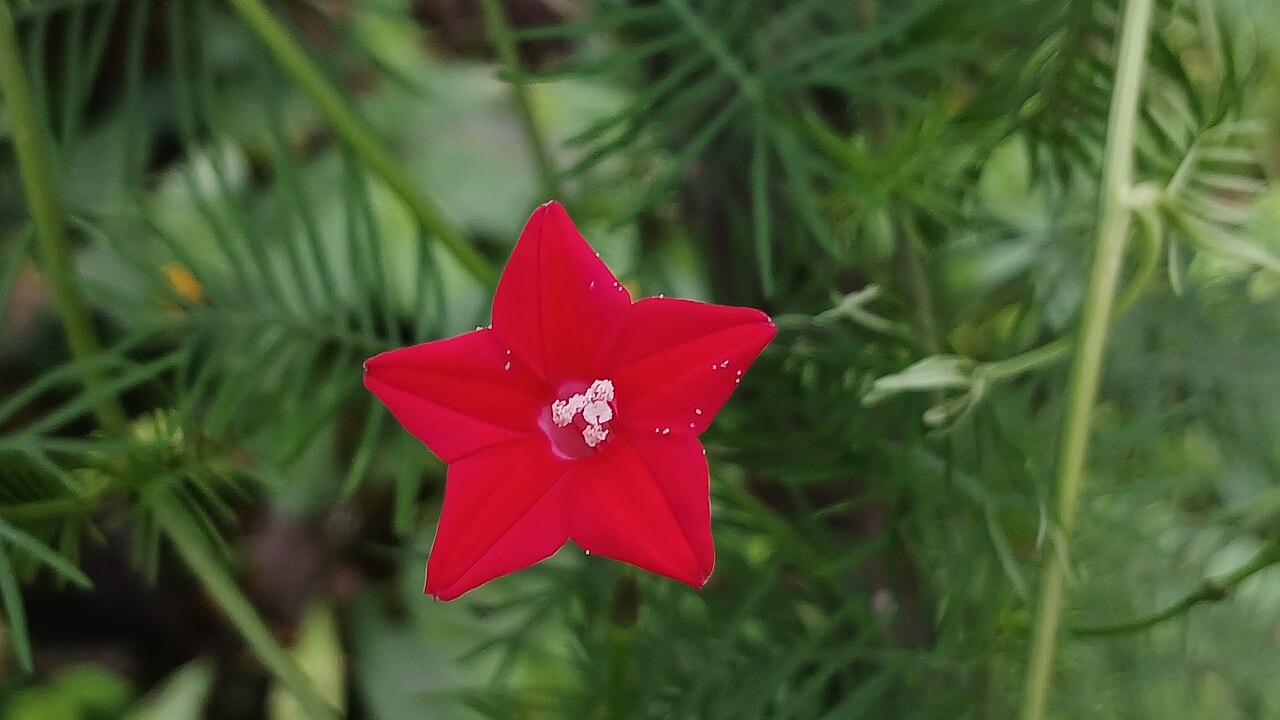
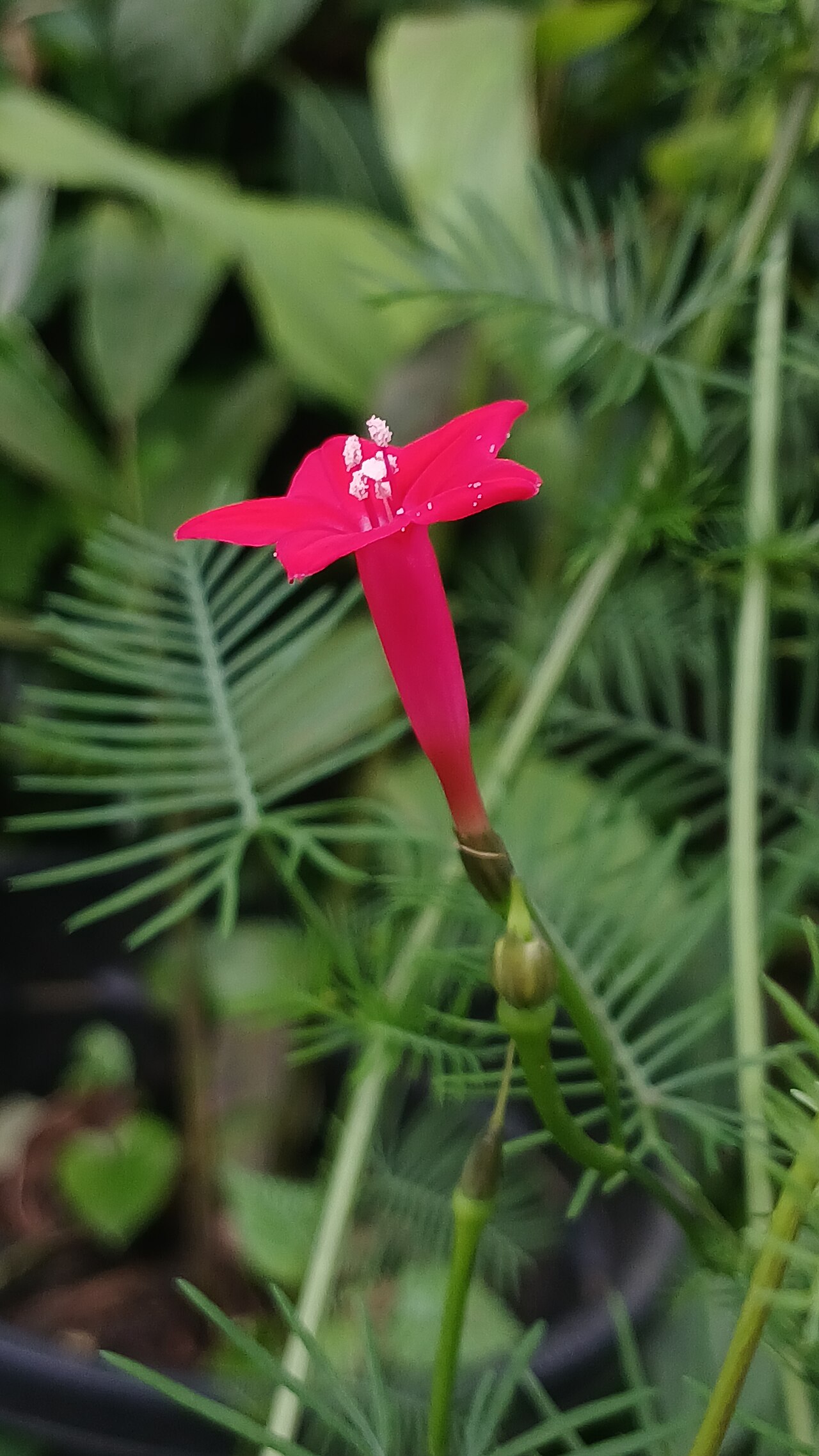
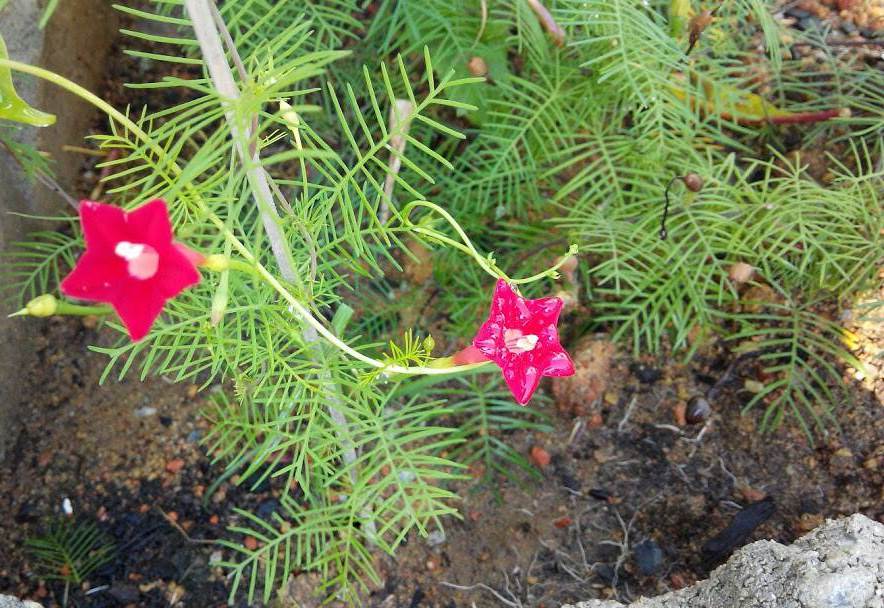
Alba is the cypress vine for gardeners who love the species’ fern-like foliage and hummingbird habit but want moonlight instead of fire: the same finely divided, thread-like leaves, the same twining 10- to 15-foot vine in a season, but with pure white, five-pointed star flowers instead of scarlet. White flowers glow at dusk, when the garden’s day shift hands over to moths, and a white cypress vine on a trellis by a patio is a evening show the red form cannot give. It is listed by the Morton Arboretum as the white cultivar of the species, and it is the only named cypress vine cultivar with solid arboretum backing — pink seedlings exist, but they are not a named cultivar, so they are not built here.
The trade-off is the same as the species: vigor and self-seeding. Alba climbs fast, twines tightly, and drops seed that volunteers next year, so give it a sturdy trellis, edit seedlings in spring, and do not let it climb into a tree you care about. The flowers are small — about an inch across — but they come in such numbers that the vine looks frosted by midsummer. Do not eat any part of it: like its morning-glory relatives, cypress vine seed is toxic, so this is a look-but-don’t-taste vine.
If you are new to choosing between cultivars, the Varieties Matter guide explains why the name after the plant matters as much as the plant itself. Alba is a perfect example: it is not just a cypress vine in the abstract, it is a cypress vine with a specific job, a specific history, and specific strengths.
Florida honesty: cypress vine is a genuine statewide annual in Florida — it loves heat, grows fast in warm soil, and blooms from summer until frost in full sun. Sow after the soil warms, scarify and soak seed overnight for faster germination, and let it self-sow for next year’s fence if you want it. Manage volunteers where you do not want them, and keep it off native vegetation: it is a non-native vine, and a well-behaved garden plant only while it stays on its trellis.
How to grow
Sow seed after the soil warms in spring — scarify (nick) the hard seed coat and soak overnight for faster germination — or start indoors 4 to 6 weeks before the last frost and transplant after frost danger. Set plants in full sun and well-drained soil, work worm castings into the bed at planting, and give the vine a sturdy trellis or fence to twine around. Water to establish, then water in dry spells; a cypress vine that dries out stalls, but one that is pampered with rich soil grows leaves at the expense of flowers.
Set plants 6-12 inches apart on a trellis in soil with a pH around 6.0-7.0. Work worm castings into the bed at planting and mulch to hold moisture. A well-fed cypress vine plant rewards that care directly: steadier growth, better bloom, and a show that actually shows up.
Water & feeding
Water to establish, then water in dry spells — cypress vine is heat-tolerant once established but stalls in drought. Water at the soil line, mulch to hold moisture, and feed lightly: castings at planting is usually enough, because rich soil makes leafy vines with fewer flowers.
Common problems
- Enthusiastic self-seeding — volunteers appear freely; edit seedlings in spring or let them form next year’s fence.
- Toxic seed — cypress vine seed is toxic if eaten; keep away from children and pets and do not mistake it for food.
- Tangled growth on weak supports — a cypress vine swallows a flimsy trellis; give it a sturdy fence or arbor.
- Wilting in dry soil — a vine that dries out stalls; water deeply in dry spells.
- Escape into trees and native vegetation — do not let it climb off its trellis into a tree or natural area.
Harvest
Cut stems for bouquets in summer, when stars are fully open — cypress vine flowers last a few days in water and their fern-like foliage suits airy, tropical-style arrangements. Deadhead only if you do not want self-seeding; otherwise, let a few plants seed for next year’s fence. At season’s end, pull annual vines and compost them, and edit volunteers in spring.
Browse all plant & pest guides
Saving seeds
Alba is the white form of cypress vine, grown from seed — sow seed after the soil warms, and it will self-seed and volunteer next year. The full method is in the Saving seeds section of the Cypress Vine guide.