
🌸 Albizia
What it looks like
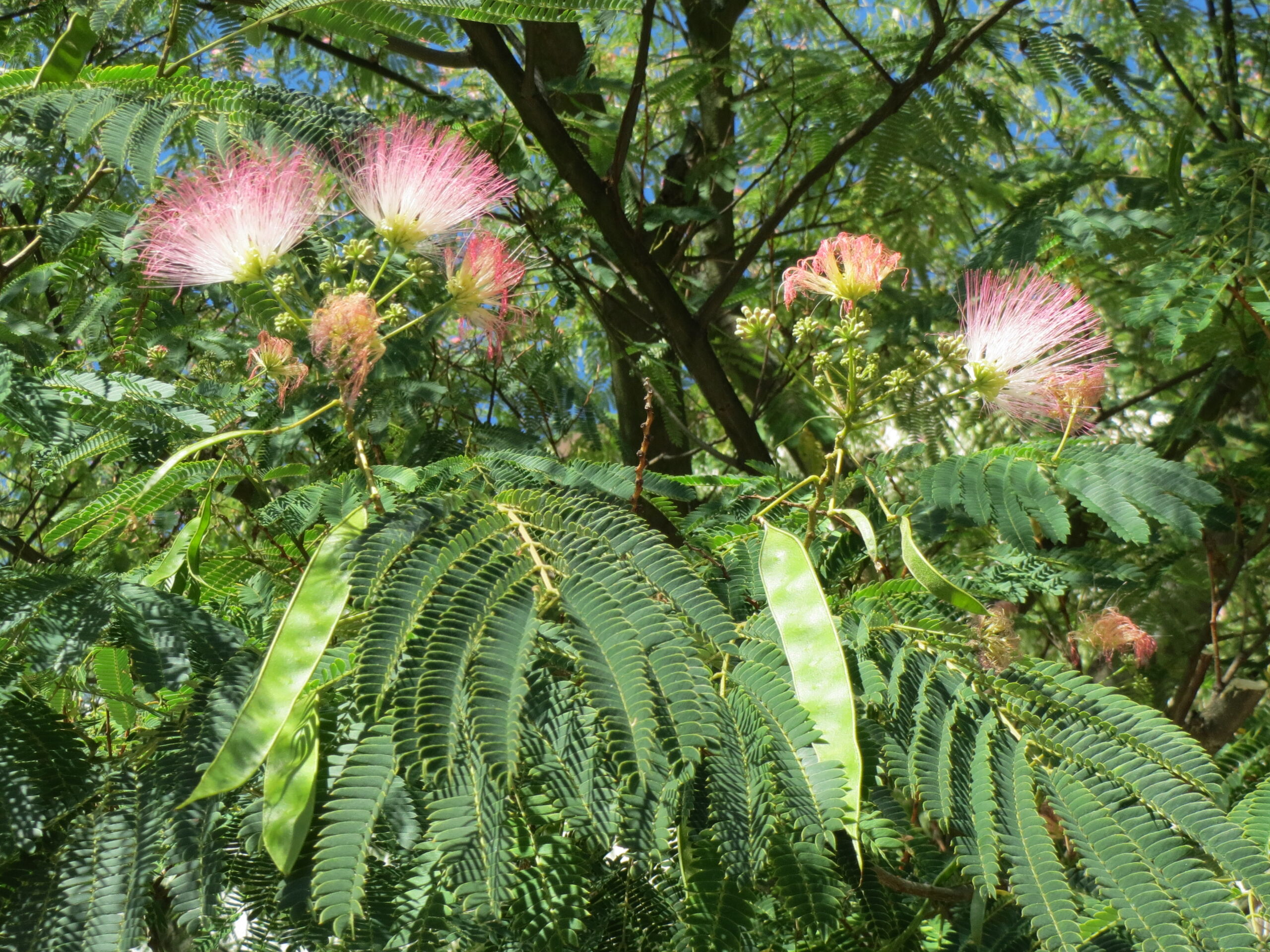
Albizia is a genus of more than 150 species of mostly fast-growing trees and shrubs in the legume family, Fabaceae — the same family that gives us beans, peas, clover and acacias. The genus was formally described by the Italian botanist Antonio Durazzini in 1772 and named in honour of Filippo degli Albizzi, the Florentine nobleman who introduced the Persian silk tree to European horticulture in the mid-18th century. Albizias are pantropical in distribution, occurring across Asia, Africa, Madagascar, the Americas and Australia, with the greatest diversity in the Old World tropics. They are commonly called silk trees, silk plants or sirises, a reference to the showy, filamentous stamens that give the flowers their characteristic brush-like, powder-puff appearance.
Identification starts with the leaves, and Albizia leaves are a pleasure to learn because they look like something else entirely. They are bipinnately compound — a central stalk divided into pairs of side-stalks, each carrying many small leaflets — so that a single leaf can look like a whole fern frond. In the silk tree, Albizia julibrissin, the leaves are 20 to 45 centimetres long and 12 to 25 centimetres broad, divided into 6 to 12 pairs of pinnae, each with 20 to 30 pairs of leaflets; the leaflets are oblong, small, and slightly asymmetric. Count the leaflets on a silk tree leaf and you will run out of patience somewhere past two hundred, which is one reason the tree looks so soft and feathery from a distance. Many Albizia leaflets fold up at night and in dull weather, a sleep movement called nyctinasty that makes the whole tree look as if it is settling in for the evening, which in a sense it is.
The flowers are the reason anyone plants one. They are produced through the summer in dense, brush-like heads at the ends of the branches, and the showy part is almost entirely stamens: the true petals are small and inconspicuous, while a tight cluster of stamens 2 to 3 centimetres long, white or pink with a white base, spills out like silky thread. In the silk tree those threads are pink, which is why the whole head reads as a pink powder-puff from across the garden. The flowers are fragrant, and they are observed to attract bees, butterflies and hummingbirds, which is a respectable pollinator résumé for a tree that is mostly grown for looking pretty.
The fruit is a flat, brown, bean-like pod, 10 to 20 centimetres long and 2 to 2.5 centimetres broad in the silk tree, containing several seeds. The pods hang on the tree into autumn and often into winter, rattling faintly in the wind and dropping seeds with enthusiasm. Size is the thing to respect before you plant: the silk tree is a small deciduous tree growing to 5 to 16 metres tall with a broad crown of level or arching branches, and mature specimens can spread up to 50 feet wide. Other Albizia species are larger — the lebbek tree, Albizia lebbek, can reach 20 metres, and some tropical species are true canopy giants — so read the species, not just the genus, before you dig the hole.
And now the distinction this guide exists to make, stated plainly. Albizia is not Mimosa. The sensitive plant that flinches when you touch it belongs to Mimosa, a different genus in the same family, and this site has a separate growing guide for Mimosa species. The tree Americans call “mimosa” is Albizia julibrissin, the silk tree, and calling it a mimosa is a common name, not a botanical fact. The confusion runs the other way too: the butterfly guide for the Blue Metalmark lists woody legumes “reported in the genus Albizia” among its host plants in south Texas thorn forest, and that is a genus-level mention — it means Albizia species in general, not the silk tree in particular, and not any Mimosa. Keep the two genera apart and half the Albizia confusion in the world evaporates.
How to grow
Start with the honest warning, because it changes the decision in much of the southeastern United States. The silk tree is widely planted as an ornamental and widely naturalized beyond its native range, which runs from southwestern Asia (Iran and Azerbaijan) eastward through China to Korea. It escapes from cultivation into fencerows, old fields, disturbed areas and coastal ground, resprouts easily when cut, and produces large amounts of seed — and its seeds are famously long-lived, with one study finding 90 percent still viable after five years. In Florida and across the Southeast it is listed as an invasive plant, which means planting it there is not a neutral act: you are planting a tree that will try to plant itself everywhere else. Check your state and county invasive lists before you plant any Albizia, and if you are in the Southeast, consider that a reason to admire silk trees in other people’s gardens rather than your own.
Where Albizia is a sensible planting, give it full sun and room. These are sun trees, fast-growing and broad-crowned, and the silk tree wants a spot where its flat-topped crown can spread without arguing with buildings, drives and power lines — 30 to 50 feet of clearance is not extravagant for a mature specimen. They are famously tolerant of poor soils and drought once established, which is part of why they colonize disturbed ground so cheerfully, but they do best in a reasonably fertile, well-drained soil and will sulk in ground that stays waterlogged. As legumes they fix atmospheric nitrogen through root nodules, enriching the soil around them, which is why Albizia species are used as shade trees over tea and coffee plantations in the tropics: the tree feeds the crop beneath it while shading it, a working arrangement rather than a merely decorative one.
Plant from nursery stock in spring or fall, and water deeply through the first few growing seasons until the root system is established. Seed propagation is easy — almost too easy, given the seed longevity noted above — and scarification or hot-water treatment helps germination, since the hard seed coat is built to wait out bad years. Stake a young tree only if it needs it, and remove the stake after a year; a silk tree that learns to stand on its own is a silk tree that will stand in a storm, though its wood is brittle and its branches are not the strongest in a high wind, so do not plant one where a falling limb would land on something you care about.
Hardiness varies by species, so again, read the species. The silk tree is a warm-temperate tree, hardy where winters are cool but not brutal, and it flowers less abundantly in cooler climates. Most other Albizia species are frankly tropical or subtropical and will not survive a hard freeze at all. The genus as a whole is not a Florida problem because it is tender — quite the opposite in the case of the silk tree, which is a Florida problem because it is tough. Match the species to your climate, not the genus name to your enthusiasm.
Water & feeding
Water an Albizia regularly through its first years, then back off. Established silk trees are drought-tolerant and low-maintenance, and overwatering a mature tree in heavy soil does more harm than a dry spell will. A deep soak in extended drought, wetting the root zone thoroughly, beats frequent sprinkling, because it trains roots downward where they belong. Mulch with compost or shredded bark to hold moisture and feed the soil slowly, keeping the mulch a few inches away from the trunk itself, since mulch piled against bark holds moisture there and invites rot.
Feeding is simple and usually unnecessary. As a nitrogen-fixing legume, an Albizia makes a good deal of its own fertilizer, and a mulch of compost does more good than a bag of synthetic feed. Do not fertilise a stressed or diseased tree into recovery; feeding does not cure wilt, and lush, soft growth can make a tree more attractive to pests, not less.
Pruning is a young-tree conversation, not an annual one. Prune in late winter or early spring while the tree is dormant, removing dead, crossing and damaged wood and building a strong, well-spaced branch structure while the tree is small enough to shape. Never top an Albizia. Topping destroys the tree’s structure, invites decay, and produces a flush of weak, fast-growing shoots that are more dangerous than the branches they replaced. If a mature tree needs major work, hire a certified arborist; a broad-crowned tree over a roof is not a do-it-yourself pruning project.
Common problems
- Mimosa wilt. The defining problem of the silk tree. A Fusarium soil fungus that blocks the tree’s water-conducting tissue, causing leaves to yellow, wilt and drop, often on one side of the tree first, and usually killing the tree over one to a few seasons. There is no cure; remove and destroy affected trees, do not replant a silk tree in the same spot, and do not compost diseased material.
- Invasiveness. Not a disease, but the most common real-world problem: self-seeding into natural areas, fencerows and neighbours’ gardens. Deadhead or remove pods before they drop if you grow one where it can escape, and check local invasive lists before planting.
- Brittle wood and storm breakage. Albizia wood is weak and branches snap in high winds and ice. Keep the crown thinned of deadwood, and site the tree away from roofs, cars and power lines.
- Webworms and leaf feeders. Mimosa webworm and other caterpillars can defoliate a silk tree in summer. Healthy trees usually refoliate; heavy, repeated defoliation weakens the tree and invites wilt, so do not ignore it year after year.
- Seed litter. Pods drop in autumn and persist into winter, and seedlings appear in beds, gutters and lawns. If pod litter bothers you, this is not your tree.
- It is not a mimosa. A naming trap, repeated because it matters: the sensitive plant is Mimosa pudica, a different genus. If a butterfly guide mentions Mimosa as a host, it means that genus, not this one — and if it mentions Albizia, as the Blue Metalmark guide does, it means this genus, not Mimosa.
Harvest
There is no fruit harvest from an Albizia, and this guide will not dress one up. The harvest is shade, flowers, nitrogen and timber, in that order of practicality. In the tropics, Albizia species are valued as shade trees over crops, as fodder, as fuelwood, and for timber — lebbek wood is hard, brown, strong and durable — and the flowers of the silk tree are used in traditional Chinese and Korean medicine as a tea. The seed harvest is for the birds and squirrels, not for you, and given the seed longevity, the birds are doing quite enough planting already.
The leaf harvest, such as it is, is mulch and green manure: nitrogen-rich legume leaves break down quickly and feed the soil, which is the closed loop, in miniature, that this whole project is about. Rake fallen leaves onto beds in autumn rather than bagging them, and let them feed the soil that fed the tree.
Saving seeds
Albizia seed saving is a lesson in locked doors. The flat, papery pods ripen in fall; gather them when they have turned brown and dry, before they split and spill their hard brown seeds, and shell the seeds out by hand. Each seed wears a waterproof coat that laughs at plain water, which is why untreated albizia seed mostly sits there doing nothing. You have to wake it up first.
The waking-up is scarification, and the home version is simple: nick the coat lightly with a file or sandpaper — just enough to break the surface, not to wound the seed inside — then soak in hot water, never boiling, for twelve to twenty-four hours. Boiling water kills the embryo, so if the kettle just boiled, let it cool first. Seeds that swell have drunk their fill and are ready to sow; seeds that stay small and hard can be nicked again and soaked again. Sow warm, in a free-draining mix, kept moist but never soggy, and expect germination on its own schedule: sources disagree here, reporting anything from a few days to a few months, so sow more than you need and do not declare failure in week two.
Three cautions belong in this section, not in a footnote. First, the seeds contain toxic amino acids — do not eat them, and keep them away from children and pets. Second, a seedling is a new individual, not a photocopy: seed from a named cultivar will not reliably come true, so propagate a named form vegetatively if matching the parent matters. Third, the silk tree has escaped cultivation across the southeastern United States and is listed as invasive in several states, so save seed only where it is welcome, and pull volunteers before they become trees. In Florida, dry saved seed thoroughly, seal it airtight with a desiccant packet, and store it cool and dark — our humidity is the fastest way to turn a good seed lot into mold.
Species in this group
Silk tree / mimosa tree — Albizia julibrissin — The famous species: a small deciduous tree 5 to 16 metres tall with a broad, flat-topped crown, fern-like bipinnate leaves, pink powder-puff flower heads in summer, and flat brown pods 10 to 20 centimetres long. Native from Iran to China and Korea; widely planted and naturalized in the southeastern United States, where it is invasive.
Lebbek tree / siris / woman’s tongue tree — Albizia lebbek — A larger tropical tree to about 20 metres, with fragrant cream-green flower heads and long, straw-coloured pods that rattle in the wind. Naturalized in Florida and the Caribbean; a shade and timber tree in the tropics.
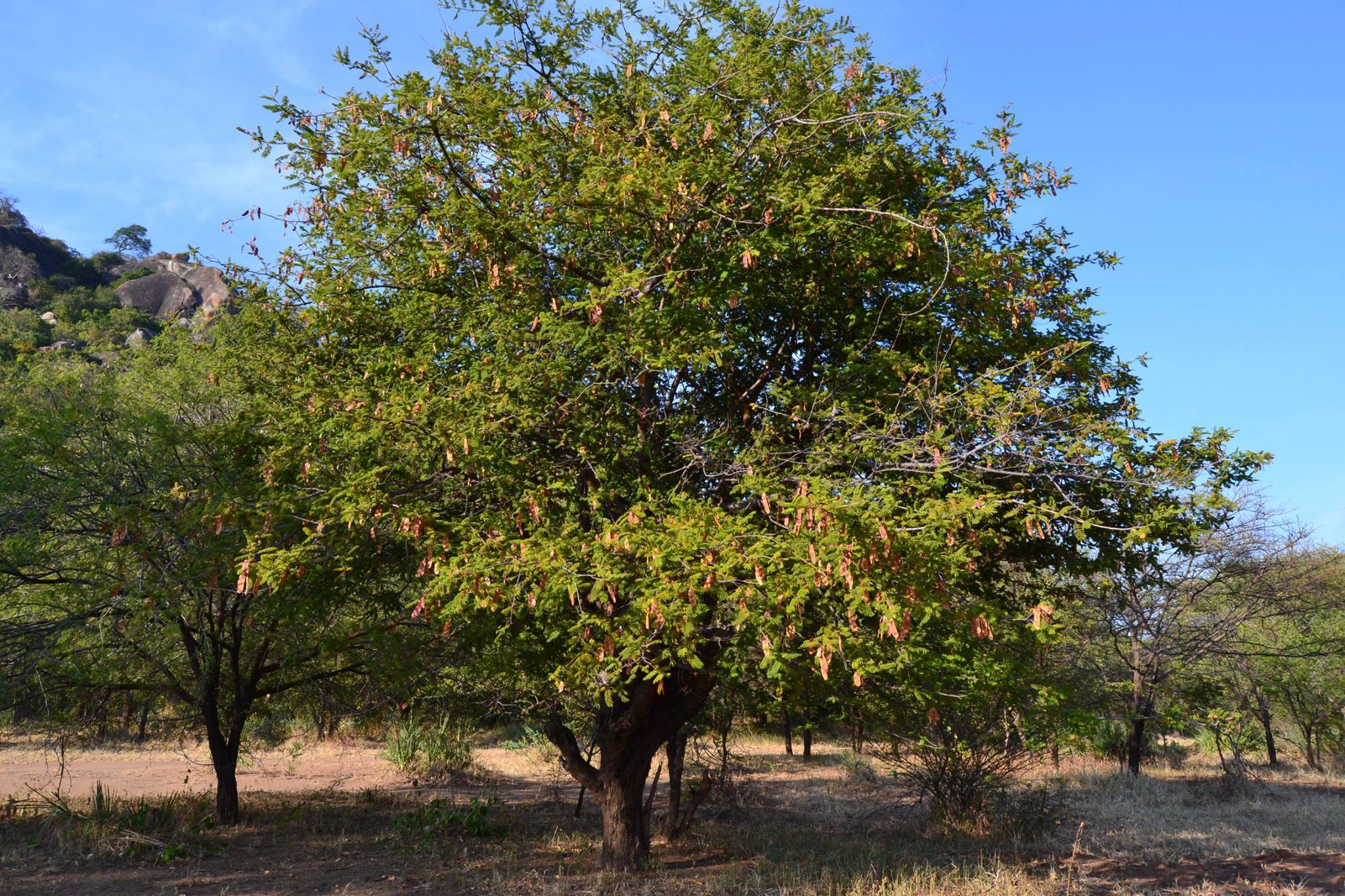
Albizia harveyi — A southern African savanna tree photographed here in Malawi; a reminder that the genus spans the Old World tropics far beyond the one species Americans know.
White siris — Albizia procera — A tall tropical Asian tree with smooth bark and pale flower heads; a timber and shade species.
Rain tree — formerly Albizia saman, now usually placed in Samanea as Samanea saman — A huge umbrella-crowned tropical tree, once counted in Albizia and still called Albizia saman in older books. If you meet it under the old name, you are meeting the same tree under a retired label.
Note: the sensitive plant and its relatives are Mimosa, not Albizia, and are deliberately not listed here. If you arrived looking for the plant that flinches when you touch it, you want the Mimosa guide. If a butterfly guide says Albizia, as the Blue Metalmark guide does for south Texas thorn forest, it means this genus.