
🌳 Alder
What it looks like
Alders are deciduous trees and large shrubs in the birch family, Betulaceae — which makes them cousins of the birches, hazels and hornbeams, a family reunion that makes sense the moment you see the catkins. They are trees of wet places: stream banks, river edges, lake shores, swamps and damp hollows, and they impose themselves on your consciousness much less stridently than birches do, until you learn to look for them, after which you see them everywhere water stands. The genus spans the temperate Northern Hemisphere, from the Arctic treeline to the mountains of the American Southwest, and nearly every alder you meet is standing in ground that would drown most other trees.
Identification starts with the flowers, because alders flower before they leaf out and the flowers are unmistakable once you know them. Alders are monoecious, meaning male and female flowers grow on the same tree, and both are catkins. The male catkins are long, slender, pendulous cylinders — in black alder, Alnus glutinosa, they are reddish and 5 to 10 centimetres long, hanging in clusters and shedding clouds of wind-borne pollen in late winter and early spring; in red alder, Alnus rubra, they are dangling reddish catkins 10 to 15 centimetres long. The female flowers are small, upright and green, and they mature into the alder’s signature feature: small, woody, superficially cone-like oval fruits, dark brown to black and hard, that persist on the tree through winter. They look like tiny pine cones, but alders are not conifers, and those “cones” are not cones — they are the hardened scales of a female catkin, holding tiny winged nutlets that shed in late autumn and winter and travel on wind and water to the next wet place.
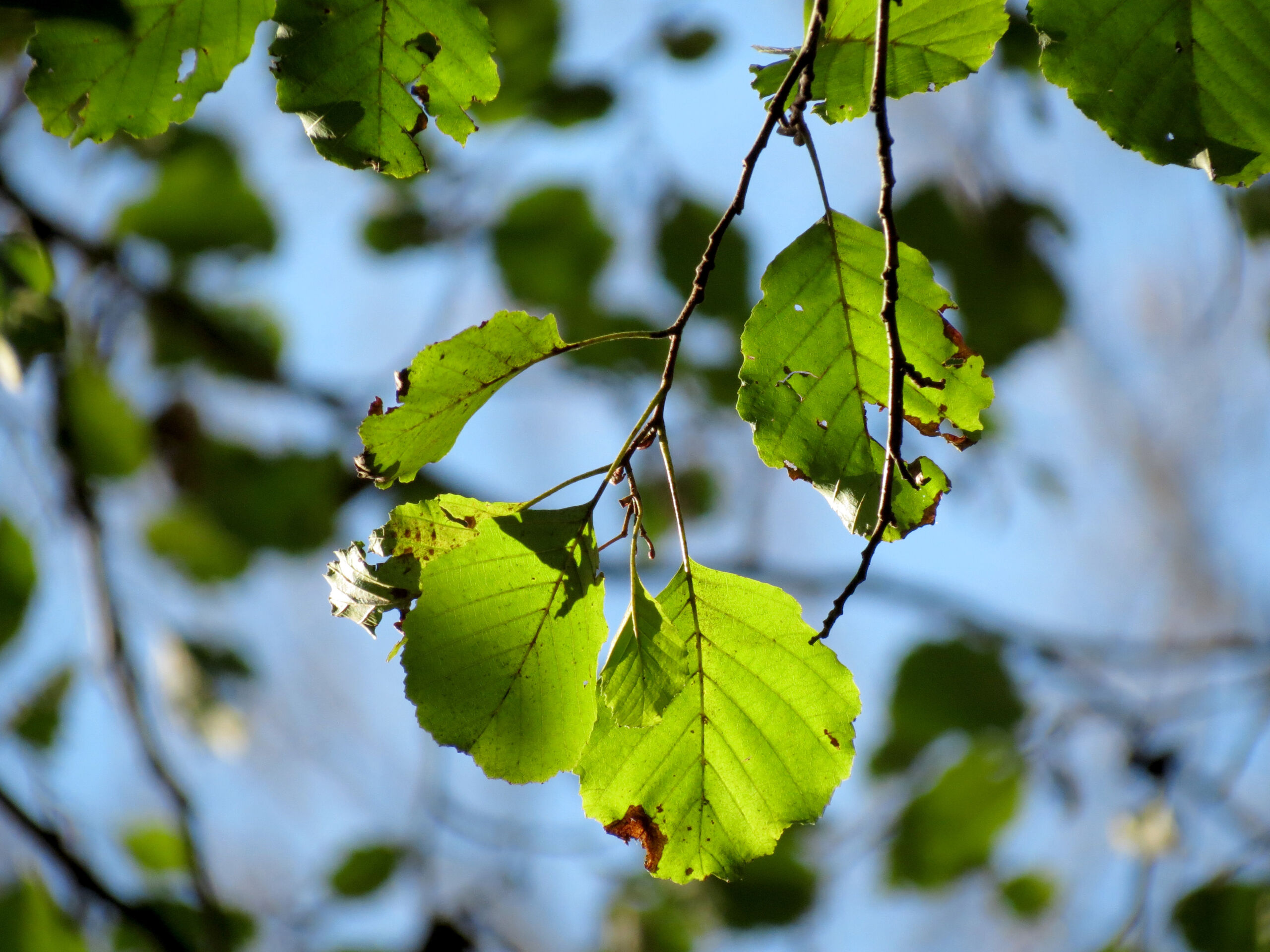
The leaves are simple, alternate, and usually toothed, and they are the way you tell the species apart. Black alder leaves are shiny, rounded, almost racquet-shaped, widest in the upper third with a broadly rounded tip, and famously sticky when young — glutinosa means glutinous, sticky, and the young leaves and buds live up to it. Red alder leaves are ovate, 7 to 15 centimetres long, with bluntly serrated edges and a distinct point at the end, and the leaf margin is revolute, the very edge curled under — a diagnostic character that distinguishes red alder from every other alder. Alder leaves stay green until they drop in autumn, with little of the autumn colour show other trees put on; an alder in November is still green, then suddenly it is not, and the bare branches with their persistent little cones are the winter identification.
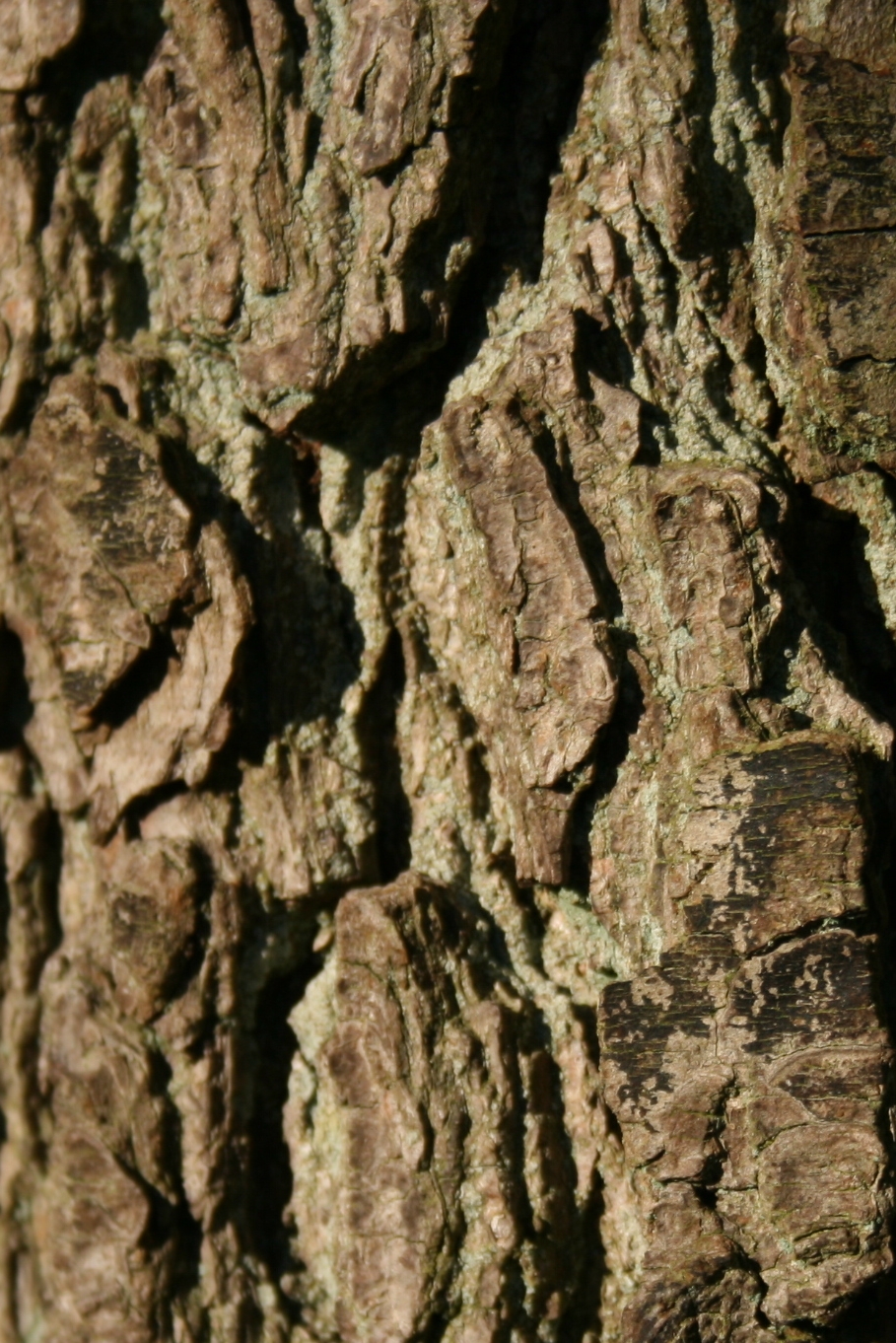
The bark is thin and smooth on young trees, becoming fissured with age, and in red alder it has a party trick: bruise or scrape it and the inner bark turns a bright rusty red on exposure to air, which is where the name red alder comes from. Size varies by species and site: black alder grows to 20 to 30 metres under favourable circumstances and exceptionally up to 37 metres, with a crown spreading 20 to 40 feet; red alder is the largest alder in North America, reaching 20 to 30 metres, with the official tallest specimen standing 32 metres in Clatsop County, Oregon. Even the smaller alders are substantial trees, not shrubs — though some, like green alder of the far north, are shrubby, and all of them are multi-decade commitments to a wet corner of the landscape.
And the superpower, because every good tree has one: alders fix nitrogen. Their roots host the nitrogen-fixing actinomycete Frankia in nodules, pulling atmospheric nitrogen into a form plants can use, which is why alders are pioneer trees on poor, disturbed and newly exposed ground — river gravels, burns, clearcuts, mine spoil — and why the soil under an alder is richer than the soil beside it. An alder is not just tolerating bad ground; it is renovating it, which is the kind of neighbour every garden wants.
One naming trap, stated plainly because the butterfly guides set it. The Green Comma butterfly guide lists “alder (Alnus)” among its host plants, and that is the genus mention this guide covers: alder means Alnus, full stop. The Mexican Fritillary guide lists “yellow alder,” but yellow alder is Turnera ulmifolia, a completely different plant in a different family, and it is deliberately not covered here. And the Pale Swallowtail guide lists red alder, which is one species of this genus, covered in the species list below. Alder means Alnus; anything else with “alder” in its name needs checking before you plant it or link it.
How to grow
Start with the site, because the site chooses the tree here more than usual. Alders want wet feet. Plant them where the ground stays moist — stream banks, pond edges, rain gardens, low hollows, the damp corner where everything else sulks — and they will thrive where other trees drown or starve. They tolerate flooding better than most trees, and black alder in particular is a tree of wetlands and watercourses, naturally widespread through Europe up to Scandinavia and up to 1,200 metres of altitude. They also tolerate poor soil, thanks to the Frankia partnership, and they grow fast on ground that has nothing to offer, which is why red alder rapidly covers former burns and clearcuts in the Pacific Northwest, often preventing the establishment of conifers. If your site is dry, sunny and well-drained, an alder is the wrong tree, and no amount of enthusiasm will make it otherwise.
Give alders full sun to part shade and room. Large species spread 20 to 40 feet, so space trees at least that far apart and well away from buildings, drives and power lines, and remember that alder wood is relatively weak and short-lived — red alder lives on average 40 to 60 years before heart rot becomes serious — so site them where a falling limb is an inconvenience, not a catastrophe. They are fast growers when young, and a young alder in a small garden is a temporary condition; a mature alder in a small garden is a problem with a trunk and a wet footprint.
Soil is where alder earns its reputation for toughness. Black alder grows in moist soils and adapts to clay, sand, wet bottomland and periodically flooded ground alike. Red alder grows nearly always within about 200 kilometres of the Pacific coast, from southeast Alaska to central coastal California, with an extension inland into northernmost Montana, and it wants the moist forest conditions of that range. The common thread is moisture with life in it: alder likes a drink, likes a bit of nitrogen poverty to show off in, and does not like to be baked dry. A soil rich in organic matter, mulched well, and watered through dry spells will keep an alder happy; a compacted, bone-dry construction site will not.
Hardiness varies by species, so again, read the species and plant the one native to your region. The genus as a whole spans the cold temperate world — green alder reaches the Arctic, black alder spans Europe to Scandinavia, red alder spans the Pacific Northwest coast — and that breadth is part of why alder is such a useful pioneer tree. But a southeastern garden planted with a Pacific Northwest alder, or a Florida garden planted with any alder at all, is a mismatch: the site’s native-plant profile for hazel alder, Alnus serrulata, covers the one alder that belongs in Florida, and this genus guide does not pretend otherwise. Plant the alder that belongs where you live.
Plant in spring or fall, from nursery stock, and water deeply through the first few growing seasons — though on a genuinely wet site, the site does most of the watering for you. Female trees produce abundant cone crops and may self-seed freely along water, so if you do not want a carpet of seedlings downstream, site accordingly. Stake a young tree only if it needs it, and remove the stake after a year.
Water & feeding
Water an alder the way the site waters it: generously. On a wet site, established alders need little supplemental water; on a merely moist site, water deeply through dry spells, wetting the root zone to a good depth, because an alder that dries out is an alder that thins out and invites trouble. Deep and occasional beats shallow and frequent, because it trains roots downward where they belong — though on a streamside site the roots will find the water table on their own, which is rather the point.
Feeding is simple and usually unnecessary. As a nitrogen-fixing tree, an alder makes a good deal of its own fertilizer, and a mulch of compost or shredded bark does more good than a bag of synthetic feed: it holds moisture, feeds the soil slowly, suppresses weeds, and protects the trunk from mower damage. Keep mulch a few inches away from the trunk itself, because mulch piled against bark holds moisture there and invites rot. Do not fertilise a stressed tree into recovery; feeding does not cure disease, and lush, soft growth can make a tree more attractive to pests, not less.
Pruning is a late-winter conversation, not an annual one. Prune while the tree is dormant, removing dead, crossing and damaged wood and opening the crown for airflow. Never top an alder. Topping destroys the tree’s structure, invites decay, and produces a flush of weak, fast-growing shoots that are more dangerous than the branches they replaced. If a mature alder needs major work, hire a certified arborist; a tree this size over water or a path is not a do-it-yourself pruning project.
Common problems
- Phytophthora root disease. The defining problem of black alder in Europe: a water mould that rots the roots of trees in wet ground, causing thinning crowns, small yellowing leaves and eventual death. There is no cure for an infected tree; buy nursery stock from reputable sources, do not move wet soil between sites, and remove severely affected trees.
- Short life and heart rot. Alders, red alder in particular, are relatively short-lived, averaging 40 to 60 years before heart rot becomes serious. Plan for succession — an alder is a pioneer, and pioneers are meant to prepare the ground for what comes next.
- Weak wood and storm breakage. Alder wood is soft and branches snap in wind and ice. Keep the crown thinned of deadwood and site the tree away from roofs and power lines.
- Alders are not for dry gardens. The most common failure is not a disease but a mismatch: an alder planted in dry, sunny, well-drained ground will thin, scorch and decline. If your site is dry, plant something else and admire alders by streams.
- Seedlings everywhere downstream. Alders seed freely along water, and seedlings appear in beds, ditches and pond edges. Accept the annual seedling harvest as the price of a pioneer tree, or site accordingly.
- It is not a yellow alder. A naming trap: yellow alder is Turnera ulmifolia, not Alnus, and it is deliberately not listed here. If a butterfly guide mentions yellow alder as a host, it means a different plant entirely, and this guide does not cover it.
Harvest
There is no fruit harvest from an alder, and this guide will not dress one up. The harvest is wood, dye, soil and wildlife, in that order of practicality. Alder wood is soft, even-grained and stable when wet — it was traditionally used for clogs, water pipes, piles under buildings in wet ground (much of Venice famously stands on alder piles), furniture, flooring and firewood — and it is a favourite wood for smoking fish. The bark yields dyes from black and brown to orange-red, used traditionally for dyeing wood, wool, baskets and feathers, and the inner bark of red alder, which turns rusty red when cut, is the source of that colour.
The seed harvest is for the birds, not for you. Alder cones persist on the tree into winter and feed small birds — siskins and redpolls in particular — through the lean months, and the insects hiding in the cones feed more birds still, which is one reason to leave a healthy alder standing as long as it is safe to do so. And the soil harvest is the real one: an alder leaves the ground richer than it found it, which is the closed loop, in miniature, that this whole project is about. Plant an alder on poor ground and you are not just growing a tree; you are hiring a renovation crew that works for sunlight.
Saving seeds
Alder seed saving begins with a case of mistaken identity that is actually the whole joke: those little woody cones are not cones at all. They are strobiles, the alder’s female catkins grown woody, and they hold the seed. Gather them in fall once they have turned brown, before they shed, and dry them in a paper bag — never a sealed plastic bag, where they heat and sweat. Shake or crumble the dried strobiles over a tray and the tiny winged nutlets fall out; winnow away the chaff with a gentle puff or a sieve, and you have a thimbleful of future trees.
Alders are wind-pollinated and monoecious, male and female catkins on the same tree, so a single tree can set seed — but a seedling is still a genetic shuffle, not a clone, and seed from a named form will not reliably match its parent. The seed also wants a winter first. Give it cold, moist stratification: mix it with damp sand or vermiculite in a sealed bag in the refrigerator. Sources disagree on the dose, reporting roughly one to three months depending on species and on how dry the seed got in storage, so use fresh seed where you can and lean toward the longer chill for stored seed — or sow outdoors in fall and let a real winter do it. Sow on the surface or barely covered, because alder seed wants light, and then comes the non-negotiable part: keep the seedbed constantly moist and out of harsh sun. Alder seedlings are wetland babies and die fast if they dry out.
The nerdy payoff is underground. In suitable garden soil, alder roots partner with Frankia bacteria to form nitrogen-fixing nodules — the reason an alder can green up ground too poor and wet for most trees — so do not be surprised when a seedling’s roots come out knobbly; that is the symbiosis clocking in, not a disease. In Florida, plant only the alder native to your region, dry any stored seed thoroughly, and keep it airtight with a desiccant packet, cool and dark, because damp storage in our humidity is a short road to mold. Fresh seed sown promptly is the reliable route; alder seed is not a long-keeper to hoard for years.
Species in this group
Red alder — Alnus rubra — The largest alder in North America, 20 to 30 metres tall, native from southeast Alaska to central coastal California. Ovate leaves 7 to 15 centimetres long with bluntly serrated, revolute margins; dangling reddish male catkins 10 to 15 centimetres long; small woody cones 2 to 3 centimetres long. The inner bark turns rusty red when cut. Host of the Pale Swallowtail among others.
Black alder / European alder / common alder — Alnus glutinosa — The European alder, 20 to 30 metres and exceptionally to 37 metres, with shiny, rounded, sticky young leaves, reddish male catkins 5 to 10 centimetres long, and dark woody cones. A tree of wetlands and watercourses throughout Europe to Scandinavia.
Hazel alder — Alnus serrulata — The southeastern native alder, covered by this site’s Florida native-plant profile. A species guide, not a genus guide; the genus guide you are reading covers the genus, and the profile covers this one species.
Grey alder — Alnus incana — A northern Eurasian and North American alder of cold, wet ground; the speckled alder of eastern North America belongs to this group.
Italian alder — Alnus cordata — A Mediterranean alder with heart-shaped leaves, planted as a fast-growing shade and street tree in mild climates.
Green alder — Alnus viridis — A shrubby alder of the far north and high mountains, the Arctic member of the genus.
Note: yellow alder is not an alder at all — it belongs to Turnera, not Alnus — and it is deliberately not listed here. If you arrived looking for yellow alder, you want a different guide. If a butterfly guide says alder with the Latin Alnus, as the Green Comma guide does, it means this genus.