
🌸 Almond
What it looks like
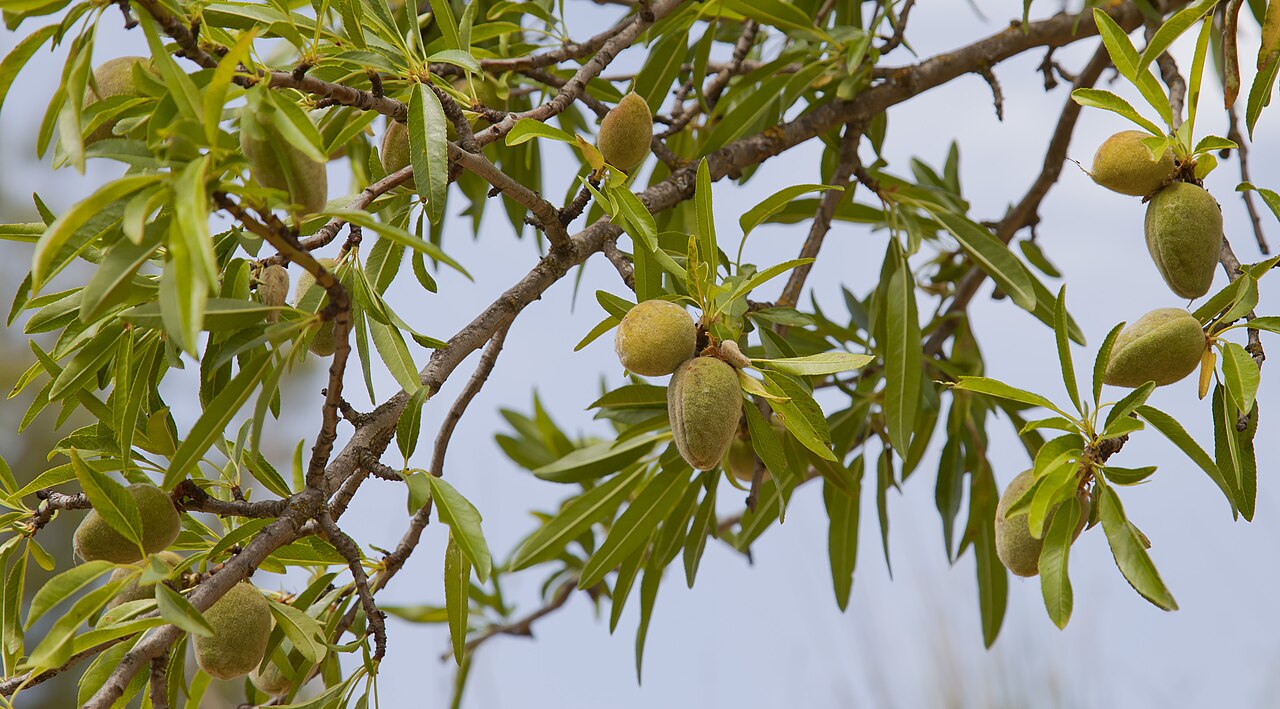
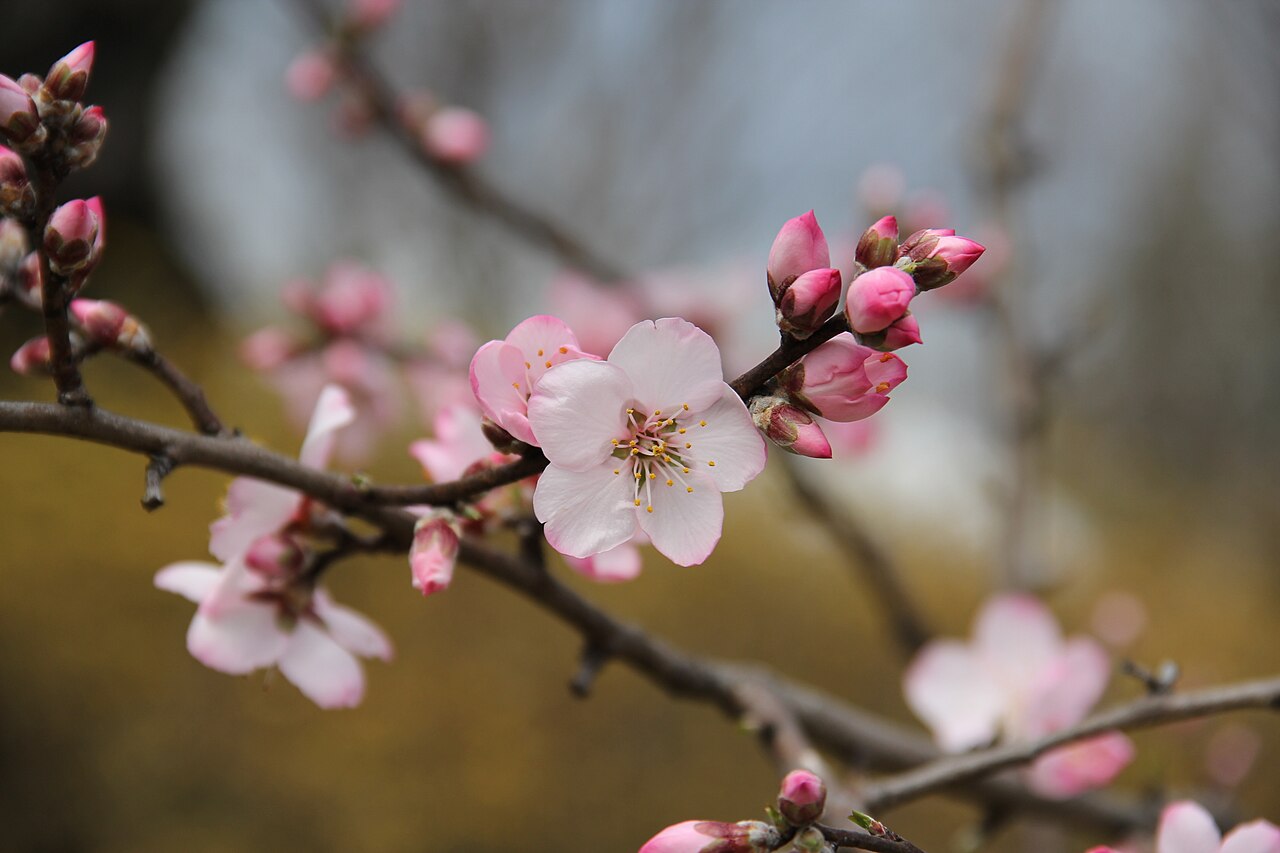
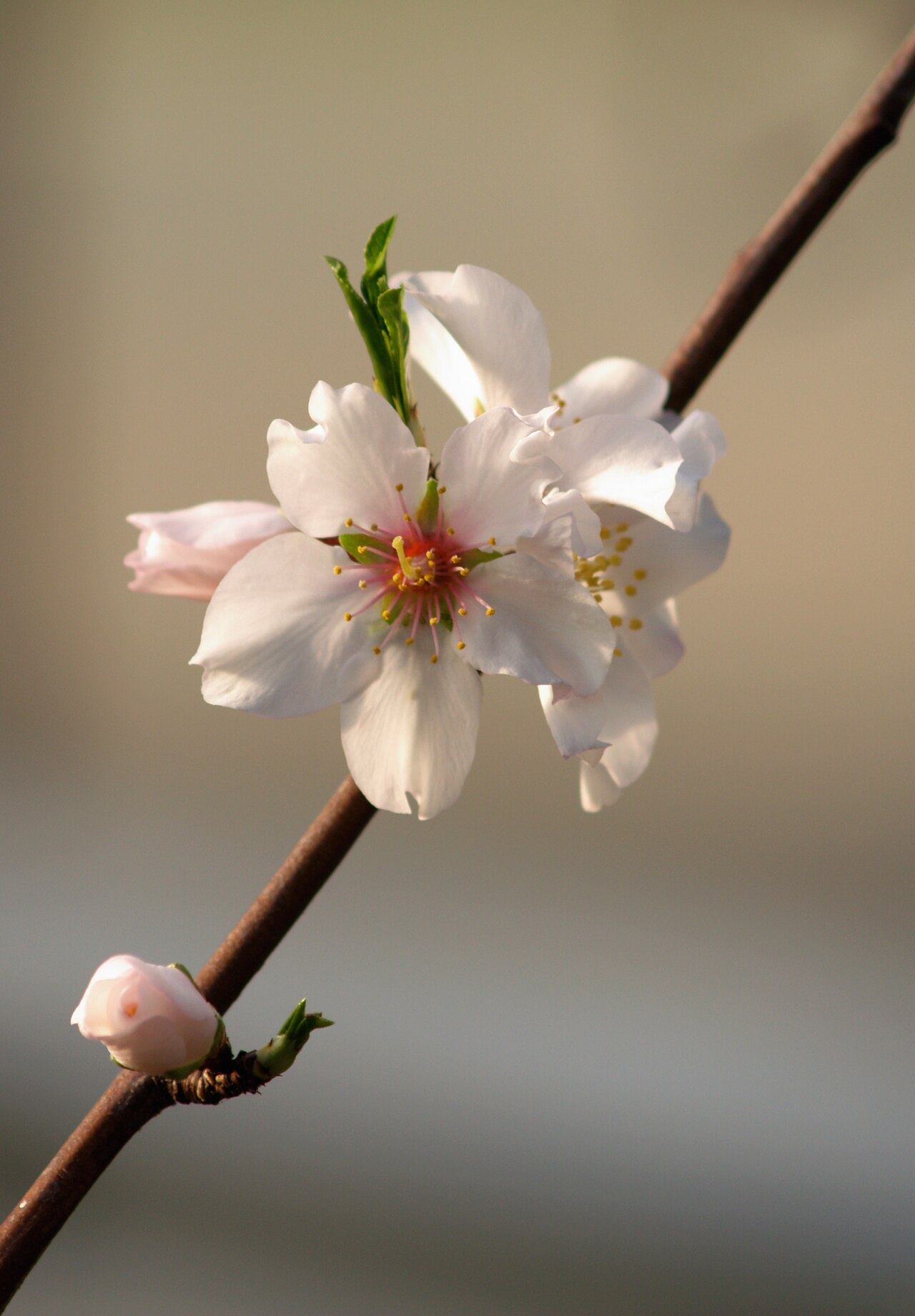
How to grow
Almonds are deciduous trees in the rose family, close cousins of peaches and plums, and their “nut” is the seed inside a dry, leathery fruit. Plant bare-root trees in late winter or early spring while dormant, in deep, well-drained soil — almonds drown in wet feet and will not tolerate waterlogged ground. Most varieties need a compatible pollination partner and bees to carry pollen, so check variety compatibility before buying; self-fertile types like ‘All-in-One’ simplify a small garden to a single tree.
The catch is climate: almonds bloom very early in spring, so late frosts can wipe out a year’s flowers in one night. Plant on a slope or high spot where cold air drains away, never in a frost pocket. Prune to an open, vase-like shape in late winter to let light and air into the canopy.
USDA zones
Almonds are generally suited to zones 7–9, where winters supply the 200–600 chill hours (below 45°F) most varieties need to break dormancy, without the hard freezes that damage wood. Some hardy varieties stretch into zones 5–6. In Florida, almonds are a challenge: much of the state is too warm for adequate chill and too humid for a tree that prefers dry summers, so treat it as a north-Florida experiment with a low-chill, self-fertile variety, not a guaranteed crop.
Water & feeding
Water young trees regularly to establish deep roots, then water deeply through the growing season, especially during nut fill — drought then means shriveled kernels. Mature trees tolerate some drought but crop better with steady moisture. Feed lightly in spring with compost or worm castings; heavy nitrogen pushes leafy growth at the expense of nuts. Mulch the root zone but keep mulch off the trunk.
Common problems
- Late frost on early bloom — the biggest crop risk. Site on high ground and accept that some years will simply fail.
- Fungal diseases in humidity — brown rot and other rots thrive in wet springs. Choose resistant varieties, prune for airflow, and avoid overhead watering.
- Verticillium wilt and root rots — plant in fresh, well-drained soil, never where stone fruits previously died of wilt.
Harvest
Almonds ripen in late summer to early fall: the hulls split open and dry, and nuts are shaken from the tree onto a tarp. Gather promptly, hull any stragglers, and dry nuts in a warm, airy spot until kernels snap cleanly — damp nuts mold in storage. Store dried almonds in a cool, dry place or the freezer. Bitter almonds are a different matter: the sweet almonds sold for eating are what home trees produce; never eat kernels that taste sharply bitter.
Browse all plant & pest guides
Saving seeds
First, a piece of botanical gossip that changes the whole job: an almond is not a nut. It is the pit of a drupe, a dry little peach whose flesh you never eat, and the seed you save is the kernel inside that pit. Save it well and you can grow a tree. Save it naively and you can grow a surprise, and the surprise may be bitter. Literally.
Start with fresh, raw, unsalted, unroasted nuts from a tree you know, still in the shell if you can get them. Roasted or salted snack nuts are dead ends, and so are nuts that have been sitting in a warm pantry for a year. When the hulls split and dry in late summer to early fall, that is your harvest window: gather the nuts, dry them thoroughly out of direct sun, and keep only plump, undamaged kernels for seed. In Florida humidity, “thoroughly dry” is not a suggestion, it is the whole game — damp seed molds, and molded seed is compost.
Almond seed sleeps through winter in the wild, so you have to fake winter before it will wake up. Soak the nuts for a day, crack the shell gently without bruising the kernel inside, then tuck the kernels into damp (not wet) sand or a damp paper towel in a bag in the refrigerator. Sources disagree on the exact sentence for this cold treatment, giving roughly a month to two months, so plan on six to eight weeks and check weekly for mold, airing or replacing the damp medium if anything smells off. After chilling, sow about an inch or two deep in deep pots of well-drained mix — almond roots dive fast and resent being disturbed — and keep them warm and lightly moist. Expect sprouts over a few weeks, not overnight.
Now the honest part, and it matters more here than for almost any other plant in this project. A seedling almond is a genetic lottery ticket, not a copy of its parent. It will not reliably grow true to a named cultivar, its nuts may be smaller, harder-shelled, or later to bear, and it may take several years to give you a significant harvest. If you want a particular named variety, with its known flavor and bearing habit, you do not grow it from seed at all: you graft a cutting of that variety onto a seedling (or a compatible peach) rootstock. Seed-grown trees make excellent rootstocks and excellent experiments, and only sometimes excellent orchard trees.
Pollination is the second trap. Many almond varieties are self-sterile and need a different, compatible variety blooming at the same time to set a crop, so a lone seedling can flower beautifully and still give you almost nothing. Unless you know your variety is self-fertile, plan on two different trees, not one.
And the safety note, stated plainly: never eat a bitter-tasting almond kernel. Bitter almonds carry amygdalin, a compound that breaks down into cyanide in the stomach, and bitter seedlings and rootstock suckers are the usual culprits when a backyard tree turns out bitter. Sweet almonds from a known sweet tree are food. A kernel that tastes bitter is not food, not a dare, and not a reason to “just try one more” — leave it, and if the whole tree runs bitter, graft it over to a known sweet variety or take it out rather than harvesting from it.
Varieties
Every named variety of Almond with its own growing guide:
- All-In-One Almond — The self-fertile, low-chill almond that lets a single tree do the whole job — the most forgiving almond for warm-winter gardens.
- Nonpareil Almond — The California orchard standard: thin-shelled, sweet, famously productive — and famously demanding about winter.