
🌳 American Hornbeam: Growing Guide
What it looks like
Meet the tree
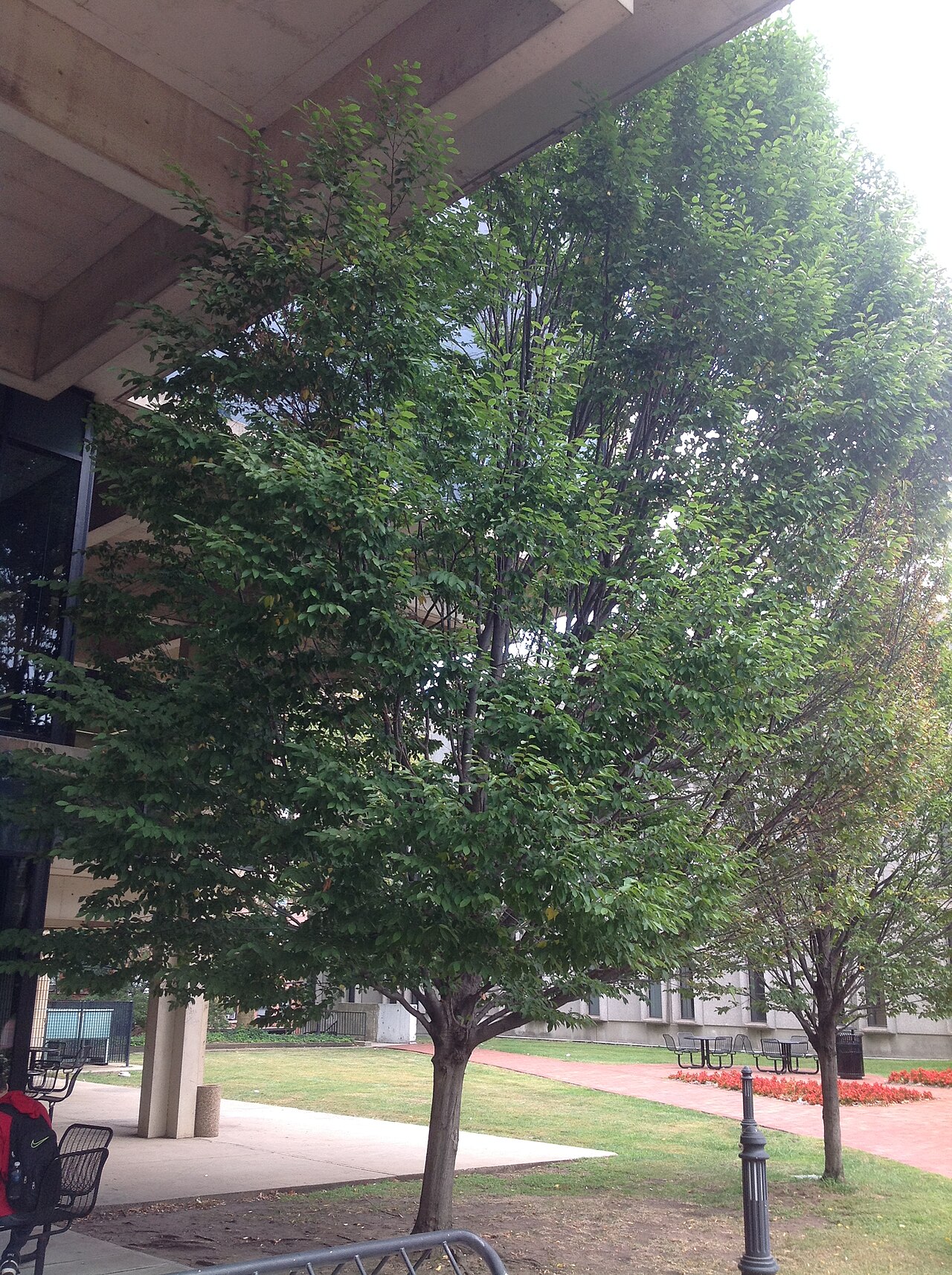
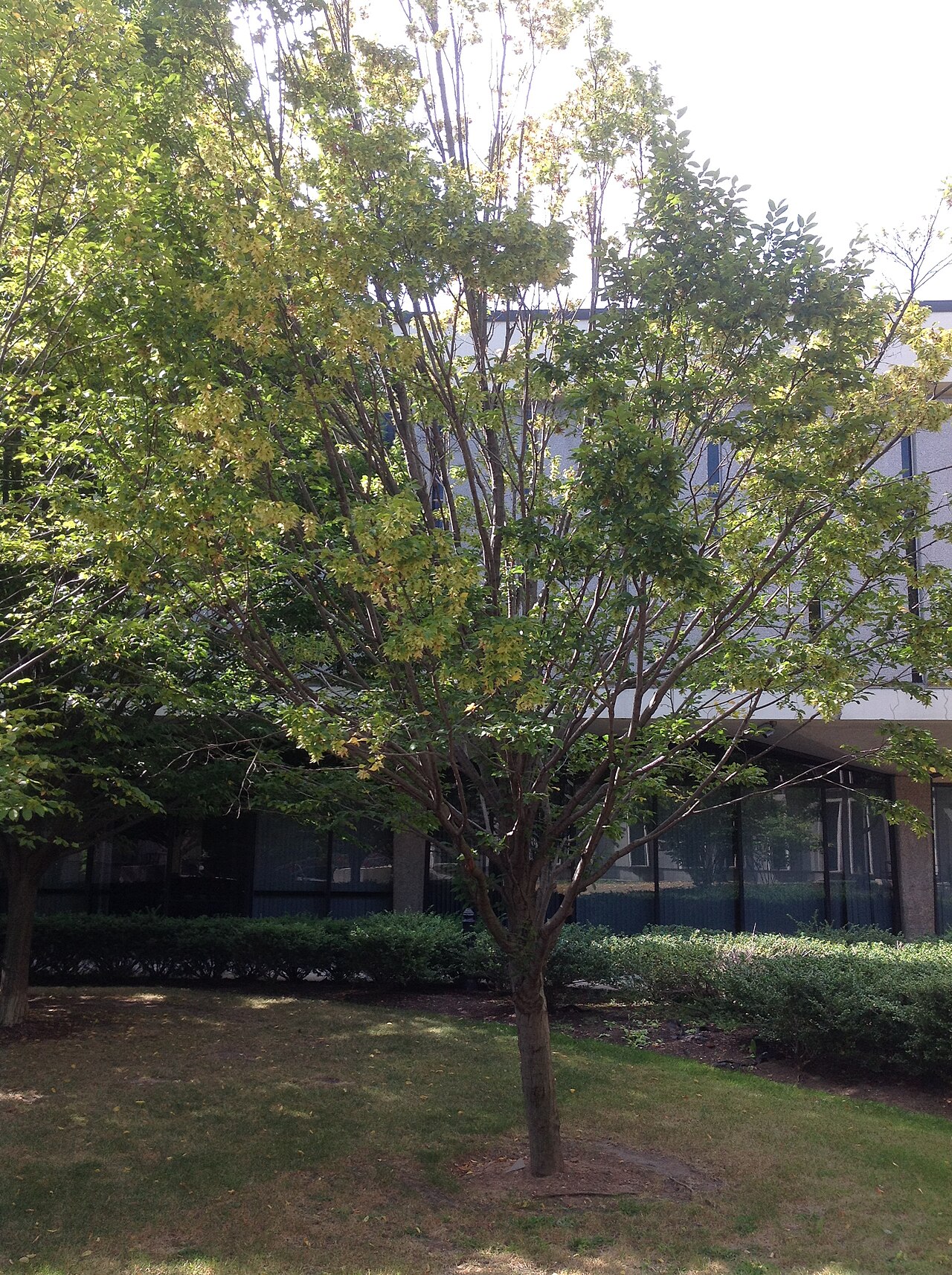
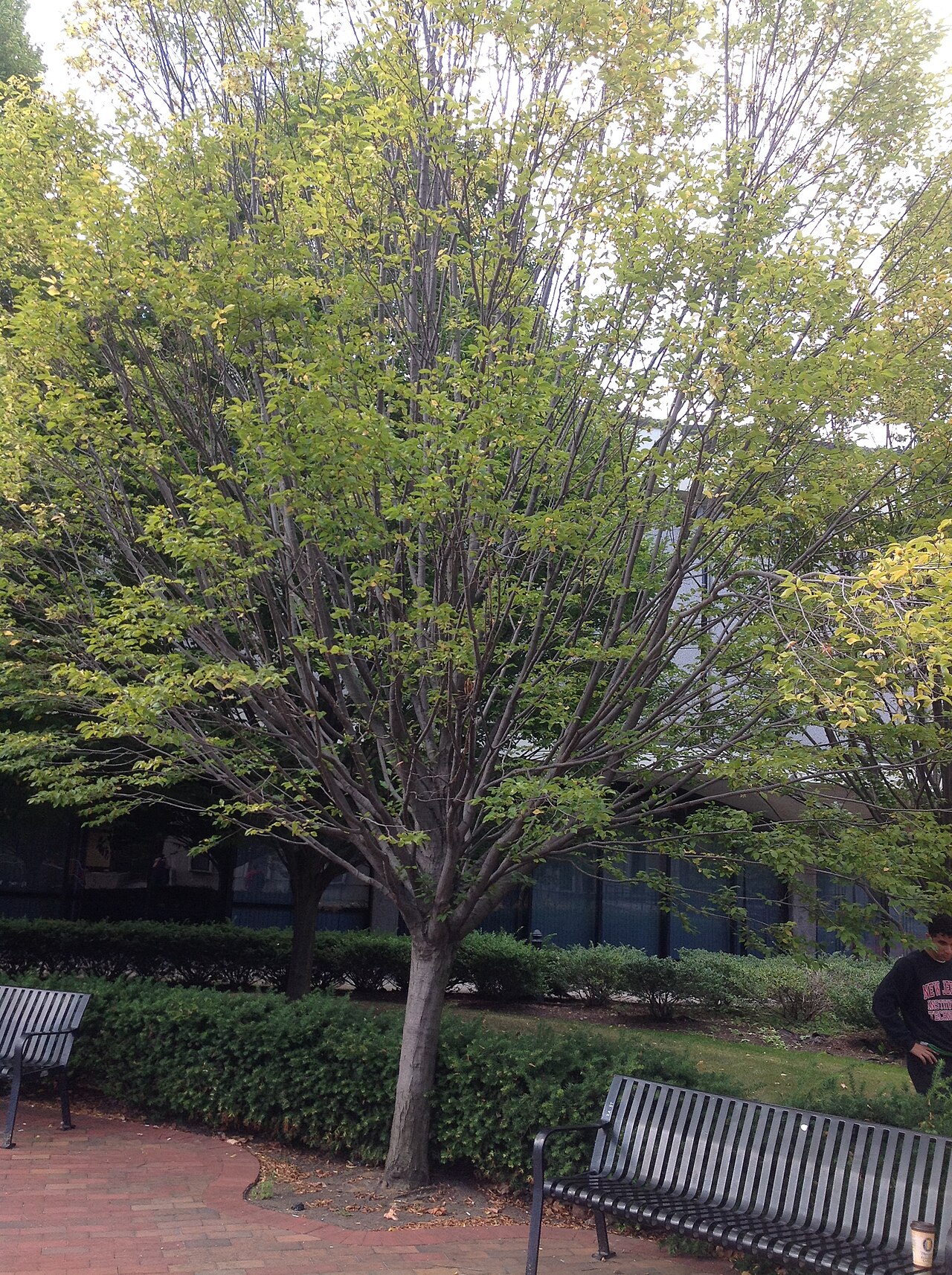
American hornbeam goes by musclewood and blue beech, and one look at the trunk explains both names: the blue-grey to grey-brown bark is tight, thin, and smooth, fluted into ridges that look exactly like the muscles in a flexed arm. It is the tree equivalent of someone who never goes to the gym but somehow has forearms. It is a small to medium tree — Florida 4-H Forest Ecology puts it at 15 to 25 feet with a bushy crown and that fluted trunk, while nursery and extension references generally give 20 to 30 feet tall and 20 to 30 feet wide — so think “understory tree,” not “forest giant.” The leaves are simple, alternate, and deciduous, 2 to 4 inches long by 1 to 2 inches wide, ovate with a wedged, sometimes unequal base, a long tapered tip, and a doubly serrated margin with pointed teeth; the upper surface is smooth blue-green and the underside is light yellowish-green and fuzzy near the main vein. In fall the foliage turns orange-red, which is a genuine show in a state where “fall color” often means “the leaves fell.” The fruit is a small, wingless, ribbed nut tucked under a three-lobed, leaf-like bract about an inch long, clustered on hanging stalks 3 to 6 inches long. Dad joke, non-negotiable: hornbeam is called ironwood because its wood is so hard, which means this tree lifts weights and also is weights.
This guide is the standalone growing guide for American hornbeam. For the native-plant profile, see American hornbeam on Living Root Garden, and for the wider hornbeam family, see Hornbeam: Growing Guide. Do not confuse it with eastern hophornbeam (Ostrya virginiana), its birch-family lookalike: hophornbeam fruit sits in papery cones like hops, and its bark peels in loose reddish-brown to grey strips, while American hornbeam has hard nuts under leaf-like bracts and smooth, muscular bark. Bark and fruit settle the argument every time.
Where it grows in Florida — the damp, shady corner is the point
In the wild, American hornbeam grows in moist, fertile soils of bottomland hardwoods on the edges of swamps, streams, and rivers, often alongside hophornbeam, red maple, sweetgum, alder, redbud, cypress, and sumac, according to Florida 4-H Forest Ecology. Its broader native range runs from Nova Scotia to Florida and west to Texas and Minnesota, and in Florida it is a north- and central-Florida tree, not a south-Florida one. That habitat tells you almost everything about growing it: it wants moisture, fertility, and a little shelter from the blast furnace. It does well in shade and will perform in full sun, where it becomes denser and more uniform, provided it has enough moisture — but in a Florida garden, partial shade with moist soil is the sweet spot, especially for a young tree. It is also the rare small tree that genuinely tolerates heavy shade, which makes it the answer to the classic Florida question: “What can I plant under these oaks that will not just sit there and sulk?” This. This can go under those oaks, provided the soil is not bone-dry oak-root desert. Mulch and water are the price of admission.
Planting: spring, balled-and-burlapped, and no shortcuts
American hornbeam is more difficult to transplant than its European cousin, and the standard advice is to transplant it balled-and-burlapped in spring. Take that seriously: a bargain bare-root hornbeam planted in a hurry in summer is a gamble, and hornbeam is a slow grower — about a foot a year — so a setback costs you a whole season of visible progress. Plant at nursery depth with the root flare visible, in a wide hole, in rich, moist, well-drained soil. It prefers deep, fertile, moist, slightly acidic soil and grows best in partial shade, per the USDA plant guide, and its chief liabilities in cultivation are exactly what you would guess from that sentence: a relatively slow growth rate and difficulty in transplantation. It will not tolerate compacted soils and should not be planted where the grade has changed — fill dumped over its roots, or soil scraped away from them, is a slow death sentence. If your site is a construction-compacted new-build lot, fix the soil first (loosen, compost, mulch, wait) or pick a tougher tree. Hornbeam rewards patience and punishes impatience, which is either a character flaw or a personality, depending on your mood. Space trees 20 to 30 feet apart, and give a single specimen room to become its bushy, fluted self rather than cramming it against a fence.
Water & feeding: steady moisture, or else
Water deeply through the first two or three years, then water in dry spells. Hornbeam likes steady moisture and suffers in prolonged drought; it is not drought-tolerant, full stop. That is the single most important sentence in this guide for a Florida gardener, because Florida droughts arrive fast and hornbeam does not bluff about them. Mulch wide — 3 to 4 inches, kept off the trunk — to hold moisture, and feed only if growth is weak: compost in spring, worm castings included, is plenty. A hornbeam that is growing slowly is usually not hungry; it is either dry, newly transplanted, or simply being a hornbeam, which grows about a foot a year and considers that a perfectly respectable pace. Do not judge it in year one. The hornbeam group guide says the same thing, and it is right: slow establishment is normal, especially for American hornbeam, and faithful watering is the whole strategy.
Pruning & structure
Hornbeam is one of the most pruning-tolerant trees available, and it can be grown as a free-form shade tree, a multi-stemmed shrub-like tree, or a single-stemmed specimen — the Kentucky extension profile notes it can be grown either way and is more narrow and upright than European hornbeam. Prune in late winter to remove dead, crossing, and rubbing wood and to set the structure while young. Because the bark is thin, avoid wounding it with mowers and trimmers, and make clean cuts rather than tearing. If you want a hedge or screen, know that European hornbeam is the classic clipped-hedge species and American hornbeam is the native understory tree; American hornbeam tolerates pruning well, but if a formal, sheared hedge is the whole goal, compare the two species honestly before planting. A native tree planted for the wrong job is still the wrong job.
Pests, diseases & problems
- Drought stress — the main problem, and it is yours to prevent. Wilting, scorched margins, and stalled growth in a dry spell mean water, deeply, now.
- Two-lined chestnut borer on stressed trees — listed in the hornbeam group guide. The defense is vigor: keep the tree watered, avoid bark wounds, and do not let it sit stressed, because borers find stressed trees the way mosquitoes find ankles.
- Leaf spot and aphids — usually minor. Improve air movement, tolerate light damage, and skip the sprayer for a few spotted leaves.
- Ice damage — prune out broken wood promptly and keep a strong structure while young. In Florida this is a rare northern worry, not a planning priority, but the principle — strong young structure, prompt cleanup — holds everywhere.
- Thin bark — easy to wound, slow to forgive. Mulch ring, no trimmer contact, no nailed signs. The bark is the whole show on this tree; protect it like it is.
- Fire sensitivity — the USDA guide notes that because of its thin bark, American hornbeam is probably top-killed or killed by most fires, and it occurs mostly in communities that rarely experience fire. In a Florida landscape where prescribed fire is part of land management, do not plant hornbeam in a burn unit and expect it to shrug. It will not shrug.
Wildlife & ecology
American hornbeam punches above its size for wildlife. Its seeds, buds, and catkins are eaten by songbirds, ruffed grouse, ring-necked pheasants, bobwhite, and turkey, plus fox and grey squirrels, according to the USDA plant guide, and UF/IFAS notes its nuts feed birds as well. UF/IFAS Extension Lake County lists Carpinus caroliniana among keystone plants for central Florida — the high-impact native species that sustain insect populations. As an understory tree, it also fills a layer most yards are missing: canopy trees overhead, lawn underneath, and nothing in between for birds to nest in, insects to feed on, or shade to deepen. Planting a hornbeam is adding a middle story to your yard’s ecology. And the wood? So hard and tough it was used for golf clubs, tool handles, and mallets. A tree that feeds turkeys and makes mallets is a tree with range.
Florida mistakes to avoid
- Planting it in a dry, sunny, compacted spot and expecting shade tolerance to substitute for water. Shade tolerance is not drought tolerance. They are different words for a reason.
- Transplanting carelessly or in the wrong season and blaming the tree for a slow first year. It told you it was hard to transplant. Believe it.
- Changing the grade over its roots during a landscaping project.
- Confusing it with hophornbeam at the nursery and planting the wrong tree for your site. Check the fruit and the bark.
- Judging it in year one. It grows about a foot a year. Year one is an introduction, not a performance review.
Saving seeds
American hornbeam (Carpinus caroliniana), also called musclewood and blue beech, is a tree that rewards the seed saver who can tolerate suspense. Its seed will germinate, often well, but on its own schedule, which may be this spring, next spring, or the spring after that. If you need a tree on a deadline, buy one. If you enjoy a pot that keeps surprising you for three years, save seed.
The seed is a small, hard nutlet tucked inside a distinctive three-lobed, leafy bract that acts as a little sail, carrying it away from the parent tree. Collect in late summer to early fall, as the clusters ripen, and rub the bracts off over a screen to reduce bulk and make the seed easier to handle.
Sow fresh seed outdoors in a prepared seedbed as soon as it is ripe, and you give yourself the best odds, because nature then runs the warm-then-cold sequence the seed is waiting for. Seed collected while still green, after it is ripe but before it has fully dried on the tree, and sown immediately, may germinate the following spring. Stored seed needs help: sources disagree on the exact prescription, with some giving about four weeks of warm, moist stratification followed by about twelve weeks of cold, others giving roughly sixty days warm and sixty days cold, and still others giving about ninety days of cold alone. The honest summary is that hornbeam wants a warm period followed by a cold period, and that exact lengths vary by seed lot and source, so do not treat any single schedule as gospel. For stored seed, mix it with damp sand or vermiculite, hold it warm and moist for a month or so, then refrigerate it cold and moist for two to three months, checking now and then for mold or drying out, and sow shallowly, about an eighth of an inch deep, in a mulched seedbed or flat.
Then comes the patience test. Some seed germinates the first spring, but a large share waits: many references warn that the majority of a lot may need two years, and seed can keep germinating for three years or more after collection. Do not throw the pot away after one quiet spring. Keep it moist, shaded, and protected from mice and squirrels, pick out seedlings as they appear if you are stratifying in bags, and grow seedlings on in the seedbed for about two years before planting them out in winter into their permanent spots.
Seedlings will be true American hornbeams, but not copies of their parent. This is an open-pollinated wild species, not a hybrid with F1 seed to warn you about, yet every seedling still varies a little from its siblings, and that is normal and desirable in a native tree. If you want a named selection with a particular form, buy it as a nursery plant; if you want hornbeams, seed gives you hornbeams, in its own good time.
Florida note: this guide places hornbeam in damp, shady corners, and lists zones down through 9, so it is a far better Florida bet than the cold-climate trees in this batch, but Florida’s mild winters still change the equation. Do not count on an outdoor winter in central or south Florida to deliver a full chill; for stored seed, the refrigerator sequence above is the reliable route. And Florida humidity cuts both ways: stratification medium must stay moist, but seed stored warm and damp will mold, so keep saved seed cool, airtight, and dry-ish until you deliberately start stratification, with a desiccant packet in the jar.
Sources
- UF/IFAS Florida 4-H Forest Ecology, “American Hornbeam — Identifying Characteristics” — habitat, size, bark, leaves, fruit, hophornbeam distinction: florida4h.ifas.ufl.edu — American Hornbeam
- USDA NRCS Plant Guide, “American Hornbeam (Carpinus caroliniana)” — soil preference, shade, transplant difficulty, drought intolerance, wildlife food, fire sensitivity: plants.usda.gov — Plant Guide (PDF)
- University of Kentucky Cooperative Extension, “Carpinus caroliniana (American Hornbeam)” — size, growth rate, transplant advice, wood uses, largest known tree: horticulture.mgcafe.uky.edu (PDF)
- UF/IFAS Extension Lake County, “Grow more Keystone Plants?” — Carpinus caroliniana as a keystone plant for central Florida: blogs.ifas.ufl.edu — Keystone Plants
American hornbeam native profile • Hornbeam: Growing Guide • Browse all plant & pest guides