
🌳 Amur Cork Tree
What it looks like
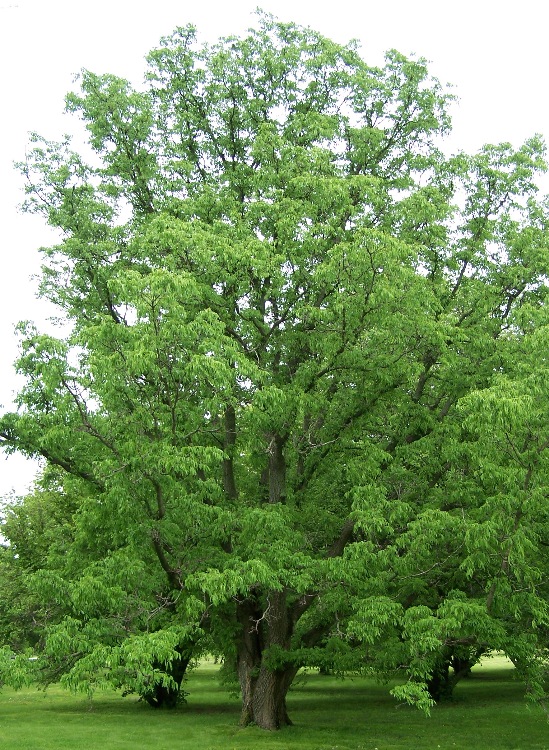
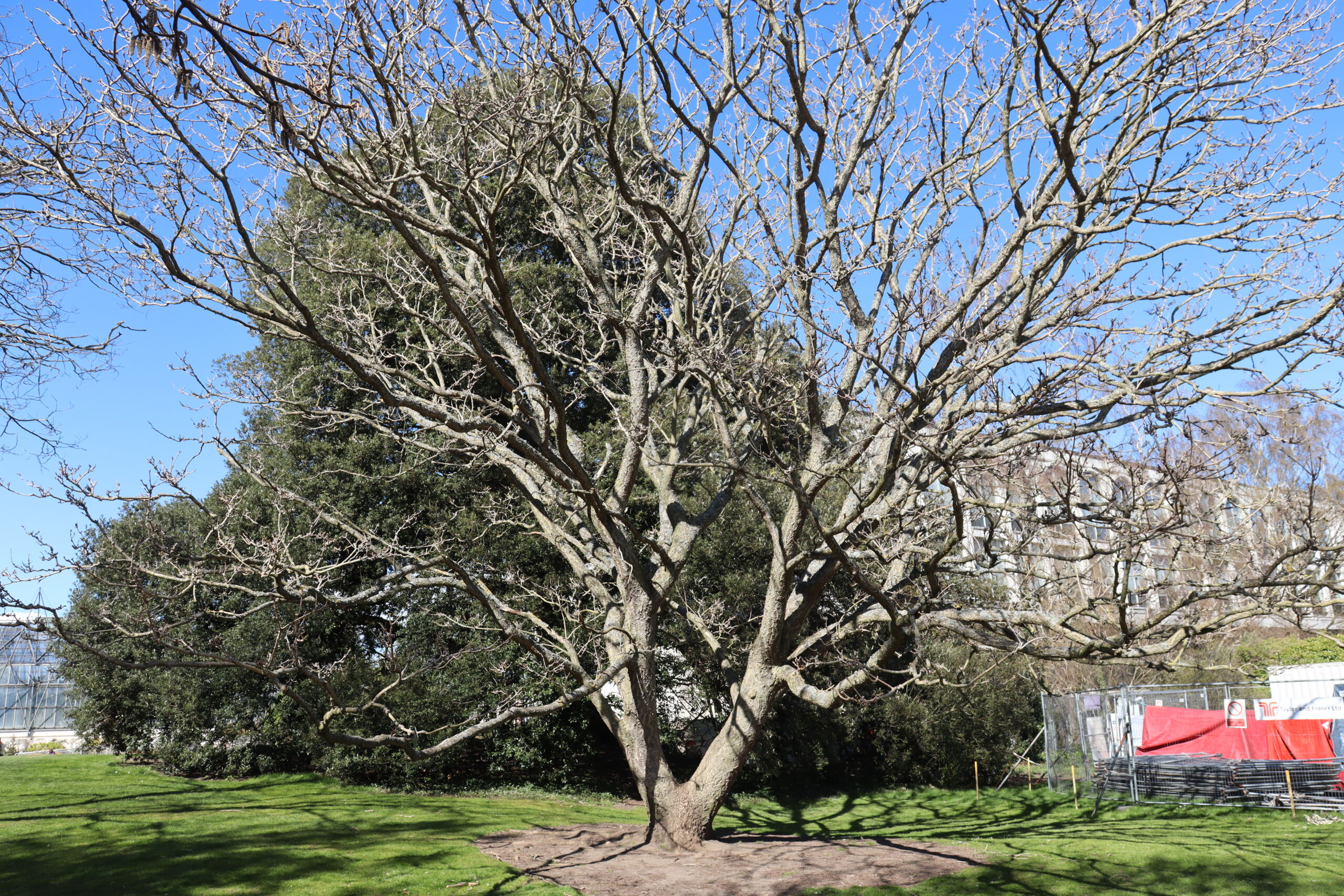
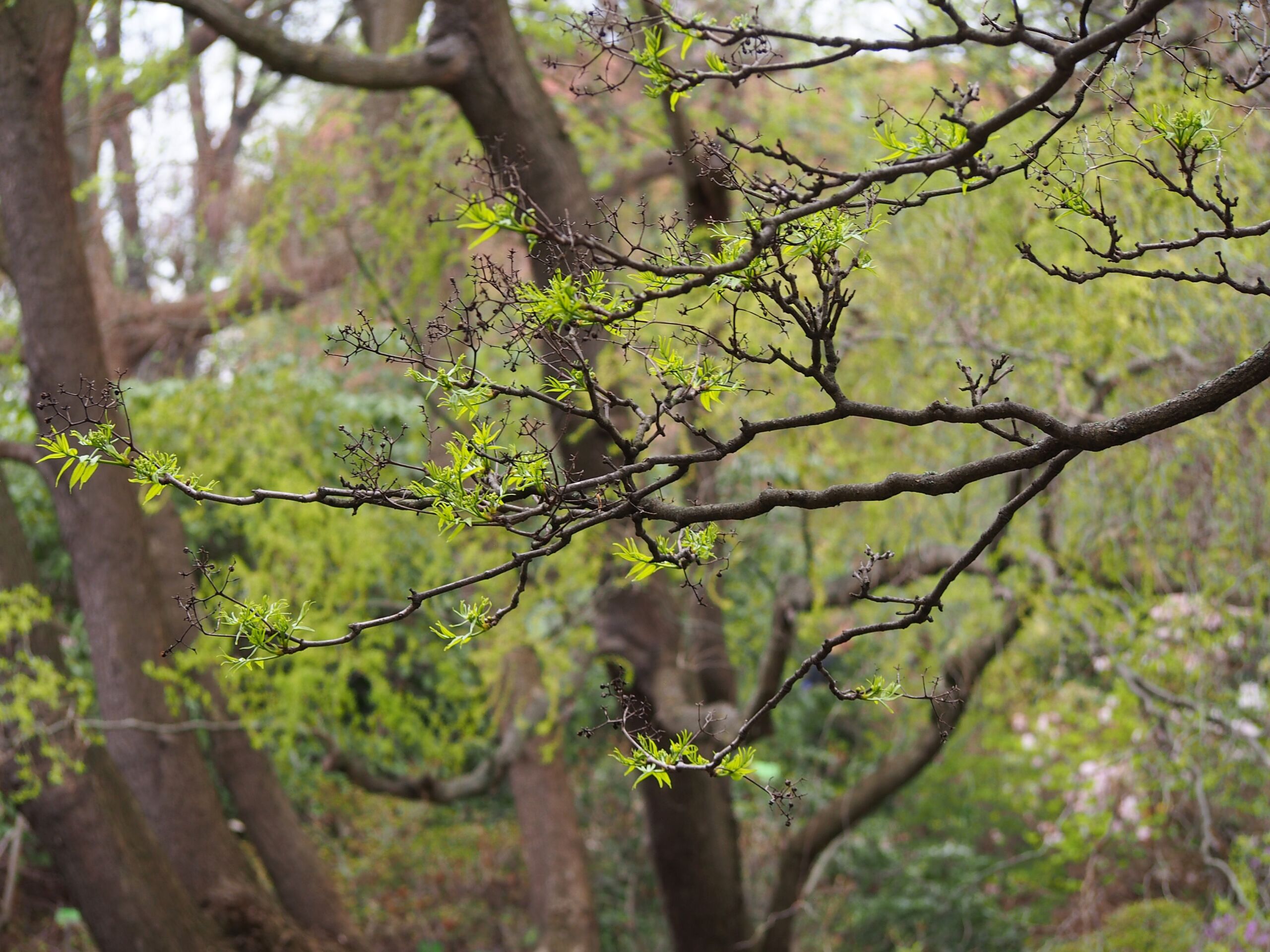
At first glance, the Amur cork tree looks like it wandered out of the wrong family reunion. It has the opposite, pinnately compound leaves of an ash, the broad spreading crown of a shade tree, and bark so thick, ridged, and corky that the genus is named for it — Phellodendron comes from Greek phellos, cork, and dendron, tree. But it is none of those things. It is a member of the citrus family, Rutaceae, the family of oranges, rue, and prickly-ash, and once you know that, the clues fall into place: crush a leaf and it smells resinous and citrus-like, sometimes compared to turpentine or disinfectant; the small yellow-green flowers arrive in clusters; and the fruit is a black, grape-like drupe that birds carry everywhere, which is where this tree’s story turns from ornamental to cautionary.
In form it is a medium to large deciduous tree, typically 30 to 45 feet tall with a spread of 30 to 50 feet, sometimes taller, with a short trunk that divides into heavy, spreading limbs and a broad, rounded crown. Mature bark is gray-brown, deeply furrowed, and genuinely corky to the touch, and the inner bark is bright yellow — a field mark worth knowing, and also the reason the tree has a long history in traditional Chinese medicine, where the bark is known as huang bai. The leaves are opposite and compound, 10 to 15 inches long, with 5 to 13 leaflets, each 2.5 to 4.5 inches long, glossy dark green above and paler beneath, turning a clear, bright yellow in autumn before they fall. The tree is dioecious: male and female flowers grow on separate trees, so only female trees bear the black drupes, and only female trees start the next invasion. Winter buds are coated in silky hairs, and the winter silhouette — heavy limbs, corky bark, shelf-like branching — is handsome in a way that has sold a great many of these trees to parks and campuses.
Its home is the Amur River valley and the moist forests of northeast Asia — northern China, Manchuria, Korea, the Russian Far East, and Japan — where it grows along streams and in rich, moist ground. The species name amurense refers to the Amur Valley. It was introduced to cultivation in the United States in the mid-1800s, planted as a tough urban tree, and it kept its side of that bargain: it tolerates drought, road salt, urban pollution, alkaline soil, and shade when young, and it has few serious pest problems. The trouble is that it kept the rest of the bargain too, and then some.
For butterflies, this guide exists because of the Chinese Swallowtail guide, whose host list runs through the citrus family and names Amur cork tree (Phellodendron amurense) alongside cultivated citrus, Japanese pepper tree, trifoliate orange, and rue. That is a real host record, and it makes botanical sense: swallowtails in this group feed on Rutaceae, and a cork tree is a Rutaceae tree. But a host record is not a planting recommendation, and this guide is explicit about that, because the same tree that feeds a swallowtail caterpillar in Asia is an invasive tree in the eastern United States.
How to grow
Here is the honest version of this section: this guide describes how the tree grows, not an invitation to plant it. Amur cork tree is hardy in USDA zones 3 to 7, prefers full sun and moist, well-drained soil, and tolerates a remarkable range of abuse — acid to alkaline soil (pH 5.0 to 8.0), drought once established, road salt, and urban pollution. Plant one in a large landscape with room for a 30- to 50-foot crown, a fibrous, shallow, wide-spreading root system, and a habit of dropping abundant fruit, and it will grow with almost no help. That ease is the problem, and it is why several states now restrict it: New York prohibits it as invasive, Massachusetts lists it as a noxious weed, Minnesota calls it invasive and says do not plant it, and Missouri and other states report it escaping into urban woodlands and riparian areas. Check your state and local rules before you even consider it, and in most of the eastern United States the correct answer is to choose something else.
If you already have one, or you are managing land where it grows, the practical facts are these. It is dioecious, so a male tree bears no fruit and spreads no seed — which is why male cultivars such as ‘His Majesty’ were developed and why some authorities recommend male plants only where planting is still allowed. But note the honest caveat from Cornell: no truly sterile cultivar exists, and a male tree can still sucker and still contribute pollen. Female trees bear heavy crops of black drupes that birds and mammals eat and disperse into roadsides, woodlands, and forest fragments, where seedlings grow thickly and shade out native trees and shrubs. Seedlings are the control point: pull them while small, before they establish. Established trees sucker and need the suckers removed, and cutting a female tree without dealing with the seed bank buys only a season.
Florida note: Florida gardeners, this is not your tree, and that is a relief rather than a loss. Amur cork tree is hardy in zones 3 to 7, a cold-climate tree of northern valleys, and Florida’s heat is outside its range — it is not a Florida tree, it is not sold as one, and no Florida gardener needs to make room for a 45-foot invasive tree to feed a butterfly that does not live here. The Chinese Swallowtail is a Hawaiian and Asian story, not a Florida one, and Florida’s swallowtails have their own citrus-family hosts, including the native and garden citrus already growing in Florida yards. If you want the corky-bark look, admire it in a northern arboretum and plant a Florida tree at home.
Water & feeding
Water to establish, then mostly leave it alone. Amur cork tree prefers moist soil and grows naturally along streams, but established trees tolerate dry periods, and overwatering in heavy soil helps nothing. It is not a fussy feeder: it grows in soils from clay to light sand and from acid to alkaline, and it needs no special feeding program. A mulch ring to hold moisture while young, and compost if the soil is genuinely poor, is the whole program. The soil science here is the tree’s own strategy: a fast-establishing, chemically defended tree — its bark and tissues carry berberine and related alkaloids, the compounds behind its medicinal history — that invests in toughness rather than in rich-soil demands. That toughness is exactly why it outcompetes native seedlings in disturbed woods, and why “low maintenance” is a warning label on this species, not a selling point.
Common problems
- Invasiveness — the main problem. Female trees produce abundant, bird-dispersed seed; seedlings grow thickly in disturbed forests, woodland edges, and riparian areas; the tree shades out natives with shelf-like branching and suppresses neighboring growth. It is prohibited or listed as invasive in several states. Do not plant it where it is restricted, and do not plant a female tree anywhere near a woodland edge.
- Seedlings everywhere. Under and around a female tree, expect seedlings. Pull them while small and before they fruit; a seedling ignored for a few years is a tree with its own seed crop.
- Suckers. The tree suckers from the base and roots. Remove suckers annually if you are keeping a tree, and expect the job to recur.
- Root and space problems. A shallow, wide-spreading, fibrous root system and a broad crown make it a poor fit for restricted root zones, small lots, and tight street plantings, despite its urban-tough reputation.
- Look-alikes. It resembles ash (Fraxinus) in leaf, but ash leaflets and bark differ, and ash is a different family altogether. Within its own genus, the naming is tangled: trees once sold as Japanese cork tree (Phellodendron japonicum), Lavalle cork tree (Phellodendron lavallei), and Sakhalin cork tree (Phellodendron sachalinense) have been folded into Phellodendron amurense in the broad modern sense by a 2006 revision — so an old “Japanese cork tree” label may be this same tree under an older name, not a different species. Buy and identify by the current name, and treat any of those older names as a flag to check, not as a separate plant.
- Messy fruit. Female trees drop abundant black drupes that stain and feed birds, which then plant the next generation. If fruit mess bothers you, a fruiting cork tree will bother you twice: once on the pavement, once in the woods.
Harvest
The traditional harvest of Amur cork tree is its bark. The bright yellow inner bark, huang bai, is one of the classic herbs of traditional Chinese medicine, valued for its berberine content, and the bark has also yielded a yellow dye. This guide records that history without recommending it: harvesting bark at any scale damages or kills the tree, the medicinal claims belong to traditions and practitioners outside this guide’s scope, and in the eastern United States the more useful harvest is removal — seedlings pulled, female trees taken out where they invade, and the space replanted with a native or non-invasive tree that feeds local caterpillars without feeding the next invasion. The ornamental harvest — yellow autumn color, corky winter bark, summer shade — is real, and it is the reason the tree was planted so widely. It is also the reason it is now a problem, which is the honest shape of this tree’s story: everything people liked about it is everything that made it escape.
Browse all plant & pest guides
Propagation
Here is the seed-saving section that refuses to be a seed-saving section, and for good reason. Amur cork tree (Phellodendron amurense) is dioecious, meaning male and female flowers grow on separate trees, and a female tree is a seed factory: a single mature tree can produce thousands of seeds a year, birds eat the black fruit and scatter the seed far beyond your garden, and that seed can stay viable in the soil for years. That is exactly why this tree is invasive in several northeastern and midwestern states, and why some jurisdictions permit the sale of named male cultivars only and require fruiting trees to be controlled so no seed is spread. Saving and sharing Amur cork tree seed is how a garden tree becomes a woodland problem, so please do not do it — no matter how well the tree behaves in your own yard.
If you already have a male cultivar you love and want more of it, propagate it vegetatively instead: semi-ripe cuttings taken in midsummer are the standard route, and a cutting from a male tree is reliably male, which is the whole point. If you have a female tree, the responsible propagation move is containment, not multiplication — strip the fruit clusters before the birds find them, bag them, and put them in the trash rather than the compost, and check your local rules before planting or giving away any cork tree at all. Florida gardeners should note that this is a tree of temperate East Asia, happiest in cooler climates, and its invasive record elsewhere is reason enough to think twice before planting it here at all.
Species and relatives
This is a species guide: it claims Phellodendron amurense only, in the broad modern sense that folds in the older names below. Other Phellodendron species are different plants, not Amur cork tree.
Phellodendron amurense — Amur cork tree, the species this guide describes; native to northeast Asia, hardy zones 3–7, dioecious, corky bark, yellow inner bark, black drupes on female trees.
Phellodendron amurense ‘His Majesty’ — a male cultivar developed at the University of Minnesota and introduced in 1996; bears no fruit, but is not sterile in the full sense, and is not a workaround where the species is prohibited.
Phellodendron japonicum (Japanese cork tree), Phellodendron lavallei (Lavalle cork tree), and Phellodendron sachalinense (Sakhalin cork tree) — older names now folded into Phellodendron amurense in the broad sense by the 2006 revision; if a label or an old guide uses one of these names, it is most likely this same tree, and the invasive cautions in this guide apply to it.
Other Phellodendron species — the genus holds around ten deciduous, dioecious trees of eastern and northeastern Asia; they are not Amur cork tree, and a guide for one of them would be a different guide.