
🌿 Angelica
What it looks like
How to grow
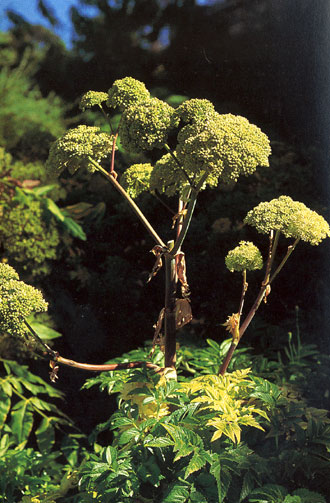
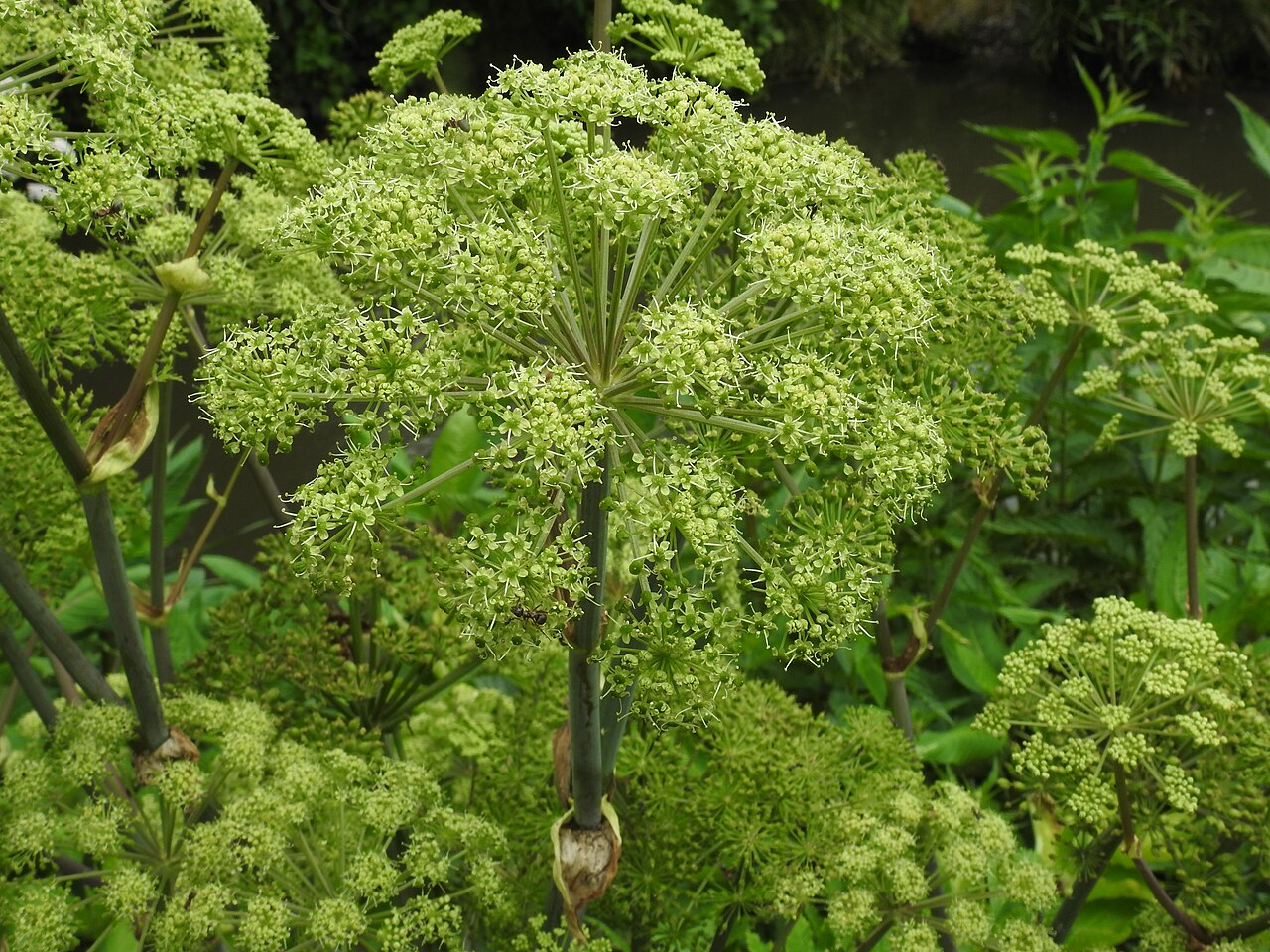
Angelica is a dramatic biennial carrot-family herb that can reach 5-6 feet in its second year, with large divided leaves, hollow stems, and huge umbrella flower heads. Its stems are candied for cakes and desserts, its leaves and roots flavor liqueurs like Chartreuse and gin, and its seeds season breads — but angelica comes with a safety note that matters: it closely resembles poison hemlock and water hemlock, two deadly relatives. Only grow and use angelica from plants you bought labeled from a reputable nursery, never from a wild plant you think might be angelica. That warning delivered, angelica is a rewarding garden plant: it prefers rich, moist soil and part shade, especially in warm climates, and it self-sows readily if you let it flower. Start from fresh seed (angelica seed loses viability quickly, so sow fresh seed in fall or early spring) or nursery plants, and site it where a very large plant will not overwhelm its neighbors. It needs winter cold to flower in year two, so it struggles in zones 10 and warmer. Cut flower stalks if you want to prolong leaf production, or let plants flower for seed and volunteers.
Water & feeding
Keep soil consistently moist — angelica is a moisture-lover and wilts in drought. About an inch to an inch and a half a week. It is a moderate-to-heavy feeder for an herb: mix worm castings into the planting hole and top-dress each spring. Mulch to hold moisture.
Common problems
- Mistaken identity with poison hemlock — only use nursery-labeled plants; never harvest wild lookalikes.
- Drought stress — angelica wilts fast; mulch and water consistently.
- Self-seeding — deadhead if you do not want volunteers, or let it naturalize in a wild corner.
- Aphids on flower heads — blast with water; beneficial insects usually follow.
Harvest
Harvest young leaves as needed in the first year and spring of the second year. Harvest stems in the second year before flowering, peeling and candying them or using them fresh. Harvest seeds when flower heads turn brown, drying them thoroughly before storage. Wear gloves when handling large quantities — angelica sap can irritate skin in sunlight for sensitive people, a trait it shares with several carrot-family relatives.
Saving seeds
Angelica (Angelica archangelica) gives you exactly one shot at seed saving per plant, and it does not wait around for you to get organized — which is fitting, since this whole plant is a two-year drama. Year one is a leafy rosette. Year two is a six-foot giant that flowers in huge umbrella heads, sets seed, and dies. That death is the point: the plant’s entire ambition is to leave seed behind, and if you let it, it self-sows so readily that you will have volunteers for years. The trick to saving seed on purpose, rather than by accident, is to work with that urgency instead of against it.
Let at least one flower head ripen fully on the plant — cutting the stalks early prolongs leaf production, but a plant with no flower heads gives you no seed, so choose your sacrifice. When the heads turn brown and the seed starts to loosen, slip a paper bag over the head and shake, or snip the whole head into a bag before the seed shatters. Here is the rule that matters most with angelica: sow it fresh. Angelica seed loses viability fast, within months rather than years, and seed that has sat dry in a drawer for a year or more is mostly wishful thinking. The gold-standard move is to sow fresh seed in fall, pressed onto the surface of moist soil and not buried at all — angelica seed needs light to germinate, and seed buried even a quarter inch deep may simply rot. If you must store it, refrigerate it promptly in an airtight container and sow in early spring, after a few weeks of cold-moist chilling in the fridge to break dormancy. Even then, sow generously: germination from stored seed is lower than from fresh, and a warm-cold-warm rhythm seems to help wake it up, so do not be surprised if emergence is staggered over several weeks.
Because angelica is a biennial, the real seed-saving skill is relay thinking: sow a few plants every year so you always have first-year rosettes waiting while the second-year giants flower and die. That way the patch never blinks out. Angelica is normally grown as the straight species rather than as F1 hybrids, so saved seed from an isolated planting usually grows true — but if other angelicas are flowering nearby, expect some crossing, and do not promise a neighbor an exact replica. Two safety notes, both non-negotiable. First, angelica sap can irritate skin in sunlight for sensitive people, so wear gloves and long sleeves when you handle armfuls of seed heads. Second, and more seriously: only ever save seed from plants you planted yourself from labeled nursery stock. Angelica’s carrot-family cousins include poison hemlock and water hemlock, both deadly, and both easy to confuse with angelica at a glance — never collect supposed angelica seed from a wild plant. In Florida, dry any seed you intend to store thoroughly, keep it airtight with a desiccant in the fridge rather than in a humid shed, and remember that most angelicas want cool, moist conditions and winter cold to flower, so Florida gardeners are already gardening at the warm edge of this plant’s patience.