
🐾 Pussytoes
What it looks like
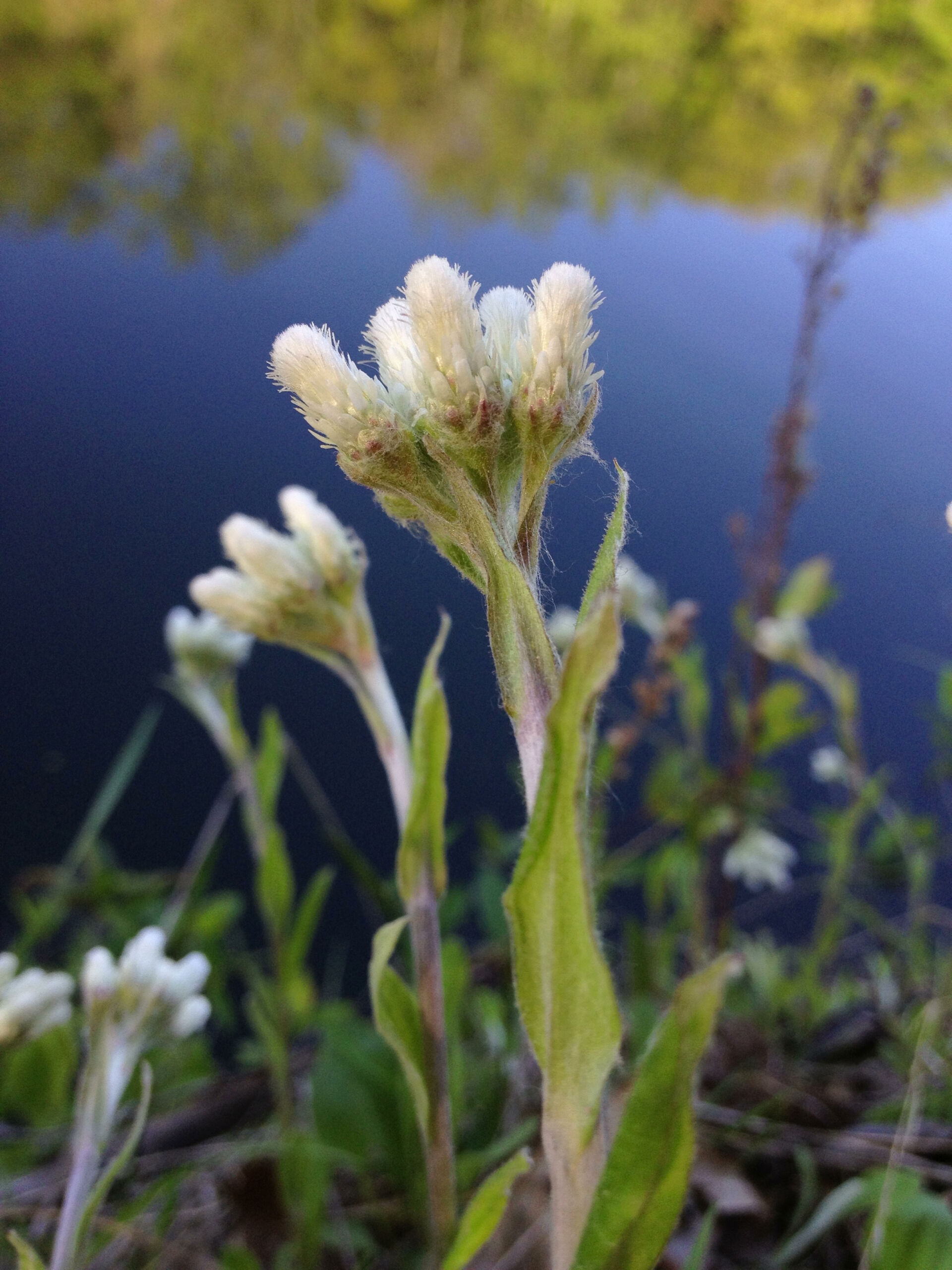
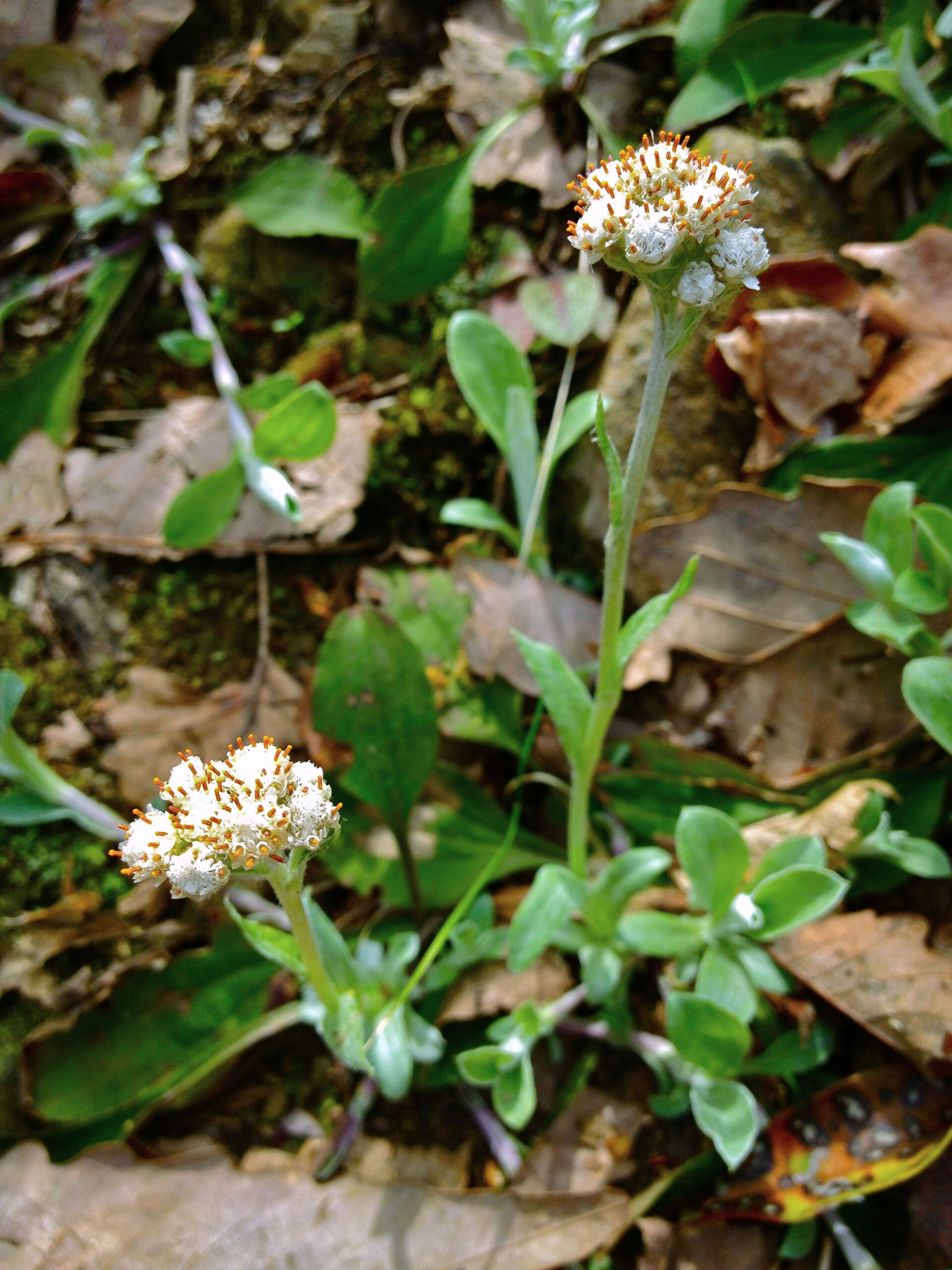
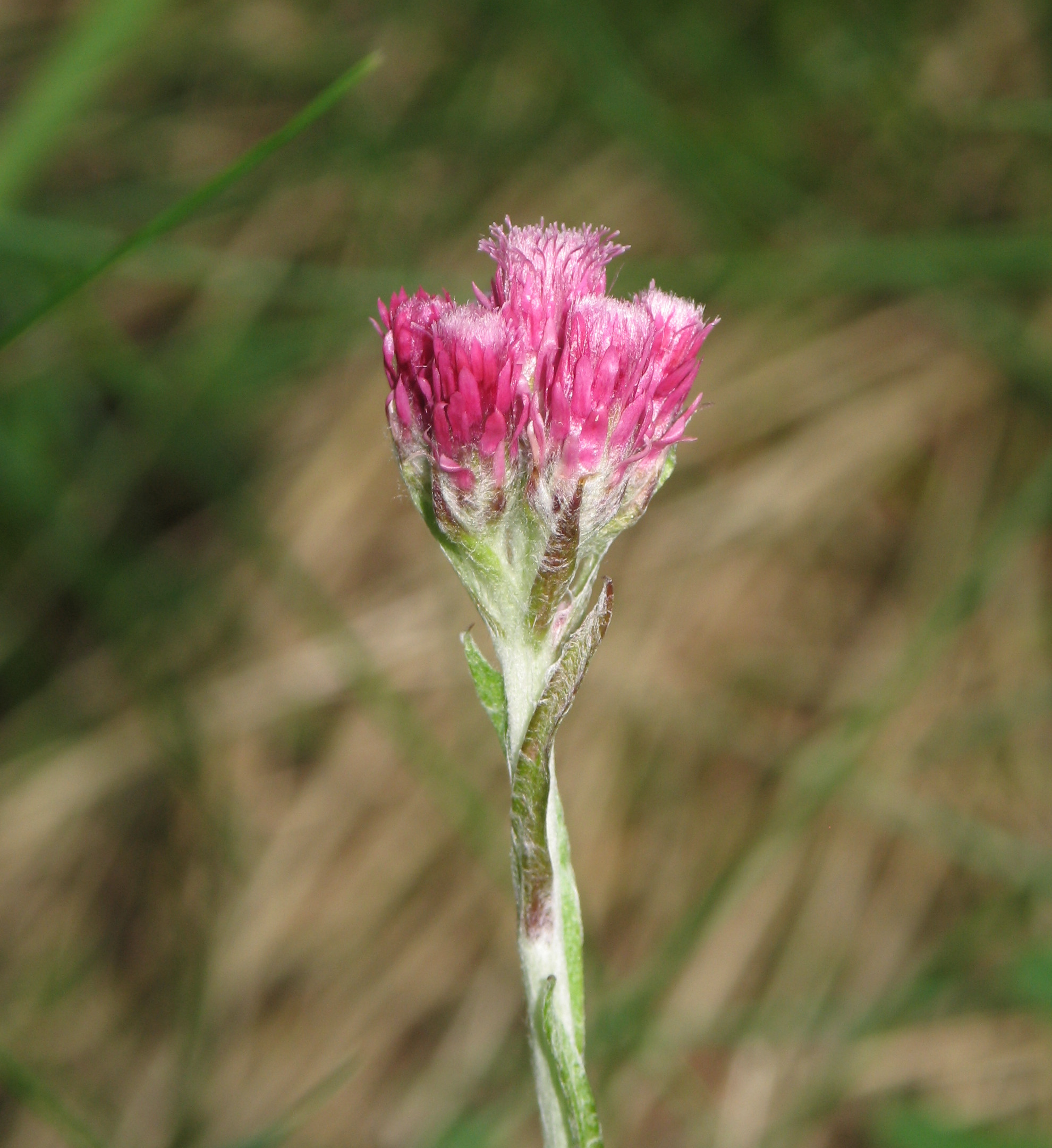
Antennaria is a genus of small, mat-forming perennial herbs in the daisy family, Asteraceae, best known by the common name pussytoes, and also called catsfoot, everlasting, ladies’ tobacco, and mouse ear, depending on where you meet them. The genus was established by the German botanist Joseph Gaertner in 1791, and modern references accept about forty-five species, mostly native to North America, with others in northern Eurasia and South America. They are low plants — roughly 4 to 20 inches tall depending on species — built as a basal rosette of leaves with a slender flowering stem rising from the middle, and they spread by stolons, runners that creep along the surface, root as they go, and make new rosettes, so that a single plant becomes a colony, and a colony becomes a mat. The leaves are the first thing you notice: basal, often paddle-shaped or narrow, covered in fine, dense, woolly hairs that give the whole plant a silvery-grey to green-grey cast and a velvety texture, like felt that grew in a garden. The wool is not decoration. It reflects light, slows water loss, and insulates the leaf, which is how a small plant survives on dry, rocky, sun-baked ground where a soft-leaved plant would crisp.
The flowers are the second thing, and they are the reason for the name. In spring, from April to June depending on species and climate, each rosette sends up a woolly stem topped by a tight, flat-topped cluster of small, fuzzy flower heads, each head composed exclusively of disc flowers — no ray flowers, no petals in the daisy sense, just a button of tiny tubular florets wrapped in papery bracts. The clusters look like the soft pads of a cat’s paw, hence pussytoes, and they are dry and papery in texture, which is why dried Antennaria heads keep their appearance for months and why “everlasting” is another common name. Plantain-leaved pussytoes, Antennaria plantaginifolia, the species at the heart of this guide’s butterfly story, is rarely more than 15 centimetres tall, with a basal rosette and an erect stem bearing a tight cluster of 4 to 17 fuzzy flower heads; its basal leaves are oval to roundish, 3.5 to 7.5 centimetres long, with 3 to 7 prominent veins, and the undersides are covered in thick silvery hair. The specific epithet plantaginifolia means “with leaves like plantain,” for the resemblance of those basal leaves to the leaves of common plantain — a different plant entirely, and a good reminder to read the whole Latin name, not just the part that sounds familiar.
Now the genus’s signature nerdy fact, stated carefully because it is easy to overstate. Antennaria species are dioecious, meaning male and female flowers are borne on separate plants: an individual plant produces either male (staminate) flower heads or female (pistillate) flower heads, and the two sexes look noticeably different. Male heads tend to appear whiter, and their projecting stamens were thought to resemble the antennae of insects — which is where the genus name Antennaria comes from, from the Latin for antenna. Female heads are whitish to pinkish, with fluffy white styles and a pappus of white bristles that carries the seed on the wind. Because the plants spread by stolons, a colony can end up consisting entirely of male or entirely of female plants, a single-sex carpet that will flower beautifully and set very little seed, which is a charming botanical quirk and a practical point: if you want seed, you need both sexes in the neighbourhood, and if you only want the mat, a single-sex colony will do very nicely. The two photographs above show the difference in the same species, female first, male second — look at them side by side and you will never again think all pussytoes flowers look alike.
For butterflies, this guide exists because of one woolly-loving insect. The American Lady guide in this series describes its caterpillars as specialists on woolly-leaved members of the daisy family, and names as core hosts the everlastings and, crucially, the pussytoes — Antennaria species, above all plantain-leaved pussytoes. The American Lady, Vanessa virginiensis, is a widespread North American brush-footed butterfly, orange and black, resident in the southern United States and ranging through most of North America, and its caterpillars feed on the woolly leaves, sheltering in silk nests among them. The wool matters, in the guide’s own framing: the caterpillars choose woolly-leaved daisies, and pussytoes, with its felted rosettes, is exactly that kind of plant. Plant a pussytoes mat in its proper range and you are not merely planting a groundcover — you are planting a nursery with the bedding already on it. A note for the linker, and for the reader: a species guide for one pussytoes, such as plantain-leaved pussytoes alone, does not cover the genus, and the butterfly guides name the genus. This guide is the genus guide, and its species section names the notable species within it.
How to grow
Grow pussytoes where the soil is poor, the sun is strong, and the drainage is sharp, and then get out of its way. Full sun gives the most compact growth and the most silvery foliage; part shade is tolerated, but mats grow looser and greener, and the silver that makes the plant beautiful fades. The soil rule is the one rule you cannot bend: lean, gritty to rocky, dry to medium moisture, well-drained soil. Pussytoes thrive in bright, cool summers and in dry, rocky, shallow soils that would starve most garden plants, and they are very tolerant of poor soil, drought once established, shallow-rocky ground, and deer, which leave the woolly leaves alone. What they do not tolerate is rich, humusy soil that stays wet, and standing water, which rots the crown — especially in winter, when a wet crown in cold soil is a death sentence. If your soil is heavy clay, amend heavily with grit or sand, or plant in a raised bed or a rock garden, or do not plant pussytoes at all. A plant that evolved on alpine scree and dry rocky slopes will not thank you for a compost-rich border, however well meant.
Plant in spring or fall, setting rosettes at the same depth they grew in their pots, spaced 8 to 16 inches apart depending on species — plantain-leaved pussytoes is often spaced around 16 inches, smaller alpine species around 8 to 12 inches — and water them in. They will spread by stolons to form a mat 12 to 18 inches wide per plant, and a planting will knit together into a weed-smothering groundcover in a season or two, filling the gaps between stepping stones, the crevices of a wall, the top of a stone wall, and the dry edge of a path where nothing else wants to grow. That is their ideal job in a garden: a low, evergreen to semi-evergreen carpet for tough spots, for rock gardens, for dry banks, and for the spaces between stones where foot traffic is light. They handle light foot traffic, and their petite size makes them ideal for small spaces, but they are not a lawn substitute for a path that gets daily pounding — plant them beside the path, not in the middle of it, and let them soften its edges.
Propagation is easy, which is another way of saying the plant does most of it for you. Divide colonies in spring, pulling apart rooted stolons and replanting them, or let the stolons root on their own and move the new rosettes where you want them. Seed can be sown, but seedlings vary, and because colonies can be single-sex, seed set is unreliable in a small planting — division is the honest route for named species and for a predictable mat. Deadhead after flowering if you want to keep the mat tidy and to prevent self-seeding from taking over a small rock garden, though in a large naturalistic planting a little self-seeding is part of the charm. Cut back tired foliage in spring to clear last year’s leaves and let the new rosettes shine, and otherwise leave the plant alone: it is a low-maintenance plant in the true sense, not the catalogue sense, and most of the work it needs is the work of not overwatering it and not feeding it.
Florida note: Be honest about the map. Plantain-leaved pussytoes is distributed widely in eastern North America, from Quebec and Nova Scotia west to Minnesota and south to Mississippi, Arkansas, and Florida, with isolated populations in eastern Texas — so the species does reach Florida, on paper. In practice, pussytoes as a genus wants bright, cool summers, lean gritty soil, and sharp drainage, and hot, humid Florida summers with consistently wet soil are exactly the conditions that make it struggle: the wool that protects it in dry air holds damp in humid air, and the crown rots. A North Florida gardener with a raised, gritty rock garden in full sun and excellent drainage could try plantain-leaved pussytoes as an experiment, but it should be tried as an experiment, in a pot or a raised bed where drainage can be controlled, not planted as a sure thing in ordinary Florida soil. For most Florida gardeners, the honest advice is to admire pussytoes in a cooler climate or a rock garden, and to spend the same dry, sunny space on a Florida groundcover that wants Florida’s summers. A guide that promised a cool-climate alpine mat would love a humid Florida summer would be selling you a plant for a climate it does not enjoy.
Water & feeding
Water needs are low once established, and the first season is the exception that proves the rule. Water deeply once a week through the first growing season while the runners spread and root in, soaking the root zone rather than splashing the foliage, which keeps the wool dry and the crown healthy. After year one, pussytoes are exceptionally drought-tolerant, and most years need no supplemental water at all — they are, after all, plants of dry slopes, rocky ground, and meadows that dry out in summer. In a wet climate, the danger is the opposite of drought: too much water, especially in winter, rots the crown, and a plant that drowns in winter will not be saved by a dry summer. In a pot, water only when the mix has dried out, use a gritty, free-draining mix, and never let the pot sit in a saucer of water.
Feeding: skip it entirely. This is the plant to which the “feed the soil, not the plant” advice applies most literally, because feeding it makes it worse. Rich soil produces floppy growth that rots in winter, and fertiliser pushes lush leaves that lose the silver, lose the compact habit, and invite rot. Pussytoes bloom and spread better on lean soil than on rich soil, and a plant grown lean and sunny will hold its shape, keep its silver, and flower reliably, while a plant pushed with fertiliser will sprawl and sulk. If you must do something, top-dress with fine gravel, which looks right with the plant, keeps the crown dry, suppresses weeds, and lets water through — a mulch that helps drainage rather than hindering it. Bark mulch, which holds moisture against the crown, is the wrong mulch for this genus, however tidy it looks.
Common problems
- Crown rot in wet soil. The main killer, and the reason Florida is a poor bet. Sharp drainage, gritty soil, raised beds or rock gardens, and no overwatering in winter are the prevention. Once the crown rots, the plant rarely recovers.
- Rich, humusy soil. Fertile soil produces floppy, green, sprawling growth that loses the silver mat habit and rots in winter. Grow pussytoes lean, in gritty, rocky soil, and skip fertiliser entirely.
- Shade. Too little sun makes mats loose and green and reduces flowering. Give full sun for compact, silvery growth and the best bloom.
- Single-sex colonies and no seed. Because plants are dioecious and spread by stolons, a colony can be all male or all female and set little seed. This is normal, not a failure — divide and share rosettes if you want more plants, and plant both sexes if you want seed.
- Self-seeding in small rock gardens. In optimum conditions pussytoes spread by stolons and by seed and can take over a small space. Deadhead after flowering to keep a small planting in bounds.
- Hot, humid summers. The wool that protects the plant in dry air holds damp in humid air, and consistently wet, humid conditions cause rot and decline. In humid climates, plant only in the driest, best-drained, sunniest spot, or not at all.
- Confusion with plantain. The basal leaves of plantain-leaved pussytoes resemble plantain leaves, but the plant is a daisy, not a plantain, and its flower heads are fuzzy buttons, not spikes. Read the whole Latin name before you weed it out by mistake.
Harvest
The harvest is flowers for drying, rosettes for sharing, and a mat for walking beside, not food. Cut flower stems for drying — the papery, fuzzy heads hold their shape and colour for months, which is why “everlasting” is one of the genus’s names, and a small bunch of dried pussytoes in a vase looks like a handful of tiny cat’s paws that never fade. Divide colonies in spring for new plants, which is the easiest harvest in this guide: pull apart rooted stolons, pot up the rosettes, and give them to a gardening friend who has a dry, sunny rock garden and a sense of humour about a plant named for a cat’s foot. The other harvest is the one you cannot cut: the early-season nectar and pollen for native bees, mining bees, sweat bees, and early bumblebees, which visit the spring flowers when little else is blooming, and the caterpillar food for the American Lady, which depends on the woolly leaves. Leave some flowers standing for the bees, leave the mat in place for the caterpillars, and let the plant do the quiet ecological work it evolved to do, under a name that makes everyone who hears it smile.
Browse all plant & pest guides
Saving seeds
Pussytoes will hand you seeds whether you ask for them or not, in the form of tiny, fluffy, dandelion-like heads that catch the wind and go looking for somewhere new to be a mat. Saving them is easy. Getting them to germinate on your schedule is the part that keeps you humble, which is why honest gardeners will tell you the same thing twice: division is the reliable way to make more pussytoes, and seed is the fun experiment you run alongside it.
Let the flower heads dry fully on the plant, then snip them into a paper bag and shake or rub out the tiny seeds. A paper bag matters here, because the fluff holds moisture and a sealed plastic bag turns a seed collection into a mildew collection. Clean off as much fluff as you can, and dry the seed thoroughly before it goes anywhere near storage. In Florida humidity that drying step is not optional decoration; seed stored even slightly damp in a warm house will lose viability fast. Once truly dry, store it in a sealed jar with a desiccant packet, somewhere cool and dark.
Here is the nerdy part that makes pussytoes different from most of the seed you save. Many Antennaria populations are largely apomictic, meaning they can set seed without fertilization, and the plants are often dioecious, with male and female flowers on separate plants. In plain language: a lot of pussytoes patches are mostly female plants cloning themselves through seed, which is why seedlings often look reassuringly like their mother. Often is doing real work in that sentence, though. Not every population behaves this way, and a seedling is never a guaranteed copy the way a division is. If you need an exact match for a named selection, divide the mat. If you enjoy surprises that mostly are not surprises, sow seed.
Fresh seed sown outdoors in fall may simply do its own thing over winter. For indoor sowing, give it a cold period first: sources disagree on the exact length, with recommendations running roughly a month to two months in the refrigerator, tucked in barely damp sand or a paper towel inside a bag you check for mold. After chilling, sow on the surface of a gritty, well-drained mix and do not bury the seed, because it needs light to germinate. Keep it moist but never soggy, and expect germination to be erratic, anywhere from a couple of weeks to a month or more, with some seed simply declining to join the party. That is normal for this genus, not a personal failure. Prick out the sturdy seedlings once they are big enough to handle, and give them lean, sharply drained soil and full sun. Rich, wet soil is the one thing a pussytoes mat genuinely resents.
One last honesty note: because seed travels on the wind, a pussytoes patch in a garden bed will seed itself into nearby cracks and gravel if it is happy. That is a feature in a groundcover and a nuisance in a path, so deadhead the fluffiest heads if you want the mat to stay where you put it.
Species in this group
Plantain-leaved pussytoes (Antennaria plantaginifolia) — the species at the heart of this guide’s butterfly story: eastern North America, paddle-shaped basal leaves, white to pinkish fuzzy flower heads in spring, the American Lady’s core pussytoes host above all others.
Mountain everlasting (Antennaria dioica) — the Eurasian and northern species, also called common pussytoes: low, silver, mat-forming, with pinkish-white flower heads, the species whose name, dioica, means “two houses,” for the separate male and female plants.
Rosy pussytoes (Antennaria rosea) — a western mountain species with rosy-tinged flower heads, found at high elevations in the Sierra Nevada and the Rockies; also called rosy everlasting.
Antennaria parvifolia — a small, low western species in the genus, one of the many small pussytoes that make the genus a groundcover group rather than a single plant.
The genus holds about forty-five accepted species in total, and new species guides for individual pussytoes do not replace this genus guide: the butterfly guides name Antennaria as a genus, and this guide is where that name belongs.