
❄️ Arctic Willow
What it looks like
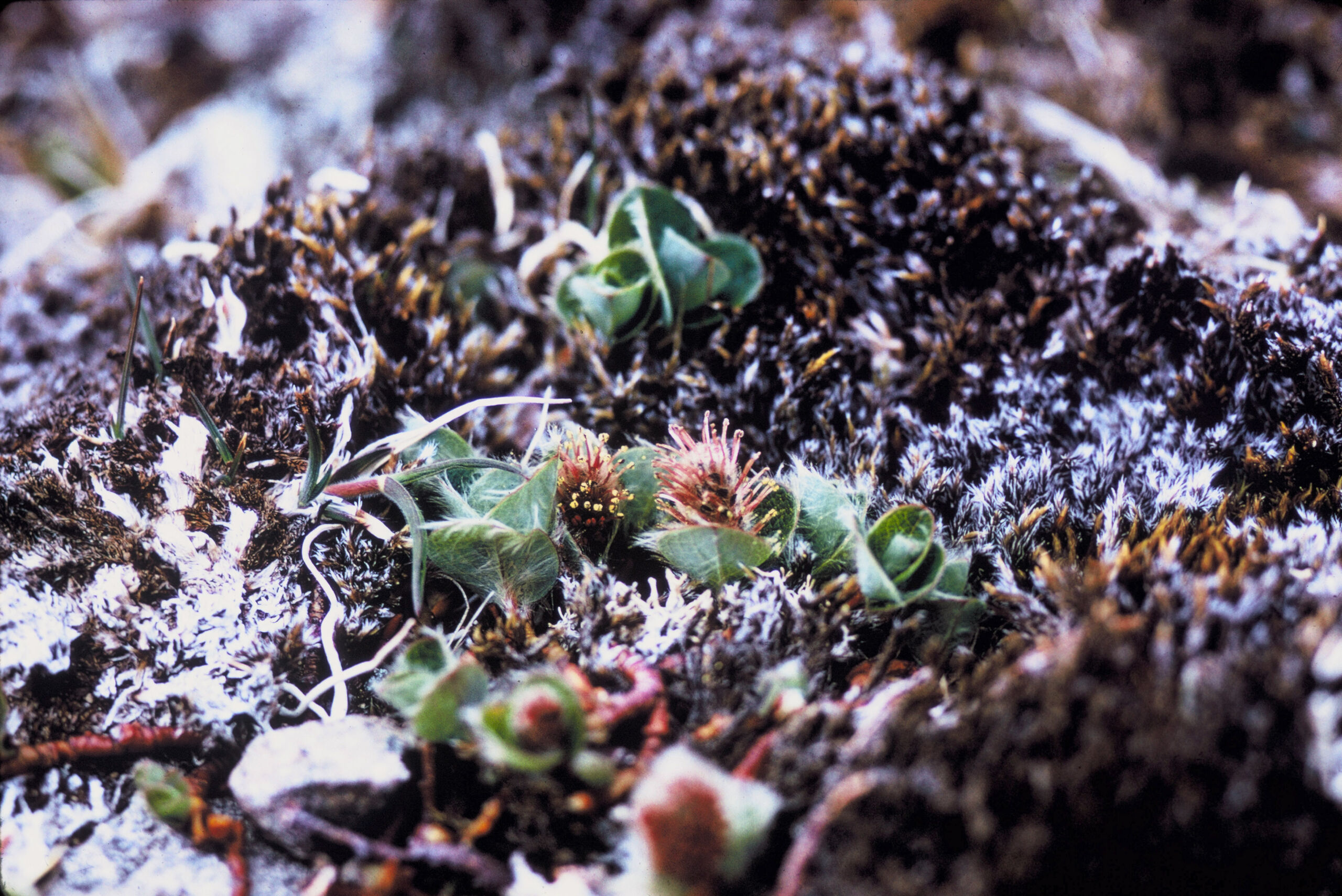
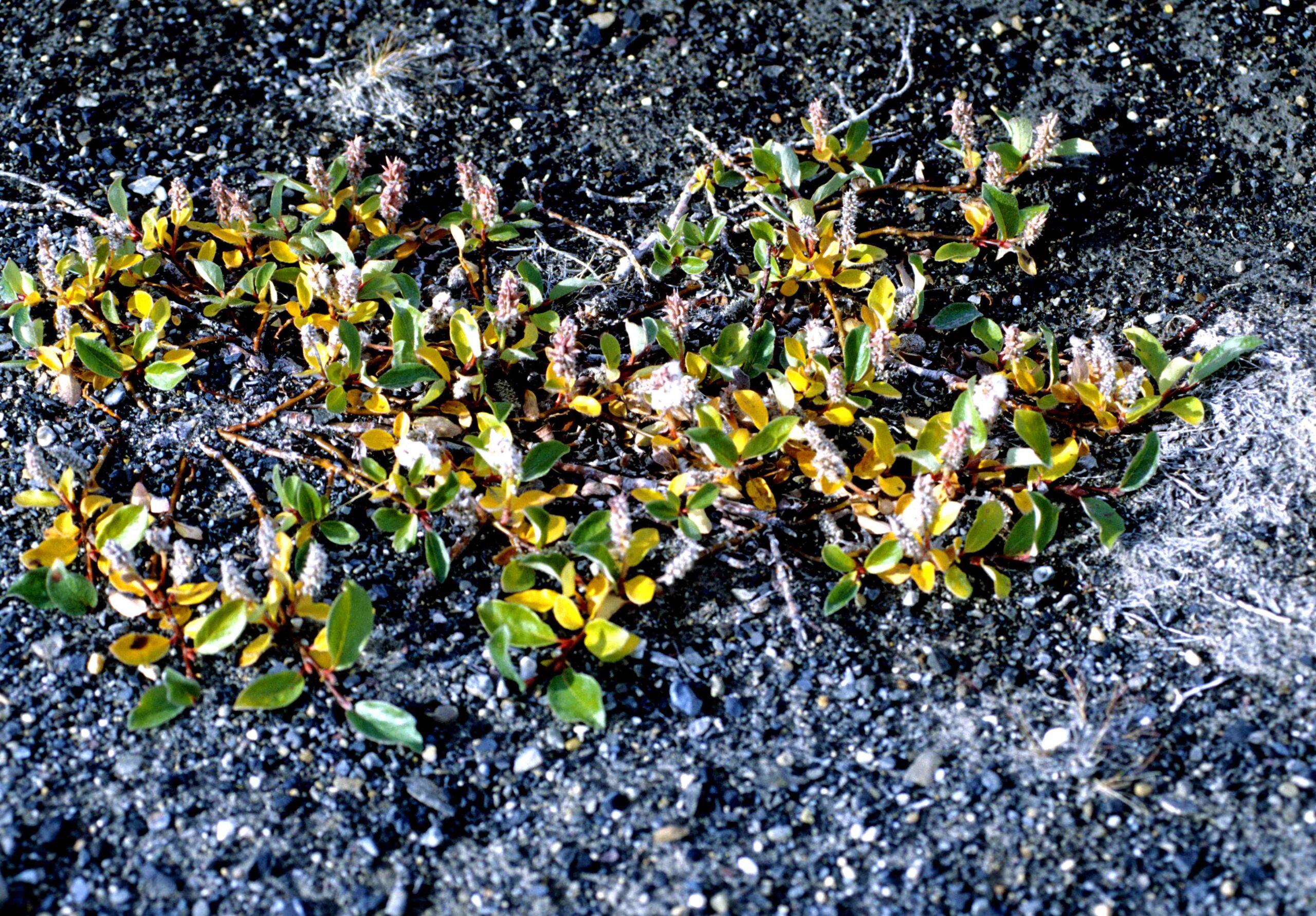
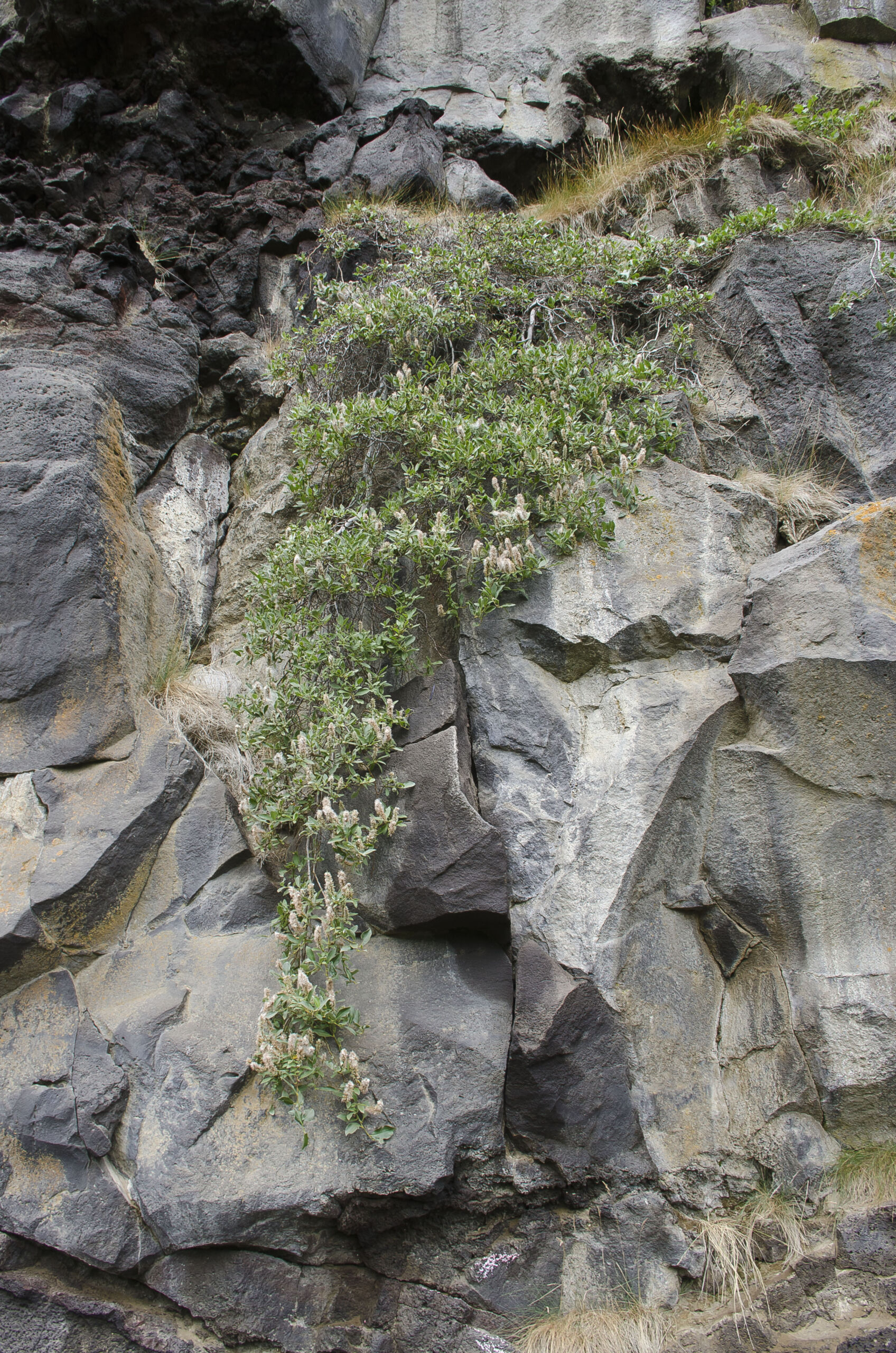
Arctic willow is the willow that looked at the Arctic, looked at the idea of being a tree, and said no thank you. It is a tiny, creeping, deciduous shrub in the willow family (Salicaceae), and it is typically only about 15 centimetres — six inches — tall, rarely reaching 25 centimetres, though plants in the Pacific Northwest can reach about 50 centimetres where the climate is kinder. That is not a stunted tree. That is the whole plan. Down at ground level, out of the wind, under the snow, is where an Arctic plant survives, and arctic willow has committed to that address completely, spreading as a low mat of trailing stems that hug the tundra like a green carpet somebody forgot to roll up.
The leaves are small, round, and shiny green, usually 1 to 4 centimetres long and about as broad, sometimes larger, and they are hairy, with long, silky, silvery hairs that catch the light and slow the wind across the leaf surface. In a landscape where the growing season is measured in weeks, a leaf that wastes water or heat is a leaf that does not come back next year, so the fuzz is not decoration — it is insulation and a windbreak in miniature. The stems are reddish-brown to yellow-brown, trailing or partly erect, and they root and spread where they touch ground, so one plant can become a broad patch over time, growing with a patience that borders on geological. One plant in eastern Greenland was found to be 236 years old, which means a willow you could step over has been alive longer than most countries, quietly adding a millimetre or two of growth in each brief summer and waiting out each winter under the snow.
Like other willows, arctic willow bears catkins, the slim, fuzzy flower spikes of the willow family, and like most willows it is dioecious, with male and female catkins on separate plants. The flowers are wind-pollinated and appear in the short Arctic summer, and the seeds that follow are tiny and tufted, built to ride the wind across open ground to the next patch of bare mineral soil. There is no showy bloom to wait for here, and no fruit to harvest — the flower is a catkin, the crop is survival, and the whole reproductive strategy is tuned to a place where a flower that needed a bee would be a flower that never got pollinated at all.
Its range is the reason for the superlative in the tagline. Arctic willow is circumpolar, ringing the Arctic Ocean, and it is the northernmost woody plant in the world, occurring far above the treeline all the way to the northern limit of land on the north coast of Greenland. It grows across the Canadian Arctic Archipelago up to Ellesmere Island, through the mainland northern territories, northern Quebec and Labrador, northern Alaska, northern Iceland, Fennoscandia, and northern Russia. South of the Arctic proper it follows the cold downhill in altitude rather than latitude, occurring on high alpine tundra south to the Sierra Nevada in California and the Rocky Mountains in New Mexico, and in Asia to Xinjiang in China. It is a plant of tundra and rocky moorland, but within that cold world it is remarkably unfussy about soil: wet sedge meadows, dry heath tundra, rocky ridges, sandy and gravelly river terraces, floodplains, stabilized dunes, snowbeds, pond margins, beaches, shale and gypsum ridges, talus slopes, moraines, poorly drained calcareous silty till, muddy salt flats, heavy clay, and dry calcareous gravel are all on its resume. What it will not tolerate is warmth. Fully dormant it can endure cold around minus 45 degrees Celsius, and it is a plant of long winters and short, cool summers — which brings us to the honest part of this guide.
And then there is the reason this guide exists: a butterfly, and a caterpillar eating what the tundra actually offers. Arctic willow is a recorded host plant for the Hecla Sulphur, whose guide lists it by name with its Latin, Salix arctica, in the Host plants section. The Hecla Sulphur caterpillar feeds mainly on arctic legumes, on milkvetch (Astragalus) species, and where those are absent it is also known to feed on arctic willow — a rare willow detour for a legume-feeding caterpillar, and a nice example of a tundra insect eating what is actually there rather than what a field guide says it should prefer. If you are reading this guide because of that butterfly, you have found the right plant, and you have also found a plant that almost nobody reading a Florida gardening site will ever grow, which is fine. Some guides exist because you should plant the plant. This one exists because the butterfly’s story is incomplete without it.
One plain-text disambiguation, because willows are a big genus and the names overlap. This guide claims Salix arctica only. The site’s willow genus guide covers willows as a group, and it does not cover this species in particular; the Carolina willow and black willow native profiles are different species, Salix caroliniana and Salix nigra, and neither of them is arctic willow. Garden plants sold as dwarf or creeping willows, and the many hybrid willows of the nursery trade, are also not this plant. If a label does not say Salix arctica, it is not arctic willow, and if a plant sold under this name grows two feet tall in a warm garden, it is almost certainly mislabeled — the real thing stays low, stays cold, and stays put.
How to grow
Let us be blunt, because a gardening guide that pretends otherwise would be lying to you: for nearly every reader of this site, arctic willow is not a plant to grow. It is a plant to know. It needs extreme cold, a short growing season, and cool summers, and it fails in warm, humid, lowland gardens — Florida included, emphatically included. A plant that endures minus 45 degrees dormant and thrives where summer averages stay cool does not have a Florida chapter, and this guide does not invent one. If you live in the far north, in Alaska or the high Arctic, or at high alpine elevation where summers stay cold and snow cover is reliable, you are gardening in its world already. If you live anywhere else, the honest growing advice is to admire it in photographs, in botanical gardens with alpine houses, and on the tundra itself, and to plant a willow suited to your climate instead.
For the few gardeners who are genuinely in its range, the site is the whole story. Full sun, open ground, and mineral soil — gravelly, sandy, or even clayey tundra soil, calcareous or acidic, wet or dry — suit it, and it wants the conditions of its home: cold winters with insulating snow cover, cool summers, and no coddling. It is not a plant for rich, amended, watered garden beds, because a rich bed in a warm climate is the opposite of tundra, and a plant adapted to nutrient-poor mineral soil does not thank you for compost. In an alpine trough or a rock garden in a genuinely cold climate, it can be grown as a creeping mat, given open ground to spread across and excellent drainage, with the understanding that it will grow slowly — very slowly — and that a plant adding a little growth each year is succeeding, not failing. Patience is not optional with a plant that can live 236 years. You are not growing a hedge. You are starting something that may outlive you.
Propagation follows the willow family pattern: seed, sown fresh on mineral soil, or cuttings, which willows root famously well — but that famous willow willingness to root is no help if the climate is wrong, and no amount of rooting hormone fixes a summer that stays above what this plant tolerates. Do not try to force it with shade cloth and ice and optimism. Plants have ranges for reasons, and arctic willow’s range is written in cold. The best propagation advice for most readers is to propagate the knowledge instead: learn to recognize it, so that when you see a low mat of round, silky-haired leaves on northern ground, you know you are looking at the northernmost woody plant on Earth, and not at some anonymous groundcover.
Florida note, stated plainly rather than softened: arctic willow is not a Florida plant, not a south Florida plant, not a north Florida plant, and not a plant to attempt in a Florida garden, container, or greenhouse as a novelty. Florida’s summers are far too warm and long, its winters far too short and mild, and its humidity far too high for a circumpolar tundra shrub. Nothing in this guide should be read as a suggestion to try. Florida gardeners who want a willow should look to the willows native to warm climates, and Florida gardeners who want to help the Hecla Sulphur should know that the butterfly itself is a creature of the far north, not a Florida garden visitor. The connection here is ecological, not horticultural, and saying so is the honest version of this guide.
Water & feeding
Water, for arctic willow, is a question of place, not of a watering can. In its home ground it grows in everything from wet sedge meadows and pond margins to dry heath tundra and gravel ridges, and it handles both ends of that range because tundra water is cold water, arriving as snowmelt and staying cool. What it does not handle is warm, stagnant water in a hot climate, or a dried-out root zone in a heat wave — both of which are ways of saying the same thing, which is that it does not handle heat. In a genuinely cold alpine garden, natural rainfall and snowmelt are usually the whole watering program, and the grower’s job is drainage, not irrigation: mineral soil that drains, open ground that does not bake, and snow cover in winter that insulates the low stems from the worst wind and cold.
Feeding: none, in any normal sense. Arctic willow grows in nutrient-poor mineral soils, on gravel, till, shale, and sand, and it is built for scarcity, not for fertility. Fertilizer does not make it grow faster in any useful way; it mostly makes soft growth that a cold climate then punishes. The plant’s real feeding strategy is time: a long life, slow growth, and a root system that explores mineral ground year after year, storing energy for the brief burst of leaf and catkin each summer. The soil science here is humbling. Tundra soil is thin, cold, and slow to cycle nutrients, and the microbes and fungi of that soil work at a pace set by temperature, not by ambition. Arctic willow is not fighting that system. It is the system, perfected: a woody plant that asks almost nothing of its soil and gives back leaf litter, root mass, and, over centuries, a mat of living ground in a place where almost nothing else woody can live at all.
That mat is also wildlife infrastructure, which is the other half of why this plant matters. Arctic willow is browsed by muskoxen, caribou, Arctic hares, and ptarmigan, and its low, dense growth shelters small tundra animals from wind and predators. It is not a garden ornamental with a wildlife bonus. It is a foundation species of the tundra food web, the green carpet that carries large herbivores through a landscape with almost no other woody food, and the caterpillar of the Hecla Sulphur is only the smallest and most specialized of its eaters. A plant that feeds muskoxen and a butterfly caterpillar at the same time, across the top of the world, has earned its superlative.
Common problems
- Warmth. The number-one problem, by a wide margin, and it is not fixable in a warm garden. Leaf scorch, failure to go properly dormant, and death in warm summers are the plant telling you it is out of its range. Do not plant it where summers are warm.
- Wrong plant, right name. Nursery plants sold as arctic willow that grow tall in warm climates are mislabeled. The real Salix arctica stays low and stays cold; check the Latin and the source before you believe a label.
- Rich, wet, warm soil. Compost-rich beds and warm, stagnant water are the opposite of mineral tundra soil. In a cold alpine trough, keep the soil mineral and draining, not rich and soggy.
- Impatience. This is a plant that grows millimetres to centimetres a year and can live for centuries. Slow growth is normal growth. A plant that has not doubled in a season is not failing.
- Trampling and disturbance. Tundra mats are fragile despite their toughness, and a low mat crushed by feet or vehicles recovers slowly. On the tundra, stay on established paths and leave the mats alone.
- Climate warming. The long-term threat is not a garden pest but a warming Arctic, as taller shrubs move north and shade out low tundra plants. That is a conservation problem, not a pruning problem, and it is worth naming honestly.
Harvest
Arctic willow’s harvest is not a crop in the garden sense, and this guide does not pretend otherwise. There is no fruit to pick, no leaf to brew, and no timber to cut — a six-inch shrub is not a timber tree, and nobody should be harvesting wild tundra mats for a garden experiment. The harvest, if the word must be used, is ecological and observational: the knowledge that the mat underfoot is a centuries-old woody plant, the sight of catkins in a brief Arctic summer, and the understanding that a butterfly caterpillar on the far side of the continent eats this plant when its preferred legumes are absent. Collect seed only where it is legal and appropriate, and only if you are genuinely in its range and genuinely equipped to grow it; otherwise, leave the tundra as you found it.
The simplest harvest is a walk, where walking is possible and permitted, across ground where arctic willow grows, in summer, when the mats are green and the catkins are out and the tundra is briefly, intensely alive. Look low. The northernmost woody plant on Earth is not going to wave at you from eye level. It is at your feet, round-leaved, silky-haired, and older than you are, and it has been doing this since before there were gardens to write guides for. That is the crop, and it arrives without a single spray, because spraying the tundra would be absurd, and because nothing in this plant’s world needs your intervention — only your respect, and your willingness to leave it to its cold.
Browse all plant & pest guides
Propagation
Arctic willow, Salix arctica, is not a plant to grow from a seed packet, and this section will not pretend otherwise. Its seed is tiny, feather-light, and short-lived — viable for days rather than seasons in the willow way — and it must be surface-sown the moment it is ripe, on moist, open ground, to stand any chance at all. Add to that the plant’s sex life: arctic willow is dioecious, with male and female catkins on separate plants, so a lone plant sets no seed in the first place, and a seed-grown plant keeps its sex a secret until it flowers. Seed is how the tundra does it. It is not how a home gardener should.
Cuttings are the honest route, and willows are famously obliging about them. Take mature wood of the current year’s growth or older — late autumn is the traditional best time — or half-ripe wood in early to mid summer in a sheltered frame. Keep the rooting medium moist, mulch against weeds, and plant out while plants are still small, since young willows establish best. Creeping mats can also be divided or layered where a stem already touches ground and roots.
One warning that belongs in every paragraph about this plant: do not go collecting wild tundra mats, and do not attempt this plant in Florida. Arctic willow belongs to zones 1–3, to arctic and high-alpine ground, and Florida heat and humidity are simply outside what it can survive. If you are not in its climate, the right propagation is the one this guide already recommends — propagate the knowledge, not the plant.
Varieties
No named garden varieties or cultivars of arctic willow were verified for this guide. The plant is the straight species, Salix arctica, and its variation in height — typically about 15 centimetres, rarely 25, reaching about 50 centimetres in the Pacific Northwest — is a response to climate and site, not a catalog of cultivars. Its relatives are not varieties either: the site’s willow genus guide covers willows as a group, Carolina willow (Salix caroliniana) and black willow (Salix nigra) are different species, and nursery dwarf willows and willow hybrids sold under similar names are different plants altogether. Grow the species by its Latin name, in its climate, or do not grow it at all — and if you are not in its climate, knowing it is enough.