
🌾 Aristida
What it looks like
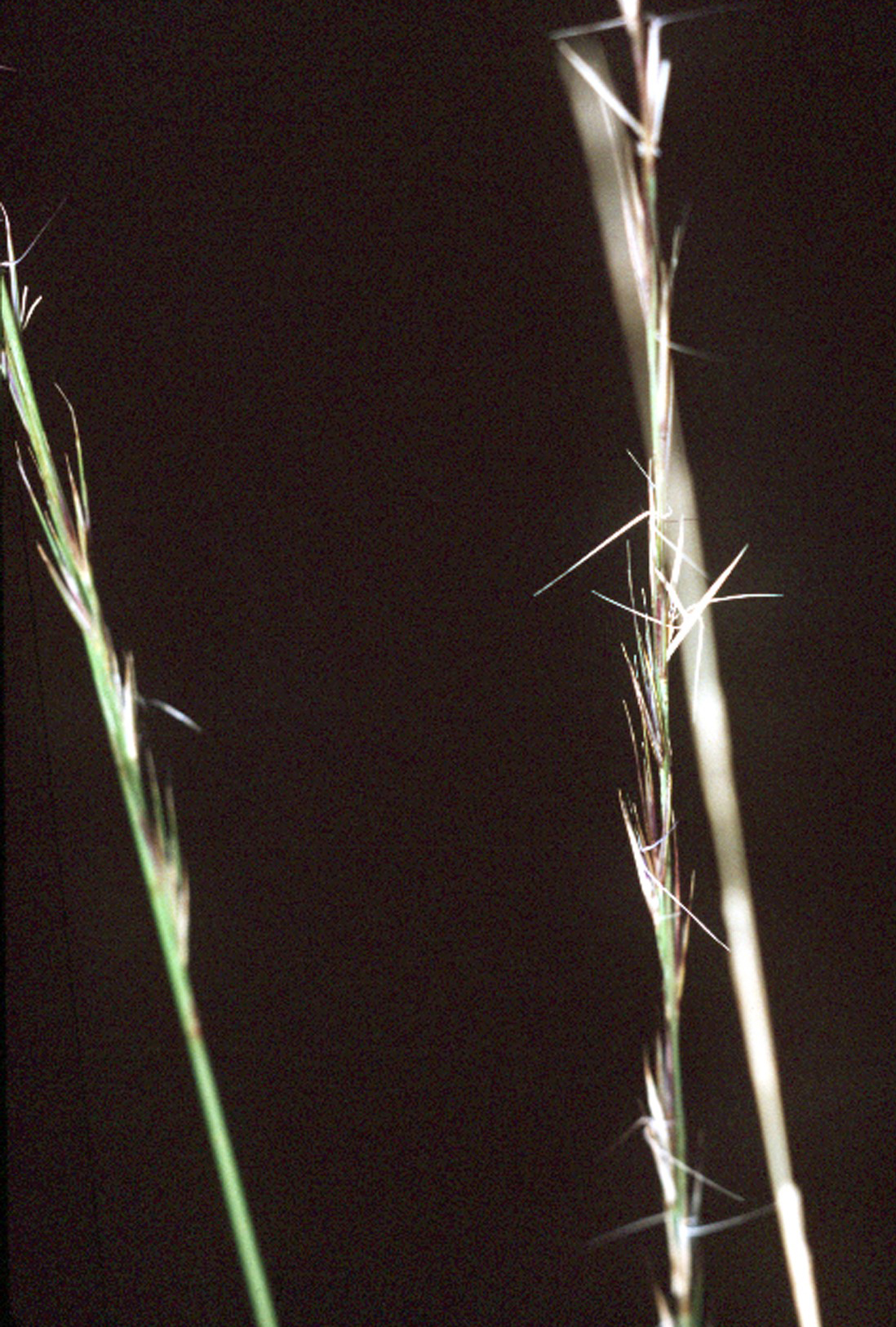
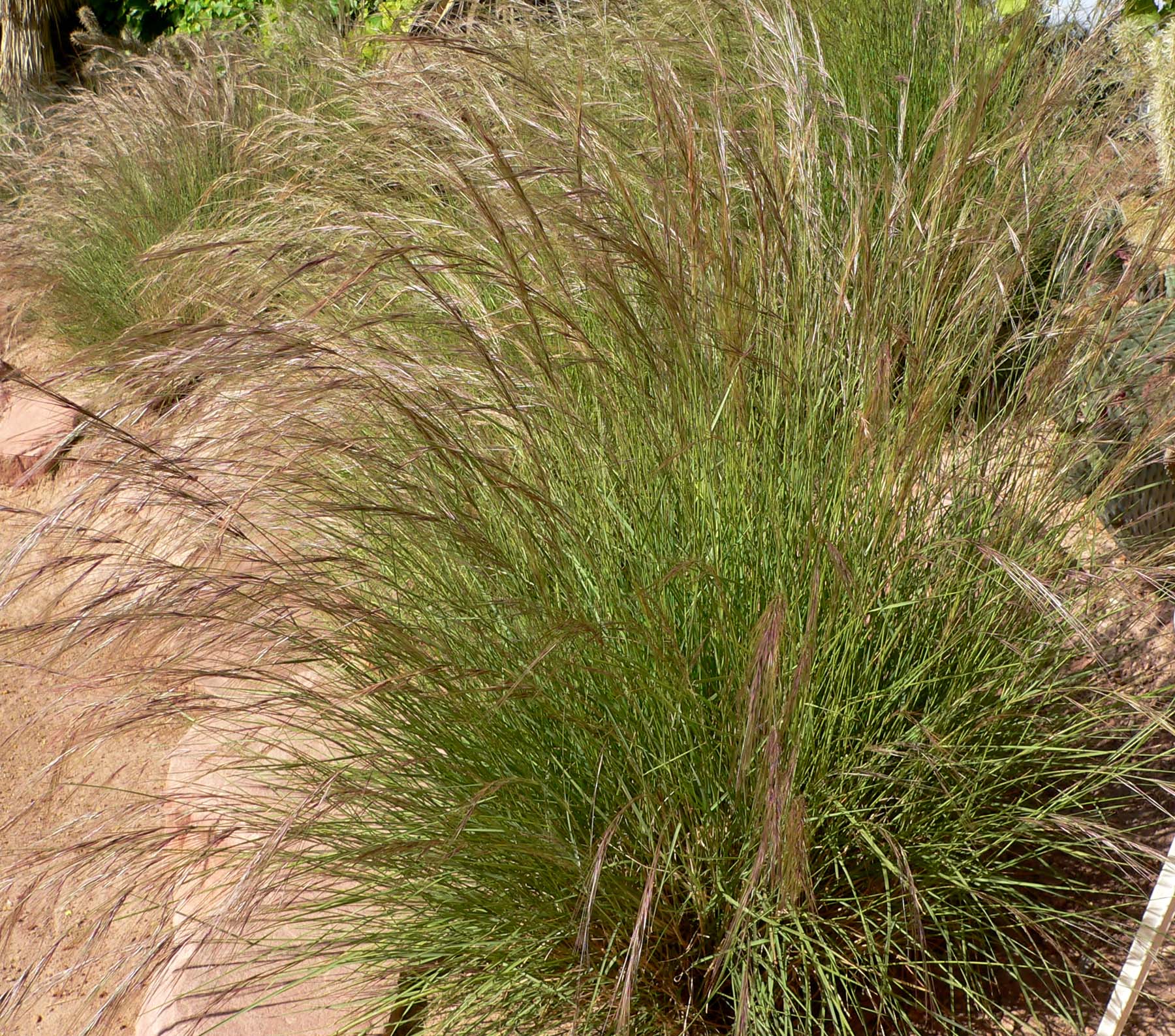
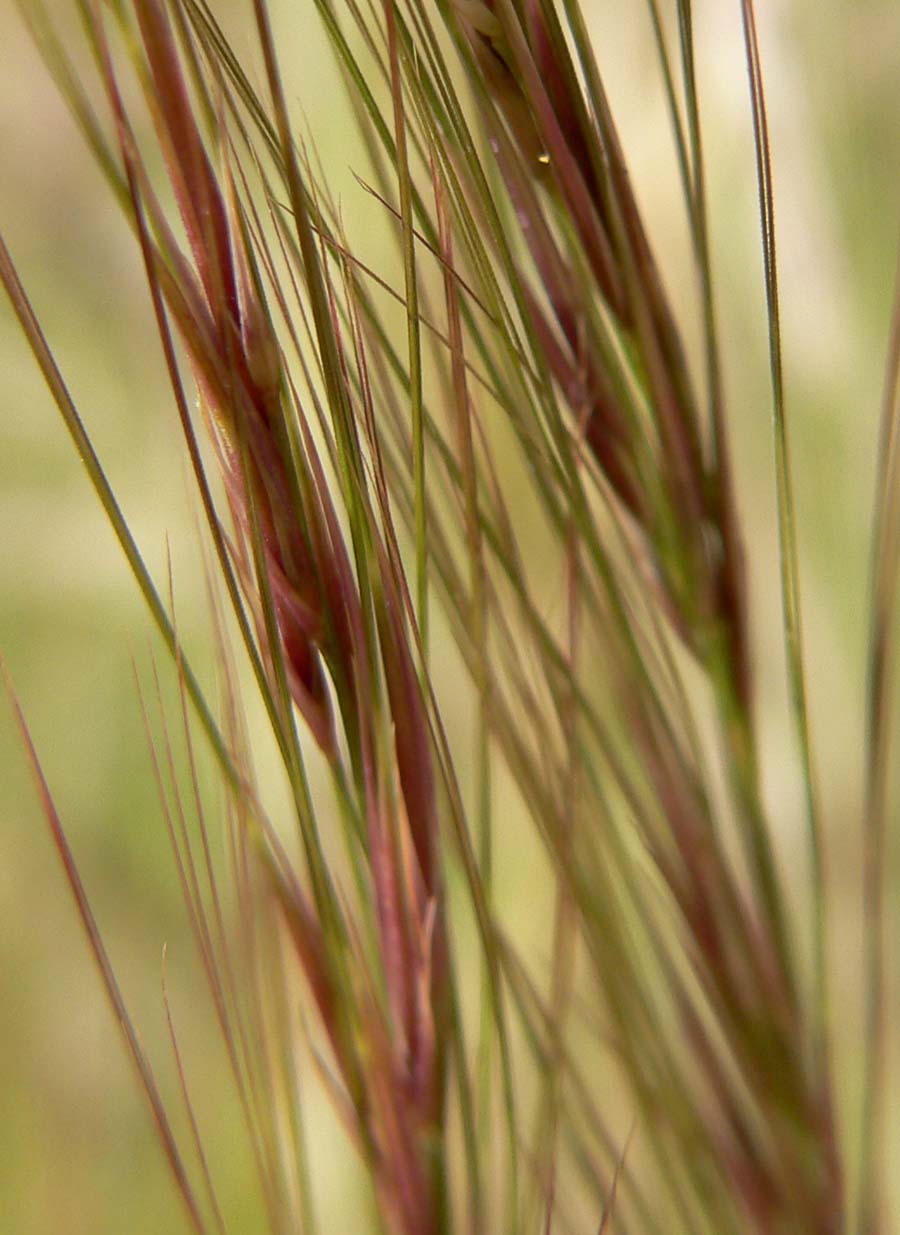
Aristida is the genus of the threeawns, and the name is the field mark. These are grasses in the grass family (Poaceae), a large genus of around 300 species found worldwide, mostly in dry, warm, open country, and they are called threeawns because each floret — each little grass flower — carries an awn that splits into three branches at the tip, like a tiny trident. Once you have seen a threeawn seed head backlit in late summer, you will never unsee it: a narrow, airy panicle of spikelets, each one trailing three fine, spreading awns that catch the light and tremble in the slightest breeze, and that also catch on fur, socks, and anything else that brushes past, which is exactly how the plant travels.
The plants themselves are mostly perennial bunchgrasses, densely tufted, with narrow leaves that are often rolled inward — involute, in botanical language — which is a drought trick: a rolled leaf loses less water than a flat one, and in the dry places where Aristida lives, every drop of water saved is a drop earned. Purple threeawn (Aristida purpurea), the best-known western species, is a short-lived native perennial warm-season bunchgrass with densely tufted culms averaging 6 to 30 inches tall, mostly basal leaves with blades 1 to 10 inches long and less than 2 millimetres wide, and a narrow panicle 2 to 8 inches long with reddish to purple spikelets. The floret bears a twisted awn column that divides into three awns three-quarters to 4 inches long, which is a long awn for a small grass, and the reason the seed heads look so feathery and the reason grazing animals learn to respect them. Other species vary — some annual, some taller, some shorter — but the pattern holds: a tuft, narrow leaves, and a seed head with three awns per floret.
Identification, if you are trying to tell one threeawn from another, comes down to the awns and the details around them: the relative lengths of the three branches, how much they twist with age, the length of the glumes that wrap the spikelet, the hairs at the leaf collar, and the shape of the panicle, whether it is narrow and contracted or loose and open. Purple threeawn, for example, can be picked out by its long hairs at the leaf collar, and it is a variable species with several recognized varieties, which is a polite way of saying that threeawn identification is a hobby for patient people with hand lenses. For the gardener, the genus-level identification is usually enough: if it is a dry-country bunchgrass with three awns per floret, you are in Aristida, and the exact species is a question for the local flora, not for the planting plan.
The genus is also a grass of ecological work, not just of looks. Aristida species are colonizers of disturbed and overgrazed ground, plants that move into dry, sandy, rocky places and hold them, with fibrous root systems that stabilize soil and high seed production that lets them re-establish after fire and drought. They increase on overgrazed ranges, which tells you two things at once: they tolerate abuse, and they are not the grass livestock prefer. They are grazed mostly in spring when the leaves are green and young, and the long awns can irritate livestock and contaminate wool later in the season, which is why a threeawn meadow is a wildlife and erosion-control planting first and a pasture second. Members of the genus have Kranz anatomy and the C4 photosynthetic pathway, the warm-season grass machinery that thrives in heat and bright light and sips water compared with cool-season grasses — another way of saying these are grasses built for sun and drought, not for lawns and irrigation.
And then there is the reason this guide exists: a skipper, and a grass it eats. Aristida is a recorded host genus for the Dotted Skipper, whose guide lists southeastern grasses including wiregrass (Aristida species) in the Host plants section — the exact genus-level form this guide covers. Grass skippers lay their eggs on grasses and their caterpillars eat grass blades, and a genus guide is the honest unit here, because the butterfly’s menu is written at the genus level: Aristida species, not one named species. If you are reading this guide because of that skipper, you have found the right genus, and the right advice is to grow the Aristida species native to your region, not to chase a single species from another part of the country.
One plain-text disambiguation, because the common names in this genus are a tangle and the site already has one of them. This guide claims Aristida species as a genus only. The site’s native-plant profile for wiregrass covers one species, Aristida stricta, the pineland threeawn of the southeastern coastal plain, and that species profile does not cover the genus; this genus guide does not cover that species in particular, and the two are meant to coexist, with the species profile for the Florida plant and this guide for the genus. The name wiregrass is also used for other grasses in other regions, and purple threeawn (Aristida purpurea) is sometimes called wiregrass, red threeawn, dogtown grass, or prairie threeawn, depending on where you are — which is why this guide leans on Latin names and why you should buy any threeawn by its Latin, not by a common name that might mean three different plants in three different states.
How to grow
Aristida species are, by reputation and by design, plants for dry sun and poor soil, and the first rule of growing them is to stop trying to improve their lives. Full sun is non-negotiable — these are open-country grasses, and shade makes them thin and floppy — and the soil should be dry, sandy, and low in fertility, with excellent drainage. They grow well in sandy and poor soils within their native ranges, on rocky hills, sandy plains, and sometimes clay, and they are used in low-water landscaping, mixed beds, borders, and native gardens, especially in the Southwest, where their airy, silvery-purple texture and movement are the whole point. Plant them among boulders, cacti, and other dry-country plants, and they look like they belong there, because they do.
Plant from seed or from container-grown plants, in spring or early summer when the soil is warm — these are warm-season grasses, and they want warm soil to get going — and space the clumps so each bunchgrass has room to reach its full width, with air around it so the seed heads can move in the wind. Water to establish, then back off: once established, purple threeawn in a California garden wants summer irrigation at most once a month, and many Aristida species want even less. Overwatering is the classic mistake, producing soft, leggy growth and root problems in soil that should be draining fast. Do not fertilize heavily, either. A grass adapted to poor soil does not need a feeding program, and rich soil mostly produces rank growth that flops and needs cutting back. A light topdressing of compost at planting, if your soil is truly terrible, is the outer limit of generosity, and for most dry, sandy sites it is unnecessary.
Management is mostly a matter of timing. Leave the seed heads standing through fall and winter, because they are the ornamental display and the wildlife food — threeawn seeds feed some songbirds, and the tufts provide cover for small mammals — and cut the clumps back in late winter or early spring before new growth starts, if you cut them at all. Many gardeners leave the old growth as mulch and habitat and only tidy the edges. Be aware of two practical truths before you plant threeawns near a path or a patio: the awns are sharp, and they can be a nuisance in areas with heavy foot traffic, catching on clothing and fur; and the dry, fine foliage of these grasses is flammable, so do not plant them close to structures or in wildfire-prone areas where dry grass against a building is a hazard. Site them in open ground, away from the house and the dog run, and they are no trouble at all.
Florida note, stated honestly rather than hopefully: most Aristida species are a poor Florida bet, and this guide does not pretend otherwise. The genus is a dry-country genus, and Florida’s humidity, summer rain, and wet soils are the opposite of the dry, sandy, well-drained conditions threeawns prefer. The exception is the one species already on the site: wiregrass (Aristida stricta), the pineland threeawn, which is a genuine southeastern coastal plain native of sandhills and flatwoods, and the Aristida that Florida gardeners should grow if they want a threeawn at all. North and central Florida gardeners with dry, sandy, open ground and a fire-adapted landscape can grow wiregrass as a native, and it is the Aristida of the Dotted Skipper’s southeastern range. South Florida gardeners, and anyone with rich, irrigated, or poorly drained soil, should treat the rest of the genus as a plant to admire in western gardens, not to attempt at home. Buying a western purple threeawn for a Florida bed is buying a plant for a climate it does not live in, and no amount of drainage fixes Florida’s humidity.
Water & feeding
Water is the whole game with Aristida, and the game is how little you can get away with. These are dry-country grasses with C4 photosynthesis, narrow rolled leaves, and deep, fibrous root systems, and they are built to make a little water go a long way. In their native habitats they grow on dry, sandy, rocky ground with low rainfall, and in the garden they want the same treatment: water to establish in the first season, then water sparingly, letting the soil dry out between waterings, and in a genuinely dry climate, hardly at all. Purple threeawn’s California guidance — summer irrigation at most once a month once established — is a good rule of thumb for the genus, and many species will be happy with less. If your threeawn is lush, green, and floppy, you are watering it too much. A threeawn that looks a little wiry, a little purple, and a little windswept is a threeawn that is happy.
Feeding: minimal to none. Aristida species grow in low-fertility soils and are used for erosion control and regeneration precisely because they do not need rich ground. A spring topdressing of compost is the right scale of feeding, if you feed at all, and a heavy fertilizer program is the wrong scale — it produces soft growth that flops, needs cutting, and loses the airy, upright form that makes threeawns worth growing. The soil science here is the dry-country story: sandy, low-organic-matter soils cycle nutrients slowly, and the microbes and fungi of those soils are adapted to scarcity, not abundance. A threeawn’s fibrous roots explore that soil widely, stabilize it against erosion, and return organic matter slowly as leaves and seed heads break down, building soil over years rather than weeks. Planting a threeawn in dry ground is therefore not just decorating a bed — it is installing a soil-holding, seed-scattering, drought-proof grass that asks for almost nothing and gives back a meadow.
One more water truth, because it decides whether a threeawn lives or dies in your garden: drainage matters more than rainfall. A threeawn in dry soil with occasional rain will thrive, and a threeawn in wet, poorly drained soil with the same rainfall will rot. If your soil holds water, if your bed stays soggy after rain, or if your climate is humid and wet through summer, the genus is telling you, politely, to pick a different grass. Drainage first, water second, fertilizer never — that is the whole feeding program, and it fits on a plant label, which is more than can be said for most garden advice.
Common problems
- Overwatering. The number-one problem, by a wide margin. Soft, leggy growth and root problems in wet soil usually mean too much water, not too little. Water to establish, then back off — or do not plant it in wet ground.
- Too much shade. Threeawns are full-sun grasses. In shade they grow thin and flop, and they lose the upright, airy form that makes them worth growing.
- Rich soil. Heavy fertilizer and compost-rich beds produce rank growth that flops and needs cutting. These are poor-soil grasses; feed them like it.
- Sharp awns. The three-parted awns catch on clothing, fur, and skin, and can irritate livestock and contaminate wool. Site threeawns away from paths, patios, and animal runs.
- Flammability. Dry, fine threeawn foliage is highly flammable. Do not plant it close to structures or in wildfire-prone areas, and keep dry thatch away from buildings.
- Self-seeding. Threeawns seed readily, and like other grasses they can be mildly invasive in the garden. Deadhead if you do not want volunteers, or leave the seed heads for birds and accept the seedlings.
- Wrong species, wrong region. A western threeawn in a humid garden, or a southeastern wiregrass in a desert bed, is a plant out of its range. Buy the Aristida species native to your region, by its Latin name.
Harvest
Aristida’s harvest is seed, dried seed heads, and habitat — in that order, and with no food or medicine claims attached. This is not a food crop, and no part of this guide recommends eating or brewing any part of it. If you want seed, collect the panicles when the awns are dry and the spikelets come away easily, and sow them on dry, sandy soil in warm weather, barely covered, because these are grasses that expect open ground and sun, not a rich seed bed. If you want dried arrangements, cut the panicles when the awns are fully colored — purple threeawn’s reddish-purple seed heads are the showiest of the genus — and dry them upside down in a dark, airy place, away from anything the awns can catch on, which is everything.
The simplest harvest, though, is a dry garden in late summer with no agenda at all: tufts of narrow leaves, airy seed heads trembling in the wind, three awns per floret catching the light, and the knowledge that the grass under your eye is holding soil, feeding birds, and hosting a skipper, all on almost no water. Leave most plants standing through the season for the wildlife, cut back in late winter before new growth, and let the genus come back tougher next spring. That is the crop, and it arrives without a single spray — because spraying a dry-country grass would kill the very insects it feeds, and because a plant that thrives on neglect does not need your intervention, only your restraint.
Browse all plant & pest guides
Saving seeds
Aristida, the threeawns, are grasses that wear their seed-saving instructions on their sleeves — or rather, on their forks. Each little floret carries three bristly awns, which is how the genus got its common name and how you will know the seed is ripe: when the panicles turn tan, brown, or in the case of purple threeawn, a showy reddish-purple, and the spikelets come away easily in your hand, the seed is ready. Cut whole panicles into a paper bag, not a cloth one — the awns catch on everything, including your sleeves, your socks, and any fabric within reach. Gloves are not a fashion choice here; they are how you keep the harvest in the bag instead of in your skin.
Dry the panicles in the bag in an airy spot, then rub and shake them to free the seed and winnow away the chaff. You do not need to strip every awn off: the awns are not decoration, and in nature they help the seed catch in the soil and work its way down into it. Dry the cleaned seed thoroughly before storage — spread it thin for a few days — then seal it in a labelled envelope or jar, airtight, cool, and dark, with a desiccant packet if you have one. Florida humidity is the enemy of stored grass seed just as it is of every other seed: damp storage in a humid house will quietly kill it before sowing day.
Sowing is refreshingly undemanding, which suits a genus that thrives on neglect. Sow in warm weather on dry, sandy, lean soil in full sun, barely covered or pressed into the surface — these are grasses that expect open ground and sun, not a rich, pampered seed bed. Keep the soil lightly moist until seedlings are up, then back off: overwatering and rich soil are the two kindnesses threeawns least appreciate. Germination is usually a matter of weeks in warm conditions, though it varies by species, and some species with hard seed coats germinate better after a light rub with sandpaper to nick the coat — try that only if a first sowing is sluggish, not as a default.
Two genus-level truths to carry with you. First, threeawns self-sow freely, so if you do not want volunteers, cut the panicles before they shatter — and if you do want more plants, the volunteers themselves can be dug up and moved while small. Second, seed gives you the species, not a guaranteed copy of one particular clump: for an exact perennial clump, divide it in early spring or autumn instead. And because this is a genus guide, remember the annuals and perennials differ — seed from an annual species gives you annual plants, however much you wish otherwise. Label the envelope with the species name, not just “threeawn,” or next year’s garden will be a guessing game.
Species
Aristida is a large genus of around 300 species, and no guide can list them all, so this section names the species a gardener or butterfly-watcher is most likely to meet, in plain text. Purple threeawn (Aristida purpurea) is the widespread western species, a perennial bunchgrass of plains, deserts, and mountains across the western two-thirds of the United States, southern Canada, and northern Mexico, with reddish-purple spikelets and several recognized varieties. Wiregrass (Aristida stricta) is the southeastern pineland threeawn, the Aristida of sandhills and flatwoods in the Carolinas and the wider coastal plain, and the species covered separately by the site’s native-plant profile — it is listed here for completeness, not claimed by this genus guide. California threeawn (Aristida californica) is a clump-forming, hairy species of the Mojave and California deserts. Forked threeawn (Aristida basiramea) is an annual of open ground in the central and eastern United States. Arrowfeather threeawn (Aristida purpurascens) is an eastern species of disturbed soils and open ground. Sixawn threeawn (Aristida adscensionis) is a widespread annual of warm, dry ground. Grow the species native to your region, by its Latin name, and let the genus guide be the map, not the destination.