
🌳 Arizona Rosewood
What it looks like
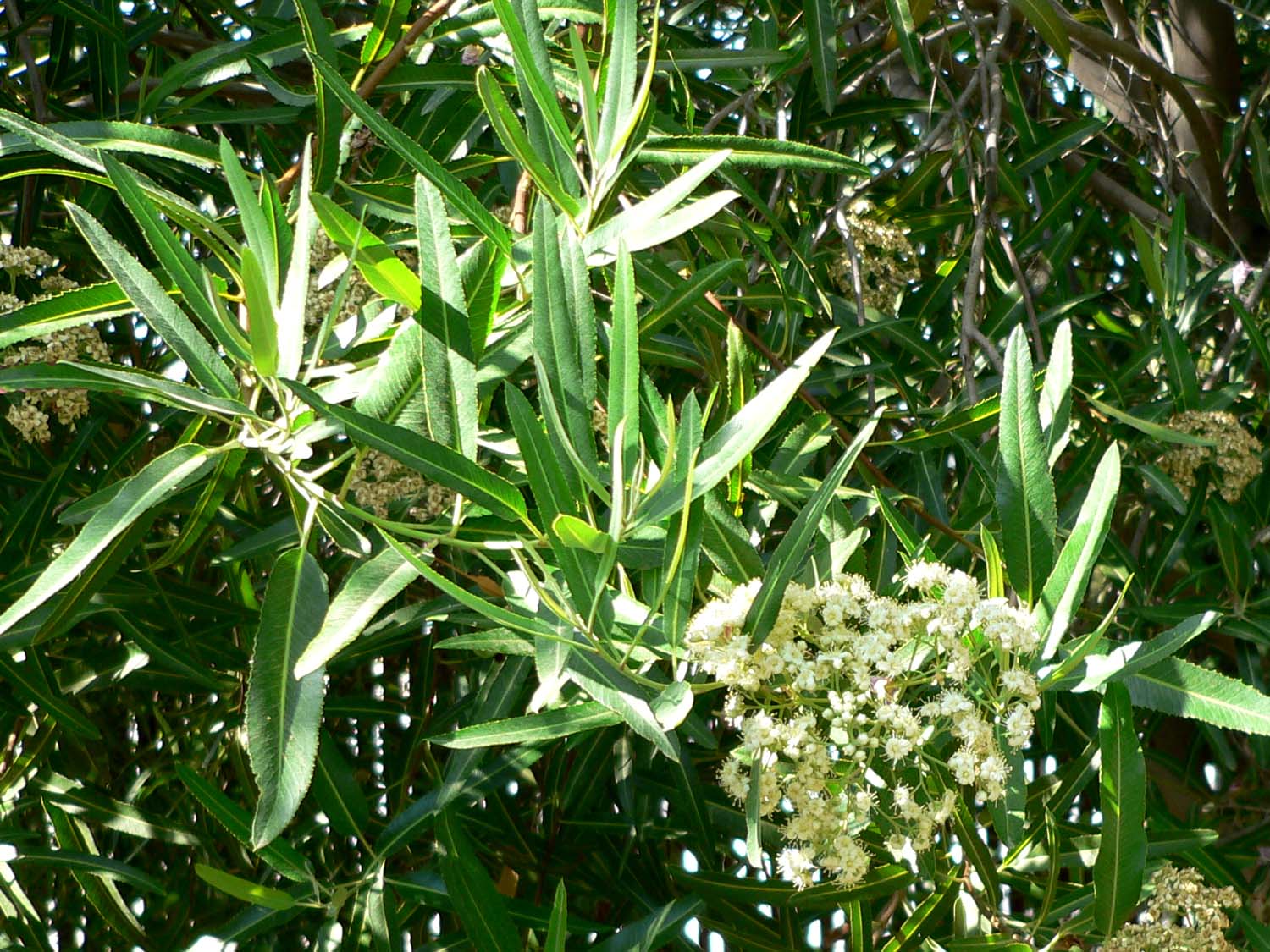
Arizona rosewood is an evergreen shrub or small tree of the rose family, Rosaceae, native to the desert mountains of the Southwest — and the first thing to know about it is that it is not a rose, it is not a rosewood of the tropical timber trade, and it is not from California despite the Latin name californica. It is a desert plant that got a confusing name and then spent a century living it down, and it does so with considerable style: dense, dark green, leathery foliage year-round, a tidy vase-shaped habit, and a toughness that makes it one of the most reliable native shrubs for a hot, dry garden.
Identification starts with the leaves, which look a lot like oleander leaves and are the reason this plant gets recommended as a native alternative to oleander. They are alternate, simple, and evergreen, lanceolate — narrow and pointed, like a spearhead — 2 to 4 inches long, leathery, shiny dark green above and paler below, with widely spaced, sharp, fine teeth along the margin and a pinkish petiole, the little stalk that joins leaf to stem. The resemblance to oleander is real and useful in the field, but the differences matter: Arizona rosewood’s leaves are shorter and narrower than oleander’s, its flowers are small and white rather than large and showy, and unlike oleander it is not lethally poisonous to everything that touches it. If the shrub looks like oleander but the flowers are tiny white clusters, you are probably looking at rosewood.
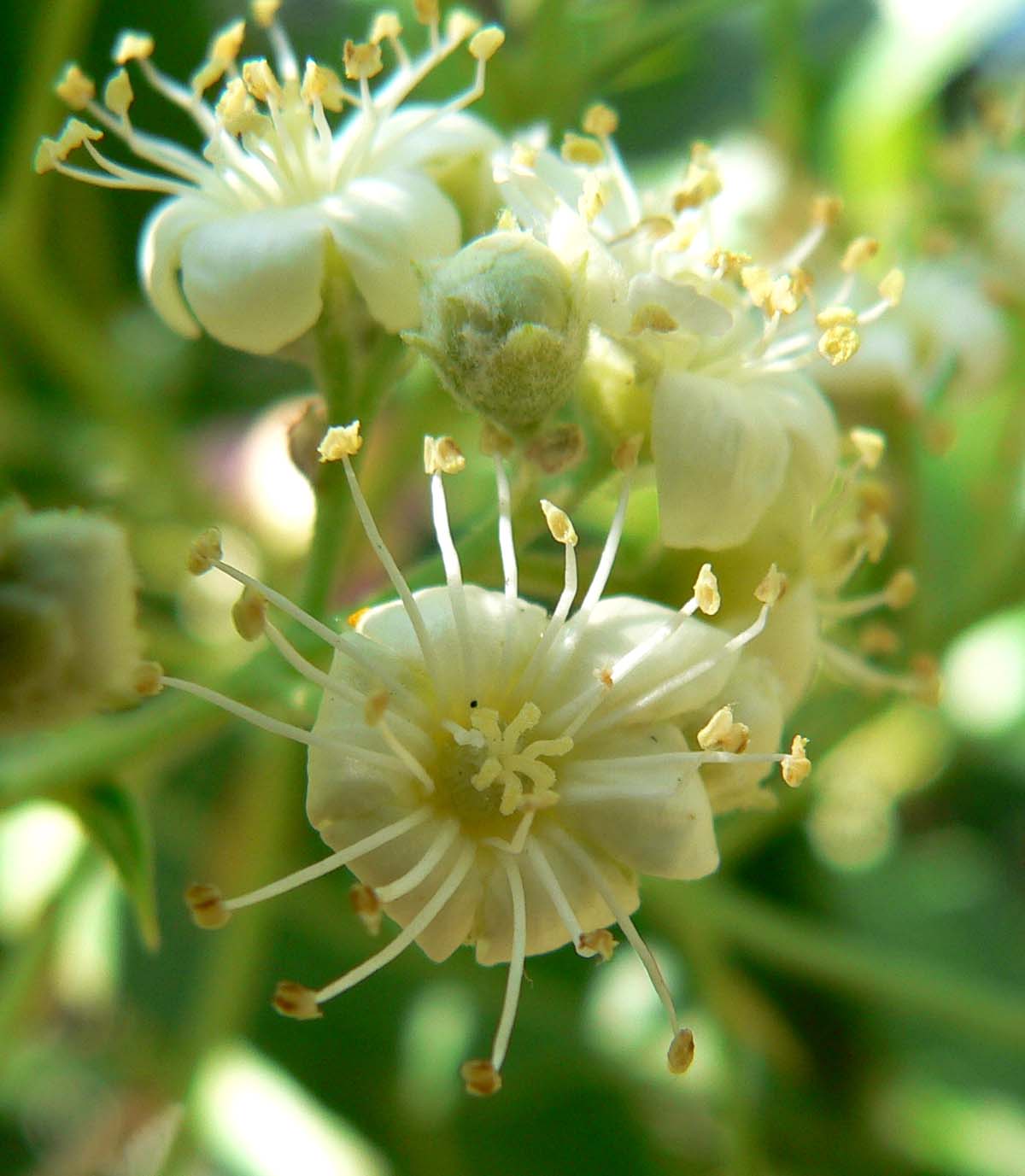
The flowers come in late spring and into summer, in flat, terminal clusters — corymbs — of small white flowers, each only about a third of an inch across, with five white petals. They are not a billboard bloom; they are a close-up bloom, subtle up close and soft from a distance, and they attract bees and butterflies while they last. The fruit follows as clusters of small, woody, reddish-brown capsules, about a quarter of an inch across, persistent on the plant, and the seeds inside attract birds. The twigs are slender and reddish-brown, with a fine gray velvety fuzz on new growth, and the bark is smooth and reddish-gray with horizontal lenticels when young, becoming scaly and darker with age. The whole plant reads as tidy, dense, and dark green — a structured evergreen in a landscape where most natives are either gray, spiny, or leafless for half the year.
Size depends on how it is grown, and sources disagree in the usual way, so here is the honest range: as a shrub it runs about 12 feet tall by 10 feet wide; trained as a single-trunked small tree it reaches about 15 feet; left alone in the wild it can reach 20 feet, and some desert-garden sources credit it with 20 to 30 feet. Gardeners should plan for a 12- to 15-foot shrub or small tree and treat anything taller as a bonus. For butterflies, Arizona rosewood is a host plant, not just a nectar plant: it is a larval host for the two-tailed swallowtail, the big yellow-and-black tiger swallowtail that is the state butterfly of Arizona. In the butterfly guides it appears as a host plant for the two-tailed swallowtail, listed under the bare common name “Arizona rosewood” — and that bare name is exactly why this guide exists, because the butterfly guide names no Latin and the Latin had to be verified from the swallowtail connection itself. The caterpillars feed on the leaves, and the adults that emerge are among the largest butterflies in North America, which is a good return on a shrub that asks for almost nothing.
Do not confuse this plant with its rosewood cousins, and do not let the Latin mislead you about where it grows. Vauquelinia californica is native to southern Arizona and southwestern New Mexico, in Madrean sky-island habitats, and south into the Peninsular Ranges of Baja California and Sonora in northwestern Mexico — not to California proper, despite californica, and not to the low desert floor. It grows in washes, on rocky slopes, and in gravelly foothills, up to about 5,000 feet elevation, in the company of oaks, junipers, and desert grasses. The other rosewoods of the genus — including the Chisos rosewood of Texas and Mexico — are different species with different ranges, and this guide claims Vauquelinia californica only.
How to grow
Arizona rosewood is a plant for a hot, dry garden with good drainage and room for an evergreen shrub, and it rewards neglect on a scale few ornamentals can match. Plant nursery-grown stock in full sun to part sun, in rocky, well-drained soil — it thrives in naturally rocky and calcareous substrates that would starve a fussy garden plant — with room for a 10- to 15-foot spread at maturity. It works as a specimen shrub, as a hedge or screen, or trained to a single trunk as a small tree, and it is one of the few evergreen natives that makes a genuinely good privacy screen in a desert garden without needing constant water to stay green. Dig a hole no deeper than the root ball, set the plant at the same depth it grew in the nursery, mulch with gravel or rock rather than wood chips, and water deeply to establish.
Once established, Arizona rosewood is a low-water plant, and the most common way to kill it is to love it too much. It wants the desert’s rhythm: deep, infrequent watering, long dry spells between, and soil that drains fast. It tolerates heat, wind, and poor, shallow soils, and it holds its dark green leaves through every season, which is no small thing in a landscape where summer turns most shrubs gray or bare. Prune lightly, after flowering, to shape it or to keep a hedge dense; it takes pruning well and can be kept as a tidy screen or allowed to grow into its natural vase shape. Do not shear it into a box unless you enjoy shearing, because a rosewood allowed its natural shape is a better-looking plant and a better wildlife plant, with denser branching for nesting birds.
Florida note: Arizona rosewood is not a Florida plant, and this guide says so plainly. It is a desert-mountain shrub of rocky, dry, well-drained soils and low summer water, and Florida’s humidity, wet summers, and heavy rains are the opposite of what it wants. A rosewood in Florida would sit in wet soil, breathe wet air, and decline, and no amount of drainage engineering makes a desert sky-island plant into a Florida garden plant. This guide exists because a butterfly guide mentions it, not because it belongs in a Florida bed. Gardeners in Florida who want the same job done — a tough, evergreen, white-flowered native screen that feeds butterflies — should plant a Florida native shrub built for Florida rain, and leave the rosewood to the desert gardens it was made for.
Water & feeding
Water needs are low once established, and that is the plant’s whole selling point. Arizona rosewood thrives in dry conditions and in areas with naturally rocky substrates, and it is grown as a drought-tolerant shrub, hedge, or small tree precisely because it does not need the irrigation that keeps most evergreen screens green in the desert. Water deeply and infrequently to establish — a good soak, then let the soil dry out — and once the roots are down, water only in extended drought or extreme heat. Good drainage is the rule: it tolerates poor, shallow, rocky, and calcareous soils, but it does not tolerate standing water or heavy, waterlogged clay, and a rosewood in a lawn’s irrigation zone, watered daily with the grass, will rot while the grass thrives.
Feeding: light, if at all. A desert native in rocky soil needs no fertilizer program, and its own leaf litter, left in place under the canopy, is the best feeding there is. If a garden plant looks pale or chlorotic, check drainage and watering first, because a rosewood in wet, overwatered soil will look hungry no matter how much you feed it, and the fix is less water, not more fertilizer. A desert plant fed like a rose is a desert plant on its way out.
Common problems
- Overwatering is the killer. Arizona rosewood is a low-water desert plant, and daily lawn irrigation, soggy clay, and low spots will rot it. Plant it in sharp drainage, water deeply and rarely, and keep it out of the lawn’s sprinkler zone.
- It is not oleander, and that cuts both ways. The leaves look like oleander’s, which makes it a good native substitute, but it does not bloom like oleander — the flowers are small and white, not large and showy. If you want a billboard bloom, this is the wrong shrub; if you want structure, evergreen foliage, and swallowtails, it is the right one.
- It is not a Florida plant. Humidity, wet summers, and heavy rain are the opposite of its native climate. Do not plant it in Florida and expect desert performance; the guide exists for the butterfly connection, not as a Florida recommendation.
- Size surprises. Sources credit it with anything from 12 feet as a shrub to 30 feet in the wild, so site it with room for a 15-foot shrub and do not plant it against a house wall or under a low eave and then complain that it grew.
- Confusion with other rosewoods. The genus Vauquelinia holds four species, and the Chisos rosewood and others are different plants with different ranges. Check the Latin and the range together, and do not assume every rosewood in the trade is Vauquelinia californica.
- The California name trap. Despite californica, this plant is not a California native in the usual sense — its United States range is Arizona and southwestern New Mexico, with the rest in Baja California and Sonora. Buy it as an Arizona plant, not a California one.
Harvest
Harvest, for Arizona rosewood, is about wood, wildlife, and structure — in that order of garden relevance. The wood is the reason for the name: dark brown streaked with red, hard and very heavy, a beautiful “rosewood” in miniature, and it has been valued as a dense, handsome wood for small work. This guide does not present it as a timber crop — a 15-foot desert shrub is not a lumber tree — but it notes the fact because it explains the name, and because a pruned branch, kept and polished, shows the red streaks that earned it. The wildlife harvest is the one that matters in a garden: dense white blossoms in late spring for bees and butterflies, seeds for birds, dense branching for nesting and shelter, and leaves for two-tailed swallowtail caterpillars. The structure harvest is the quiet one: an evergreen screen that stays green and tidy through desert summer without irrigation, which is a better yield than a showy shrub that needs a sprinkler to survive July.
Browse all plant & pest guides
Saving seeds
Arizona rosewood, Vauquelinia californica, is a slow grower with a patient gardener’s reward, and its seed is the easiest way in — easier, by most accounts, than cuttings. The flowers give way to small, hairy capsules, each splitting into sections, and the pods hang on the shrub from summer into winter, which gives you a generous harvest window. Collect them in autumn when they are brown and dry, crack them open, and clean the seed away from the pod debris. Dry the seed thoroughly before you store it, then keep it in a labelled envelope or jar, airtight, cool, and dark, with a desiccant packet — Florida humidity will quietly ruin stored seed if you let it, and this desert seed deserves better than a damp drawer.
What the seed wants before it germinates is where sources disagree, and you should know that rather than be handed one confident recipe. Published advice includes a day-long soak in water, nicking the hard seed coat, several months of cold, moist stratification, and even six to eight weeks in a freezer bag. The common thread is that the seed benefits from a cold period and from patience, not from any single magic trick. The practical home path is: collect in autumn, give the seed a cold spell over winter — a refrigerator stay in barely damp mix is the gentlest version — then sow in spring in a well-drained, gritty mix, kept warm and lightly moist. Germination is usually measured in weeks rather than days, and seedlings should be potted on and grown sturdy before they face the open ground, because this is a slow shrub and rushing it outdoors small is how you lose it.
Cuttings are the alternative, and they are worth mentioning precisely because they are less reliable: cuttings taken in late spring with rooting hormone root, at best, about half the time. Seed is the route that gives you numbers, and numbers are what you want from a slow plant. The trade-off is variation: seedlings will differ from one another, and if you need one particular subspecies form — the species is divided into subspecies that nurseries do distinguish — seed-grown plants will not guarantee it. For an exact form, take cuttings from the plant you want, or buy named nursery stock.
A final word for Florida readers, stated plainly: this is a desert-mountain shrub of rocky, alkaline, sharply drained soil, hardy to about 15°F and built for drought and heat, not for humid summers and heavy rain. Seed storage advice above still holds wherever you live, but growing it in Florida is an experiment for a raised, gritty, sunny spot with no wet feet — not a sure thing. Save the seed honestly labelled with the year and the parent plant, and give the seedlings the drainage they evolved for, or give the seed to a desert gardener who can.
Species in this group
Arizona rosewood (Vauquelinia californica) — the species described in this guide, the evergreen shrub or small tree of Arizona, southwestern New Mexico, Baja California, and Sonora, host for the two-tailed swallowtail.
Chisos rosewood (Vauquelinia corymbosa var. angustifolia, also treated as Vauquelinia angustifolia) — a rosewood of Texas and Mexico, a different plant with longer leaves and a different range, not covered by this guide.
Other Vauquelinia species — the genus holds four species of shrubs in the southwestern United States and Mexico, including Vauquelinia australis; a species guide for any one of them does not cover Arizona rosewood, and this guide does not cover them. The genus is sometimes divided into subspecies, including Vauquelinia californica subsp. californica and subsp. pauciflora, and Sonora rosewood (subsp. sonorensis in some treatments); those are forms within this species, not separate species, and nursery stock should be checked by subspecies name where it matters.